When stubborn dirt, baked-on mud, weathered mildew, and oil stains take over your concrete, siding, decks, and outdoor equipment, standard garden hoses simply won’t cut the mustard. For deep outdoor cleaning tasks that require serious muscle, gas-powered pressure washers remain the undisputed champions of the residential and commercial cleaning world.
To help consumers navigate an overwhelming market, a team of expert product testers recently spent three weeks putting eight of the most popular gas pressure washers through rigorous, real-world trials. Pitting the machines head-to-head in demanding conditions, the testing panel recorded data and scored each unit across five core pillars: ease of use, cleaning performance, raw power, maneuverability, and overall value.
The results offer crucial insights for homeowners and professionals alike, breaking down which machines stand out for general property maintenance, budget-conscious buyers, heavy-duty contractors, and commercial-scale jobs.
Chronology and Testing Methodology: Putting Power to the Test
The evaluation process was designed to simulate the toughest conditions these machines would face in the hands of everyday users and professionals. Spanning a full two weeks of intensive, hands-on labor, the testing protocol required each machine to run for a minimum of four hours across a diverse array of real-world surfaces.
The Testing Grounds
Concrete Driveways & Sidewalks: Evaluated for the machine’s ability to lift deep-seated oil stains, ground-in mud, and stubborn tire marks.
Wooden Decks & Fences: Tested for stripping capabilities, checking whether the units could clean effectively without gouging or fraying soft wood fibers.
Vinyl Siding: Monitored for coverage speed, consistency, and safe pressure delivery on delicate home exteriors.
Vehicles & Farm Equipment: Assessed for the precision of soap delivery and low-pressure rinsing safety.
Testers cycled through multiple quick-connect nozzles, tested accessory compatibility, and measured fuel consumption under load. Once the physical labor concluded, data was synthesized into a weighted scoring matrix. Out of the original pool, four standout models emerged as category leaders, retailing anywhere from $300 to over $1,400.
Supporting Data: The Top-Performing Gas Pressure Washers
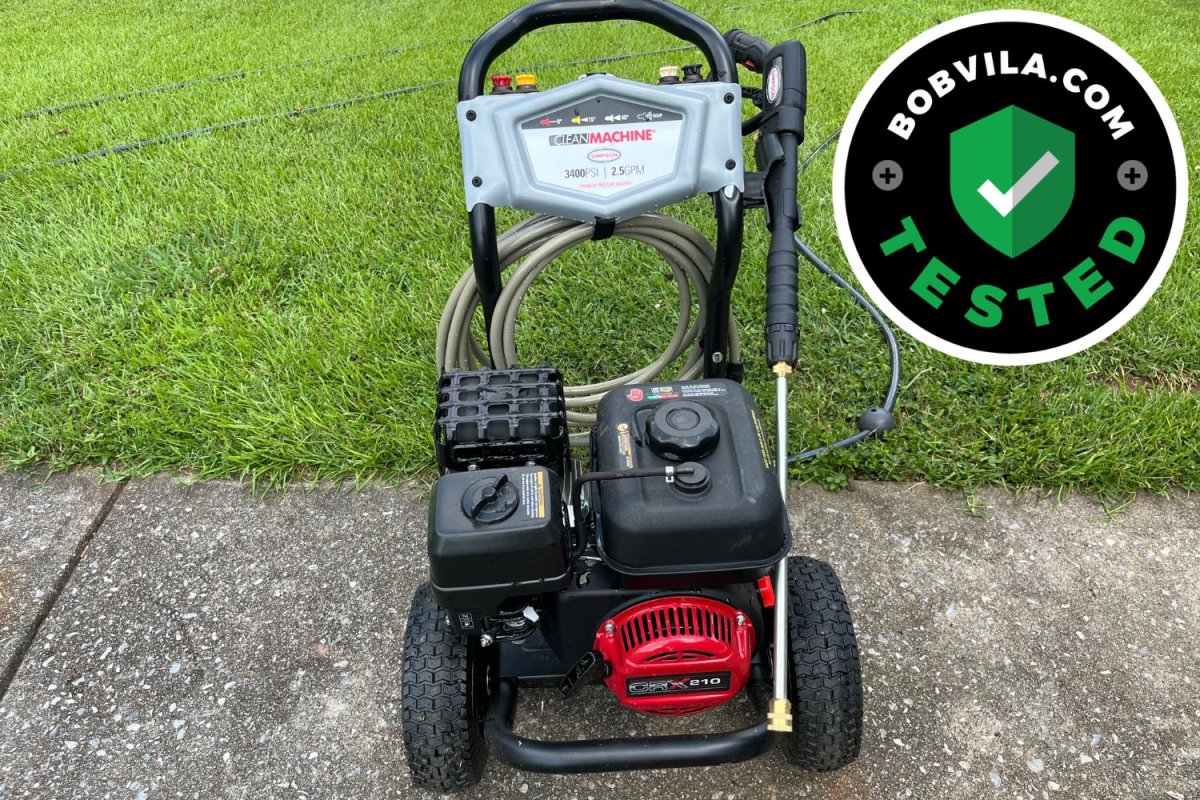
1. Best Overall: Simpson Clean Machine 3400 PSI 2.5 GPM Gas Pressure Washer
Ease of Use: 4.8/5
Performance: 5/5
Maneuverability: 4.8/5
Noise: 4.5/5
Value: 5/5
The Breakdown:
Emerging as the undisputed king of the test pool, the Simpson Clean Machine strikes an ideal balance between raw power, user-friendly design, and approachable pricing. Most homeowners pull a pressure washer out of storage only a few times a year, meaning reliability after sitting idle is paramount.
The Simpson answers this call with a low, wheelbarrow-style design equipped with pneumatic tires that glide over uneven terrain. It tucks neatly beneath standard workshop shelving for storage. Powered by a dependable CRX engine, testers noted it started on the very first pull during every single trial.
Beyond its mechanical reliability, the inclusion of a 15-inch surface cleaner attachment tipped the scales in its favor. This accessory allowed testers to clear driveways and sidewalks at least twice as fast as traditional spray nozzles while leaving an immaculate, streak-free finish.
2. Best Bang for the Buck: Vevor 3600 PSI 2.6 GPM Gas Pressure Washer
Ease of Use: 4/5
Performance: 4/5
Maneuverability: 4/5
Noise: 4/5
Value: 4.5/5
The Breakdown:
Retailing just north of the $300 mark, the Vevor gas pressure washer proves that high-end performance doesn’t have to break the bank. Delivering an impressive 3,600 PSI backed by a robust copper pump, it handles general outdoor cleanup and vehicle washing with ease.
Weighing in at a remarkably lightweight 58 pounds, it is easily one of the most portable gas units on the market. While testers noted that the fuel lines are fabricated from relatively inexpensive materials—suggesting potential long-term upgrades may be wise—the machine performed reliably throughout testing. It features an onboard detergent tank and four quick-connect nozzles, offering unbeatable value for budget-conscious property owners.
3. Best Medium-Duty: Westinghouse WPX3200
Ease of Use: 4.7/5
Performance: 5/5
Maneuverability: 4.8/5
Noise: 4.5/5
Value: 4.7/5
The Breakdown:
With a cult following and stellar customer satisfaction ratings, the Westinghouse WPX3200 is a masterclass in mid-tier engineering. Priced aggressively under $350, it matches the performance of machines costing upwards of $400.
Though roughly 5 pounds heavier than competing units, its upright steel frame and rugged wheels more than compensate, offering exceptional maneuverability in tight spaces. Testers used it to blast away caked-on mud, mold, and mildew from brick borders and vinyl siding. Its easy-starting engine and intuitive five-nozzle layout make it a perennial favorite for residential users.
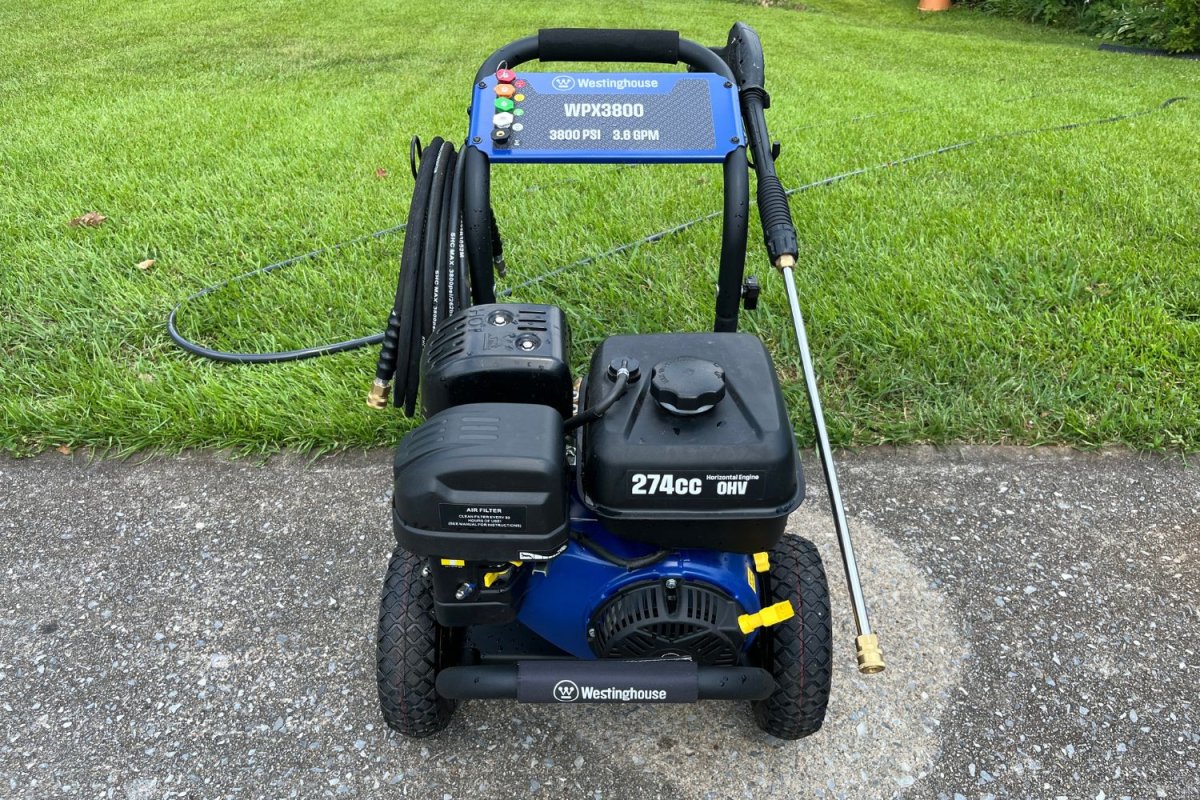
4. Best Heavy-Duty: Westinghouse WPX3800
Ease of Use: 4.5/5
Performance: 5/5
Maneuverability: 4.3/5
Noise: 4/5
Value: 4.5/5
The Breakdown:
For property owners with extensive cleaning acreage or professionals requiring rugged durability, the Westinghouse WPX3800 is a powerhouse. Featuring a commercial-grade triplex pump and a massive 274cc engine, it delivers superior flow rates (3.6 GPM) that allow users to hold spray tips further from surfaces while cleaning faster.
Equipped with a massive 1.3-gallon fuel tank, it runs continuously for 2.5 hours or more per fill-up. While its weight and stiffer high-pressure hose make it slightly less nimble to transport, its long-term durability and heavy-duty output are unmatched in its price class.
Official Responses and Expert Insights
Industry professionals who spearheaded the testing phase weighed in on how consumers should approach their purchasing decisions.
"Compact size, strong cleaning ability, and a dependable engine make this Simpson Clean Machine one of the best all-around gas pressure washers for home use. Including a 15-inch pressure washer almost makes the competition unfair."
— Mark Wolfe, Product Reviews Tester and Writer
Professional tester Zach Lazzari, who reviewed top-tier commercial units like the Simpson Aluminum 4200 PSI powered by a Honda GX390 engine, offered a word of caution regarding over-buying:
"The only reason commercial-grade models didn’t take our top prize is cost, which is more than double the price of many consumer units. If you need something for professional contracting, this is the gold standard. But for smaller tasks and intermittent use, you are far better off with a moderately priced residential unit."
Implications for Consumers: Gas vs. Electric and Safety Realities
As shoppers weigh their options, the implications of choosing a gas-powered washer over an electric alternative center on power, maintenance, and environmental regulations.
The Power Advantage
Gas pressure washers rely on 4-stroke combustion engines, delivering significantly higher pounds per square inch (PSI) and gallons per minute (GPM) than electric equivalents. This high flow rate is what makes gas units uniquely suited for stripping paint, tackling massive concrete slabs, and cutting through heavy commercial grime.
Regulatory Compliance and Emissions
With stringent regulations from the California Air Resources Board (CARB) and the Environmental Protection Agency (EPA), top manufacturers have pivoted heavily toward "50-state-compliant" engines. These low-emission motors ensure compliance nationwide without sacrificing the robust torque required for heavy washing tasks.
Practical Safety Considerations
Gas pressure washers are inherently loud, with operational noise levels ranging between 85 and 100 decibels—roughly equivalent to a running leaf blower. Testers strongly advise users to wear hearing protection during extended operations. Additionally, proper end-of-season maintenance—such as draining old gasoline and stabilizing the fuel system—is essential to prevent carburetor gumming and ensure reliable startup year after year.
Key Takeaways for Buyers
Match PSI to the Task: For standard residential cleaning (cars, siding, patios), 2,500 to 3,400 PSI is the sweet spot.
Prioritize GPM: Remember that cleaning power is a product of both PSI and GPM (Gallons Per Minute). Higher flow rates translate to faster cleaning times.
Inspect the Hoses: Entry-level models often feature stiff plastic hoses that easily kink; upgrading to flexible rubber hoses can drastically improve the user experience.
By carefully evaluating your intended workloads, storage space, and budget, you can harness the raw efficiency of a top-tier gas pressure washer to keep your property pristine for years to come.