

Main Facts
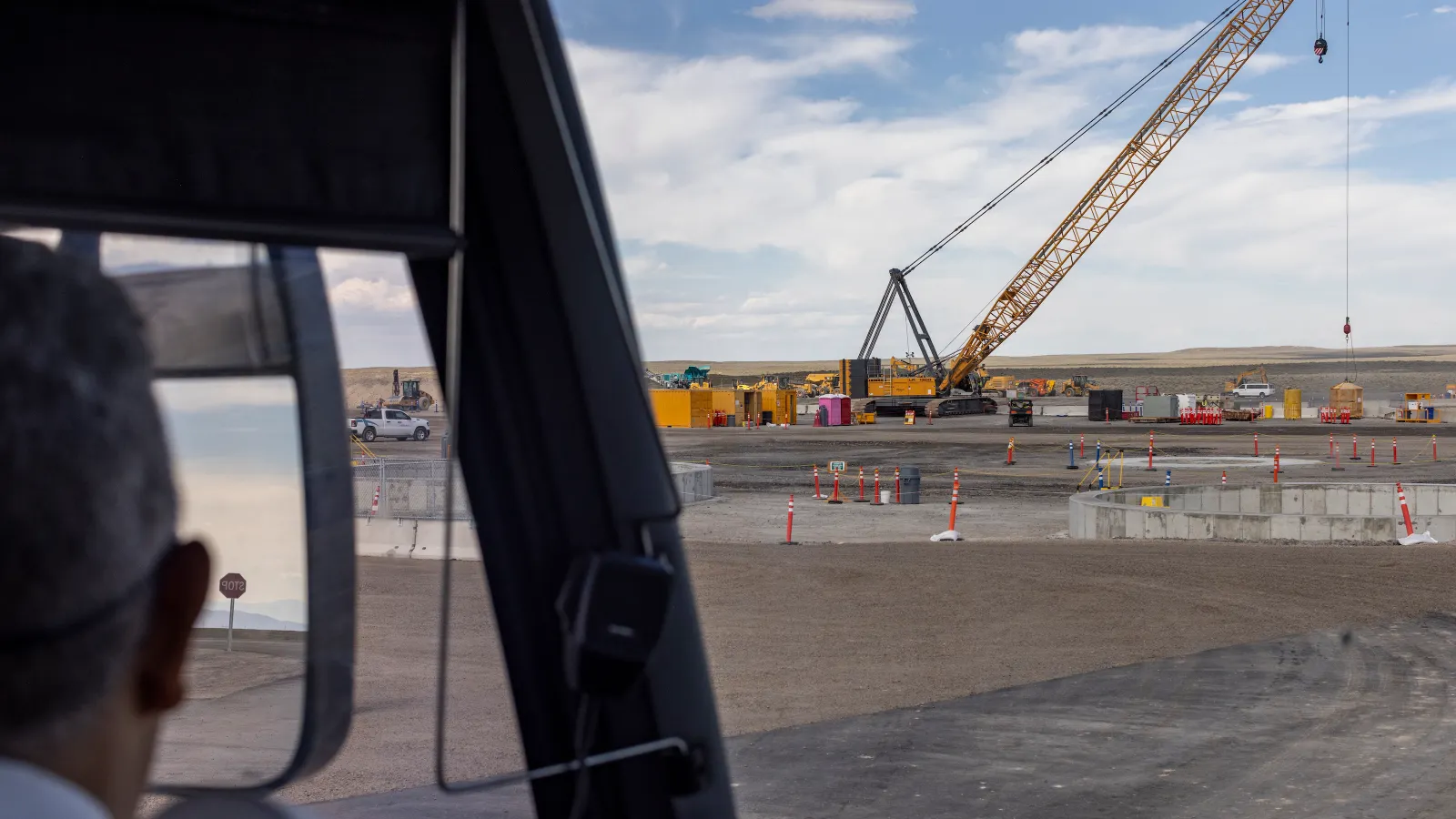
The global energy landscape is undergoing a massive paradigm shift, and at the epicenter of this transformation is a resurgence in nuclear power generation. Kiewit, an Omaha, Nebraska-based heavy general contractor and engineering giant, is positioning itself at the forefront of this movement. According to Mike Rinehart, president of the firm’s nuclear solutions division, Kiewit’s nuclear revenue has roughly doubled year-over-year since 2022. The company’s portfolio currently boasts more than 10 commercial nuclear projects actively underway, complemented by a dozen additional initiatives managed under Department of Energy (DOE) programs.
This meteoric rise is not an isolated corporate success story; it is a direct reflection of an insatiable, unprecedented appetite for reliable, carbon-free baseload electricity. Driven heavily by the explosive growth of artificial intelligence (AI), hyper-scale data centers, electric vehicle (EV) adoption, and a broader societal push toward complete electrification, the energy sector is scrambling for power sources that can deliver massive scale without carbon emissions.
As traditional fossil fuel assets—particularly coal-fired power plants—approach the end of their operational lifecycles, utilities and federal regulators are aggressively pivoting back to nuclear energy. Kiewit anticipates that its nuclear construction operations will easily crystallize into a billion-dollar-a-year business in the near future, signaling a profound vote of confidence in the long-term viability of nuclear infrastructure.
Chronology
The modern renaissance of nuclear construction did not happen overnight; it is the culmination of regulatory evolution, federal policy shifts, and a rapidly changing commercial energy market over the past several years:
- Pre-2022: Kiewit observed a steady, organic growth in interest regarding nuclear power, driven initially by general electrification trends, early EV infrastructure demands, and the looming retirement of aging fossil fuel and coal infrastructure across the United States.
- 2022: Marking a pivotal turning point, Kiewit’s nuclear revenue begins a steep upward trajectory, doubling year-over-year as market demand for carbon-free baseload power accelerates.
- Early 2024: The Nuclear Regulatory Commission (NRC) issues a milestone commercial nuclear reactor construction permit to a subsidiary of TerraPower—a Bill Gates-backed nuclear reactor design and development company. This marks the first time in nearly a decade that the NRC has granted such a permit for a utility-scale advanced nuclear reactor, opening the floodgates for next-generation technology.
- June 23, 2024: The U.S. Department of Energy announces a massive financial backing initiative, offering loans of up to $17.5 billion to utilities and energy firms to support the development of 10 large-scale nuclear reactors across five distinct sites.
- Present Day: Kiewit manages a robust pipeline of over 10 commercial nuclear projects and a dozen DOE programs, with leadership actively navigating complex supply chains, specialized labor requirements, and rigorous regulatory frameworks to execute these generational builds.
Supporting Data
The economic and regulatory indicators supporting Kiewit’s bullish outlook on nuclear energy are both staggering and historic:
- Revenue Growth: Kiewit’s nuclear revenue has doubled annually since 2022, on a direct path to eclipsing $1 billion per year.
- Project Portfolio: The contractor is actively executing more than 10 commercial nuclear projects alongside 12 projects tied to Department of Energy programs.
- Federal Funding: The DOE’s June 2024 loan offering of up to $17.5 billion aims to catalyze the construction of 10 large nuclear reactors distributed over five strategic geographic sites.
- Regulatory Milestones: The NRC’s approval of TerraPower’s construction permit represents the first utility-scale advanced nuclear permit issued in nearly 10 years.
- Quality and Supply Chain Constraints: The industry relies heavily on NQA-1 (Nuclear Quality Assurance-1) standards, the national consensus standard for quality assurance governing safety-related components, particularly within the nuclear island and reactor core.
Official Responses: An Exclusive Q&A with Mike Rinehart
To understand the mechanics behind this explosive market growth, Construction Dive sat down with Mike Rinehart, president of Kiewit’s nuclear solutions. Edited for brevity and clarity, here are his insights on the drivers, technologies, challenges, and supply chain realities of modern nuclear construction.
What is driving the interest in nuclear construction?
"Our observation of the nuclear market is that it has obviously gained a lot of momentum. There’s a lot more interest in it. Today, it’s still the only carbon-free generating resource that will meet demand at scale," Rinehart explained.
"Kiewit sees the nuclear business for us being a billion-dollar-a-year business or more easily. That’s the scale that we see it at. It all ties into overall electrification demand, and AI and the data centers are obviously a big consumer of that. But we saw growth in interest, a growth in nuclear, even going back before the big hyperscaling boom."
Rinehart noted that the demand existed prior to the generative AI explosion, driven by broad-based electrification like electric vehicles. Crucially, however, it is also a matter of replacement. "More importantly, [there are] the aging generating assets that are already operating in the country—so, a lot of the large generating coal assets and other fossil assets that are starting to approach their end of life. A lot of renewables, although they have their place and they’re great, they don’t necessarily fill all of that baseline generation at scale."
Where is the biggest opportunity in nuclear construction right now?
Rejecting the idea that a single technology dominates the landscape, Rinehart emphasized a diversified approach.
"It wouldn’t be fair for me to pick just one, small modular reactor projects, large reactors, DOE work. I think they all have their place," he said. "If I can make a bad analogy, nuclear is like an automobile. Not all automobiles are created the same. You have large semi trucks, they serve a specific purpose. You have sports cars and race cars, they serve a very specific purpose. And I can make the same argument about all of the different nuclear technologies that are out there right now."
According to Rinehart, large traditional reactors, small modular reactors (SMRs), and advanced microreactors each fulfill deeply strategic, distinct roles within the evolving national energy grid. The key lies in matching the specific energy need with the optimal technology application.
What are the biggest challenges on these projects?
While the regulatory environment overseen by the NRC is notoriously stringent, Rinehart argues that regulation is frequently used as an unfair scapegoat for troubled projects.
"I think the construction challenges of most of these nuclear projects are more rooted in the organization of the overall program, being able to follow what we call the EPC [engineering, procurement, and construction] playbook on execution," Rinehart stated.
"It’s easy to say it’s a more complicated and complex regulatory environment, you have to go through NRC, and that certainly has some challenges. But I think some people use regulation as the scapegoat of why nuclear jobs go bad. There are very large projects, there are very complex projects, and even the small jobs are still large, complex projects."
Furthermore, modern nuclear builds often incorporate "first-of-a-kind" (FOAK) technologies. While FOAK engineering and regulatory pathways present distinct nuances, Rinehart points out that managing novel technology is not entirely alien to heavy industrial engineering. Instead, the ultimate hurdle is integration: "I think the biggest challenge for some of these big jobs is getting the right integration between engineering, procurement and construction with all of the stakeholders that are involved in the program. That could be the regulators, that could be local authorities, that could be the utility unit. Getting full integration and a truly seamless program to be able to manage the risk, quantify the risk and accurately report out on what’s happening on the job is the larger challenge in the industry right now."
How much of a concern is labor on these projects?
Amid widespread industry anxiety regarding skilled labor shortages across the construction sector, Rinehart remains cautiously optimistic, leaning heavily on institutional partnerships with labor unions.
"You read on LinkedIn how everyone’s talking about there’s going to be labor shortages, but the building trades have always pulled through," Rinehart noted.
Kiewit maintains proactive channels to mitigate workforce deficits. "We have a recurring building trades task force. I’m a part of it for our nuclear market. We communicate quarterly with all of the building trades at the national level. So, yes there is a lot of pressure on the building trades to be able to support all this work. At the same time, I think if you have a good plan and you make sure that you have all the right tools and support and the right benefits for your employees, the skilled labor will be there."
What equipment and material constraints are top of mind?
Supply chain vulnerabilities represent one of the most formidable hurdles in nuclear construction, extending far beyond routine raw materials.
"The nuclear industry has certain quality standards that are much more robust when it comes to safety-related components, especially to things that fall under NQA-1 [the national consensus standard for quality assurance in the nuclear industry]," Rinehart explained.
While standard commodity supply chains—such as steel, piping, and critical electrical equipment like transformers and switchgear—are already facing intense market pressure, the specialized nuclear supply chain is facing an even steeper deficit. "The NQA-1 supply chain for safety-related components, these are things that are going to be usually within the nuclear island and the reactors. That right there, that market will not be able to support the demand that we see."
To circumvent this impending bottleneck, top-tier engineering, procurement, and construction (EPC) contractors are taking matters into their own hands. "A lot of us tier one EPCs are planning on being capable of doing our own commercial grade dedication, where we could use commercial sources for that same material, but just run it through more engineering, labs and testing and a lot of oversight. I think that’s going to be absolutely imperative for the market to go the way that we want, being able to support that ourselves."
Implications
The rapid expansion of Kiewit’s nuclear business points to broader, transformative implications for the North American economy, energy infrastructure, and industrial construction sectors:
- Grid Resilience and Decarbonization: As data center footprints expand exponentially to support artificial intelligence and cloud computing, tech giants can no longer rely solely on intermittent renewable energy sources like wind and solar. Nuclear power provides the essential, high-capacity, carbon-free baseload generation necessary to keep digital infrastructure running 24/7 without violating corporate sustainability mandates.
- Evolution of EPC Delivery Models: The recognition by industry leaders that traditional supply chains cannot support NQA-1 demands indicates a shift toward self-reliance. Major contractors will increasingly invest in internal testing laboratories, commercial-grade dedication programs, and robust engineering oversight to prevent project delays.
- A Shift in Public and Regulatory Perception: With the NRC greenlighting advanced reactor permits and the federal government injecting billions in loans through the DOE, the regulatory climate is transforming from an adversarial bottleneck into a collaborative framework designed to jumpstart domestic energy independence.
- Workforce Transformation: The reliance on structured, quarterly dialogues between tier-one contractors and national building trades sets a new benchmark for labor management. Meeting the demands of a billion-dollar nuclear construction pipeline will require continuous upskilling, attractive benefit structures, and institutionalized workforce pipelines to ensure that technical ambitions are matched by boots-on-the-ground execution.
