

When homeowners embark on a bathroom renovation, the decisions can quickly become overwhelming. While fixtures, vanities, and wall colors often steal the spotlight, selecting the right flooring material is arguably the most critical structural and functional choice in the room. Unlike living rooms or bedrooms, bathrooms are subjected to a punishing microclimate: standing water, frequent chemical exposure, fluctuating humidity levels, and dramatic shifts in temperature.
Selecting a surface that complements your interior design is only half the battle. A truly successful bathroom floor must withstand high foot traffic, maintain adequate slip resistance when wet, offer effortless sanitation, and align with your project budget. Whether you are aiming for a sleek contemporary aesthetic, an industrial wet room, or a warm transitional design, understanding the landscape of modern bathroom flooring options is essential for a lasting investment.
What to Consider When Choosing Bathroom Flooring
Before committing to a specific material, interior designers and general contractors advise evaluating how a product performs under real-world residential conditions. The primary criteria include:
- Moisture Resistance: The material must repel water or be completely waterproof to prevent subfloor rot, mold growth, and structural degradation.
- Slip Resistance: Polished surfaces can become treacherous when wet. Texture and static coefficient of friction ratings are paramount for safety.
- Comfort and Thermal Properties: Hard surfaces like tile and concrete can feel freezing underfoot during winter months, though they pair exceptionally well with underfloor radiant heating systems.
- Maintenance and Cleaning: Grout lines, porous stones, and organic fibers require varying degrees of upkeep, sealing, and specialized cleaning agents.
- Installation Complexity: Some options are tailored for DIY weekend warriors, while others demand professional masonry, pouring, or leveling expertise.
The 6 Best Flooring Options for Bathrooms
1. Ceramic and Porcelain
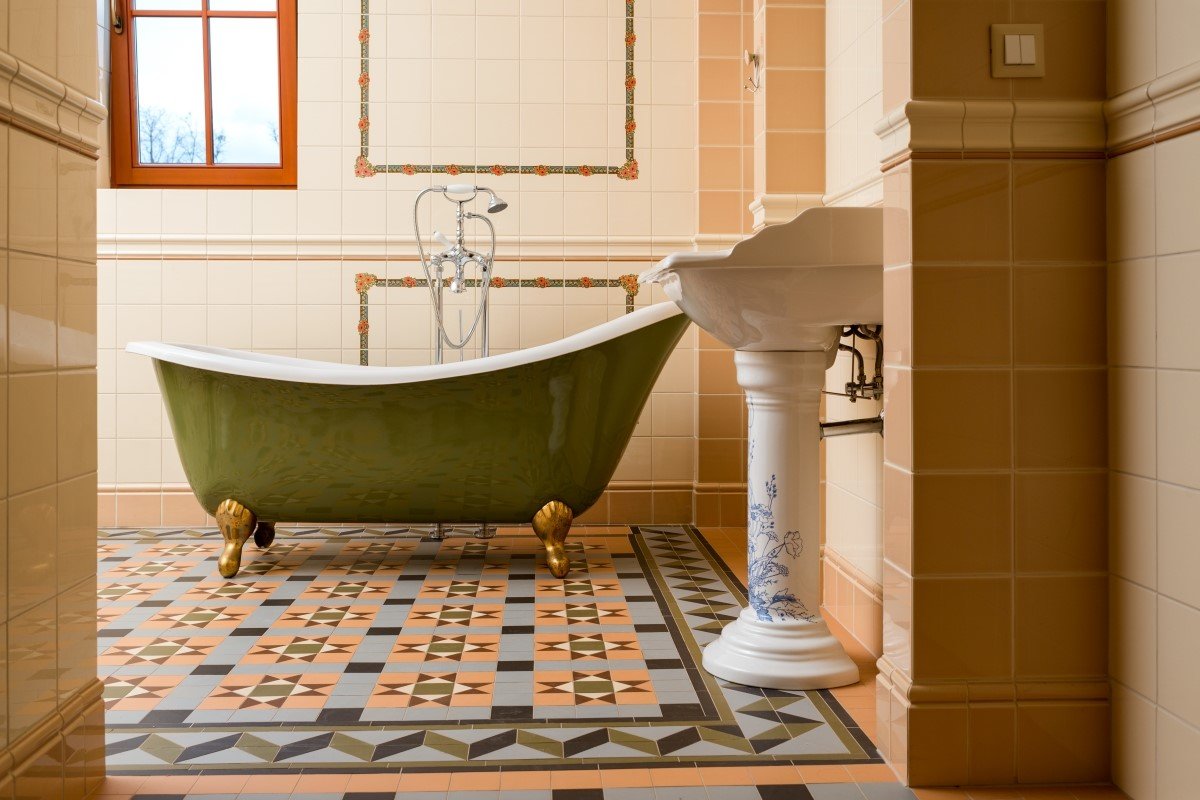
Ceramic and porcelain tiles remain the undisputed gold standard for bathroom floors. Prized for their exceptional durability and complete water resistance, they are versatile enough to suit almost any architectural style. Options range from delicate mosaics and classic penny rounds to large-format planks that mimic hardwood.
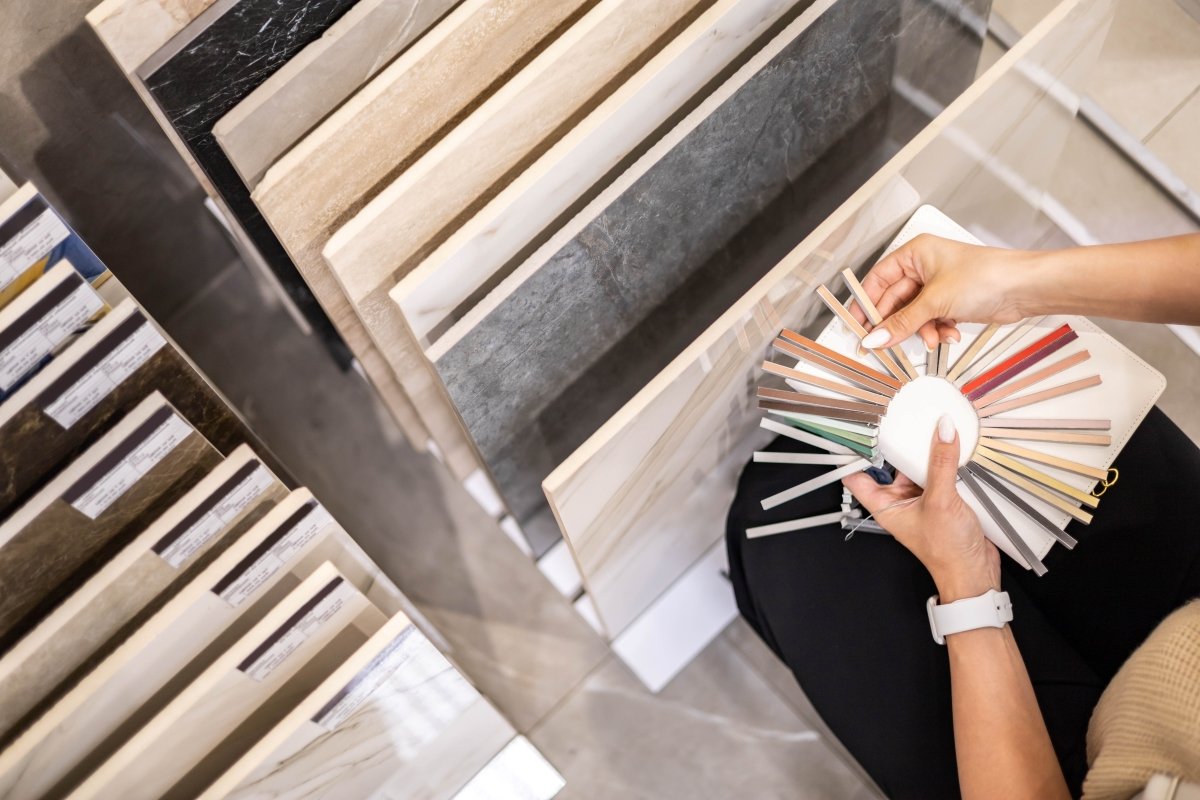
Porcelain, in particular, absorbs less than 0.5 percent of water, making it virtually impervious to moisture. While ceramic tile is slightly more porous and may require glazed finishes or periodic sealing, both materials offer incredible longevity. However, installation can be labor-intensive, requiring a perfectly level subfloor, precise cuts, and meticulous grout sealing to prevent staining.
2. Vinyl (Sheet and Luxury Vinyl Plank)
Vinyl has undergone a massive design renaissance, emerging as a top-tier contender for budget-conscious and DIY-friendly renovations. Modern vinyl is entirely waterproof, exceptionally comfortable underfoot, and available in hyper-realistic prints that mimic high-end hardwoods and natural stone.
Standard vinyl sheets or self-adhesive tiles can be easily cut with a utility knife to fit irregular bathroom layouts. Meanwhile, Luxury Vinyl Plank (LVP) features rigid, interlocking boards equipped with acoustic and thermal backing layers (such as cork or foam). The primary caveat is that thin vinyl products require a flawlessly smooth subfloor; otherwise, underlying imperfections will telegraph right through the surface.
3. Concrete
For urban lofts, minimalist spaces, and modern industrial designs, poured concrete offers a striking, seamless aesthetic. Because concrete is poured directly in place, it is an exceptional choice for open-concept wet rooms where the shower and toilet share a continuous, curbless plane.
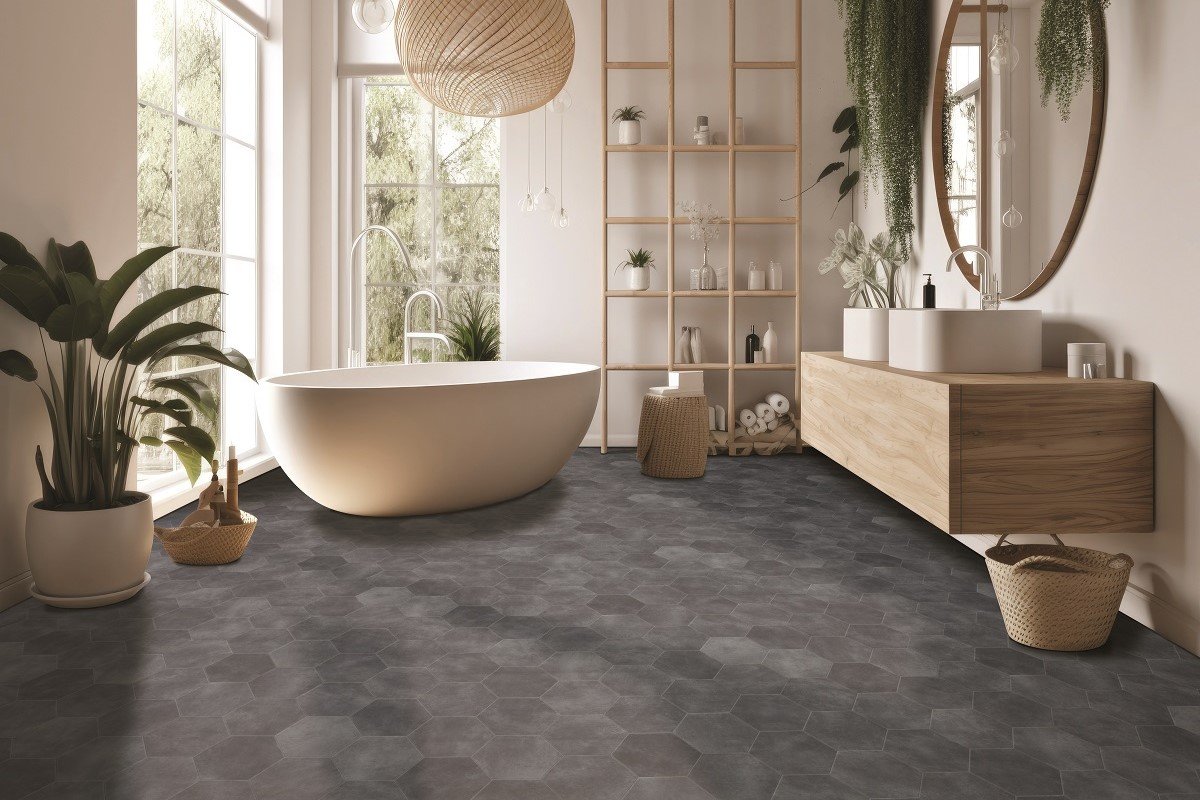
Concrete is immensely durable and can be stained, acid-washed, or textured to resemble high-end stone. Nevertheless, installation is strictly labor-intensive: curing takes several days, and the material is inherently cold and hard unless paired with radiant floor heating. Furthermore, smooth concrete finishes require an anti-slip additive or textured seal to prevent accidents in wet environments.
4. Natural Stone
If luxury is the primary objective, natural stone surfaces—such as marble, slate, travertine, and granite—deliver unmatched visual depth and organic beauty. Interior designer Danielle Nicholson notes an industry-wide shift toward embracing natural imperfections: "If you think of going into older buildings, you will typically notice limestone or marble that can be hundreds of years old. You will notice the imperfections in it, but yet it’s still beautiful. That is what I’m starting to see people embrace in their homes."
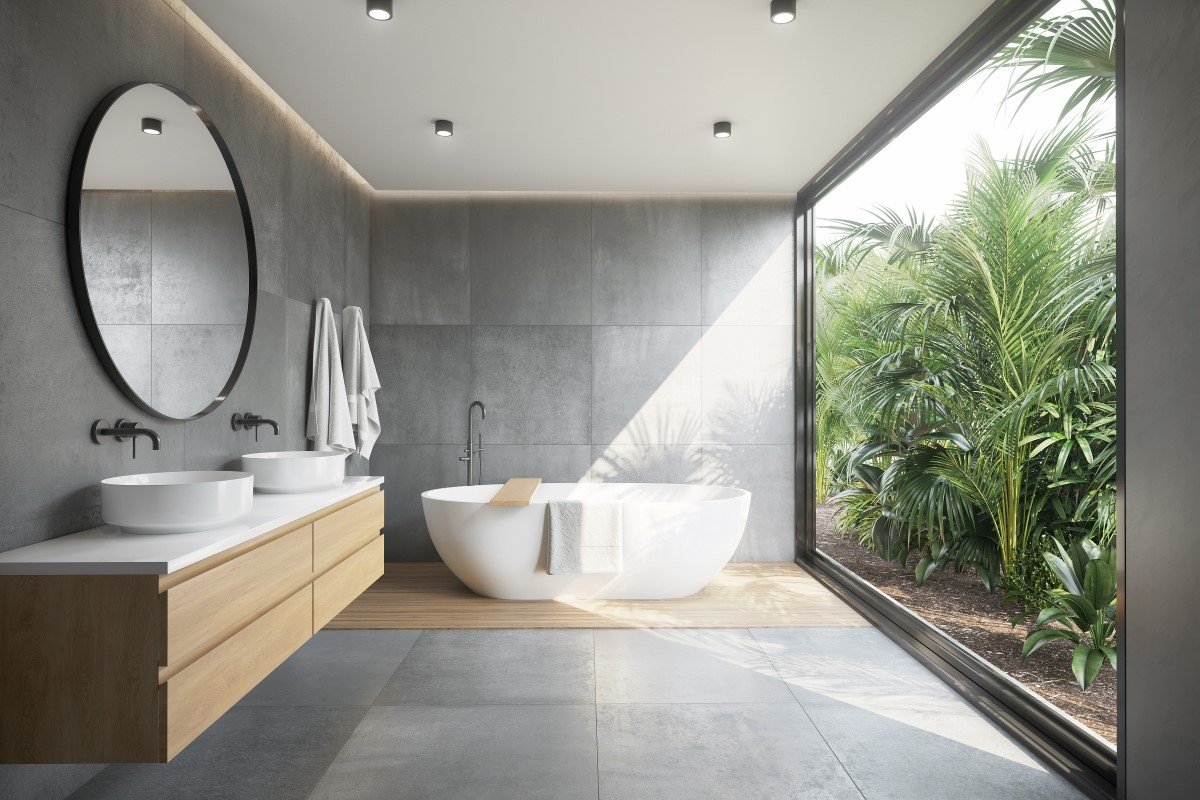
While stunning, natural stone comes with distinct trade-offs. It is typically expensive, heavy, and porous. Most stones demand regular sealing to prevent staining, and highly polished marble is notoriously prone to scratching and slipperiness when wet.
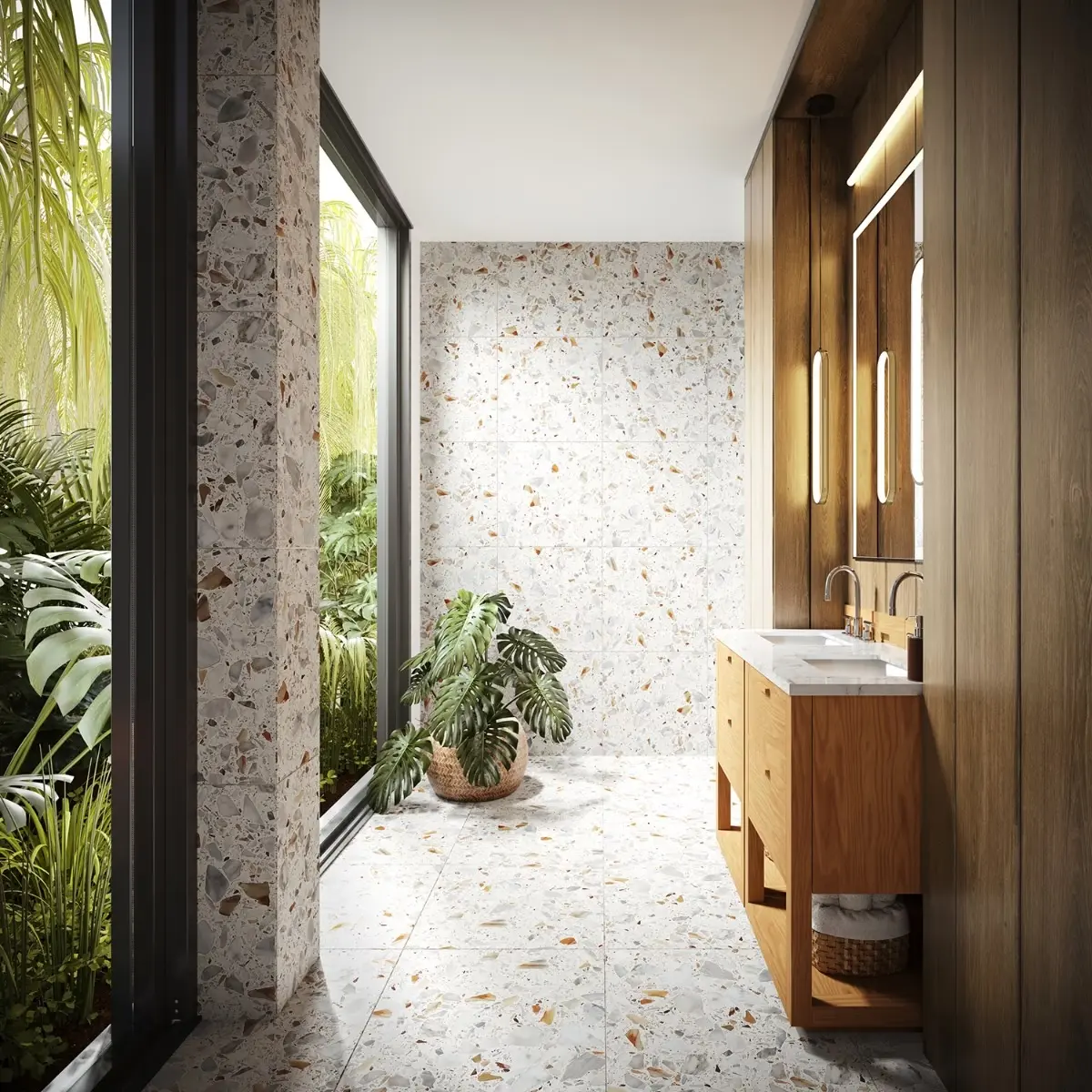
5. Terrazzo
Originating with 16th-century Venetian craftspeople who embedded scrap marble and granite chips into cement binders, terrazzo offers a dazzling, light-reflecting surface loaded with character. Today, terrazzo is available either as a labor-intensive, poured-in-place floor or as pre-cast tiles.
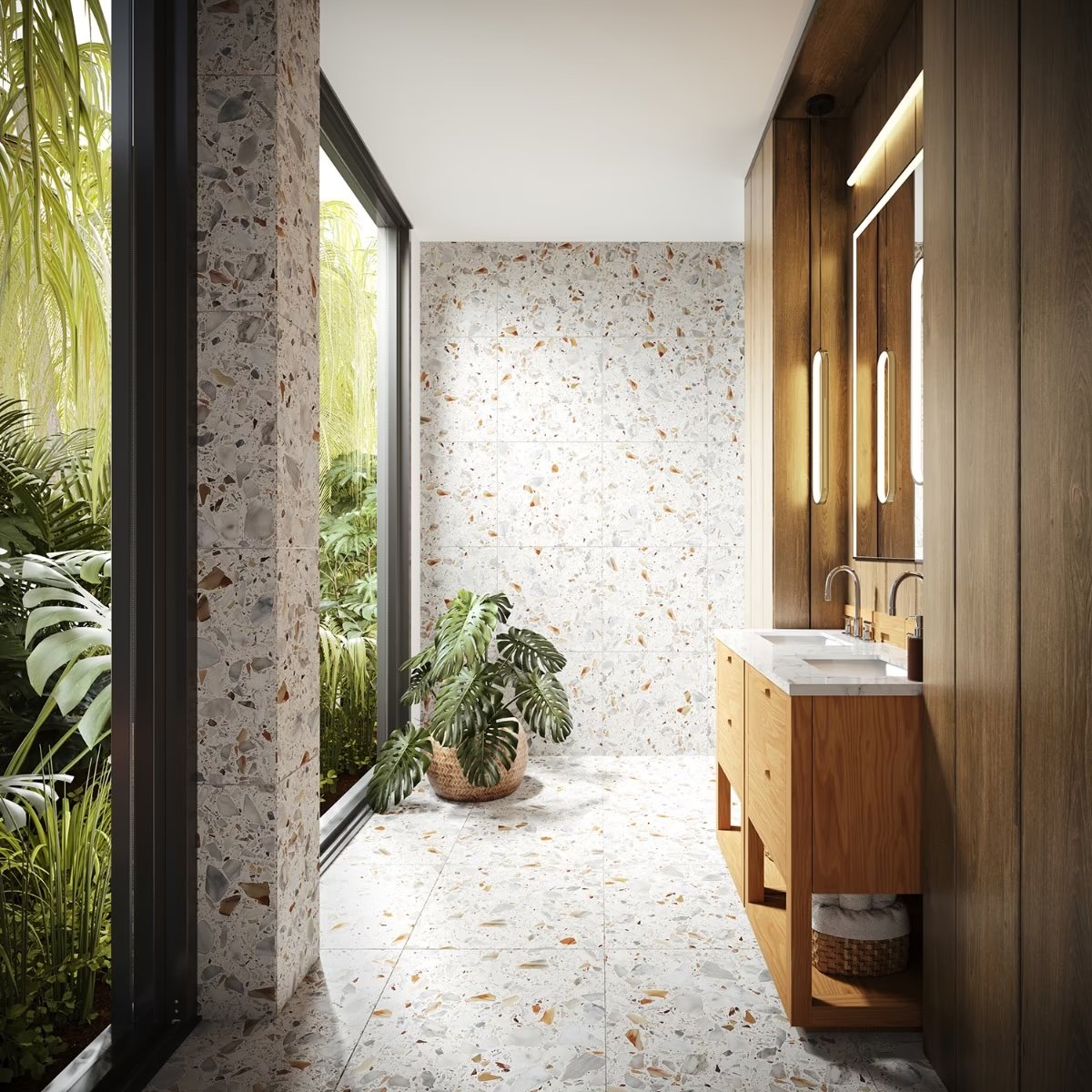
Terrazzo comes in two primary formulations: cement-based (which is porous and requires regular sealing) and resin-based (which is nonporous and highly water-resistant). Both varieties are exceptionally hard-wearing and long-lasting, though professional installation is typically required to achieve a flawless finish.
6. Vinyl Tile
Distinct from sheet vinyl and rigid planks, modular peel-and-stick vinyl tiles provide an accessible entry point for homeowners executing quick updates. They deliver the visual impact of encaustic tiles or natural slate at a fraction of the cost. While they are easy to install, care must be taken during layout: unsealed or poorly pressed seams can allow moisture to seep underneath, leading to lifting and adhesive failure over time.
Alternative Types of Bathroom Flooring to Consider
1. Waterproof Laminate
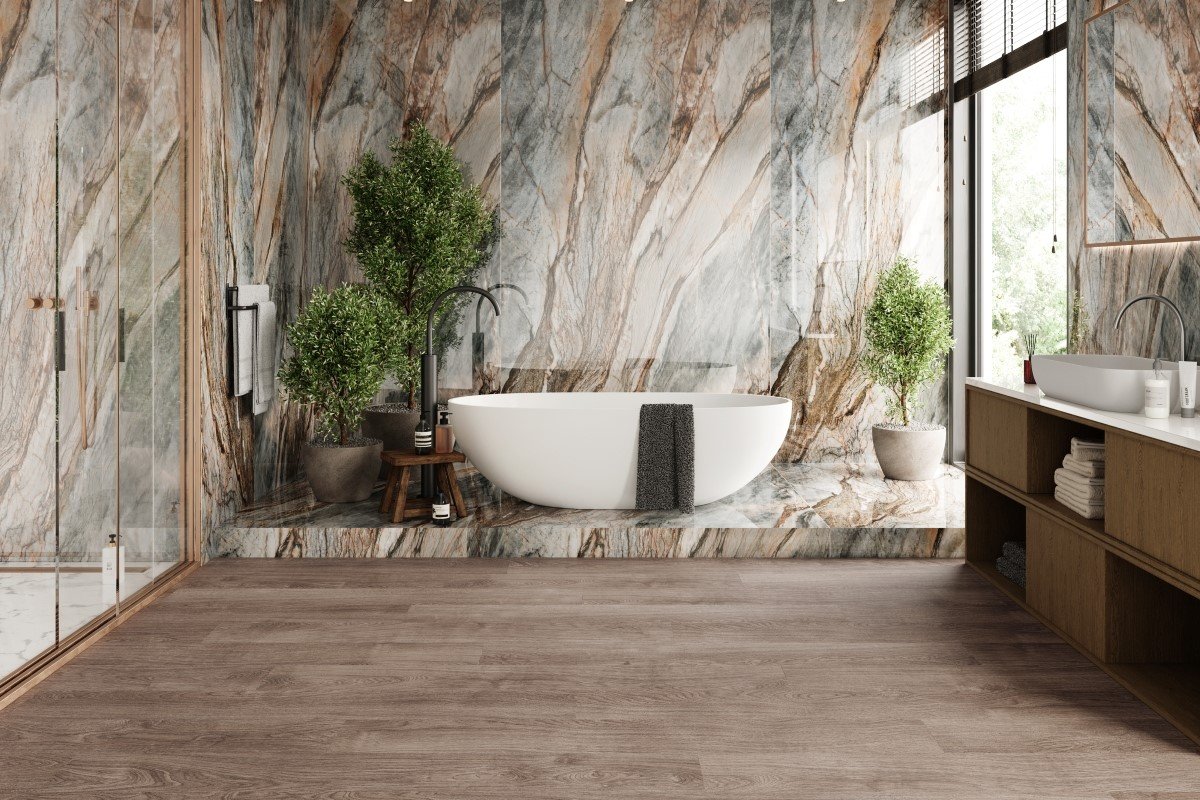
Waterproof laminate combines photographic wood-grain layers with click-together installation systems. Unlike traditional laminate—which relies on a fiberboard core that swells and buckles upon contact with standing water—fully waterproof laminate features enhanced edge-sealing technologies. However, homeowners must verify that the specific product manufacturer explicitly certifies the material for wet-room installations.
2. Linoleum
Often confused with synthetic vinyl, linoleum is a sustainable product manufactured from linseed oil, wood flour, cork dust, and tree resins. It is durable, naturally anti-microbial, and comfortable underfoot. While modern linoleum is water-resistant, it is not entirely waterproof and requires careful edge sealing in humid environments.
3. Cork
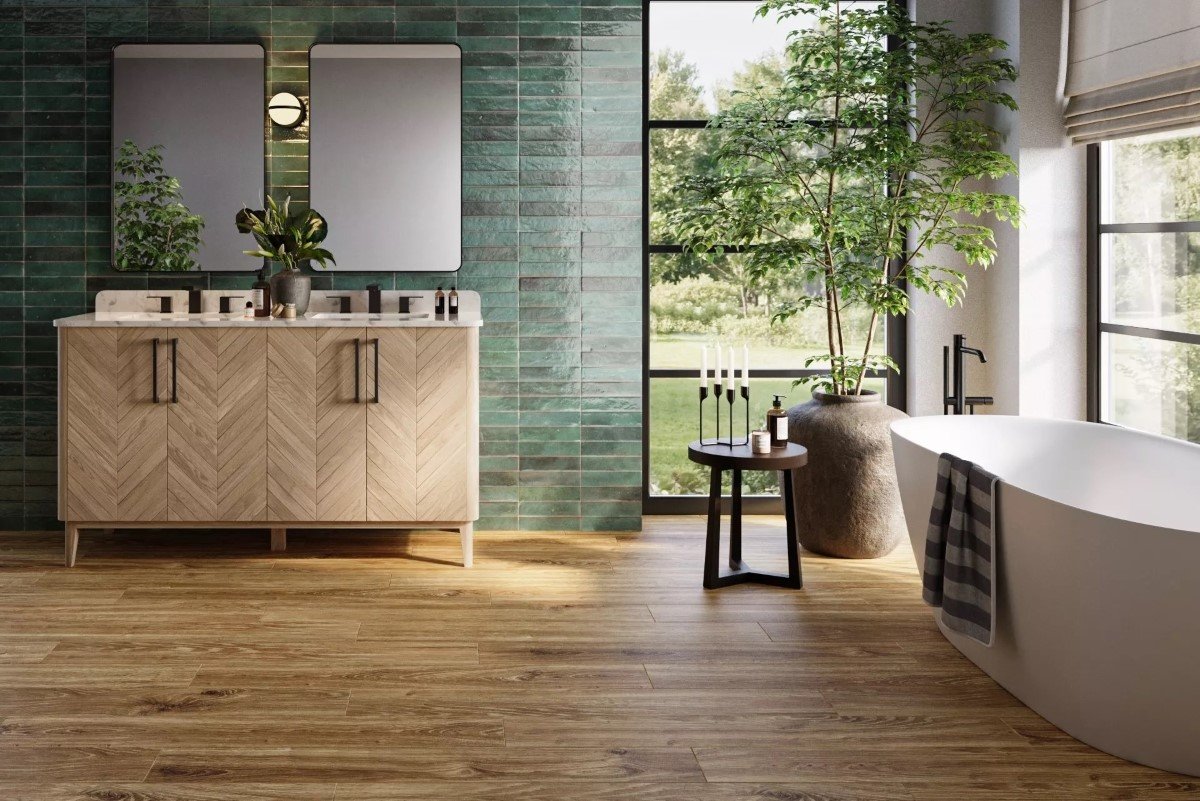
Harvested from the renewable bark of cork oak trees without harming the trunk, cork is the ultimate eco-friendly flooring choice. It provides natural thermal warmth, shock absorption, and acoustic dampening. Because cork is porous, it requires rigorous sealing to prevent moisture damage and can dent under heavy, concentrated loads like bathroom stools.
4. Bamboo
Bamboo is a rapidly renewable grass processed into sturdy flooring planks. While engineered bamboo offers reasonable dimensional stability, solid bamboo can swell if standing water infiltrates the seams. It delivers the aesthetic warmth of hardwood but demands vigilant spill management in bathroom settings.
Trending Bathroom Flooring Ideas
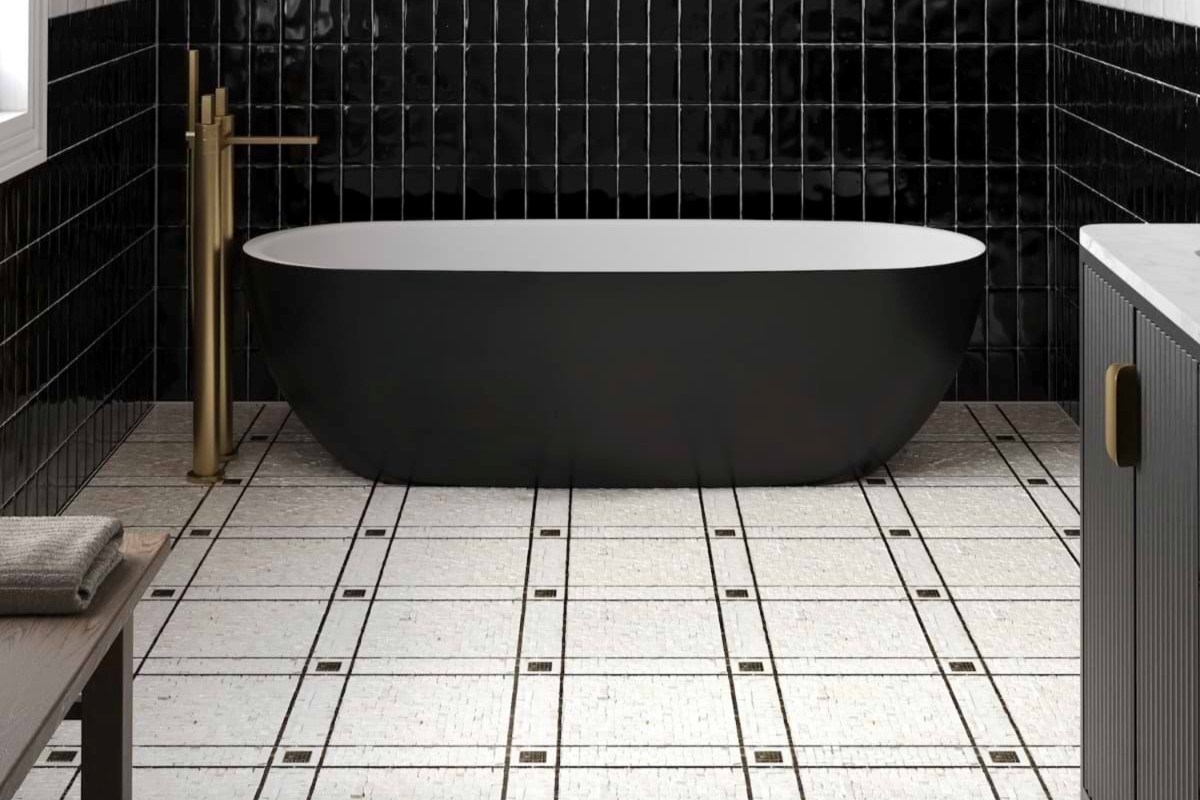
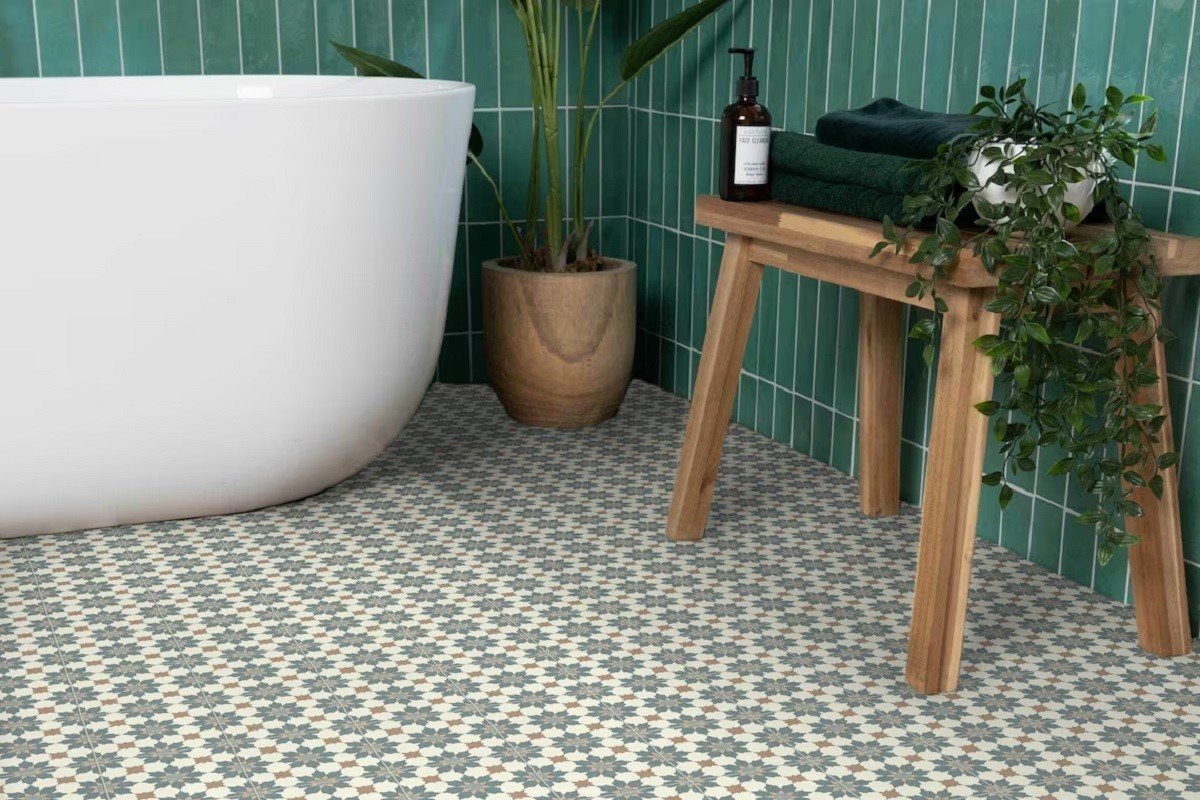
Contemporary design trends favor geometric layouts, such as tumbled marble checkerboards, herringbone tile patterns, and high-contrast grout lines. Large-format tiles are also surging in popularity; by reducing the total number of grout lines, these expansive slabs create a seamless optical illusion that makes compact bathrooms feel significantly larger and airier.
Flooring to Avoid Installing in a Bathroom
- Solid Hardwood: Traditional solid wood expands, warps, cups, and rots when exposed to persistent humidity and standing water.
- Standard Wall-to-Wall Carpeting: Retains moisture, breeds mold, harbors bacteria, and is notoriously difficult to sanitize in wet zones.
Frequently Asked Questions (FAQ)
Q. What is the best flooring for a bathroom?
Porcelain tile remains the industry favorite due to its superior water resistance, structural durability, and extensive stylistic versatility. Waterproof luxury vinyl is the top alternative for budget-focused DIY projects.
Q. What bathroom flooring will last the longest?
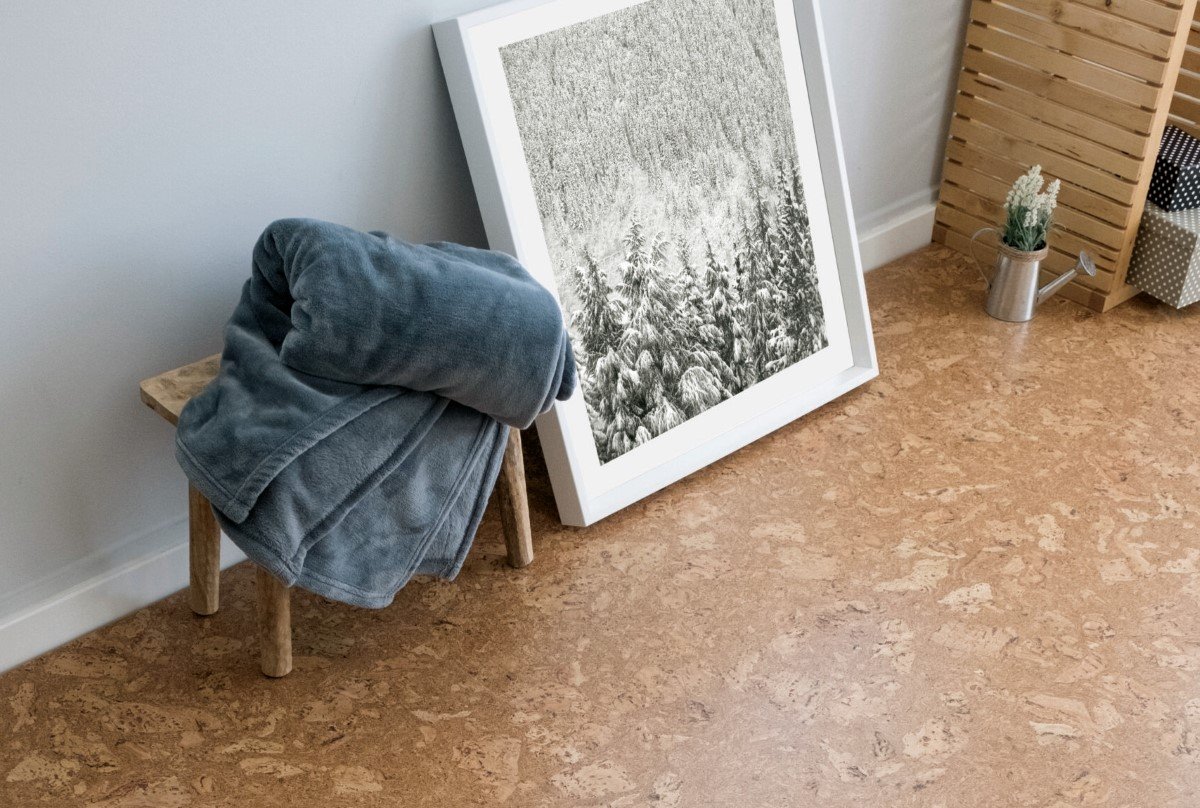
Properly installed and maintained ceramic or porcelain tile can easily perform for decades, outlasting almost all alternative materials.
Q. What flooring makes a small bathroom look bigger?
Large-format tiles paired with narrow, matching grout lines minimize visual clutter, expanding the perceived footprint of the room. Continuing the same flooring seamlessly into the shower stall further enhances this spacious effect.
Q. What is the easiest bathroom flooring to DIY?
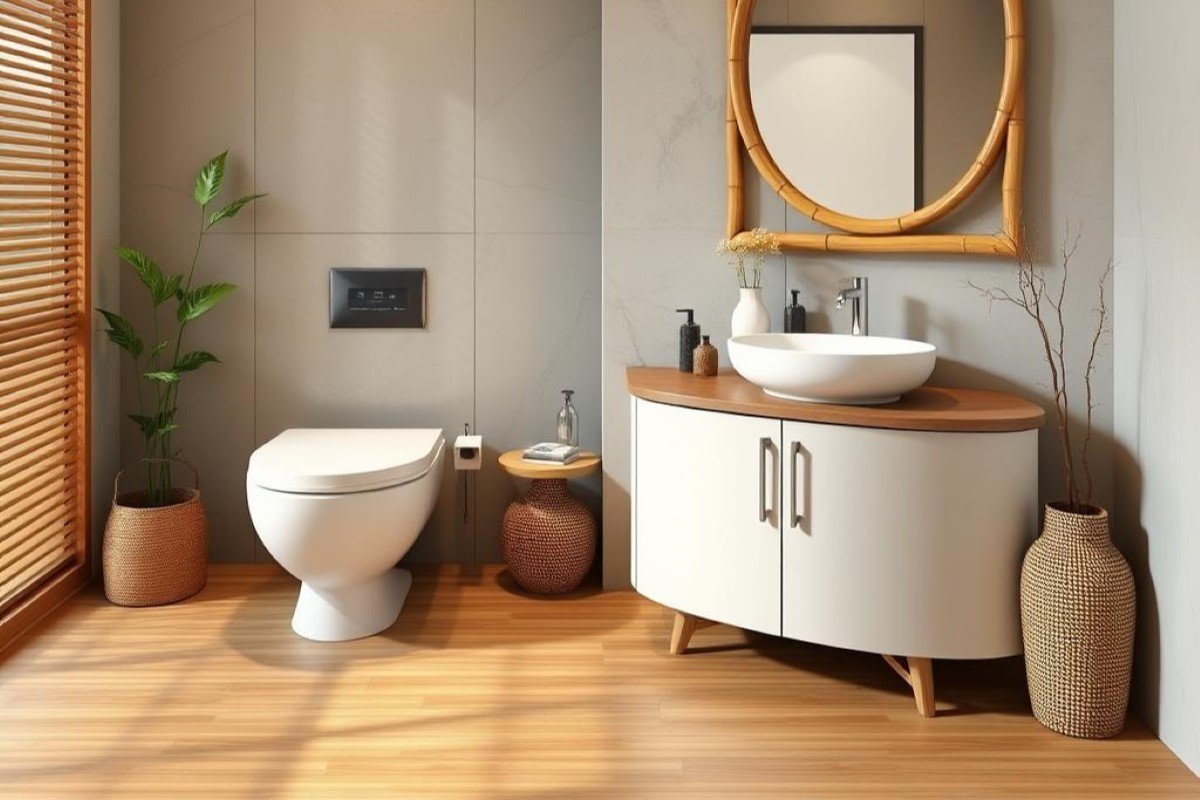
Peel-and-stick vinyl tiles require minimal tools and expertise, though achieving a lasting bond relies entirely on starting with a pristine, leveled subfloor.
