


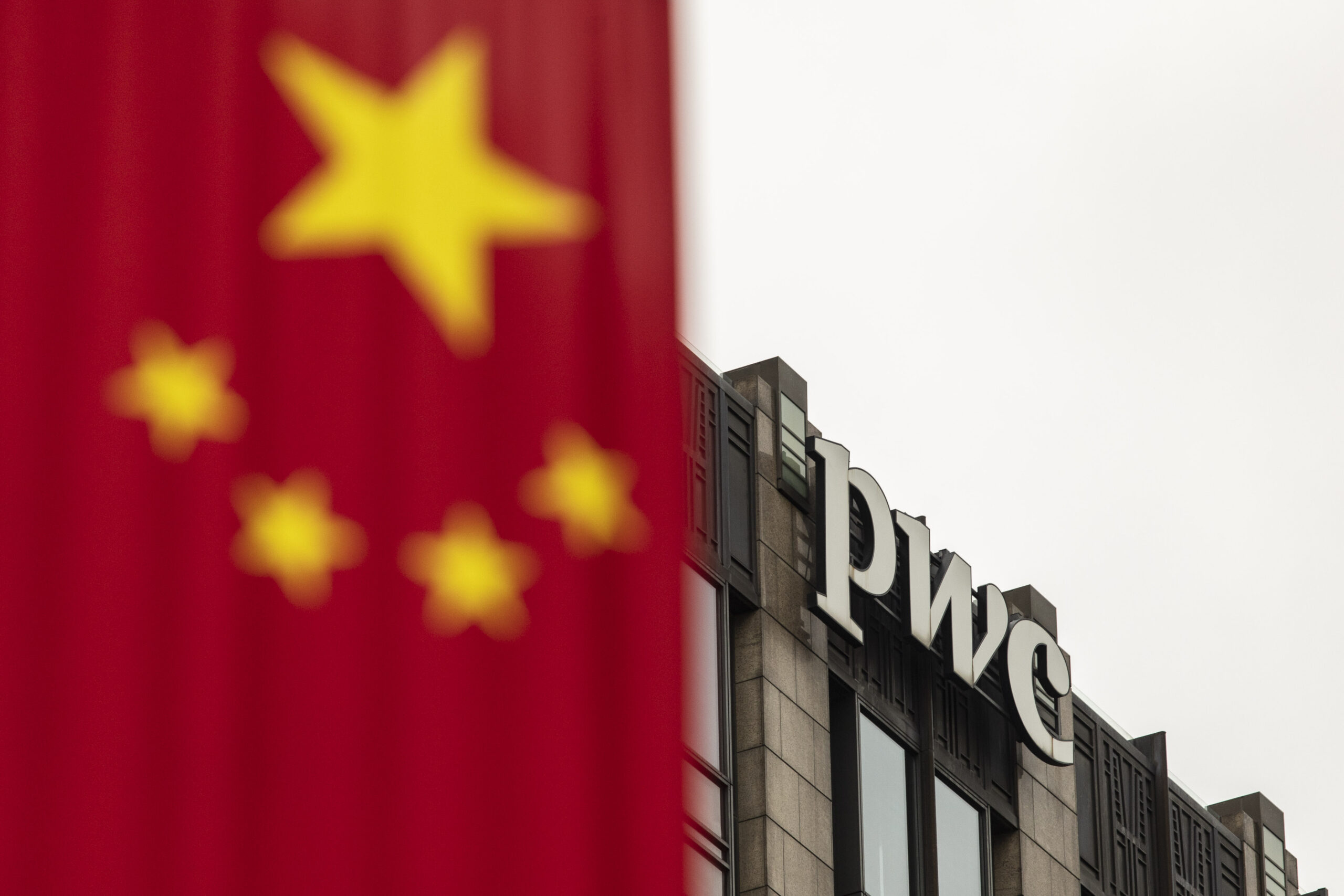
HONG KONG — In a pivotal legal development that could reshape accountability standards for the Big Four accounting networks worldwide, a Hong Kong court has declined to dismiss PricewaterhouseCoopers International Ltd. (PwCIL) from a multi-billion-dollar lawsuit. The high-stakes legal action, spearheaded by liquidators of the collapsed property titan China Evergrande Group, seeks to hold the global network accountable alongside its regional member firms for alleged audit failures.
The decision, handed down on Wednesday by Deputy High Court Judge Patrick Fung, deals a significant blow to the global auditing giant’s defense strategy. By ruling that PwCIL must remain a defendant in the proceedings, the court signaled that international umbrella entities may no longer be able to easily insulate themselves from the liability of local affiliates in high-profile corporate fraud and negligence cases.
The overarching lawsuit targets a staggering 57 billion yuan ($8.5 billion) in damages—representing one of the largest corporate civil claims in Hong Kong’s history. Of that total, roughly 38 billion yuan is being pursued jointly against PwCIL, its mainland Chinese affiliate, and its Hong Kong branch, with an additional 19 billion yuan targeted exclusively at the regional entities.
The Core Ruling and Immediate Implications
The central battleground of Wednesday’s judgment revolved around whether PwC International—the coordinating umbrella entity for the worldwide PwC network—had any direct legal responsibility or proximity to the audits performed on China Evergrande, the poster child for China’s devastating real estate debt crisis.
PwCIL had petitioned the court to be struck from the lawsuit, arguing that it operates strictly as a administrative network coordinator, has never provided professional services to Evergrande, and maintained no direct corporate relationship with the developer.
However, Deputy High Court Judge Fung dismissed these assertions at this stage of litigation, ruling that the evidentiary material submitted by PwCIL to justify its exit was "inadequate and unsatisfactory." Fung emphasized that because the full factual matrix of the case remains obscured and heavily contested, it is premature to sever the global entity from the proceedings. A comprehensive examination of internal network documents, governance structures, and rigorous cross-examination of witnesses will be required to determine the true nature of oversight and control.
A New Playbook for Global Liquidators
Legal analysts view the ruling as a potential watershed moment for cross-border corporate liquidations. If upheld through trial, the decision provides a blueprint—or "playbook"—for liquidators and creditors worldwide looking to pierce the corporate veil of global professional services networks. Historically, multinational accounting networks have relied on a Swiss verein or separate legal entity structure to firewall their global headquarters from the malpractice liabilities of local member firms. Wednesday’s judgment challenges the viability of that structural defense in Hong Kong courts.
Chronology of a Collapse: From Boom to Winding-Up
The journey from Evergrande’s dizzying heights as China’s top-selling developer to its current status as a cautionary liquidation tale has been relentlessly turbulent.
- The 2021 Default: Evergrande officially defaults on its offshore debt obligations, exposing a monumental financial black hole and triggering a systemic crisis across China’s property sector.
- January 2024: Following years of failed restructuring attempts and mounting creditor pressure, a Hong Kong court officially orders the winding-up of China Evergrande Group, appointing insolvency experts Edward Middleton and Tiffany Wong of Alvarez & Marsal as court-appointed liquidators.
- March 2024: Liquidators launch formal legal proceedings against PwC, filing initial claims centered on auditing work conducted for Evergrande’s 2017 financial statements and the first half of 2018. Subsequent hearings expand the scope of challenged audits to cover the crucial 2017–2020 window.
- Mid-2024 to 2026: Liquidators mount a multi-front recovery effort, initiating litigation against former management, challenging asset protection structures, and zeroing in on an aggregate 57 billion yuan in damages claims.
- Wednesday’s Ruling: Deputy High Court Judge Patrick Fung denies PwCIL’s application to exit the multi-billion-dollar lawsuit, keeping the global network tethered to the litigation.
Supporting Data and Financial Realities
The sheer scale of the Evergrande liquidation underscores the desperate stakes for international and domestic creditors attempting to recoup losses from one of the most complex corporate collapses in history.
According to court filings and updates provided by the liquidators:
- Total Claims: The lawsuit targets 57 billion yuan ($8.5 billion) in total damages for alleged negligence and misrepresentation.
- PwC-Specific Target: 38 billion yuan of that total is sought directly from PwCIL, its mainland Chinese arm, and its Hong Kong branch.
- Expanded Liabilities: The debt burden of Evergrande has ballooned far beyond initial estimates, officially reaching approximately HK$350 billion ($44.6 billion) according to court-appointed liquidators.
- Meager Recoveries: Despite exhaustive global asset-tracing efforts, liquidators report that recoveries to date have been remarkably modest, totaling only about $255 million.
- Prior Settlements: The pressure on PwC’s regional network is already profound. Earlier this year, PwC’s Hong Kong entity separately agreed to pay HK$1.3 billion in regulatory fines and financial compensation to settle parallel investigations into its flawed audits of the developer.
Official Responses and Stakeholder Positions
Reactions to Wednesday’s judicial decision highlight the starkly contrasting positions of the defense and the plaintiff’s camp as the case prepares for deeper evidentiary phases.
PwC International’s Response:
In an emailed statement to media outlets, a spokesperson for PwCIL expressed respect for the court’s time while firmly disagreeing with the outcome.
"PwCIL is the coordinating entity within the PwC network and has never provided any services to Evergrande or had any relationship with the company," the representative said. "PwCIL is confident that the claims against it have no merit. We are reviewing the Court’s decision and evaluating our legal options."
The Liquidators’ Response:
Attorneys representing the Alvarez & Marsal liquidators welcomed the court’s refusal to dismiss the global network, viewing it as a critical procedural victory. However, they maintained a measured tone regarding the road ahead:
The decision "does not determine the ultimate merits of the claims, which will be decided by the court in due course."
Broader Implications: A Multi-Front Legal War
The survival of the claims against PwCIL is just one theater in an expansive, global war of attrition being waged by Evergrande’s liquidators. The pursuit of accountability and assets involves intersecting legal battles across multiple jurisdictions:
The Fate of Founder Hui Ka Yan
Just last week, a mainland Chinese court handed down a life sentence to Evergrande founder Hui Ka Yan, alongside the total confiscation of his personal assets. Liquidators have been aggressively hunting down an estimated $7.7 billion in worldwide assets tied to Hui. However, this has created friction between offshore creditors and mainland enforcement authorities, as foreign stakeholders voice deep concern that vital assets could be swallowed entirely by domestic Chinese legal proceedings rather than distributed globally.
Shareholder Compensation and Priority Battles
Simultaneously, the Hong Kong courts are wrestling with collateral skirmishes. Hearings recently commenced regarding a liquidator challenge against a controversial HK$1 billion settlement deal designed to establish a compensation fund for Evergrande’s minority shareholders. This dispute highlights fierce competition over asset seniority in complex winding-up cases—a battle that will directly dictate the final payout percentages for institutional creditors.
The Future of Global Auditing Standards
As the case moves forward toward a full trial, the legal community will be watching closely. If PwCIL is ultimately found liable for the auditing failures of its regional affiliates under the weight of an $8.5 billion claim, the operational and insurance landscape for all Big Four accounting networks will be fundamentally transformed. International umbrella networks may be forced to overhaul their risk management, quality control enforcement, and structural firewalls to prevent localized financial catastrophes from threatening global operations.
