

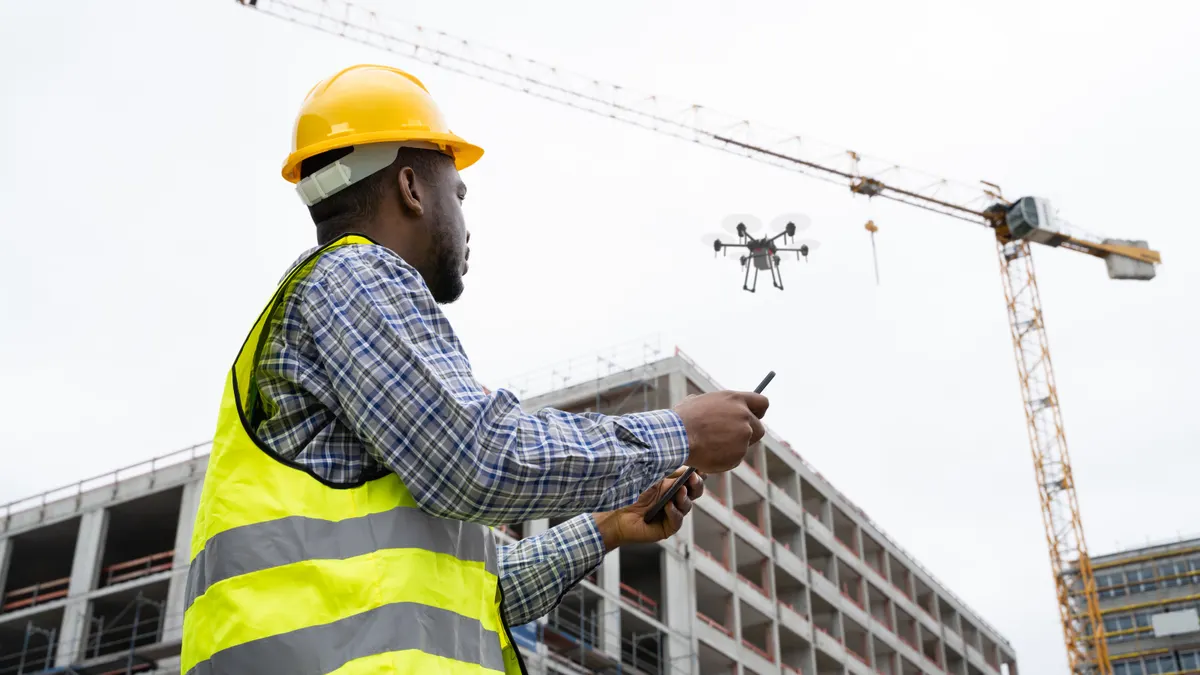
WASHINGTON — Unmanned aerial systems (UAS) have rapidly transformed from novel gadgets into indispensable jobsite centerpieces. However, a comprehensive new survey released by Associated Builders and Contractors (ABC) reveals a looming vulnerability at the heart of the construction technology boom: an almost total reliance on Chinese-manufactured hardware, specifically industry giant DJI, even as Washington erects formidable trade barriers against foreign drone imports.
According to the ABC Drone Usage Report, published on August 26, 2026, more than a third of ABC member contractors (36%) now actively deploy drones across their jobsites. Yet beneath this growing adoption lies a stark geographic concentration. Among respondents who utilize drones, a staggering 97% stated that their primary machines were built by China-based DJI. Furthermore, the second most-cited brand also originates in China, underscoring an acute market dominance that leaves North American builders heavily exposed to geopolitical shifts and trade policy volatility.
This heavy reliance on foreign hardware collides directly with aggressive new economic measures enacted by the federal government, leaving contractors, tech developers, and industry experts scrambling to assess the future of jobsite aerial intelligence.
Main Facts
The latest data from the ABC paints a vivid picture of how modern construction operations have integrated aerial data collection into their day-to-day workflows:
- Pervasive Market Share: DJI dominates the construction landscape, serving as the primary drone provider for 97% of surveyed contractors who use the technology.
- Widespread Jobsite Integration: Approximately 36% of ABC members deploy drones on their projects, indicating that aerial tech has moved well beyond early adopters into mainstream construction management.
- Primary Use Cases: Drones are primarily utilized for high-frequency logistical tasks. The survey indicates that 81% of adopting firms use drones for site progress monitoring, while 50% rely on them for structural and site inspections.
- Low Financial Barriers to Entry: Getting started with drones remains remarkably inexpensive. Roughly 60% of respondents reported hardware expenditures between $1,000 and $10,000—the lowest tier measured in the survey. Only 28% invested more than $10,000, while 10.2% declined to answer.
- Impending Regulatory Headwinds: Fresh federal tariffs threaten to disrupt supply chains, driven by new executive actions targeting imported heavy-duty and thermally equipped drones.
Chronology: From Novelty to Trade Conflict
The convergence of commercial drone adoption and international trade policy has evolved over nearly a decade, marked by escalating security concerns and economic protections:
- 2017: Federal scrutiny of commercial drone origins begins in earnest when the U.S. Army bans its soldiers from utilizing DJI drones, citing unspecified cyber vulnerabilities and data-security risks associated with foreign-manufactured hardware.
- May 2026: ABC conducts its comprehensive member survey, polling contractors on their operational reliance, hardware origins, budgetary commitments, and specific use cases for aerial technology.
- July 2026: Major construction technology consolidation signals institutional confidence in aerial workflows. Contech giant Procore announces a monumental $845 million proposal to acquire DroneDeploy, betting heavily on the long-term viability of drone data and artificial intelligence integration.
- August 13, 2026: President Donald Trump imposes a sweeping 100% tariff on specific categories of drones entering the United States, targeting defense supply chains and advanced UAS components.
- August 26, 2026: ABC officially releases its 2026 Drone Usage Report, highlighting both the immense utility of jobsite drones and the precarious concentration of Chinese-built hardware.
- September 3, 2026: The newly instituted 100% tariff officially goes into effect, altering the economic calculus for contractors seeking to replenish or expand their hardware fleets.
Supporting Data and Survey Insights
The ABC report offers a granular look at how construction firms allocate resources toward aerial programs, demonstrating that while the hardware investment is modest, the operational scope is vast.
Financial Commitments and Accessibility
The survey data highlights that implementing a basic drone program does not require massive capital expenditures. With six out of ten firms spending under $10,000 on physical units, small- to mid-sized contractors have found it easy to incorporate aerial monitoring into their standard toolkits.
However, this low entry cost has inadvertently incentivized reliance on inexpensive, highly capable imported models rather than fostering domestic manufacturing alternatives. The nearly universal preference for DJI products points to a lack of competitive domestic or allied hardware that matches the price-to-performance ratio established by Chinese manufacturers over the past decade.
Operational Utility
Contractors are not flying drones merely for promotional aerial photography or marketing reels. The data reveals deeply technical operational functions:
- Progress Monitoring (81%): General contractors use frequent aerial overflights to track earthwork, monitor subcontractor pacing, verify milestone completions, and generate transparent progress reports for owners and stakeholders.
- Inspections (50%): Roofs, facades, bridges, and other hard-to-reach structural elements are routinely evaluated via high-resolution aerial imaging, drastically reducing the safety risks and labor hours associated with traditional scaffolding and manual inspections.
Official Responses and Expert Analysis
Industry analysts and trade leaders emphasize that despite looming geopolitical and economic hurdles, the momentum behind construction technology is irreversible.

Industry observers note that major market movements—such as Procore’s proposed $845 million acquisition of DroneDeploy—demonstrate that investors and software giants view drone-captured data as foundational to modern construction management, rather than a fleeting trend.
Commenting on the survey findings, construction technology experts stress that success with drones requires far more than simply purchasing hardware. "The contractors that focus on practical applications, build the right internal capabilities and integrate drone data into their operations will be best positioned to capture that opportunity," industry analysts note.
For firms looking to navigate the current technological landscape without wasting capital, experts recommend a measured, strategic approach:
- Define Use Cases First: Before purchasing hardware, contractors must clearly identify what operational bottlenecks drones will solve (e.g., volumetric earthwork calculations, façade inspections, or site safety monitoring).
- Develop Internal Capabilities: Organizations must build robust internal frameworks covering specialized employee training, dedicated staffing, strict regulatory compliance with Federal Aviation Administration (FAA) guidelines, and seamless integration with existing project management workflows.
Implications for the Construction Sector
The intersection of overwhelming reliance on Chinese drone hardware and the implementation of harsh new tariffs creates a complex web of strategic implications for North American contractors.
Supply Chain Vulnerabilities and Tariff Pressures
The new 100% tariff enacted on September 3 applies specifically to drones with a maximum takeoff weight exceeding 55 pounds, as well as systems equipped with advanced thermal imaging capabilities. While lighter, consumer- and commercial-grade DJI models frequently used on typical building sites may escape the immediate letter of this specific tariff, the broader regulatory trend signals an increasingly hostile environment for Chinese-built UAS technology in the U.S. market.

Contractors accustomed to low-cost hardware replacements may soon face soaring equipment costs, forced to either absorb steep tariff markups or seek alternative hardware manufacturers based in the United States, Europe, or allied Asian nations—alternatives that currently lag behind in market availability and price competitiveness.
National Security and Data Privacy Concerns
Beyond financial costs, the concentration of foreign-built hardware on critical infrastructure projects raises persistent cybersecurity and data governance questions. Jobsites often capture sensitive aerial data regarding critical utilities, transportation corridors, industrial plants, and proprietary commercial designs. As federal scrutiny deepens, contractors executing public-sector, defense, or high-security private projects may face mandatory bans or compliance mandates that prohibit the use of DJI and other Chinese-manufactured systems entirely.
The Shift Toward Software and Data Ecosystems
As hardware procurement becomes politically and economically fraught, the true value in construction drone programs is shifting rapidly toward software, analytics, and data integration. The willingness of major software players to invest hundreds of millions of dollars into aerial data platforms suggests that the future of construction tech lies in what is done with the data rather than which physical shell captures it.
Contractors who successfully decouple their operational workflows from specific hardware brands—building agile data pipelines that can ingest imagery from any compliant UAS—will be best equipped to weather future trade wars, regulatory shifts, and supply chain disruptions.
Conclusion
The ABC’s 2026 Drone Usage Report paints a dual portrait of modern construction: an industry rapidly modernizing through accessible aerial technology, yet structurally dependent on a single foreign supplier now caught in the crosshairs of aggressive trade protectionism. For general contractors and specialty trade contractors alike, the mandate moving forward is clear: build rigorous internal data strategies, diversify technological dependencies, and prepare for an era where operating a jobsite drone requires navigating complex geopolitical waters as carefully as airspace regulations.
