

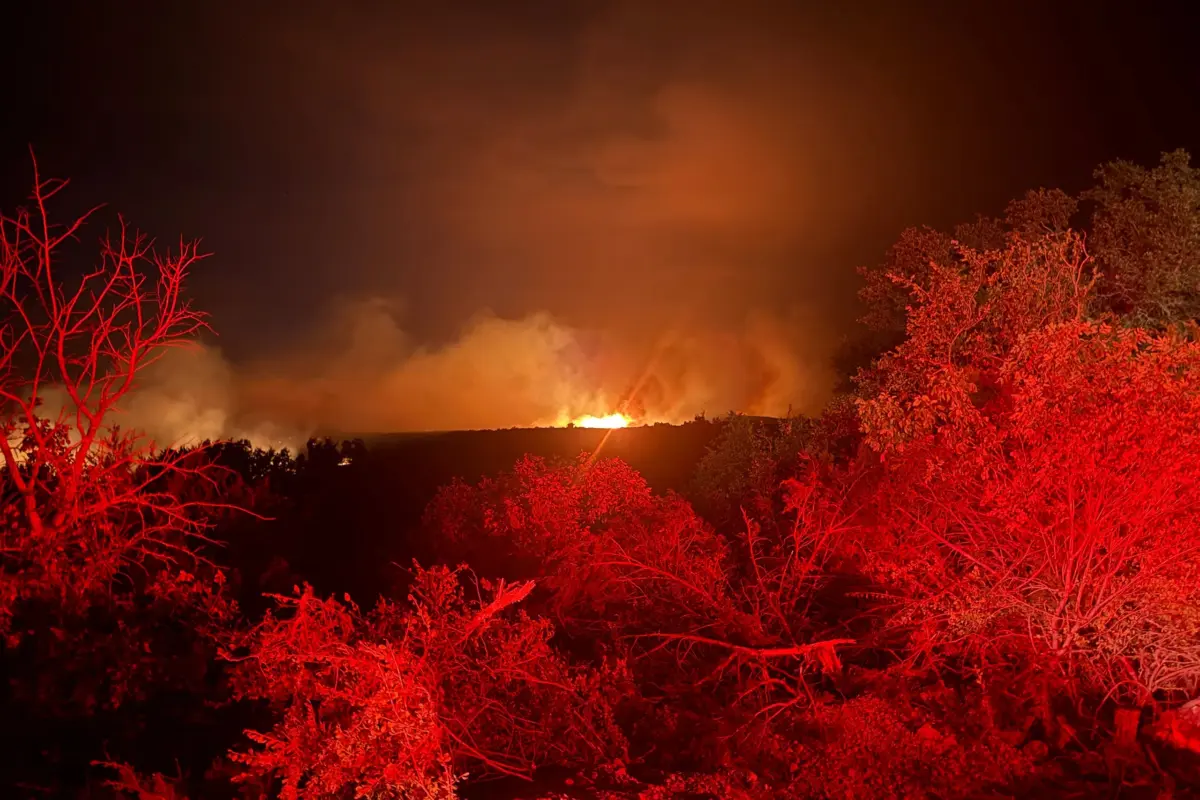
PALO PINTO COUNTY, Texas — Driven by relentless winds, extreme drought, and punishing late-summer temperatures, the Ross Fire has carved a path of devastation across North Texas. Igniting in the dry ranchlands of Palo Pinto County, the aggressive blaze has rapidly expanded into one of the largest and most destructive wildfires in the recorded history of the Dallas-Fort Worth metroplex region.
In just three days, the inferno scorched an astonishing 85,000 acres across Palo Pinto and Jack counties, forcing evacuations, choking North Texas skies with thick, orange smoke, and threatening historic landmarks. As an exhausted coalition of local, regional, and state firefighting crews works tirelessly to construct containment lines, the Ross Fire has laid bare the extreme vulnerability of Texas ecosystems during periods of prolonged heatwaves.
While cooler weather patterns and isolated showers offer a glimmer of hope to exhausted first responders, the incident underscores a worsening crisis across the Lone Star State, where dozens of active fires continue to challenge emergency management infrastructure.
Main Facts: Scale, Scope, and Destruction
The numbers associated with the Ross Fire paint a grim picture of rapid environmental devastation. According to the Texas A&M Forest Service, the fire has consumed approximately 85,000 acres of dense brush, dry grasses, and ranchland since breaking out.
As of Friday morning, officials reported that the blaze is 26% contained. In firefighting terminology, containment refers to the physical percentage of the fire’s perimeter surrounded by a constructed line—such as a cleared firebreak, scraped earth, or natural barrier—designed to prevent further lateral spread.
Despite the immense scale of the fire and reports of extreme fire behavior—including entire stands of trees torching simultaneously in massive group fires—miraculously, no injuries or fatalities have been reported among civilians or emergency personnel.
However, the physical toll on the region is undeniable. The fire has inflicted structural damage on several properties, most notably impacting Worth Ranch, an 800-acre historic Scouting America camp situated along the banks of the Brazos River. While assessments are ongoing, the full extent of the architectural and environmental damage to the legendary campgrounds remains unknown.
The Ross Fire now holds the dubious distinction of being the second-largest wildfire in the recorded history of the Dallas-Fort Worth region, according to data from the National Weather Service’s Fort Worth office. It trails only the infamous Possum Kingdom Complex Fire, which charred a staggering 126,734 acres in April 2011.
Chronology of a Catastrophe: Day-by-Day Progression
Monday: Ignition and Rapid Expansion
The Ross Fire began on Monday near Palo Pinto under ominous environmental conditions. Fanned by brisk, unpredictable winds, the spark caught hold in bone-dry ranchland. With fuel moisture levels critically low due to relentless regional heat, the fire did not merely burn—it exploded. In its opening hours, the blaze consumed thousands of acres with terrifying velocity, outpacing initial local response efforts and leaping across natural barriers.
Tuesday: The Doubling Effect and Emergency Declarations
By Tuesday, the situation had escalated into a full-scale crisis. Officials reported that the fire had doubled in size in a matter of hours, exploding to approximately 50,000 acres. The sheer volume of smoke and the rapid northward migration of the flames prompted mandatory evacuation orders for portions of Jack County, while Palo Pinto County issued broad voluntary evacuation advisories.
Recognizing the severity of the threat, Texas Governor Greg Abbott announced on Tuesday that the Federal Emergency Management Agency (FEMA) had swiftly approved a Fire Management Assistance Grant (FMAG). This critical federal authorization provided immediate financial relief and cost-reimbursement mechanisms to local agencies battling the blaze.
Wednesday to Thursday: Crossing the 80,000-Acre Threshold
By Wednesday, damage assessments pushed the acreage estimate past the 80,000-acre mark. Fire behavior remained volatile. Small rural volunteer fire departments, working alongside municipal crews from the Dallas-Fort Worth metroplex and heavy assets from the Texas A&M Forest Service, engaged in grueling, round-the-clock defensive operations.
Evacuation orders in Jack County and advisory notices in Palo Pinto County were eventually lifted as shifting winds and strategic containment efforts reduced immediate threats to residential populations. To support displaced citizens, emergency managers established a primary evacuation center at the Jacksboro Twin Lakes Recreation Center, alongside specialized livestock relocation facilities designed to house cattle, horses, and other farm animals evacuated from path-of-fire ranches.
Friday: Containment and Assessment
By Friday morning, aggressive aerial drops and ground bulldozers helped establish a 26% perimeter line around the fire. While the immediate threat to human life diminished, crews transitioned into a protracted phase of mop-up operations, extinguishing lingering hot spots within the 85,000-acre scar.
Supporting Data: The Broader Texas Wildfire Crisis
The Ross Fire is not an isolated incident; rather, it is the most prominent manifestation of a statewide wildfire crisis driven by extreme weather. According to the Texas A&M Forest Service, the Ross Fire is burning concurrently with roughly 80 active wildfires across Texas, which collectively have scorched more than 90,700 acres. While many of the smaller fires have achieved full containment, their sheer volume places unprecedented strain on state firefighting resources.
Geographically, the Ross Fire has severely disrupted local infrastructure. Local authorities in Palo Pinto County were forced to enact sweeping road closures, shutting down critical arteries including segments of U.S. 180 and Texas State Highway 254. These closures remained in place for days to allow heavy brush trucks, water tenders, and command vehicles unhindered access to the fire zones.
Furthermore, the environmental fallout of the fire extended far beyond the immediate burn zone. Prevailing winds carried massive plumes of grey and amber smoke eastward and southeastward across North Texas. The resulting atmospheric haze coated the Dallas-Fort Worth metroplex in eerie orange skies.
State environmental regulators issued air quality warnings, advising children, older adults, and individuals with chronic respiratory ailments—such as asthma or emphysema—to remain indoors and avoid strenuous outdoor physical activity as particulate matter hung heavily in the air.
Official Responses and Strategic Priorities
Combating a wildfire of this magnitude requires a complex, multi-agency cooperative framework. The response team deployed to the Ross Fire represents a diverse coalition, uniting small rural departments closest to the point of origin with sophisticated urban strike teams from the Dallas-Fort Worth metroplex and elite state foresters.
According to statements released by the Texas A&M Forest Service, the overarching strategic priorities for the unified command have remained constant:
- Life Safety: Protecting human life above all else, ensuring timely evacuations, and safeguarding first responders.
- Community Defense: Defending residential structures, rural homesteads, and critical public infrastructure from encroaching flame fronts.
- Forward Progress Mitigation: Slowing the forward momentum of the main fire body through direct and indirect attack methods.
- Line Construction: Building durable containment lines designed to hold the fire in place until complete suppression can be achieved.
Governor Abbott’s administration praised the swift deployment of federal and state assets, noting that the FEMA Fire Management Assistance Grant was vital in easing the financial burden on local jurisdictions whose emergency funds are routinely tested by prolonged disaster seasons.
Implications: Climate Pressures and Future Preparedness
As the smoke slowly clears over Palo Pinto and Jack counties, the Ross Fire serves as a sobering reminder of the compounding risks facing modern Texas. The intersection of severe agricultural drought, intense summer heatwaves touching the triple-digit mark, and expanding rural-urban interfaces creates a volatile recipe for catastrophic wildfires.
Meteorological forecasts for the Fort Worth area offered a temporary reprieve, with temperatures hovering near 100 degrees accompanied by isolated showers and lower overall fire weather indices. However, local emergency management officials emphasize that the danger has not passed. The ecological scars left by the Ross Fire—and the hundreds of thousands of acres burned statewide—signal an urgent need for continued vigilance, aggressive brush management, and robust funding for rural volunteer fire departments that serve as the first line of defense for Texas communities.
For the ranching families, historic preservationists, and local residents of Palo Pinto and Jack counties, recovery will be a long road. Yet, the resilience displayed by the unified firefighting coalition and the community at large stands as a testament to the enduring spirit of North Texas in the face of natural disaster.
