

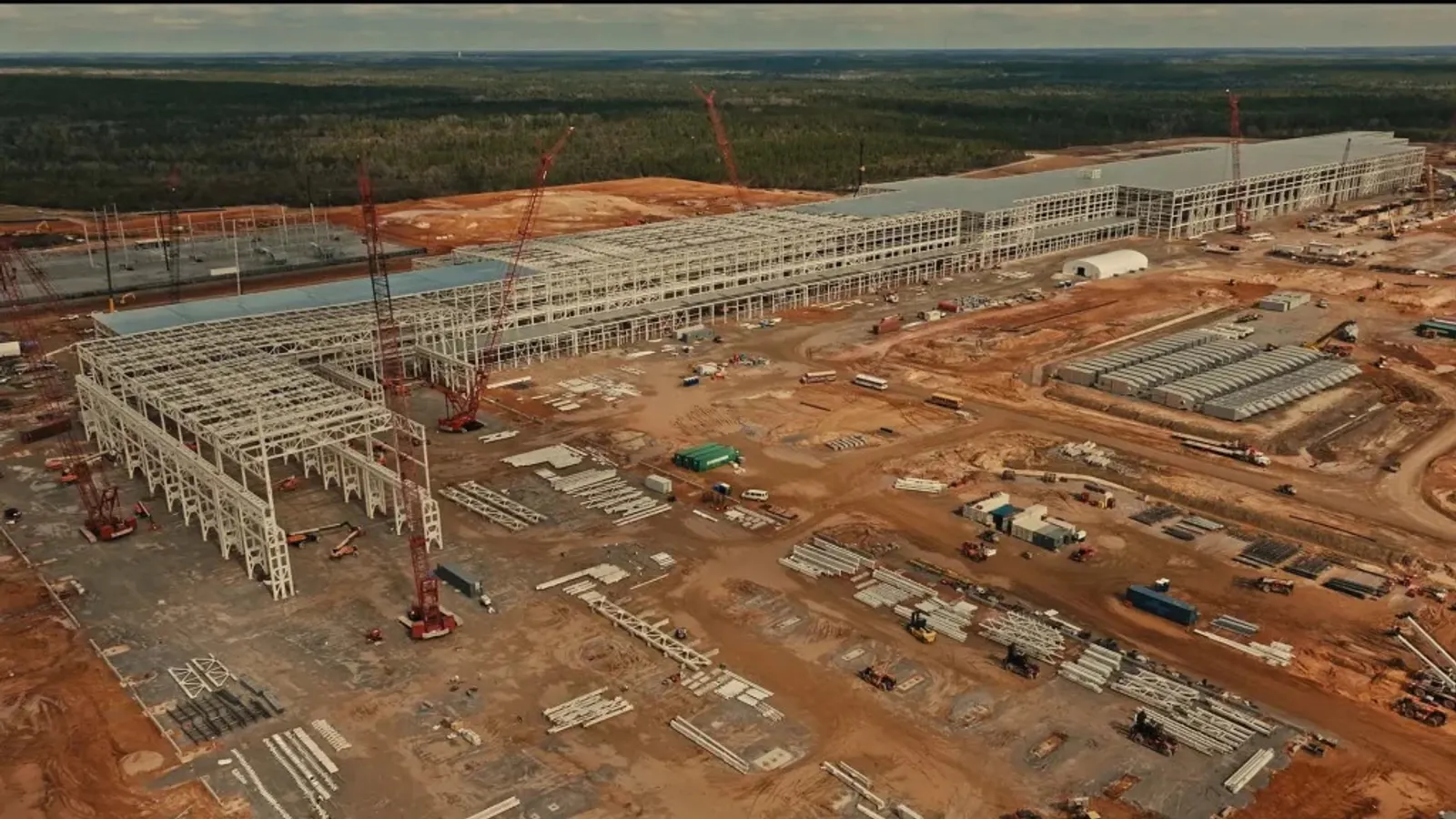
BAY MINETTE, Ala. — In what marks one of the most significant industrial developments in the United States in decades, aluminum manufacturer Novelis has announced that its monumental recycling and rolling plant in Bay Minette, Alabama, is on track to begin comprehensive commissioning phases this year.
The sprawling facility, which represents a staggering $5 billion capital investment, is poised to reshape the domestic aluminum supply chain, bolster local and regional economies, and set a new benchmark for sustainable, closed-loop manufacturing in North America. Once fully operational, the plant will stand as the first fully integrated aluminum recycling and rolling facility built from the ground up in the United States in over 40 years.
Main Facts
The Bay Minette project is a monumental engineering and industrial undertaking designed to meet surging domestic demand for sustainable, high-grade aluminum.
- Project Scope and Capacity: Upon completion, the facility will boast a massive production capacity of 600,000 metric tons of finished aluminum goods annually.
- The Investment: Originally announced in 2022 with an estimated price tag of $2.5 billion, the project’s total investment has since doubled to $5 billion, reflecting expanded operational goals, inflationary pressures, and advanced technological integrations.
- Strategic Importance: The plant will primarily serve the automotive, beverage packaging, and specialty products markets, providing a reliable, locally sourced supply of low-carbon aluminum.
- Construction and Engineering Partners: Engineering, procurement, and construction management (EPCM) services are being spearheaded by global engineering and construction firm Fluor, which has coordinated thousands of skilled tradespeople on-site.
- Current Status: Following rapid construction milestones through 2025—including the installation of critical heavy machinery—Novelis officially initiated the commissioning phase for the plant’s cold mill in March 2026, with broader plant-wide commissioning scheduled to ramp up throughout the remainder of the year.
Chronology of a Mega-Project: From Groundbreaking to Commissioning
The path to bringing the Bay Minette facility to life has been defined by rapid execution, massive logistical coordination, and historic engineering feats.
2022: Groundbreaking and Initial Vision
Novelis officially broke ground on the Bay Minette facility in 2022, signaling a major vote of confidence in American manufacturing and green infrastructure. At the time of the groundbreaking, company executives projected a $2.5 billion investment aimed at creating a state-of-the-art facility that would merge recycling and rolling capabilities under one roof. The vision was clear: build a plant capable of turning scrap metal into high-value aluminum sheets with minimal carbon footprint.
2023–2024: Mass Excavation and Foundation Work
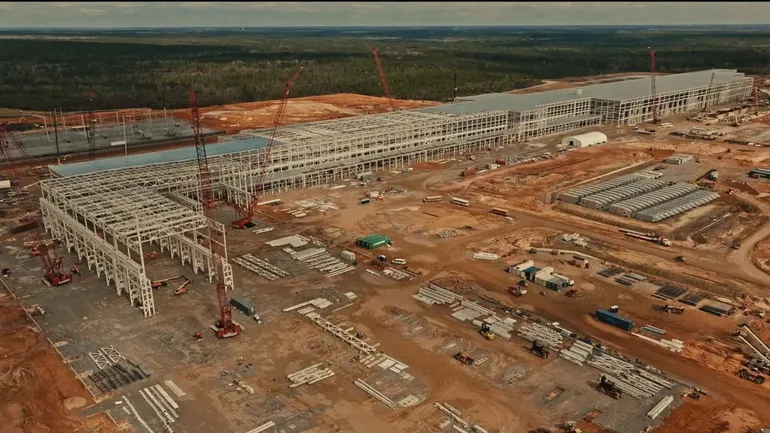
The early construction phases required immense civil engineering work. Millions of cubic yards of earth were moved, and deep foundations were laid to support the immense weight of the industrial machinery required for a modern rolling mill. Supply chain stabilization and workforce mobilization became top priorities as Fluor and Novelis scaled up operations on the sprawling Alabama site.
2025: Reaching Major Milestones
Construction activity peaked in 2025, marked by several high-profile engineering achievements. During the second quarter of 2025, construction crews completed one of the most technically demanding phases of the project: the installation of the plant’s colossal hot mill housings. This milestone required specialized heavy-lift cranes and meticulous precision during excavation and foundation alignment. At the height of construction activity in mid-2025, approximately 1,000 workers were actively deployed on the site daily.
Early 2026: The Shift to Commissioning
As structural and mechanical work drew to a close in targeted zones, the project entered its next evolutionary phase. According to Novelis’ fourth-quarter and full fiscal year 2026 financial and operational reports, the company officially commenced commissioning of the cold mill in March 2026. This transition from construction to testing and validation marks the beginning of the end for the greenfield phase, with broader facility commissioning slated to unfold across the remainder of the year.
Supporting Data and Technical Specifications
The sheer scale of the Bay Minette plant places it in a league of its own within the contemporary industrial landscape. To understand the magnitude of the project, industry analysts look closely at the quantitative data driving its design and output:
- $5 Billion Capital Outlay: The doubling of the initial budget highlights Novelis’ long-term commitment to expanding its North American footprint. The increased capital expenditure has allowed for cutting-edge automation, advanced environmental controls, and enhanced recycling infrastructure.
- 600,000 Metric Tons: This annual output represents a massive injection of domestic supply into markets that have historically relied on imported metals or fragmented recycling supply chains.
- 40-Year Industry Gap: Prior to Bay Minette, the U.S. had not seen a fully integrated recycling and rolling facility built in over four decades. Most existing facilities have undergone incremental expansions or modernizations rather than ground-up development.
- Workforce Scale: At peak construction, the site supported roughly 1,000 workers, providing a substantial economic boost to Baldwin County and the surrounding Alabama communities through direct employment, secondary spending, and localized supply contracts.
- Cold Mill Commissioning: The successful initiation of cold mill testing in March 2026 serves as the primary technical gateway, ensuring that the precision equipment required to reduce aluminum thickness and achieve exacting surface finishes functions properly under operational parameters.
Official Responses and Industry Perspectives
Leadership from both Novelis and its primary project partners have consistently emphasized the transformational nature of the Bay Minette development.

In corporate statements and financial briefings, Novelis executives have framed the plant as a cornerstone of the company’s global sustainability strategy. By integrating recycling directly with rolling operations, the facility will significantly reduce energy consumption and greenhouse gas emissions compared to primary aluminum production. The closed-loop model allows Novelis to process customer scrap, melt it, and roll it back into high-quality sheets with minimal waste.
Fluor, overseeing the complex EPCM scope, has repeatedly praised the collaboration between local contractors, skilled labor unions, and Novelis management. The execution of heavy lifts—such as the hot mill housings in 2025—demonstrated advanced project management capabilities amidst a volatile global supply chain environment.
Economic development officials in Alabama have also lauded the project, noting that the multi-billion-dollar investment solidifies the state’s reputation as a premier destination for advanced manufacturing, aerospace, and heavy industrial engineering.
Strategic Implications for the Aluminum Industry and Economy
The activation of the Bay Minette plant carries profound implications for multiple sectors of the North American economy:
1. Automotive Sector Transformation
Automakers are under increasing regulatory and consumer pressure to reduce the lifecycle carbon footprint of their vehicles. Aluminum plays a critical role in lightweighting, which improves fuel efficiency and extends the range of electric vehicles (EVs). The Bay Minette plant will provide automakers with a secure, domestic source of certified low-carbon aluminum, insulating supply chains from geopolitical disruptions and international shipping bottlenecks.

2. Beverage Can and Packaging Sustainability
The beverage packaging industry relies heavily on aluminum cans as a infinitely recyclable alternative to plastics. With the massive recycling capacity built into the Bay Minette facility, Novelis will be able to process billions of used beverage cans annually, reinforcing the circular economy and helping consumer brands meet ambitious recycled-content targets.
3. Reshoring and Supply Chain Resilience
The COVID-19 pandemic and subsequent global supply chain disruptions exposed the vulnerabilities of relying on offshore manufacturing and extended logistics networks. By establishing a world-class, fully integrated recycling and rolling hub on U.S. soil, Novelis is playing a leading role in the broader movement toward industrial reshoring and economic self-reliance.
4. Environmental Impact and Decarbonization
Producing secondary aluminum from recycled scrap requires roughly 95% less energy than producing primary aluminum from bauxite ore, resulting in a dramatic reduction in carbon emissions. The sheer scale of the Bay Minette plant—processing hundreds of thousands of metric tons—means its operation will directly contribute to significant corporate and national carbon-reduction goals.
Looking Ahead
As Novelis moves deeper into the commissioning phase throughout 2026, all eyes in the manufacturing and construction sectors will be fixed on Bay Minette. The successful transition from a massive construction site to a fully functioning production facility will not only validate the $5 billion investment but also serve as a blueprint for future heavy industrial projects in the United States. With the cold mill already undergoing active testing and overall plant commissioning underway, the dawn of a new era for American aluminum manufacturing is officially in sight.
