

By Industry News Desk
Published: October 2026
Main Facts
Long hours, grueling physical labor, and an unquestioned culture of burnout have historically served as the traditional badges of honor in the construction sector. However, as Generation Z enters the workforce, they are opting out of playing by these legacy rules.
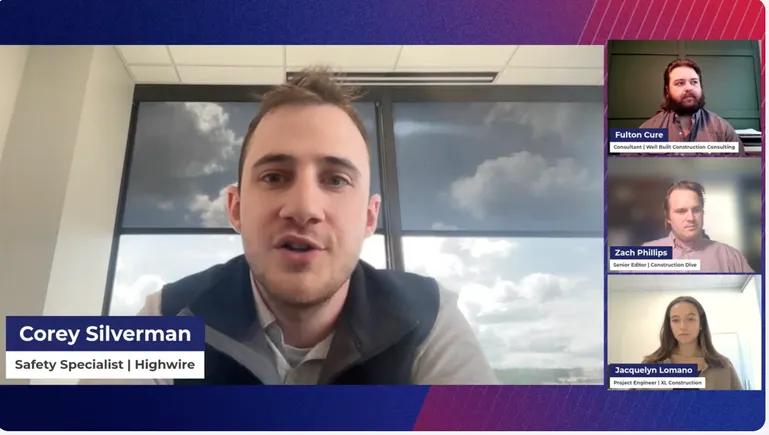
Industry experts addressed this paradigm shift during the virtual panel discussion titled "Courting Construction: Recruiting Talent," moderated by Construction Dive Senior Editor Zach Phillips. The consensus among the panel was clear: while Generation Z sees immense potential and room for innovation in the built environment, contractors must drastically adapt their recruitment and retention strategies. This operational pivot has become a paramount necessity as the industry braces for a sweeping generational handoff, driven by widespread impending retirements among longtime executives, project managers, and seasoned tradespeople.
To secure this emerging talent pool, companies are learning that they must sell more than just a paycheck; they need to market career fulfillment, rapid upward mobility, and technological integration. Conversely, retaining these young professionals requires a fundamental cultural shift toward work-life balance, mutual mentorship, and operational efficiency over mindless grinding.
Chronology
- June 2026: Recent graduates step into the job market. Amid widespread concerns regarding artificial intelligence displacing traditional white-collar roles—such as structural engineering and data analysis—construction management graduates experience a starkly different reality, stepping into an industry actively hungry for human capital.
- Late Summer 2026: Jacquelyn Lomano secures and begins her role as a project engineer at Milpitas, California-based XL Construction, just weeks before participating in the industry panel. Her transition highlights the immediate demand for specialized degree holders in the field.
- Wednesday, Virtual Event: Construction Dive hosts the "Courting Construction" virtual event. Industry panelists—including Fulton Cure of Well Built Consulting, Corey Silverman of Highwire, and Jacquelyn Lomano of XL Construction—convene to discuss the convergence of generational philosophies in the modern workplace.
- The Next Decade (2026–2036): Industry experts project a massive wave of retirements as senior leaders who have spent 15, 20, or 30 years at their respective firms step down, creating an unprecedented vacuum at the top of the organizational ladder.
Supporting Data & Economic Landscape
The construction industry currently finds itself navigating a precarious economic balancing act. On one side sits a persistent labor shortage, marked by thousands of open job positions across the United States. On the other side sits a wave of demographic shifts that will reshape corporate leadership over the next ten to fifteen years.
- The Generational Wealth and Leadership Gap: According to insights shared by Fulton Cure, a consultant at Well Built Consulting based in Baltimore, the impending retirement of senior leaders creates a fast-track opportunity for young workers to climb the corporate ladder. Firms that successfully onboard Gen Z today will have trained replacements ready when legacy leaders exit over the next decade.
- Higher Education Disillusionment: Traditional four-year college degrees are increasingly viewed by Gen Z with skepticism. Escalating student loan debt, coupled with diminishing employment prospects and the existential threat of AI automation in traditional office jobs, has led many young adults to reconsider alternative career paths.
- The Construction Advantage: Unlike fields experiencing contraction or saturation due to technological automation, construction offers tangible, irreplaceable physical value. Industry insiders report that young engineering and construction management graduates are finding that boots-on-the-ground execution remains inherently insulated from pure software-based replacement.
Official Responses and Expert Perspectives
The panel discussion brought together a diverse cross-section of industry voices—ranging from seasoned consultants to professionals who just weeks prior were walking across university graduation stages. Their insights shed light on the friction points and synergy opportunities between older builders and incoming youth.
Selling the Career and Tangible Fulfillment
Fulton Cure emphasized that firms must capitalize on the unique gratification construction offers: the ability to physically see the fruits of one’s labor.
"We’re seeing it all over the place that there are so many companies that have these amazing senior leaders who have been there for 15, 20, 30 years," Cure noted. "Those people are retiring in the next 10 to 15 years, and somebody’s going to have to fill their spot."
Cure illustrated this point personally, sharing how driving past an apartment complex with his daughter allows him to proudly state, "Dad built those apartments right there."
Corey Silverman, a safety specialist at Burlington, Massachusetts-based software development firm Highwire, echoed this sentiment regarding job satisfaction. Reflecting on his own experiences on job sites, Silverman pointed to project milestones like topping-out parties as pivotal moments of pride.
"I know that when I was part of a team that finished a project or we had a topping out party, it was just really cool to be able to say, ‘Wow, I was a part of that massive building being built,’" Silverman said.
The AI Threat vs. The Jobsite Reality
Jacquelyn Lomano, who graduated from Cal Poly San Luis Obispo in June with a degree in construction management, offered a perspective from the front lines of recent collegiate job searches. Having started her role at XL Construction just weeks before the panel, Lomano shared how professors warned students in structural engineering and related fields about impending displacement by artificial intelligence.
"Coming out of college, when people were looking for their jobs, I had teachers tell me when I was studying structural engineering, that AI would take my job," Lomano explained. "You could look around, it’s been happening to a lot of people, and a lot of my peers couldn’t find jobs right when they graduated."
By contrast, Lomano found that the construction sector stood out by offering immediate stability and a welcoming stance toward new talent. "I think that’s where the construction industry comes in at a different angle, where they need people, they want people to be a part of this industry," she said. "We’re in a good place in the economy right now, and I would advertise that as the number one thing."
Redefining the "Badge of Honor"
Attracting Gen Z is only the opening salvo; keeping them requires a total reimagining of workplace culture. Silverman pointed out that younger workers place a premium on work-life balance—a concept historically foreign to the construction sector’s 60-hour-workweek culture.
However, Cure was quick to clarify that Gen Z’s pursuit of balance is not synonymous with laziness or an aversion to manual labor.
"We’re not anti hard work. We’re not anti doing the thing that has to be done," Cure asserted. "We’re just also very in tune to say there’s got to be a better way to do it."
Implications for the Industry
The arrival of Generation Z in construction forces a vital internal audit among general contractors, subcontractors, and executive boards. To navigate this cultural transition successfully, the industry must focus on two major areas: intergenerational knowledge transfer and technological integration.
1. The Humility Requirement in Knowledge Transfer
For decades of wisdom to successfully pass from retiring baby boomers and Gen Xers to incoming Gen Z professionals, both sides must humble themselves.
Silverman reflected on his early career anxiety, noting that he initially felt immense pressure to conceal his inexperience to avoid looking incompetent. The breakthrough occurred only when he actively leaned into his status as a learner.
"It was when I started to say, ‘I don’t know what this is, can you teach me this?’ Or ask the superintendent, ‘Can I come on this walk with you and you tell me what these things are?’ That’s when I really started to learn," Silverman shared. "No one is expecting you to come out of college with all that knowledge."
Lomano experienced a similar realization during her initial weeks at XL Construction. Despite possessing an academic degree in construction management, she quickly discovered the vast chasm between classroom theory and on-site reality. Fortunately, mentorship played a crucial role in managing her expectations.
"My mentor told me maybe a year or couple of months, but eventually, as time goes on, you’ll get it," Lomano recounted.
2. Operational Modernization and Efficiency
Gen Z employees are digital natives who have grown up with automation, instant communication, and streamlined software ecosystems. When they enter job sites reliant on paper blueprints, outdated scheduling methods, and redundant administrative processes, friction is inevitable.
To retain these workers, construction firms must invest in modern construction technology—such as Building Information Modeling (BIM), drone site-mapping, advanced project management software, and mobile field-reporting tools. By empowering young workers to optimize workflows, firms can satisfy Gen Z’s demand for smart, efficient labor without sacrificing project deadlines.
Conclusion
The collision of traditional construction methods with Gen Z’s forward-thinking ethos is not a crisis—it is an evolutionary necessity. As the industry faces the retirement of its veteran workforce, embracing young professionals who value both hard work and smart systems will determine which construction firms thrive over the next generation and which ones get left behind in the mortar.
