

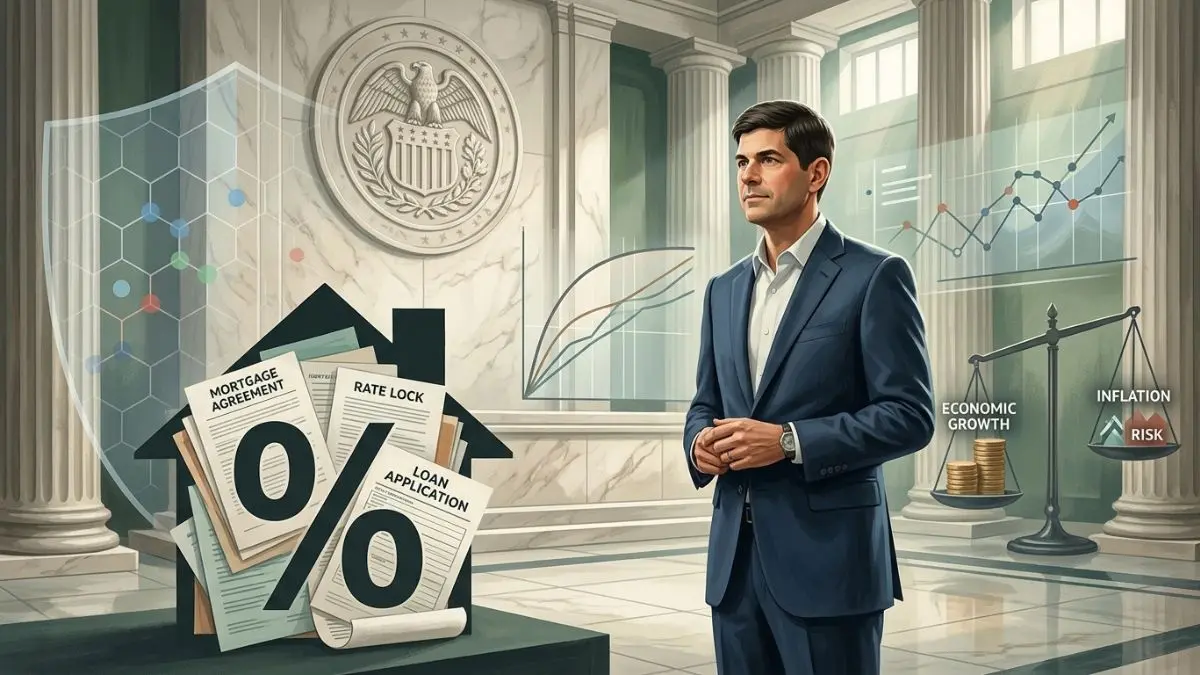
WASHINGTON — In the high-stakes theater of central banking, few addresses carry the psychological weight of the annual Economic Policy Symposium in Jackson Hole, Wyoming. For months, financial markets, housing sector analysts, and policymakers have anxiously awaited the debut Jackson Hole address of Federal Reserve Chair Kevin Warsh.
The speech, delivered under the shadow of persistent inflation, escalating geopolitical flashpoints, and a shifting trade landscape, immediately sparked intense debate across Wall Street. Yet, as analysts parse every syllable uttered by the central bank chief, market veterans argue that the obsession with Warsh’s personal policy leaning misses a broader, more uncomfortable truth: the trajectory of American interest rates—and by extension, the housing market—is being dictated less by the internal politics of the Eccles Building and far more by external macroeconomic forces currently resting in the hands of the executive branch.
Main Facts: The Jackson Hole Turning Point
The central takeaway from Warsh’s address is clear: the Federal Reserve Chair has signaled a conditional willingness to support further monetary tightening. Specifically, Warsh indicated that if inflation data fails to show meaningful, sustained improvement while the domestic labor market maintains its current stability, he will vote in favor of a benchmark interest rate hike.
This stance bridges a crucial gap between the Fed’s traditional consensus-seekers and its vocal bloc of inflation hawks. For the housing market, which has weathered a prolonged period of affordability crises driven by elevated borrowing costs, the announcement is a sobering reminder that monetary relief is far from guaranteed.
Despite the hawkish undertones, the immediate market reaction has been muted. Long-term bond yields have largely priced in the probability of future rate hikes, with the benchmark 10-year Treasury yield hovering at 4.72%. Rather than panicking over every utterance from the Fed Chair, financial experts are urging stakeholders to shift their focus away from personalities and toward the three foundational pillars that will actually dictate where yields and mortgage rates head next: the conflict in the Middle East, the escalating trade war, and the resilience of the American labor market.
Chronology: The Path to Warsh’s Pivot
To understand how the Federal Reserve arrived at this juncture, it is necessary to trace the sequence of events that transformed the central bank’s policy posture over the past year:
- Late Last Year: The Federal Reserve observed a steady softening in domestic labor data. Anticipating a cooling economy, the central bank laid the groundwork to let trade-war-induced inflation pass through the system while projecting two to three rate cuts for the upcoming year.
- Early This Year: Inflation metrics unexpectedly worsened, outpacing the cooling effects of a softening labor market. This shift forced the Fed’s internal hawk faction to abandon their patience and demand a tighter monetary stance.
- Recent Months: Geopolitical tensions flared, notably with the outbreak and persistence of the conflict involving Iran. Energy markets reacted with volatility, driving up oil and diesel prices and handing inflation hawks a primary justification for maintaining a restrictive policy rate. Concurrently, new trade friction—most notably a resurgent trade dispute with Canada—further complicated the pricing environment for retail goods.
- Today: Fed Chair Kevin Warsh delivers his inaugural Jackson Hole address, formally aligning his near-term voting posture with the prevailing hawkish consensus should inflation data stall further.
Supporting Data: Tariffs, Yields, and the Path of Inflation
The debate over monetary policy is fundamentally anchored in empirical data regarding consumer behavior and market pricing. A critical piece of this puzzle was recently published by the Federal Reserve itself in a comprehensive economic paper analyzing the impacts of the 2025 tariffs on U.S. household spending.
The Tariff Transmission Mechanism
The Fed’s research analyzed the transaction data of 125,000 American households to measure how sweeping tariff policies rippled through consumer wallets. The findings starkly illustrate the counterproductive nature of protectionist trade measures on consumer purchasing power:
- Price Pass-Through: Tariffs passed through at a rate of 15% to 20% directly into retail prices.
- Good-Level Inflation: This push raised the prices of affected consumer goods by 1% to 2%.
- The Demand Destruction Effect: Most critically, households responded to these price pressures by aggressively cutting their overall spending by 4%—a contraction three to four times larger than the initial price increase itself.
Despite this localized demand destruction, broader Personal Consumption Expenditures (PCE) inflation—the Fed’s preferred gauge—remains stubbornly above the central bank’s steadfast 2% target. Compounding the challenge, PCE data excludes the heavy disinflationary shelter weightings found in other indices, making organic progress toward the 2% goal exceptionally difficult without concerted fiscal and trade alignment.
Energy Markets and Geopolitical Risk
Energy pricing remains the invisible hand guiding the Federal Reserve’s current posture. Prior to the escalation of the Middle East conflict, the prevailing economic consensus within the administration was straightforward: if global oil prices decline, broader inflation indices follow suit.
Fed hawks have explicitly tied their persistent hawkishness to the ongoing risks in the Middle East. Analysts suggest that a sustained oil price range of $67 to $82 per barrel is necessary to alleviate inflationary pressures and calm central bankers’ nerves. Trading slightly above this threshold, the persistent threat of geopolitical escalation ensures that the Federal Reserve will retain an aggressive bias.
Official Responses and Market Perspectives
The leadership transition at the Federal Reserve has naturally invited intense scrutiny from market makers and financial commentators.
The Credibility Dilemma
A persistent concern among market observers is the delicate political tightrope walk facing Chair Warsh. Financial institutions are acutely aware that if inflation data necessitates further rate hikes, Warsh must navigate a potential internal revolt. If he refuses to join a majority favoring a rate hike, markets risk viewing him through a political lens—specifically, as overly aligned with the executive branch’s preferences for lower rates.
Should such a dynamic play out, institutional investors and bond markets are widely expected to look past Warsh toward alternative figures, such as Federal Reserve Bank of Cleveland President Beth Hammack, who is widely perceived by markets as more willing to champion aggressive monetary tightening when data dictates. Such a fractured perception would erode the traditional firewall between monetary policy and political administration, undermining the predictability that financial markets require.
Labor Market Resilience
Despite the anxieties surrounding geopolitical conflicts and trade policies, the domestic labor market continues to act as a crucial anchor for the broader economy. The headline unemployment rate stands at a historically healthy 4.1%, while initial jobless claims remain remarkably low.
Federal Reserve officials have repeatedly noted that they are comfortable with modest job creation figures, particularly given that the domestic labor force itself is not expanding at historical rates. The bond market has successfully priced yields around this reality. However, institutional analysts emphasize that any unforeseen cracks in this labor foundation would immediately disarm the Fed hawks, opening a rare window for long-term yields to drift lower irrespective of short-term political posturing.
Implications for Housing, Borrowing, and the Broader Economy
For everyday consumers, prospective homebuyers, and real estate professionals, the macroeconomic chess match playing out in Washington carries direct, tangible consequences.
1. The Mortgage Rate Reality
With the 10-year Treasury yield anchored near 4.72%, mortgage rates remain elevated, severely compressing housing market liquidity. Prospective buyers continue to face an affordability crunch where high borrowing costs overlap with stubbornly resilient home prices. Because long-term bond markets have already priced in the probability of additional Federal Reserve tightening, any further upside surprises in inflation could push yields even higher, further freezing housing turnover.
2. The Limits of Central Bank Control
The most vital takeaway from Warsh’s Jackson Hole address and the surrounding economic data is that the Federal Reserve is fundamentally reactive, not proactive, regarding the primary drivers of modern inflation.
- Fiscal and Geopolitical Levers: Of the three primary forces dictating interest rate trajectories—the Middle East conflict, the ongoing trade war, and domestic labor stability—two are squarely within the control of the federal executive branch.
- The Policy Mandate: To achieve the lower borrowing costs desired by consumers and policymakers alike, the administration must pursue diplomatic stability in energy-producing regions and de-escalate aggressive trade tariffs that actively suppress consumer spending while driving up retail prices.
3. Looking Ahead
As the financial world moves past the immediate spectacle of Kevin Warsh’s Jackson Hole debut, the macroeconomic roadmap is remarkably clear. The Federal Reserve will hold its hawkish line as long as inflation prints hot, energy markets remain threatened by geopolitical conflict, and trade policy continues to distort consumer goods pricing.
For those rooting for lower mortgage rates, the message is unequivocal: lobbying the Federal Reserve is ultimately secondary. The true battlegrounds for lower borrowing costs are being fought on the fields of international diplomacy, global trade negotiations, and energy market stabilization. Until those external variables find resolution, American borrowers will have to learn to navigate a higher-for-longer economic reality.
