

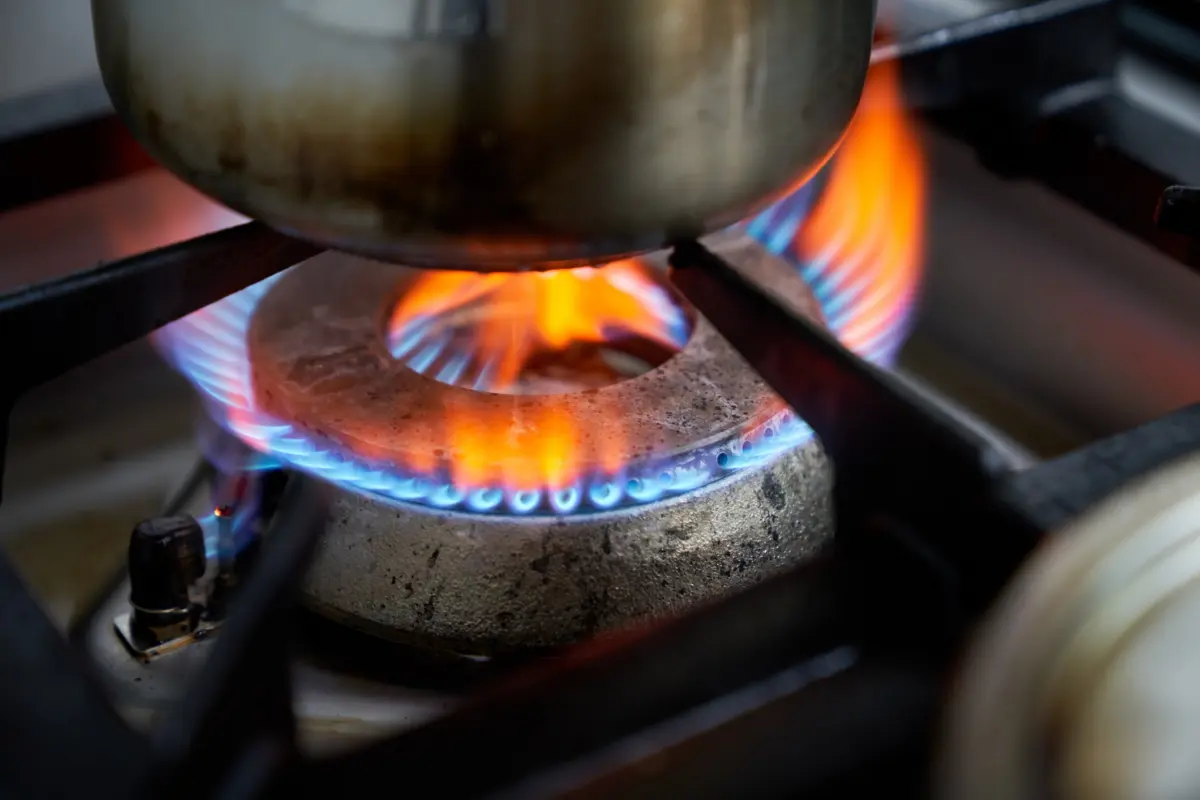
For the more than 15.7 million Americans employed in the United States food service industry, a shift at work often means standing mere inches away from intense heat and a continuous plume of invisible air pollution. While the public debates the merits of gas versus electric appliances in residential settings, a landmark peer-reviewed study has turned its attention to the heavy-duty burners powering the nation’s restaurants.
Published in the scientific journal Environmental Research Letters, a collaborative study conducted by researchers from the Stanford Doerr School of Sustainability, the New York University Grossman School of Medicine, PSE Healthy Energy, and chef Christopher Galarza has revealed alarming findings. According to the research, workers in commercial kitchens utilizing gas and propane appliances are routinely exposed to air pollution and heat levels that far exceed standard health guidelines. The findings shine a harsh light on an occupational environment that has historically flown under the regulatory radar.
Main Facts: What the Study Uncovered
The research represents the first comprehensive United States study to directly compare indoor air quality and thermal conditions in restaurant kitchens powered by gas appliances against those utilizing all-electric systems under authentic, real-world working conditions.
The findings are stark:
- Pervasive Pollutants: Kitchens utilizing gas or propane appliances regularly exceeded health benchmarks for nitrogen dioxide ($NO_2$), carbon monoxide ($CO$), and benzene—a known human carcinogen.
- Extreme Heat: Approximately 68% of the gas-powered kitchens evaluated recorded indoor temperatures surpassing 90 degrees Fahrenheit, the high-heat safety threshold proposed by the Occupational Safety and Health Administration (OSHA).
- The Electric Alternative: By contrast, the all-electric commercial kitchens evaluated in the study maintained pollution levels well within health guidelines during active cooking hours.
- Off-Hour Hazards: Even when kitchens were closed, unventilated spaces with active pilot lights accumulated high concentrations of toxic gases, putting early-morning staff and cleaning crews at immediate risk.
Chronology of the Research and Methodology
To understand how commercial kitchens impact worker well-being, a multidisciplinary team set out to capture accurate environmental data from active food service establishments.

Setting the Scope
The study was initiated as part of PSE Healthy Energy’s Methane and Health Initiative, a broader scientific endeavor designed to uncover the public health and climate risks tied to methane sources. Recognizing that commercial cooking heavily relies on fossil fuels—with approximately 80% of end-use energy in US commercial kitchens coming from gas—the researchers targeted real working environments.
Data Collection Across Three States
Over the course of the project, investigators monitored air temperature and a suite of combustion-related pollutants: methane, nitrogen dioxide, carbon monoxide, carbon dioxide, and benzene. Sampling was meticulously conducted across five distinct employee work areas in 28 different locations throughout California, New York, and Pennsylvania.
The sample pool comprised:
- 21 gas-powered kitchens
- 3 propane-powered kitchens
- 3 all-electric kitchens
Measurements were not limited to active service hours. Researchers deployed monitors during both peak cooking rushes and overnight periods to capture the full scope of employee and crew exposure. Furthermore, in specific trials, a temperature sensor was physically attached to a chef’s shoulder during a rigorous five-hour cooking shift to map micro-environmental thermal stress.
Supporting Data: The Numbers Behind the Hazards
The accumulation of pollutants in commercial spaces often happens invisibly. Without adequate ventilation systems functioning at peak capacity, byproducts of gas combustion build up rapidly.

Nitrogen Dioxide ($NO_2$)
Nitrogen dioxide is a corrosive gas known to trigger asthma attacks, reduce lung function, cause airway inflammation, and worsen chronic respiratory symptoms like coughing and wheezing.
- EPA Standards Surpassed: Roughly 70% of the gas kitchens analyzed surpassed the US Environmental Protection Agency’s 1-hour outdoor air standard for $NO_2$. (Researchers utilized outdoor benchmarks because the US currently lacks an equivalent enforceable indoor air quality standard.)
- Cumulative Exposure: Gas and propane kitchens accumulated roughly 170 cumulative hours—equivalent to about four full work weeks—where $NO_2$ concentrations exceeded the World Health Organization’s (WHO) hour-averaged exposure recommendations.
- Workplace Limits: In at least one inspected kitchen, the 15-minute average $NO_2$ level breached the short-term workplace exposure limit recommended by the National Institute for Occupational Safety and Health (NIOSH).
Carbon Monoxide and Benzene
Combustion from gas appliances is not limited to nitrogen oxides.
- Carbon Monoxide: Concentrations of carbon monoxide exceeded California’s stringent 1-hour exposure guidelines in three of the evaluated gas kitchens. Exposure to $CO$ can induce symptoms ranging from debilitating headaches and dizziness to unconsciousness and fatal poisoning.
- Benzene: Benzene concentrations breached California 1-hour exposure guidelines in five gas kitchens. As a potent carcinogen, benzene exposure is historically linked to an elevated risk of developing leukemia and other blood-cell cancers.
The Overnight Danger
One of the study’s most surprising discoveries centered on what happens after the restaurant closes its doors. In roughly 71% of gas kitchens subjected to overnight monitoring, concentrations of nitrogen dioxide, carbon monoxide, carbon dioxide, methane, and benzene were actually higher overnight than during service hours.
When ventilation systems are shut down for the night, continuous pilot lights continue to emit trace gases. Methane accumulation, in particular, poses a dual threat: not only is it a potent greenhouse gas contributing to climate change, but high indoor concentrations can displace oxygen in the air, leading to worker fatigue, rapid breathing, vomiting, convulsions, and—in extreme, confined scenarios—organ damage or death.
Thermal Stress and High Heat
Heat stress is a persistent hazard in culinary arts, but the study revealed that the issue is driven intrinsically by equipment choices rather than external weather conditions.

- Roughly 68% of gas kitchens with temperature data exceeded 90°F.
- Even on days when outdoor temperatures lingered comfortably below 75°F, 10 out of 13 tested gas kitchens still breached the 90°F mark indoors.
- When temperature monitors were strapped to a chef’s shoulder during a standard five-hour shift, the recorded average temperature hit 92°F, peaking at a grueling 106°F.
Official Responses and the Regulatory Gap
The publication of these findings has sparked immediate discussions regarding the regulatory framework governing workplace safety in the food service sector.
A critical takeaway from the research is the stark disconnect between general public health guidelines and occupational safety enforcement limits. While consumer-focused metrics from the EPA and WHO prioritize absolute health protection, workplace thresholds set by bodies like OSHA and NIOSH factor in industrial compliance, technical feasibility, and economic costs.
As Yannai Kashtan, an air quality scientist at PSE Healthy Energy, explained to researchers, occupational thresholds are intentionally higher because they serve a different administrative purpose. However, this creates a dangerous gray area.
"If work environments are exceeding health-based thresholds but are compliant with the occupational limits that govern enforcement, this points to a gap in health protection for commercial kitchen workers," Kashtan noted. Drew Michanowicz, principal scientist at PSE Healthy Energy, echoed these sentiments, emphasizing that consumers rarely ponder the heavy industrial machinery operating behind their favorite neighborhood eateries or fast-food chains.
Implications for the Food Service Industry and Beyond
The implications of this research extend far beyond high-end restaurants, touching upon commercial kitchens operating within schools, hospitals, and corporate cafeterias.

Worker Health and Productivity
The physical toll of chronic pollutant exposure and extreme heat can lead to higher rates of employee turnover, chronic respiratory illnesses, and heat-related exhaustion. Conversely, transitioning away from fossil-fuel combustion offers multi-faceted benefits. Chefs collaborating with the research team pointed out that electrified kitchens often see improved worker productivity due to manageable ambient temperatures, drastically reduced cleaning times, and lower risks of accidental burns or gas-line explosions.
Industry Limitations
The research team candidly addressed the study’s inherent limitations. Because all-electric commercial kitchens remain a rarity in the United States—accounting for only a tiny fraction of the commercial cooking landscape—the study only featured three all-electric locations. Furthermore, the voluntary participation model and regional focus (limited to California, New York, and Pennsylvania) mean the findings cannot be instantaneously generalized to every corner of the country. Nonetheless, the empirical trends align closely with decades of residential gas-appliance research.
Actionable Recommendations for Kitchens and Homes
To combat these newly quantified risks, experts have outlined practical mitigation strategies for both commercial establishments and domestic kitchens.
Recommendations for Commercial Kitchens
- Optimize and Maintain Ventilation: Ventilation systems serve as the primary line of defense against both thermal loads and trapped pollutants. These systems must be routinely inspected, professionally maintained, and operated continuously during prep, service, and cleaning hours.
- Targeted Electrification: While a complete overhaul of a commercial kitchen’s infrastructure can be financially daunting, prioritizing the replacement of gas ranges and deep fryers with induction or electric equivalents can yield the most immediate, dramatic improvements to indoor air quality.
- Off-Hour Safety Protocols: Restaurant managers must ensure that ventilation systems are left running—or scheduled to cycle—during overnight hours and early morning shifts when cleaning crews arrive while pilot lights remain lit.
Recommendations for Household Gas Stoves
For everyday home cooks utilizing residential gas ranges, the guidance mirrors commercial best practices:
- Eliminate the Source: Whenever budget and housing situations permit, replacing gas burners with modern electric radiant or induction cooktops is the most effective safeguard.
- Partial Electrification: Renters or homeowners unable to replace their primary stoves can minimize gas usage by shifting everyday cooking tasks to portable induction hobs, air fryers, electric kettles, and rice cookers.
- Ventilation is Non-Negotiable: Always activate the overhead range hood when cooking with gas, and consider deploying a dedicated HEPA air purifier within the kitchen space to capture fine particulates and combustion byproducts.
As the scientific community continues to map the intersection of energy policy and public health, studies like this make it clear: the future of safe culinary arts may well depend on turning off the gas and turning toward clean, electric power.
