

Main Facts
Smart locks have cemented their status as a cornerstone of modern home automation, prized for their convenience, remote-access capabilities, and integration with broader smart-home ecosystems. However, because the vast majority of these devices are not hardwired into a home’s electrical grid, they rely entirely on replaceable or rechargeable internal batteries. This dependence introduces the single most pervasive pain point in the industry: unexpected power loss, which risks locking homeowners out of their own properties.
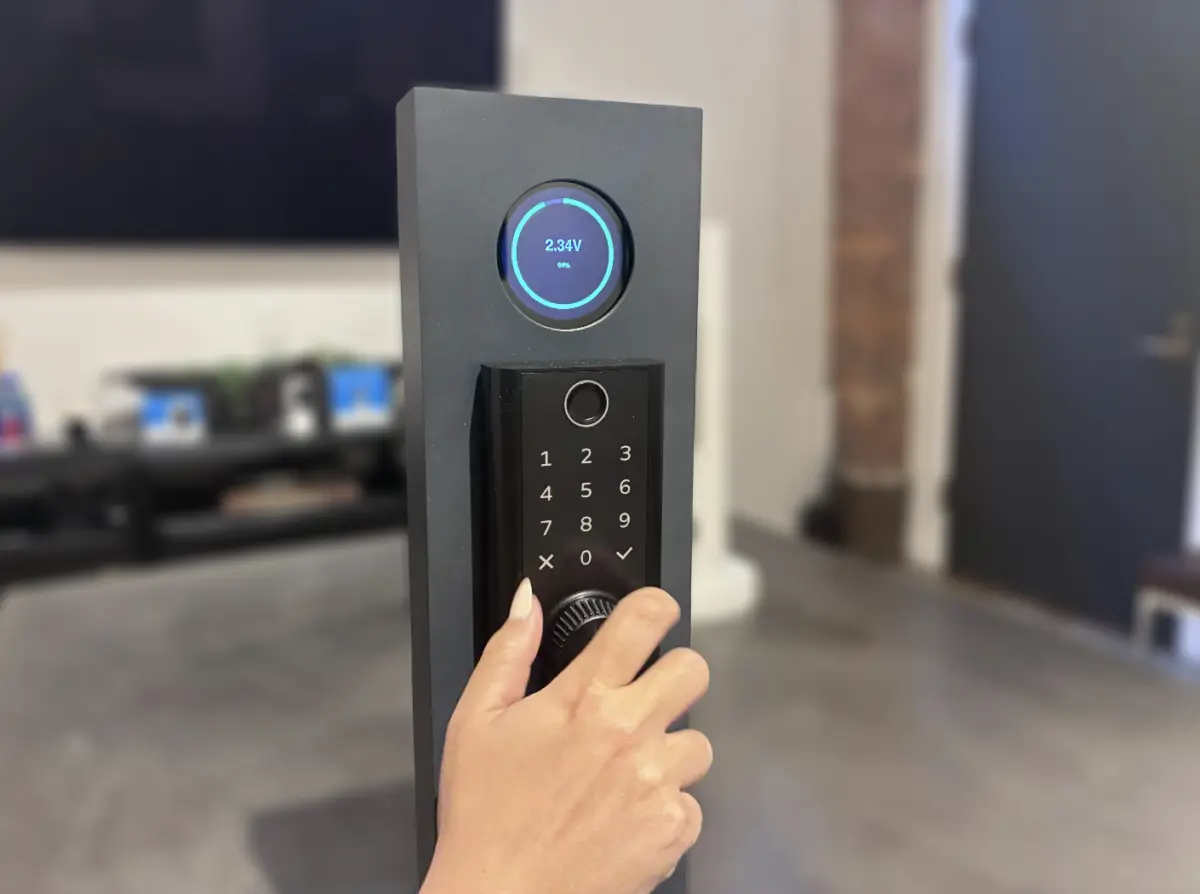
To combat this, Ring—a dominant subsidiary of Amazon renowned for its video doorbells and security cameras—has officially announced its entry into the smart lock category with the introduction of The Ring Smart Lock. Priced at $249 and slated for release in 2027, the flagship device features a groundbreaking mechanical solution to the dead-battery dilemma: a built-in supercapacitor powered by a first-of-its-kind physical energy crank integrated directly into the thumbturn.
Located just beneath a backlit touchscreen keypad, the small manual knob allows users to manually generate emergency power with just four or five quick spins. This kinetic action provides roughly 20 seconds of operational power—more than enough time to punch in a PIN, unlock the door, step inside, and address the depleted battery.
Beyond its headline-grabbing manual crank, the Ring Smart Lock is equipped with an array of industry-standard features. These include an onboard biometric fingerprint reader, remote locking and unlocking via mobile application, and seamless integration with the broader Ring and Amazon Alexa device ecosystems. Rather than relying on a home’s local Wi-Fi router to maintain connectivity, the lock leverages Amazon Sidewalk, a shared, secure community network powered by compatible Amazon devices in the immediate neighborhood, ensuring reliable status updates and remote controls without heavy power consumption.

Chronology
The path to the Ring Smart Lock’s unveiling spans years of evolving home security technology and strategic product development under the Amazon corporate umbrella.
The Evolution of Smart Lock Backups
- Early Era (Mid-2010s): As smart locks gained mainstream traction, manufacturers relied almost exclusively on traditional mechanical keyholes as a failsafe against dead batteries.
- The Transitional Phase (Late 2010s–Early 2020s): Competitors began experimenting with alternative emergency power solutions. This included hiding USB-C ports for portable power banks or designing faceplates that accommodated external 9-volt batteries to jump-start the keypad. Simultaneously, niche manufacturers tested solar panels for exterior-facing units, though these proved unreliable in shaded entryways or harsh weather.
- The Development of Ring’s Entry: Recognizing the shortcomings of existing emergency measures, Ring founder and CEO Jamie Siminoff spearheaded the internal development of a device that would bypass external equipment entirely.
The Reveal and Timeline
- October 2026: Ring officially showcases the smart lock during a private media demonstration led by Jamie Siminoff, giving industry experts their first hands-on look at the thumbturn energy crank.
- Upcoming Launch (2027): The Ring Smart Lock is scheduled to hit the consumer market at a retail price point of $249, marking Ring’s official debut in the smart lock sector.
Supporting Data & Technical Breakdown
To fully understand why Ring’s design stands apart in a crowded marketplace, it is necessary to examine the underlying power storage mechanics and the historical pitfalls of alternative backup systems.
The Problem with Traditional Failsails
According to consumer technology analysts and home security experts, historical emergency backup methods have consistently fallen short of true user-friendliness:
- Mechanical Keyholes: Ring CEO Jamie Siminoff famously categorized traditional physical keys as "medieval" in their simplicity and vulnerability. Relying on a physical key defeats one of the primary conveniences of smart locks—keyless entry—and forces homeowners to either carry a physical key or hide one insecurely outside their homes. Furthermore, many homeowners fail to lubricate or maintain outdoor keyholes, causing them to seize up over time.
- External Jump-Starts (9-Volt Batteries and USB-C): While holding a 9-volt battery against the base of a lock or plugging in a portable power bank can supply temporary juice, these methods require the user to possess extra equipment at the moment of emergency. If a homeowner is locked outside in the rain without their portable charger or a spare battery, these features are rendered useless.
How Supercapacitors Work
Instead of relying solely on standard chemical batteries for emergency functions, the Ring Smart Lock utilizes a supercapacitor.

Unlike chemical batteries—which store and release energy through slow, continuous chemical reactions—supercapacitors store electrical energy electrostatically on the surface of conductive materials. This distinct physical property allows them to:
- Charge almost instantaneously through physical inputs (such as hand-cranking).
- Discharge high bursts of energy rapidly over a short duration.
- Withstand thousands of charge and discharge cycles without significant degradation.
According to technical demonstrations provided by Ring, the hand-crank mechanism operates independently of the lock’s primary power source. Even if the internal battery has been completely drained—or removed entirely from the device—spinning the thumbturn crank generates enough immediate electrostatic charge to power the electronic circuits and motor long enough to grant entry.
Connectivity via Amazon Sidewalk
The decision to utilize Amazon Sidewalk for network communication rather than standard home Wi-Fi solves another critical smart lock engineering challenge: battery drain.
Wi-Fi modules require substantial power to maintain continuous connections to a home router. By routing status updates, remote lock commands, and access logs through Amazon Sidewalk’s low-power, long-range shared network protocol, the Ring Smart Lock preserves the lifespan of its primary replaceable batteries, significantly extending the duration between required maintenance.

Official Responses and Industry Perspectives
The announcement of the Ring Smart Lock has generated substantial commentary from industry leaders, tech journalists, and security analysts, focusing heavily on user experience and engineering philosophy.
Jamie Siminoff on Rejecting "Medieval" Technology
During the private product demonstration, Jamie Siminoff emphasized that the inspiration for the energy crank came from a fundamental frustration with how the smart home industry approaches failure points.
"When you look at how people manage dead batteries today, the industry has largely accepted outdated compromises," Siminoff noted during the presentation.
By designing a mechanical solution built directly into the exterior hardware of the lock, Ring aims to eliminate the anxiety associated with getting locked out. Siminoff stressed that the system was engineered to function under the worst-case scenario: a total power failure where standard battery replacement is impossible on the spot.

Initial Reactions from Tech Media
Early reviewers and consumer technology journalists have praised the ingenuity of the thumbturn crank, highlighting its practicality compared to traditional backups.
- Practicality over gimmicks: Unlike solar panels that depend on weather conditions or hidden keyholes that invite lock-picking vulnerabilities, a mechanical hand-crank offers absolute user agency. As one CNET reviewer noted after testing the prototype, the physical act of generating emergency power feels intuitive and reliable, requiring minimal physical exertion (four to five quick spins) to achieve results.
- Ecosystem Integration: Security analysts have also pointed out that pricing the device at $249 positions it competitively against premium offerings from brands like Yale, August, and Schlage, particularly when factoring in the value of biometric fingerprint scanners and native Alexa integration.
Implications for the Smart Home Market
The arrival of the Ring Smart Lock and its unique supercapacitor technology carries several significant implications for the broader smart home security landscape.
1. Raising the Bar for Emergency Preparedness
For nearly a decade, manufacturers have accepted that dead batteries are an inevitable nuisance of wireless home security. By introducing a self-powered mechanical backup that requires no external tools, keys, or accessories, Ring has established a new benchmark for user-centric design. Competitors in the smart lock space will likely face immediate pressure from consumers to adopt similar self-sustaining emergency mechanisms in future generations of hardware.
2. Deepening Amazon’s Ecosystem Dominance
By tying the lock’s connectivity directly into Amazon Sidewalk and the broader Alexa ecosystem, Amazon continues to fortify its connected-home fortress. Sidewalk leverages community infrastructure to maintain device connectivity without straining local Wi-Fi networks, showcasing a distinct architectural advantage that standalone lock manufacturers cannot easily replicate without a dedicated smart home hub.

3. Pricing and Market Adoption in 2027
At a retail price point of $249, the Ring Smart Lock enters the mid-to-high tier of the consumer market. While higher than budget-friendly alternatives that lack biometric scanners or advanced networking, the inclusion of a fingerprint reader, remote app access, and the proprietary hand-crank failsafe provides a strong value proposition for homeowners looking to eliminate the final anxiety points of smart home automation.
As the 2027 release date approaches, industry watchers will be monitoring whether consumers embrace the hand-crank thumbturn as an essential home security feature—and whether rival manufacturers quickly follow suit with their own kinetic backup solutions.
