

WASHINGTON — The latest Equipment Shipment Data report released by the Air-Conditioning, Heating, and Refrigeration Institute (AHRI) reveals a dynamic shifting landscape for the North American HVAC and water heating sectors. Analyzing performance metrics from August 2026, the data paints a picture of a stabilizing cooling market characterized by a sharp, single-month rebound in central air conditioners, juxtaposed against the enduring, structural rise of heat pumps.
While seasonal transitions brought mixed results across various equipment categories—including a surprising, continued surge in oil furnaces and a cooling off for residential water heaters—industry analysts point to robust distributor replenishment and improved supply chain availability as the primary drivers heading into the fall season.
Main Facts
The overarching narrative of the August 2026 AHRI report centers on the diverging trajectories of central air conditioning units and heat pumps, alongside notable fluctuations in heating and water-heating equipment.
- Central A/C Outpaces Growth: Central air conditioning shipments grew by a notable 17.2% in August 2026 compared to the same period in 2025, outpacing heat pump growth rates for the month by more than three times.
- Heat Pumps Maintain Structural Share: Despite a slower single-month growth rate compared to pure A/C units, heat pumps accounted for 44.7% of all combined cooling shipments in August. This marks the second-highest historical percentage for the month, trailing only August 2025’s record 47.5%.
- Seven-Month Upward Streak: Combined shipments of air conditioners and heat pumps have now increased for seven consecutive months (February through August 2026), demonstrating consistent market recovery rather than isolated spikes.
- Mixed Results in Heating and Water Heating: Oil furnaces continued an unexpected six-month growth streak—surging 27.1% over August 2025—while gas furnaces and residential storage water heaters experienced volume declines for the month.
- Decadal Shifts: Over a ten-year horizon, heat pump shipments have skyrocketed by 57.6% (August 2016 to August 2026), while standalone central air conditioning units have declined by 12.4% over the same timeframe, illustrating a profound generational shift in consumer and builder preferences.
Chronology and Market Timeline: The 2026 Recovery
To understand the current standing of the HVAC manufacturing and distribution ecosystem, industry observers must look at the sequential progression of the market over the course of 2026.
Early-Year Stabilization (January – May 2026)
The year began with cautious optimism. While residential water heaters—particularly gas models—faced persistent headwinds and declining shipments from January through May, cooling equipment began carving out a quiet recovery. Notably, March saw a modest 0.1% uptick in central air conditioning units, while heat pumps established a steady, unbroken chain of month-over-month growth that would extend deep into the summer.

Peak Summer Surge (June – July 2026)
The heart of the cooling season brought aggressive demand. June and July 2026 posted formidable year-over-year combined cooling shipment increases of 21.7% and 20.1%, respectively. During this period, distributors aggressively stocked inventory to meet intense seasonal cooling loads driven by high ambient temperatures across large swathes of the United States and Canada.
August Transition and Replenishment (August 2026)
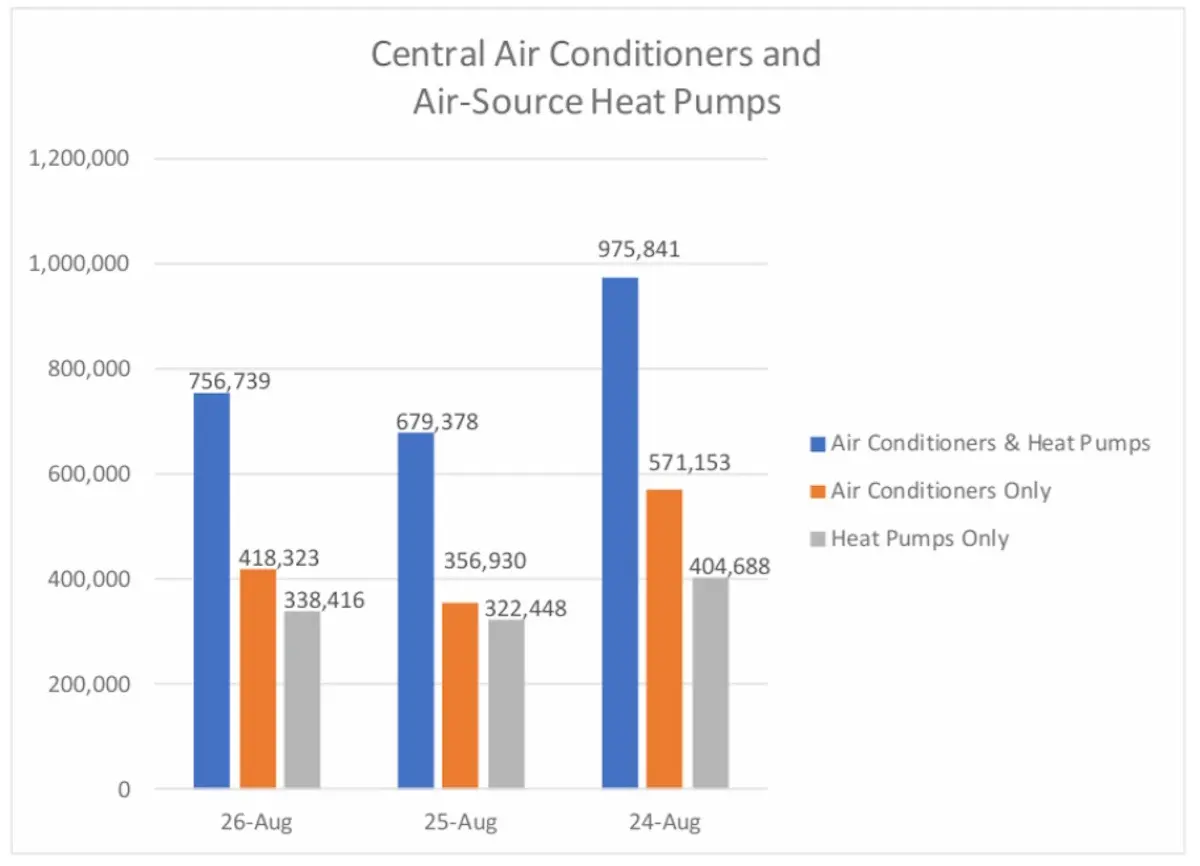
As the summer drew to a close, August shipment figures moderated slightly from the blistering pace set in June and July. Combined shipments of A/C and heat pump equipment reached 756,739 units. Analysts attribute the slight cooling in growth velocity to standard seasonal shifts. However, the 17.2% surge in central A/C specifically signaled that manufacturers and distributors were actively replenishing stock, ensuring healthy product availability as the industry prepares for the shoulder heating season.
Supporting Data and Detailed Segment Analysis
The AHRI dataset provides granular insight into how individual product categories performed during August 2026 and how they stack up against historical benchmarks.
Air Conditioners and Heat Pumps
Combined cooling equipment shipments in August 2026 reached 756,739 units, representing a solid 9.3% increase over the 692,214 units recorded a decade prior in August 2016. When disaggregating the data:
- Central Air Conditioners: Experienced a 17.2% year-over-year increase for August 2026, pointing to strong builder demand and replacement activity.
- Heat Pumps: Comprised 44.7% of all combined cooling shipments. While central A/C grew faster in a single month, heat pumps represent the bedrock of long-term cooling expansion. Over the past ten years, heat pump shipments have climbed 57.6%, while central A/C units have contracted by 12.4%.
Warm-Air Furnaces
Because August falls firmly within the cooling season, warm-air furnaces traditionally see lower demand than cooling equipment. Nevertheless, the segment produced notable outliers:

- Oil Furnaces: Defying expectations, oil furnaces notched their sixth consecutive month of year-over-year growth. August 2026 shipments jumped 27.1% compared to August 2025, and an eye-opening 40% compared to August 2024. Despite this impressive streak, analysts caution that oil furnaces remain a niche segment relative to the broader gas furnace market.
- Gas Furnaces: Experienced declines for the month, though long-term data indicates overall stability, with gas furnace shipments up 5.3% compared to August 2016 levels.
Residential Storage Water Heaters
The residential water heater sector faced downward pressure in August, mirroring a broader cooling trend observed in July:
- Electric vs. Gas Volumes: Electric storage water heaters continued to outsell gas counterparts, beating gas volumes by nearly 68,692 units in August.
- Year-Over-Year Retraction: Both gas and electric categories experienced volume declines in August compared to the same period in 2025, with gas units dropping 12.1% and electric units falling 16.1% for the month. Over a ten-year span, gas water heaters have declined by 14.9% since August 2016, whereas electric units have recorded a modest 3.7% growth.
Industry Perspectives and Official Responses
Industry stakeholders and market analysts have interpreted the AHRI data through various lenses, focusing heavily on supply chain health and the unstoppable momentum of electrification.
AHRI representatives emphasize that the consistent seven-month growth streak across combined cooling equipment points to a healed supply chain. Unlike the volatile, unpredictable shipment spikes seen during the post-pandemic supply chain crunch of 2021–2023, the 2026 numbers reflect steady, predictable distributor replenishment.
HVAC distributor associations have echoed this sentiment, noting that warehouse inventory levels are well-balanced. Contractors report that equipment availability—particularly for high-efficiency heat pump systems—is robust, allowing them to complete installations without the lengthy backorders that plagued the industry in previous years.
Regarding the unexpected resurgence in oil furnaces, energy economists point to localized regional demand, specific rural replacement cycles, and aggressive inventory adjustments by regional wholesalers rather than a national renaissance for oil-based residential heating.

Implications for Contractors, Manufacturers, and Distributors
The long-term and short-term trends illuminated by the August 2026 AHRI report carry significant strategic implications for professionals across the HVAC and plumbing supply chain.
1. Re-Evaluating Heat Pumps as Year-Round Staples
The data confirms that heat pumps are no longer merely a regional or seasonal alternative; they represent nearly half (44.7%) of all cooling shipments in peak summer months. Contractors and dealers who treat heat pumps solely as a heating-season product risk missing out on a massive, structural market shift. Business planning must treat heat pump technology as the default cooling and heating solution for an increasing number of residential applications.
2. Supply Chain and Inventory Confidence
The healthy distributor replenishment indicated by August’s shipment figures suggests that manufacturers have successfully optimized production lines. Distributors can plan their Q4 and early 2027 inventories with a higher degree of certainty, mitigating the risks of overstocking or stockouts as the industry transitions from cooling to heating demand.
3. Navigating Niche and Declining Categories
While oil furnaces are enjoying a temporary multi-month growth wave, contractors must remain grounded in the reality that gas and electric systems dominate market share. Similarly, the contraction in residential water heater shipments calls for targeted marketing and promotional strategies by plumbing contractors to stimulate replacement demand among homeowners postponing discretionary home upgrades.
Ultimately, the August 2026 AHRI report portrays a resilient, maturing HVAC market—one where traditional equipment continues to find pockets of surprising strength, while modern electrification technologies steadily reshape the future of indoor comfort.
