

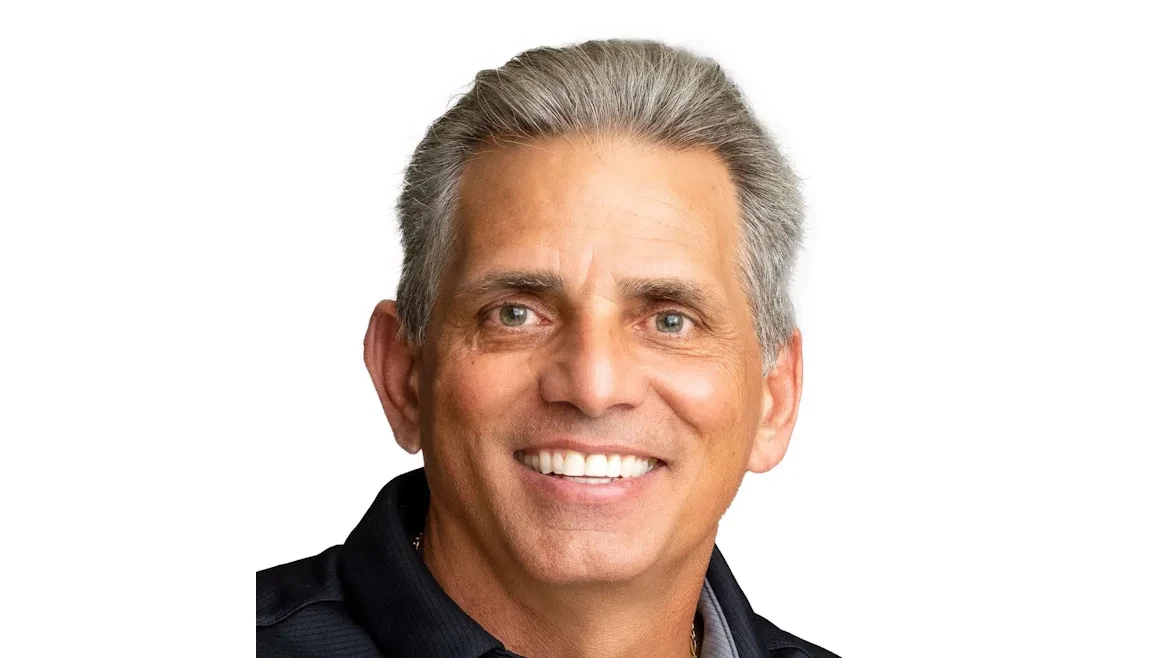
WASHINGTON — In the modern era of American politics, candidates with business backgrounds are far from rare, but contenders who built multi-state home-services empires from the ground up remain a distinct anomaly. Enter Joe Strada, a self-made HVAC contractor, multi-licensed tradesman, and Republican nominee for Florida’s 11th Congressional District.
With a Forbes-estimated net worth hovering around $800 million, Strada is projected to become the wealthiest sitting member of the United States Congress if he secures victory in November. Running in a district rated by election analysts as solidly and safely Republican, Strada is poised to transition from managing thousands of service trucks and technicians to legislating on Capitol Hill. Yet, for all his remarkable financial success, Strada’s narrative is firmly rooted in the blue-collar realities of the American trades—a foundation that continues to shape his unprecedented political platform.
Main Facts: A Historic Political Contender with Trades Roots
Joe Strada’s entry into national politics has upended traditional expectations of who runs for federal office. Following a fiercely contested Republican primary in August 2026—where he narrowly defeated Carey Baker by just 393 votes following an automatic machine recount—Strada secured the GOP nomination to succeed retiring Representative Daniel Webster. Notably, Rep. Webster also shares a background in the industry, having worked in his family’s business, Webster Air Conditioning & Heating.
Strada’s path to the ballot box received a major boost in September when he earned the endorsement of President Donald Trump. However, what truly sets Strada apart in the political landscape is his staggering personal wealth and industrial footprint. According to Forbes, his net worth places him in a tax bracket achieved by very few elected officials in American history.
Despite his immense wealth, Strada’s platform remains intensely focused on the dignity of manual labor, workforce development, and the revival of American technical education. If elected, he will join a small, elite cohort of federal lawmakers with direct professional experience in the heating, ventilation, air conditioning, and refrigeration (HVACR) and mechanical contracting industries. This roster includes Representatives Randy Weber (R-Texas), founder of Weber’s Air & Heat, and Mark Messmer (R-Ind.), former co-owner of Messmer Mechanical.
Chronology: From Teenager with a Toolbelt to Multi-Millionaire CEO
To understand Joe Strada’s political ambitions, one must trace a career that began long before corporate boardrooms and private equity buyouts entered the picture.
- Early Beginnings (Age 14–19): According to corporate biographies from Strada Services, Strada began working at just 14 years old to support himself. By the time he turned 19, he landed his first official job within the air-conditioning sector, marking the genesis of a lifelong career in the trades.
- Mastering the Trades (The 1990s): Over the next two decades, Strada systematically accumulated professional mastery. He earned rigorous state certifications spanning electrical work, plumbing, air conditioning, residential building, and general contracting.
- The Del-Air Era and Partnership (Early 2000s): Strada’s trajectory shifted when his friend Robert Dello Russo, founder of major home-services firm Del-Air, offered him a sales position. Demonstrating an intense drive to learn every facet of the trade, Strada spent his free time accompanying experienced technicians without pay to master installation and repair work, while wiring residential houses on Saturdays.
- Founding Strada Services (2003): Building on this partnership, Dello Russo and Strada launched an independent electrical company that would eventually evolve into Strada Services. Strada maintained his dual commitment, continuing his work at Del-Air for over a decade.
- Taking Full Control (2016): In a pivotal career move, Strada bought out his business partner, officially severed his ties with Del-Air, and assumed absolute operational control of Strada Services.
- The Lennar Breakthrough and PE Investment (2021): When Strada’s HVAC noncompete agreement finally expired in 2021, homebuilding titan Lennar approached him to handle HVAC operations for approximately 3,000 newly constructed homes—this despite Strada having zero HVAC employees on his payroll at the time. Within 12 to 18 months, Strada engineered a rapid-scaling miracle, generating roughly $120 million in air-conditioning work. Later that same year, private equity powerhouse Trilantic North America acquired a 55% stake in Strada Services, cementing the company’s status as a corporate heavyweight.
Supporting Data: The Scale of Strada Services
The numbers behind Strada Services illustrate the sheer scale of the operation that propelled its founder to national prominence. Today, the enterprise stands as one of the preeminent home-services businesses in the United States.
- Workforce: Strada Services employs a massive workforce of over 4,000 skilled professionals.
- Geographic Reach: The company operates across 13 states, primarily servicing the burgeoning new residential construction market and existing homeowners.
- Financial Performance: Forbes estimates the company’s yearly revenue at approximately $534 million.
- Operational Output: According to company metrics published on their official website, Strada technicians have successfully installed over 211,000 systems and completed roughly 485,000 repair jobs.
- Educational Investment: Reflecting its founder’s personal philosophy, the company operates a robust 17-week paid training program designed to onboard and upskill individuals entering the trade from non-traditional backgrounds.
Official Responses and Campaign Platform: Elevating the Trades
While opponents might point to his vast wealth, Strada’s campaign messaging remains anchored in his working-class roots. He has consistently used his platform to challenge the cultural hegemony of the traditional four-year university degree, arguing that society has done a disservice to young people by devaluing vocational and technical education.

In a 2024 interview with Florida’s Voice, Strada elaborated on the inspiration behind his company’s intensive 17-week paid training initiative. Since launching his congressional bid in June 2026, these concepts have transformed into the cornerstone of his legislative platform, prioritizing workforce development, modernized apprenticeships, and expanded career and technical education (CTE) funding.
"That experience is why workforce development, apprenticeships, and career and technical education are central to his campaign," reads an official statement on the Strada campaign website. "He has watched training change families’ futures."
Political observers note that Strada’s personal biography gives him unique credibility on these issues. In an era where vocational labor shortages threaten American infrastructure and housing development, a billionaire contractor who once wired homes on Saturdays and learned installations for free offers a compelling narrative to working-class voters in Florida.
Implications: What a Tradesman in Congress Means for Industry and Policy
Should Joe Strada coast to victory in November and assume office in Washington, his presence in the halls of Congress carries profound implications—both for the HVACR industry and broader national economic policy.
1. A Legislative Voice for Mechanical Contractors
For decades, HVAC contractors, plumbers, and electricians have felt underrepresented by a political class dominated largely by attorneys, career politicians, and corporate executives. Having a lawmaker who personally held multiple state trade licenses and built a massive contracting business provides the mechanical services industry with an authoritative, firsthand advocate in federal policy discussions. Issues ranging from small-business tax incentives, private equity regulations in home services, and supply-chain hurdles to federal energy efficiency mandates and equipment standards will now have a champion who intimately understands field operations.
2. Amplifying Workforce Development at the Federal Level
With the skilled labor shortage remaining one of the greatest headwinds facing the construction and home-services sectors, Strada’s legislative focus could bring unprecedented national attention to career and technical education. Lawmakers may see a renewed bipartisan push to reform federal workforce grants, expand access to modern apprenticeships, and integrate vocational training into secondary education systems. By positioning technical training as a viable, highly lucrative alternative to traditional college debt, Strada could shift the national cultural paradigm regarding blue-collar professions.
3. Redefining Wealth and Public Service
Strada’s entry into Congress also touches on a broader conversation about wealth and representation in American democracy. As the prospective wealthiest member of the legislative branch, his campaign tests whether voters look past personal fortune when a candidate’s life story aligns with grassroots values. Having lived the journey from earning an hourly wage at 19 to commanding a half-billion-dollar enterprise, Strada represents the ultimate realization of the American Dream—a factor that his campaign hopes will resonate powerfully with voters as he prepares to transition from the job site to the nation’s capital.
