

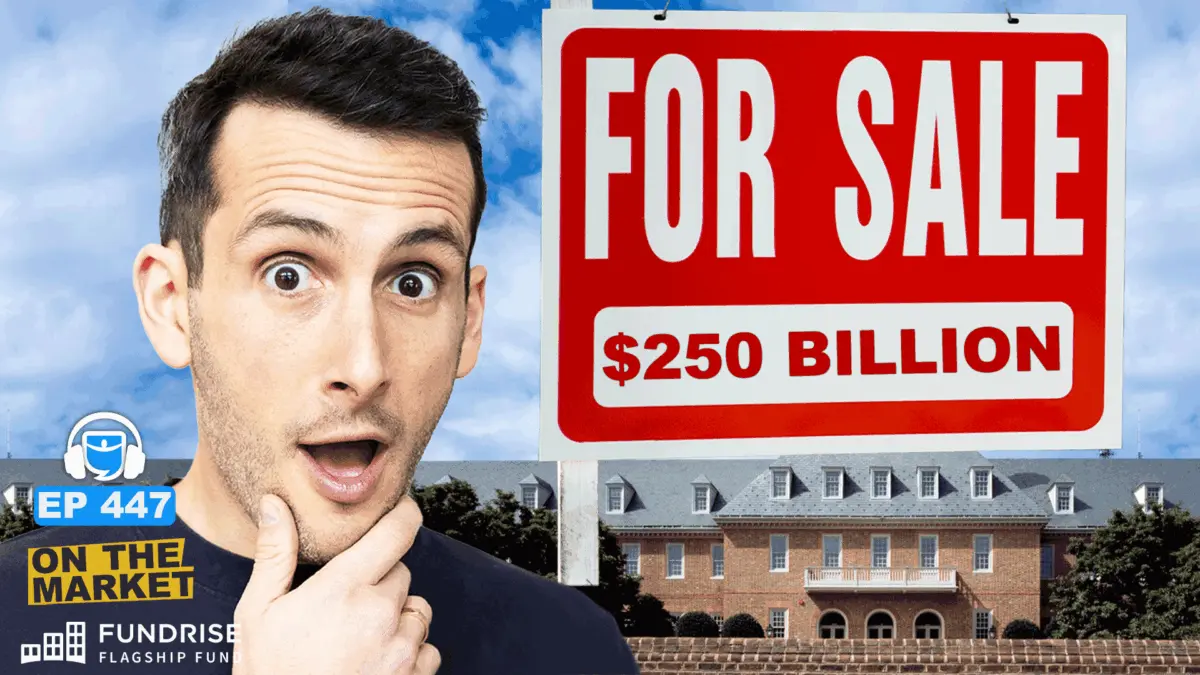
Nearly 50% of all residential mortgages in the United States flow through two government-sponsored enterprises (GSEs): the Federal National Mortgage Association (Fannie Mae) and the Federal Home Loan Mortgage Corporation (Freddie Mac). Together with Ginnie Mae, these entities backstop roughly two-thirds of the entire American housing market.
Now, a high-stakes initiative from the Trump administration to push these mortgage giants out of government conservatorship and onto the public stock market is gathering momentum. While the move could net the U.S. Treasury a staggering $250 billion windfall, financial analysts, real estate investors, and prospective homebuyers are sounding the alarm over potential side effects—chief among them, upward pressure on mortgage rates and the tightening of credit standards.
Main Facts: The Pillars of American Housing
To understand the gravity of a potential Fannie Mae and Freddie Mac initial public offering (IPO), one must first examine the architecture of the U.S. mortgage market. Unlike most global economies where mortgages remain on the books of originating banks, the United States relies on a uniquely fluid, standardized secondary mortgage market.
- The Scale: At the close of 2025, the total U.S. residential mortgage market sat at approximately $15 trillion. Fannie Mae and Freddie Mac accounted for $6.8 trillion of that total—just under 50%.
- The Role: Fannie and Freddie do not lend directly to consumers. Instead, they purchase mortgages from primary lenders like Rocket Mortgage or Chase, bundle them into mortgage-backed securities (MBS), and sell them to institutional investors worldwide, such as pension funds and sovereign wealth funds.
- The 30-Year Fixed: The omnipresent 30-year fixed-rate, prepayable mortgage is an almost exclusively American financial product. Its existence, and its historically low rates, are heavily subsidized by the stability and liquidity provided by Fannie Mae and Freddie Mac.
- The Proposed IPO: The Trump administration is weighing a plan to strip the government’s conservatorship status from the GSEs, taking them public by issuing tens of billions of dollars in shares and returning the entities to private shareholders.
Chronology: From Depression-Era Creation to Government Conservatorship
The journey of Fannie Mae and Freddie Mac is defined by a turbulent evolution through American economic history:
- 1938 (Fannie Mae Established): Created by Congress during the Great Depression under the Federal National Mortgage Association charter, its original mandate was to inject liquidity into a frozen housing market and make homeownership accessible.
- 1968 (Privatization Phase I): Fannie Mae was converted into a shareholder-owned, publicly traded corporation to shift its debt off the federal budget, though it retained a public policy mission.
- 1970 (Freddie Mac Established): The Federal Home Loan Mortgage Corporation was created to introduce market competition and further expand secondary mortgage liquidity.
- Mid-2000s (The Subprime Crisis): Under intense political pressure to broaden homeownership, both entities aggressively piled into purchasing subprime mortgages and riskier assets.
- September 2008 (The Federal Takeover): As the subprime mortgage market collapsed, Fannie and Freddie faced insolvency. The Federal Housing Finance Agency (FHFA) placed both entities into a federal conservatorship. The U.S. Treasury injected $187 billion to keep them solvent, acquiring roughly 80% of their common stock in exchange.
- 2012 (The Net Worth Sweep): The Treasury enacted a policy sweeping all corporate profits from Fannie and Freddie back into government coffers as repayment for the bailout, sparking nearly a decade and a half of fierce litigation from private shareholders.
- 2025–2026 (The Privatization Push): Following a Republican sweep in Washington, the Trump administration accelerated talks with major Wall Street banks to lay the groundwork for a historic public offering, targeting a potential market rollout.
Supporting Data: The Numbers Behind the Market
The sheer volume managed by GSEs underscores why any structural shift sends shockwaves through the financial sector:
- Market Share Breakdown:
- Fannie Mae & Freddie Mac: ~45% ($6.8 trillion of the $15 trillion market)
- Ginnie Mae (FHA/VA Loans): ~20%
- Private Portfolio Loans (held by banks): ~22%
- Financial Impact for the Treasury: While proponents argue a public sale could generate up to $250 billion for the government, critics note that $250 billion accounts for a fraction of a percent of the total U.S. national debt—roughly 0.6%—rendering it an ineffective tool for solving broader structural fiscal deficits.
- The Cost of Borrowing: According to an analysis by JPMorgan Chase, if the government transitions these entities to a private model without putting an explicit, legally binding federal guarantee in writing, benchmark mortgage rates could jump by 45 basis points (nearly half a percentage point).
Official Responses and Stakeholder Perspectives
The debate over privatization has created stark divisions between political architects, Wall Street investors, and industry economists.
Proponents: Unwinding Government Control
Supporters of the IPO, including high-profile hedge fund investors like Bill Ackman of Pershing Square, have long argued that keeping these entities in government conservatorship indefinitely is an overreach.
- Taxpayer Protection: Advocates assert that privatization removes taxpayer exposure to trillions of dollars in underlying mortgage risks.
- Capital Efficiency: Proponents believe that returning Fannie and Freddie to the private sector allows market pricing and capitalist risk assessment to dictate terms, while monetizing the government’s warrants to deliver tens of billions to the Treasury.
Critics: The Illusion of Risk Removal
Skeptics, including many housing economists, argue that true privatization is a legal and economic illusion.
- The "Too Big to Fail" Dilemma: Critics point out that because these institutions are systemically vital to the economy, any future market disruption will inevitably force a government bailout regardless of their ownership structure. Investors know this, meaning an "implicit" government backstop will always remain.
- The Cost to Borrowers: Market analysts warn that consumers will ultimately foot the bill through inflated borrowing costs if private shareholders demand higher market-rate returns on their equity.
Implications for Real Estate Investors and Homebuyers
Should the Trump administration successfully push Fannie Mae and Freddie Mac through an IPO, the ripple effects will be felt immediately across the American real estate landscape.
1. Short-Term Mortgage Rate Volatility
With mortgage rates already hovering at elevated levels following global economic shifts, an additional hike of 45 basis points driven by privatization uncertainty would further cool an already sluggish housing market. Higher rates reduce purchasing power, stall home price growth, and delay market recovery.
2. Contraction of Access and Affordable Lending Programs
Private markets prioritize profit and risk mitigation over public policy missions. Programs designed to expand homeownership access to underserved communities—such as Fannie Mae’s HomeReady or Freddie Mac’s Home Possible—could face severe scaling back or outright elimination if private institutional investors balk at their underlying risk profiles.
3. A Shift in Timeline for First-Time Buyers
For prospective buyers relying on low down-payment assistance or specialized GSE-backed financing programs, financial advisors suggest evaluating timelines carefully. While an overnight structural collapse is unlikely, phased reforms could lead to stricter debt-to-income ratios and tighter credit underwriting standards by the end of the decade.
Conclusion
The debate over privatizing Fannie Mae and Freddie Mac represents a fundamental philosophical clash: balancing the ideals of a free-market capitalist economy against the practical necessity of a government-backed financial safety net. While the Trump administration views an IPO as a logical step toward deregulation and fiscal replenishment, the margin for error is razor-thin. For millions of Americans looking to buy a home or secure a mortgage, the ultimate success of this trillion-dollar gamble will be measured not in Wall Street profits, but in the monthly cost of homeownership.
