

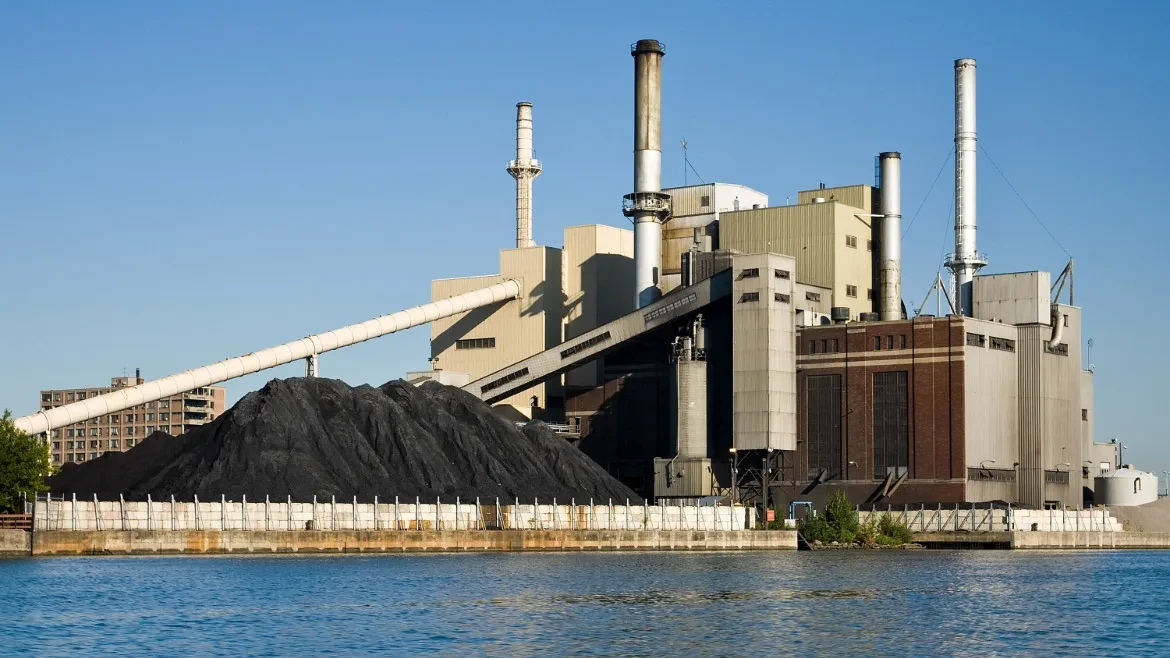
WASHINGTON — As the United States navigates an unprecedented surge in electricity demand driven largely by the exponential proliferation of data centers, artificial intelligence infrastructure, and industrial electrification, the nation faces a profound reckoning over its energy future. Long-standing vulnerabilities regarding power capacity, baseload reliability, nuclear waste management, and the phasing out of legacy coal-fired generation have been thrust to the forefront of national discourse.
Unlike many international competitors that have aggressively streamlined their long-term energy strategies under centralized federal mandates, the United States remains entangled in complex jurisdictional battles, partisan disputes, and regulatory gridlock. From the legal boundaries of federal emergency powers to the intractable dilemma of nuclear waste storage, the nation’s path forward will require a delicate balancing act between grid stability, economic competitiveness, and environmental stewardship.
The Main Facts: A Perfect Storm of Rising Demand and Constrained Capacity
The modern American power grid is confronting a demand shock unlike any seen in decades. For years, domestic electricity consumption grew at a relatively modest, predictable pace. However, the rapid expansion of hyper-scale data centers powering cloud computing and artificial intelligence has fundamentally altered the equation. These facilities operate continuously, requiring massive, uninterrupted streams of baseload power that renewable sources like wind and solar cannot always reliably deliver on their own without extensive battery storage infrastructure.
To meet this surging load, energy planners are being forced to reevaluate the entire portfolio of U.S. power generation. This includes assessing the viability of extending the lifespans of aging fossil fuel plants, accelerating the development of advanced nuclear reactors, and overhauling transmission corridors.
However, the U.S. approach stands in stark contrast to global trends. While dozens of nuclear reactors are currently under construction or in advanced stages of development worldwide—particularly across Asia—nuclear expansion in the U.S. has faced decades of regulatory hurdles, high capital costs, and public skepticism. Meanwhile, the nation’s reliance on coal has steadily declined from its 2007 peak, leaving policymakers scrambling to find reliable baseload replacements before dispatchable capacity is retired.
Chronology: Key Milestones in the Modern U.S. Energy Crisis
Understanding the current impasse requires examining the sequence of regulatory, judicial, and geopolitical milestones that have shaped America’s energy landscape over the past two decades:

- 2007: U.S. coal-fired electricity generation reaches its historical peak, supplying the vast majority of the nation’s baseload power before environmental regulations, cheap natural gas, and renewable energy incentives begin driving a structural decline.
- Early 2020s: The post-pandemic economic recovery, coupled with the boom in artificial intelligence and cloud computing, triggers an unexpected and steep rise in domestic electricity demand, placing unprecedented stress on regional transmission organizations (RTOs).
- Early 2025: Facing mounting grid reliability warnings and potential capacity shortfalls, the Trump administration and the U.S. Department of Energy (DOE) issue directives ordering six coal-fired power plants—scheduled for imminent retirement—to continue operating beyond their planned closure dates under asserted emergency federal authorities.
- Mid-2025: Environmental advocacy groups and legal coalitions challenge the DOE directives in federal court, arguing that the administration is misusing emergency powers to circumvent standard regulatory processes and prop up the coal industry.
- Late 2025: The U.S. Court of Appeals for the District of Columbia Circuit rules decisively against the federal intervention. The court finds that the Department of Energy exceeded its statutory authority by compelling private utilities to keep plants open under the guise of an emergency that did not meet the legal threshold.
- Present Day: Policymakers, utility executives, and HVAC and engineered systems professionals grapple with the fallout of the D.C. Circuit ruling, seeking durable legislative and technological solutions to stave off capacity deficits as data center buildouts accelerate.
Supporting Data: Global Energy Dynamics and Coal Capacities
To contextualize the domestic challenges facing the United States, energy analysts frequently look to global comparisons compiled by organizations such as Global Energy Monitor (GEM). The data highlights a widening chasm between U.S. capacity trends and those of other industrial superpowers, particularly China and India.
1. Global Coal-Fired Power Capacity (As of 2025 Estimates)
- China: Maintains approximately 1,200 coal-fired power plants accounting for nearly 1,200 gigawatts (GW) of operational capacity. China alone accounts for roughly one-third of total global electricity demand.
- India: Operates roughly 250 gigawatts of coal-fired capacity, serving a rapidly industrializing economy with expanding domestic power needs.
- United States: Ranks immediately behind or alongside India in total coal capacity, representing a steep and continuous decline from its mid-2000s peak.
- Other Key Nations: Japan, South Korea, Russia, Germany, and Poland round out the remaining major global holders of active coal-fired generation infrastructure.
2. Nuclear Energy Development Disparities
- Global Pipeline: At least 60 nuclear power reactors are currently under active construction or in advanced development phases globally, driven heavily by state-backed initiatives in Asia and parts of Europe.
- The U.S. Stagnation: Despite renewed bipartisan interest in advanced small modular reactors (SMRs), the U.S. has struggled to bring new commercial nuclear capacity online efficiently, hampered by complex licensing frameworks and financing hurdles.
3. The Nuclear Waste Dilemma
A primary impediment to nuclear expansion in the United States remains the unresolved issue of long-term waste disposal. In centralized economies like China, India, and Japan, national governments maintain direct, unencumbered authority to designate sites for power plants and permanent waste repositories.
In contrast, the U.S. federalist system divides authority between federal oversight and state-level pushback. Because a singular, universally accepted permanent federal repository (such as the long-delayed Yucca Mountain project) has failed to materialize, thousands of tons of spent nuclear fuel remain temporarily stored on-site at commercial reactor locations distributed across the country.
Official Responses and Stakeholder Perspectives
The intersection of federal intervention, environmental law, and grid reliability has ignited sharp debates among legal scholars, political figures, and industry stakeholders.
The Federal Perspective and Emergency Directives
Proponents of the Department of Energy’s efforts to delay coal plant retirements argue that aggressive decarbonization mandates are moving faster than the physical grid can safely accommodate. From this viewpoint, losing dispatchable baseload generation before replacement natural gas, nuclear, or storage facilities are fully operational invites rolling blackouts, destabilizes regional grids, and threatens national security. Proponents maintain that executive and emergency authorities are legitimate tools of last resort when grid operators signal imminent capacity deficits.
The Environmental and Legal Challenge
Conversely, legal challengers view these federal directives as an overreach of executive authority designed to advance a specific fossil-fuel policy agenda under the false banner of an emergency. Following the D.C. Circuit Court ruling, Michael Lenoff, an attorney representing the environmental coalitions that challenged the directive concerning Michigan’s J.H. Campbell Generating Plant, issued a scathing critique. Lenoff labeled the court’s decision a necessary rebuke of the administration’s "abuse of emergency powers," asserting that such mechanisms must be strictly reserved for genuine, unforeseen crises rather than utilized as a routine administrative workaround to prevent planned power plant retirements.

The Partisan and Regional Divide
The debate has also manifested along partisan lines. In Michigan, where the J.H. Campbell facility became a focal point of the dispute, local Democrats criticized the federal push to keep the plant online as a politically motivated maneuver favoring state Republicans and legacy energy interests.
However, energy economists and engineering experts caution against reducing these complex structural dilemmas to partisan talking points. Insiders argue that whether a plant burns coal, splits atoms, or utilizes natural gas, the underlying physics of the electric grid demand a dispassionate, long-range strategy focused entirely on reliability, cost-efficiency, and environmental impact.
Broader Implications for HVAC, Engineering, and the Future Grid
For professionals in the engineered systems, HVAC, and data center sectors, the ongoing power capacity crunch carries immediate practical implications. Modern data centers require unprecedented cooling loads, precise thermal management, and robust electrical infrastructure. As grid operators impose stricter interconnection rules and warn of potential capacity constraints, data center developers are increasingly forced to explore microgrid integration, on-site co-generation, and direct partnerships with nuclear and renewable energy providers.
Furthermore, the failure of the U.S. to establish a cohesive, long-term national energy policy threatens to create regional disparities in power reliability and electricity pricing. States that aggressively retire baseload assets without securing reliable, dispatchable replacements risk exposing industrial, commercial, and residential consumers to volatility.
Looking Ahead
The United States possesses the technological innovation, financial capital, and engineering talent necessary to construct a resilient, modern energy economy. However, as international competitors surge ahead in nuclear development and grid modernization, the U.S. window for deliberative inaction is closing.
To successfully navigate the dual pressures of soaring data center demand and aging infrastructure, policymakers must look past short-term electoral cycles. By drawing lessons from international frameworks—streamlining regulatory pathways for advanced nuclear energy, resolving the nuclear waste impasse through cooperative federalism, and planning grid transitions based on engineering realities rather than political expediency—the United States can forge an energy policy capable of sustaining the digital and industrial economy of the 21st century.
