

Published: October 7, 2026
Author: Agustina Íñiguez (Adapted & Expanded)
Main Facts: The Paradigm Shift in Acoustic Engineering
For decades, the standard approach to architectural acoustics has relied heavily on permanence. When architects, engineers, and building planners map out noise control, they look to fixed infrastructure: multi-layer drywall assemblies, heavy roof insulation, specialized ceiling tiles, and permanently installed soundproofing walls. These permanent elements dictate the sonic profile of a building from its inception, establishing strict boundaries on how sound travels through a space.
However, modern physical environments are rarely static. Industrial workflows evolve, production lines shift, commercial offices embrace hybrid and fluid configurations, and temporary work zones frequently pop up in areas never originally engineered for high-impact noise. When sound sources are mobile or mutable, static architecture falls short.
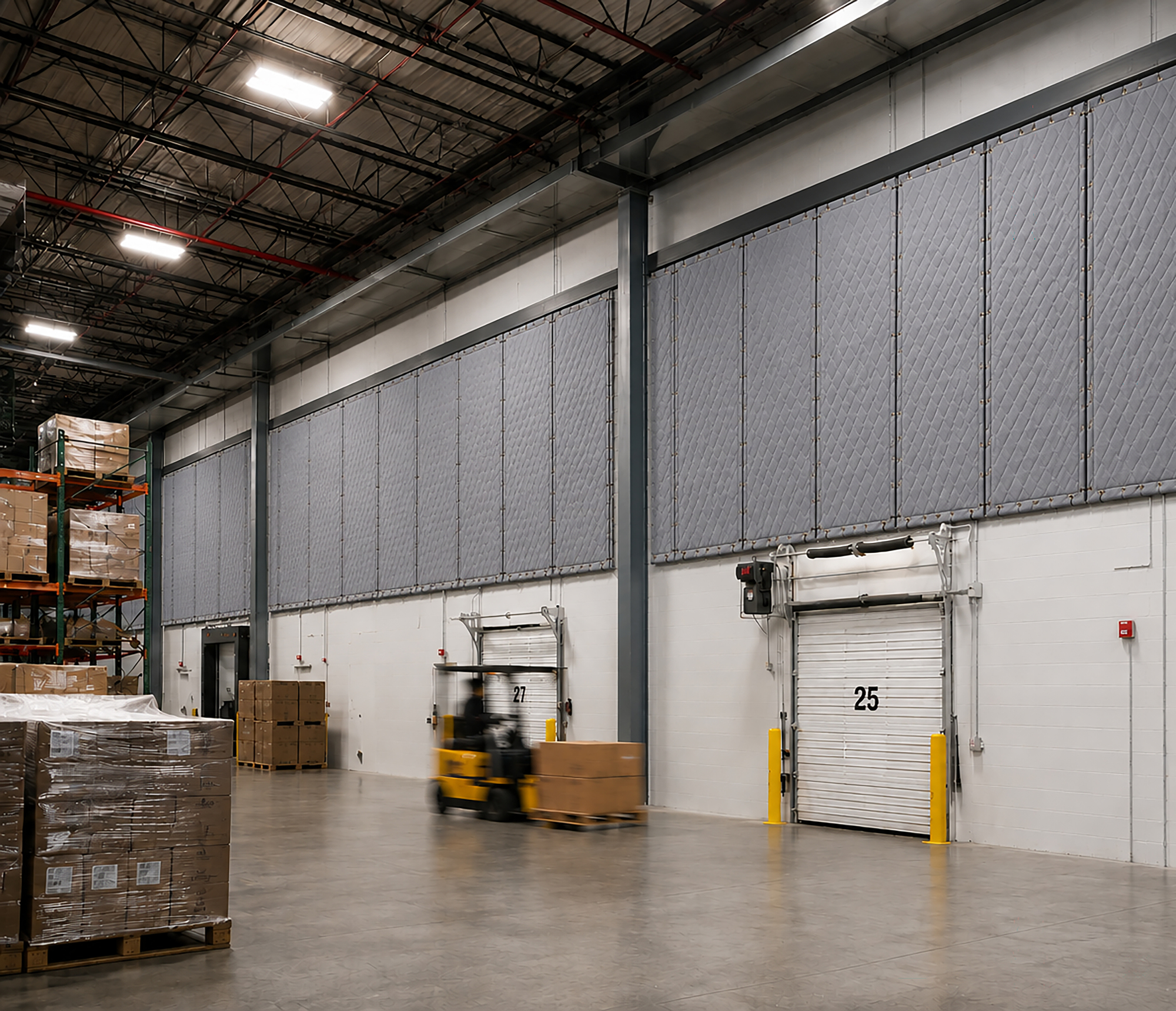
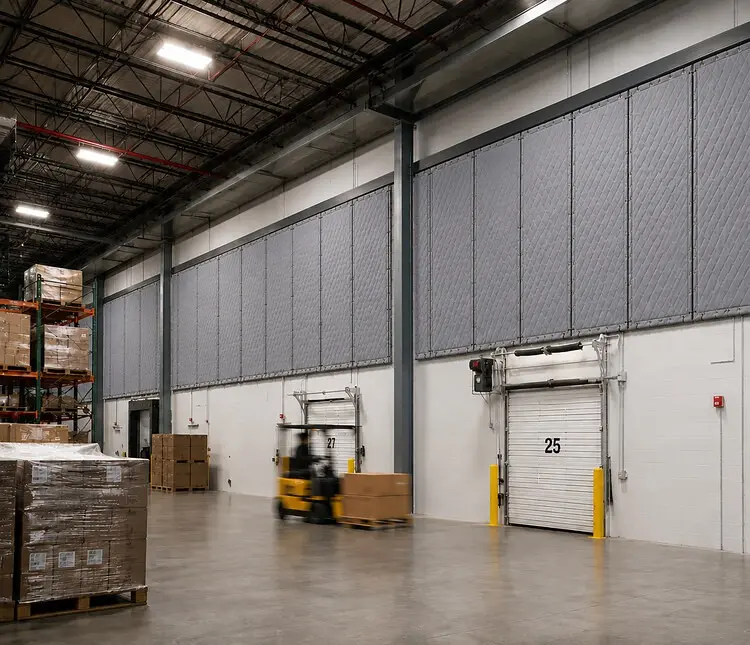
The introduction of flexible, moveable acoustic systems—such as portable enclosures, hanging curtains, industrial blankets, and track-mounted barriers—represents a fundamental shift in spatial design. Rather than forcing a building’s shell to undergo expensive and continuous reconstruction to meet changing noise requirements, modern acoustic strategies are increasingly turning to portable infrastructure. Companies like Acoustical Surfaces are leading this charge, pioneering systems that bring sound control directly to the noise source, transforming how professionals manage acoustics in real time.
Chronology: The Evolution of Flexible Sound Control
To understand where architectural acoustics are heading, it is helpful to trace how the industry has adapted to the shifting demands of commercial and industrial spaces over time.
Phase 1: The Era of Fixed Interventions (Mid-to-Late 20th Century)
Historically, noise mitigation was treated as a late-stage or structural fix. Factories built dense concrete block walls around deafening machinery, and commercial offices relied on permanent partition walls to carve up floor plans. If a company changed its manufacturing layout or expanded its workspace, expensive structural renovations were required to restore acoustic comfort.
Phase 2: The Rise of Modular Workspaces (Early 2000s)
As open-plan offices and rapid manufacturing processes gained popularity, the limitations of fixed walls became glaringly apparent. Architects began experimenting with modular furniture, demountable partitions, and semi-permanent ceiling baffles. While these interventions offered more flexibility than traditional drywall, they were still largely heavy, rigid, and labor-intensive to reconfigure.
Phase 3: The Era of Dynamic, Portable Infrastructure (Present Day)
Today, acoustic control has crossed into the realm of truly agile design. Leveraging advanced material sciences—such as mass-loaded vinyl cores, specialized fiberglass quilting, and heavy-duty tracking mechanisms—manufacturers have developed deployable sound barriers that can be installed, repositioned, or rolled away in minutes. Projects utilizing systems like Acoustical Surfaces’ STOP-25 and BSC-25 lines illustrate how temporary envelopes can act as lightweight infrastructure, modifying a room’s acoustic footprint without altering its permanent architecture.
Supporting Data: Engineering Performance in Motion
A common skepticism surrounding portable acoustic solutions is whether flexible materials can match the performance of heavy, fixed building materials. Modern testing data, however, proves that engineered soft-infrastructure can rival traditional construction.
Material Performance Metrics
- Mass-Loaded Vinyl (MLV) Cores: High-performance quilted curtains often utilize MLV cores available in densities ranging from 1 to 2 pounds per square foot, providing substantial mass to block low-frequency sound waves.
- Sound Transmission Class (STC) Ratings: Systems such as the STOP-25 fiberglass quilted curtain panels achieve an STC rating of 26, effectively absorbing sound on both sides while significantly reducing noise transfer between zones.
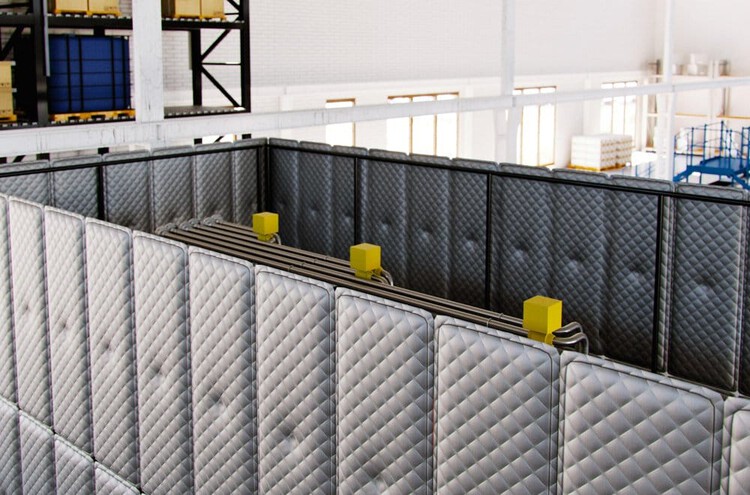
- Equivalency to Traditional Framing: Specialized portable acoustic screens (such as the BSC-25 line, featuring a 1-inch black steel tube frame and a 1/8-inch high-density vinyl core) provide sound-blocking capabilities directly comparable to a conventional 2×4 wood-stud wall finished with drywall on both sides.
Real-World Case Studies
- Open Shop Studio: By installing track-mounted STOP-25 fiberglass quilted panels joined by vertical Velcro seams, the studio gained the ability to rapidly morph a cavernous open-plan room into isolated recording or working spaces, and back again, depending on the daily operational requirement.
- Zamboni Office Environments: Facing the need for a temporary yet high-performance acoustic barrier that could not be permanently built into the office architecture, Zamboni deployed BSC-25 quilted curtains. The overlapping panel design successfully isolated workflow noise while preserving the option for total removal as office layouts evolved.
Official Responses and Industry Perspectives
Architects, acoustical engineers, and product manufacturers increasingly view temporary noise-mitigation tools not as compromises, but as essential components of resilient design.
"When designing mobile acoustic systems, it is possible to recognize that certain needs are temporary. An intervention lasting only a few weeks does not necessarily require a permanent modification to the building," notes design literature from Acoustical Surfaces.
Industry experts emphasize that the modern built environment must account for the unanticipatable. Traditional architectural timelines—from schematic design to construction documentation—lock a building into a fixed state. Yet, a tenant renting a commercial space today may operate an entirely different type of business within three years.
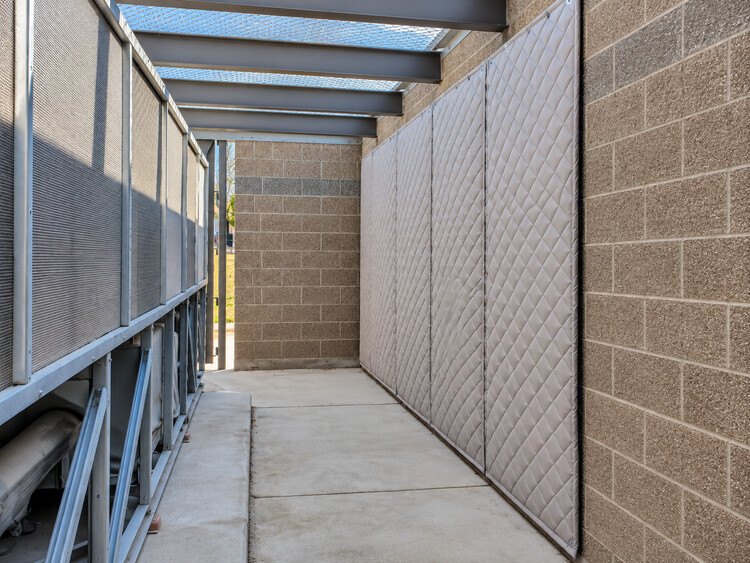
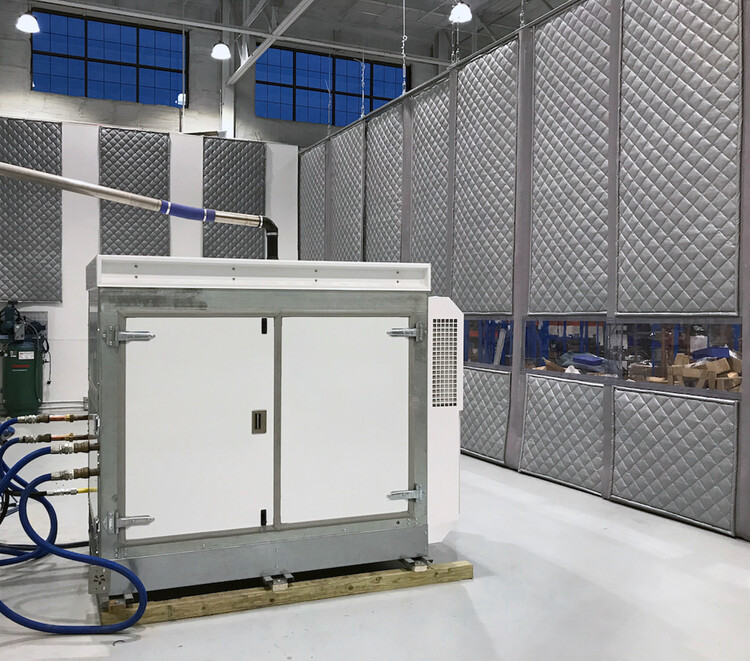
By treating acoustic management as a layered, deployable strategy rather than a static concrete reality, designers empower users to take control of their sonic environments. Curtains establish temporary spatial boundaries; blankets contain sound around high-decibel machinery; and portable enclosures alter micro-environments safely within larger, uninterrupted floor plates.
Implications: The Future of Dynamic Architecture
The shift toward mobile acoustic control carries wide-ranging implications for the future of architecture, interior design, and industrial engineering.
1. Architectural Agility and Sustainability
Permanent construction generates significant material waste whenever spaces are remodeled. By relying on reusable, portable acoustic infrastructure, building managers can drastically reduce the carbon footprint associated with frequent interior renovations. A flexible acoustic curtain or barrier can be uninstalled, moved to a new facility, or reconfigured as a business grows, aligning with circular economy principles.
2. Human Well-being and Productivity
In both industrial complexes and creative studios, ambient noise is a primary contributor to stress, fatigue, and occupational hearing loss. Mobile acoustic solutions allow facility managers to respond immediately to emerging noise hotspots—such as a newly introduced piece of manufacturing equipment—without waiting months for a contractor to build a permanent partition. This rapid response safeguards worker health and optimizes daily productivity.
3. Redefining the Role of the Architect
As buildings are increasingly expected to perform multiple, shifting functions over their lifespans, the role of the architect is expanding. Designers are no longer just planning static enclosures; they are orchestrating dynamic systems. Architecture is learning to rely as heavily on elements that arrive, adapt, and depart as it does on concrete, steel, and stone.
Ultimately, when acoustic control is allowed to move, sound management transcends mere noise reduction. It becomes an active, living strategy that gracefully accompanies the continuous transformation of human spaces.
