

Main Facts
For fans of deeply researched, comprehensive music journalism, the latter half of 2024 brought an unwelcome quiet. No Dogs in Space, the critically acclaimed music history podcast hosted by the husband-and-wife duo Marcus Parks and Carolina Hidalgo, has been on hiatus since July 2024. The conclusion of its third season—which was notably abbreviated and centered on the sprawling, influential world of experimental rock—left a palpable void in the audio landscape.
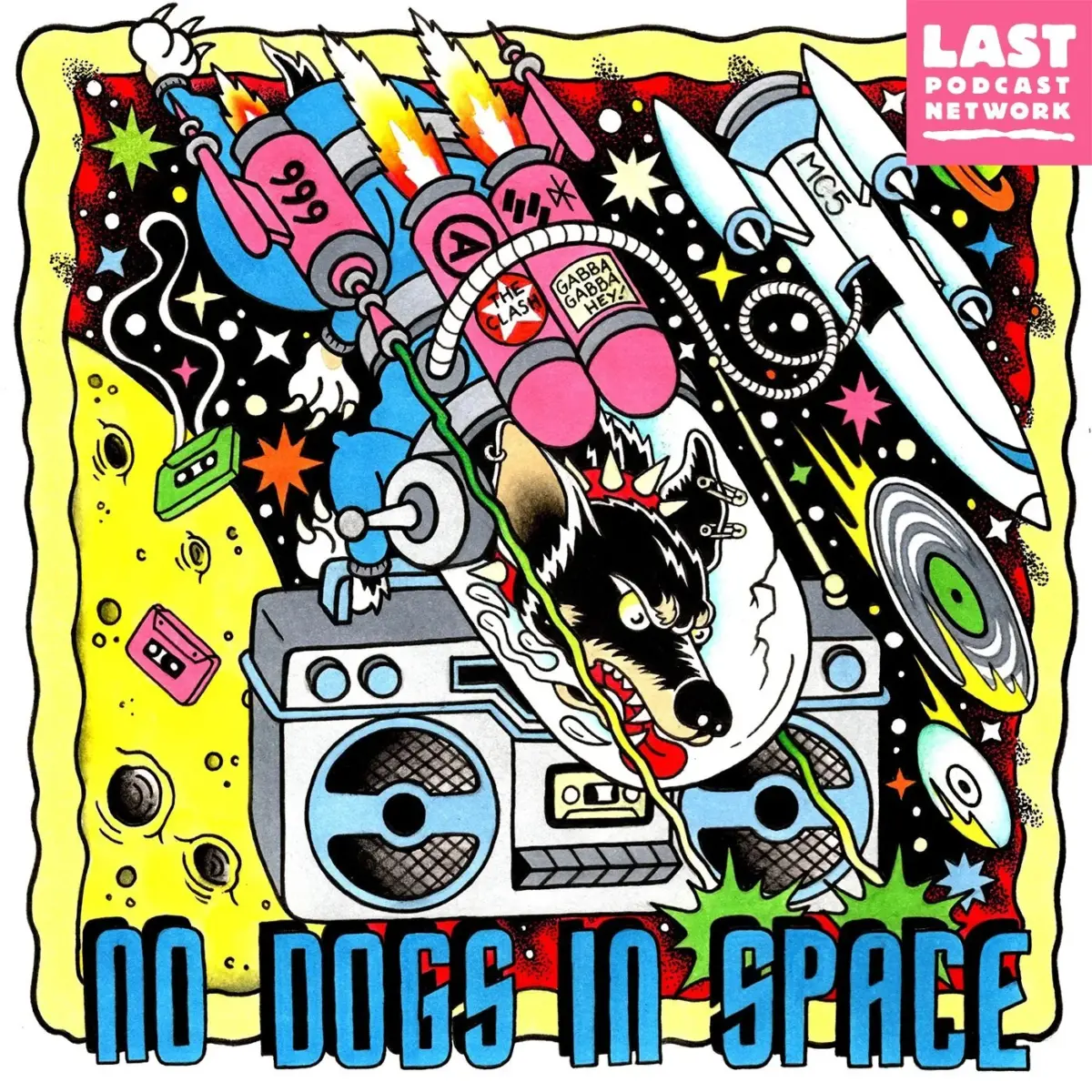
The podcast, distributed via the Last Podcast Network, has carved out a unique space for itself since its inception. Unlike episodic music podcasts that offer brief, digestible 45-minute overviews of an artist’s career, No Dogs in Space approaches music history with the exhaustive rigor of a doctoral dissertation paired with the infectious enthusiasm of passionate record collectors. Spanning 73 meticulously crafted episodes across three distinct seasons, the show explores the definitive origins, cultural contexts, and trajectories of towering musical acts.
Yet, the abrupt end of Season 3 has left listeners in a state of suspended animation. The final episodes focused on the pioneering German experimental rock band Can, wrapping up a thematic exploration of Krautrock that had fans salivating for more. However, the season finale concluded with Parks and Hidalgo teasing an unexpected pivot back to punk rock—the subject of the show’s inaugural season—under the banner of a conceptual "Punk 2.0" retrospective. Since that announcement, the RSS feed has remained silent.
Despite the lack of new content, the podcast’s catalog remains a masterclass in long-form audio storytelling. Covering subjects as diverse as the Beastie Boys, The Velvet Underground, Joy Division, The Stooges, The Replacements, and Amon Düül II, the show treats music history not merely as a timeline of hit singles, but as a complex sociological tapestry. While the hosts have offered intermittent glimmers of hope regarding a potential return via social media and live streams, the definitive future of No Dogs in Space remains unconfirmed, prompting a reassessment of its impact on modern music podcasting.
Chronology
To understand the current anticipation surrounding No Dogs in Space, it is necessary to trace the trajectory of the podcast from its launch to its current state of limbo.
The Genesis and Season 1: The Punk Explosion
No Dogs in Space premiered in January 2020, entering a crowded podcast market with a distinct mission statement: to tell the complete, unfiltered stories of music’s most influential subcultures and bands. Hosted by Marcus Parks—best known for his exhaustive research and co-hosting duties on the smash-hit true crime and paranormal podcast Last Podcast on the Left—alongside researcher, producer, and co-host Carolina Hidalgo, the show immediately established its tone.
Season 1 focused entirely on the roots and evolution of punk rock. Over a multi-episode arc, Parks and Hidalgo dissected the genre from its proto-punk precursors in the late 1960s through the explosion of the mid-1970s in New York and London. The chronological depth was staggering; rather than starting simply with the Ramones or the Sex Pistols, the hosts dug deep into the garage rock explosions of the Pacific Northwest, the Detroit underground, and the socio-political climates that birthed the movement.
Season 2: Exploring the Avant-Garde and Alternative Icons
Buoyed by the critical success of its inaugural season, No Dogs in Space returned for Season 2 with an expanded scope. This phase of the podcast solidified its reputation for undertaking monumental subjects. The season featured deep dives into foundational artists who reshaped the sonic landscape.
Listeners were treated to sprawling, multi-part explorations of The Velvet Underground, tracing their avant-garde roots in New York City’s art scene through their tragic commercial misfires and eventual status as the band that "launched a thousand bands." Subsequent series tackled Joy Division and New Order, chronicling the transition from post-punk despair to electronic innovation, and the ferocious, leather-clad chaos of The Stooges. Each series demonstrated an escalating ambition in episode length and research depth, cementing the show’s status as essential listening for music aficionados.
Season 3: The Abbreviated Avant-Rock Journey and the Krautrock Tease
Season 3 marked a stylistic evolution toward the more esoteric corners of rock history, focusing squarely on experimental rock. This season was notably shorter than its predecessors, leaving fans wanting more even as individual episodes expanded in scope.
The highlight of the season was an extensive exploration of the Krautrock movement. A two-part introduction to the genre heavily spotlighted Amon Düül II, unpacking the psychedelic, politically charged, and boundary-pushing music emerging from post-war West Germany. This led directly into the season-ending focus on Can, the hypnotic groove-heavy experimentalists who redefined rhythm in rock music.
The chronology took an unexpected turn in July 2024. As the Can series concluded, Parks and Hidalgo announced plans to return to their roots for a conceptual successor to Season 1, tentatively dubbed "Punk 2.0." Listeners anticipated a swift turnaround, given the show’s historical production schedule. Instead, July 2024 marked the beginning of the ongoing hiatus, leaving the feed dark and fans re-listening to the back catalog.
Supporting Data and Structural Analysis
The hallmark of No Dogs in Space is its unparalleled commitment to depth over brevity. An analysis of the show’s run reveals metrics that challenge traditional podcasting conventions, which often prioritize short, easily digestible episodes designed for casual commuting.
The Mathematics of Immersion
In the modern podcasting ecosystem, creators are frequently advised to keep episodes under an hour to maintain listener retention. No Dogs in Space shattered this rule by embracing hyper-extended storytelling:
- Total Catalog: 73 episodes spanning three seasons.
- Average Episode Length: Frequently exceeding 90 minutes to two hours.
- Series Lengths:
- The introductory Krautrock series (featuring Amon Düül II) spans over three hours of content.
- The retrospective on The Replacements stretches to nearly nine hours.
- The Beastie Boys documentary series surpasses even The Replacements in total duration, functioning essentially as an exhaustive audio biography.
Despite these staggering runtimes, the show maintains a remarkably high listener retention rate. This is achieved through a structural balancing act. Parks and Hidalgo divide their scripts into meticulously researched, information-dense historical segments that read like narrative non-fiction books. These are interspersed with unscripted, improvisational sidebars where the hosts unpack their personal connections to the music, debate the cultural validity of certain albums, and inject moments of levity.
Transparency and Sourcing
Another data point setting the podcast apart is its dedication to academic-level rigor. Unlike pop-culture podcasts that rely on generalized Wikipedia summaries or cultural myths, No Dogs in Space treats its subjects with journalistic integrity. At the conclusion of every multi-part series, the hosts provide a comprehensive list of source materials—including out-of-print biographies, academic essays, fanzines, and primary interviews—allowing listeners to independently verify claims or dive deeper into the rabbit hole. This transparency has built immense trust within the listener base, transforming the audience from passive consumers into active participants in music history.
Official Responses and Creator Updates
Because the hiatus arrived without a formal "series finale" or a definitive explanatory press release, fans have had to piece together the show’s status through creator-led channels, social media interactions, and live streams.
Carolina Hidalgo’s Social Media Engagement
While official announcements on the main No Dogs in Space feed have been non-existent since July 2024, co-host Carolina Hidalgo has remained responsive to fan inquiries on platforms like Instagram. In response to direct comments asking about the future of the podcast, Hidalgo has consistently expressed enthusiasm for continuing the project.
Rather than signaling a permanent cancellation or creative burnout, her statements suggest that the hiatus is a byproduct of competing professional demands, personal scheduling, and the immense research burden required to produce a season of No Dogs in Space. Hidalgo has reiterated that she would "love to do more episodes," keeping the door wide open for a future revival.
Mentions on the Last Podcast Network Circuit
Further context has emerged during live streams and ancillary programming across the Last Podcast Network. Marcus Parks, whose primary professional focus remains the massively popular Last Podcast on the Left, has periodically addressed the status of No Dogs in Space when queried by fans during digital Q&As.
The consensus from these informal updates is that No Dogs in Space is not dead; rather, it is subject to the rigorous production pipelines that define the network’s output. Because Parks and Hidalgo insist on doing the heavy lifting of research and scripting themselves—rather than outsourcing the work to a team of junior researchers—producing a single multi-hour series requires months of archival reading, listening sessions, and script refinement. Consequently, when other professional obligations pull the hosts in different directions, No Dogs in Space is forced into a holding pattern.
Implications
The current hiatus of No Dogs in Space highlights broader trends within the podcasting industry, specifically concerning the economic and creative realities of long-form, highly researched niche content.
The Burnout Trap of Hyper-Researched Audio
The podcasting boom of the late 2010s and early 2020s birthed an era of content creation where audiences came to expect relentless consistency. Weekly releases became the gold standard for audience retention and algorithmic favorability. However, shows like No Dogs in Space operate on an entirely different plane. When a podcast demands nine hours of historical synthesis for a single subject (such as The Replacements), the production model begins to mirror writing a non-fiction book rather than recording a casual chat.
The implication for the industry is clear: hyper-researched, prestige audio journalism is inherently difficult to sustain under traditional weekly or even seasonal production models without significant burnout. Creators who refuse to compromise on depth often find themselves hitting logistical walls, forcing unplanned hiatuses that test the patience of even the most dedicated fanbases.
The Value of Archivism in the Streaming Era
In an age where music consumption is dominated by algorithmic playlists, randomized streaming queues, and bite-sized TikTok trends, No Dogs in Space serves a vital cultural preservation role. By contextualizing albums within the specific socio-political, economic, and interpersonal realities of their creators, the podcast encourages listeners to view music not as disposable content, but as high art worthy of serious critical analysis.
The eager anticipation surrounding the hypothetical "Punk 2.0" season proves that there is a robust, unfulfilled appetite for slow-form music journalism. Even in its absence, the podcast has elevated the standard for how music history can be communicated in the digital age. Whether Marcus Parks and Carolina Hidalgo return to the microphones next month, next year, or take even longer to assemble their next archival masterpiece, the existing 73-episode catalog stands as a monument to obsessive, affectionate, and rigorous music criticism. For music lovers navigating the endless noise of modern media, the silence of No Dogs in Space is deafening—precisely because the music they champion, and the way they tell its story, matters so much.
