

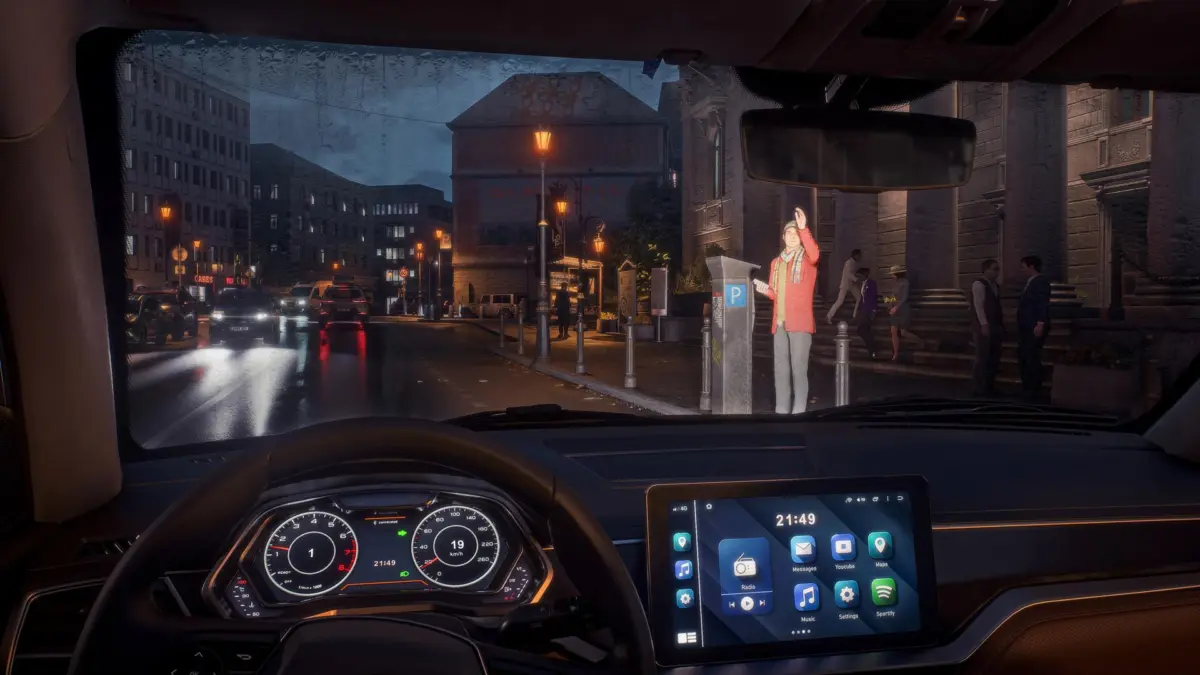
The intersection of generative artificial intelligence and the video game industry has reached another flashpoint, bringing questions of labor displacement, transparency, and creative integrity to the forefront. A high-stakes public dispute has erupted between game developer Saber Interactive and Stella Sacco, the former lead writer of the upcoming title Rideshare "Stimulator". At the heart of the controversy is a stark disagreement over whether human writers were discarded in favor of automated systems, casting a shadow over the game’s recent announcement and the broader practices of mid-to-large-scale game development studios.
As automation becomes increasingly sophisticated, publishers are finding themselves navigating a minefield of ethical, legal, and public relations challenges. This developing story highlights the growing pains of an industry grappling with rapid technological shifts while trying to reassure both consumers and a deeply anxious workforce.
Main Facts
The controversy centers on Rideshare "Stimulator", an immersive driving simulation game developed by Unigine and published or associated with Saber Interactive, which was announced to the public last month. The core premise of the title puts players behind the wheel as a rideshare business owner, interacting with a steady stream of virtual passengers.
However, the game’s promotional materials and Steam storefront have triggered an intense backlash. Stella Sacco, who served as the lead writer for the project during its early development phases, publicly accused Saber Interactive of cutting ties with her and utilizing ChatGPT to finish the narrative elements of the game. Furthermore, Sacco pointed out that the passenger voices featured in promotional content appear to be entirely AI-generated.
Crucially, at the time of these revelations, the game’s official Steam listing lacked any mandatory or transparent disclosures regarding the use of generative artificial intelligence for writing or voice acting. This omission has added fuel to the fire, as players and industry watchdogs increasingly demand clear labeling for AI-generated content on digital distribution platforms.
The dispute quickly escalated into a war of words between Sacco and Saber Interactive CEO Matthew Karch. While Karch has flatly denied that any writers were laid off or replaced by artificial intelligence, Sacco maintains that her contributions were sidelined and that automation directly supplanted human labor on the project.
Chronology of Events
To understand how a niche simulation game became the epicenter of an industry-wide debate on artificial intelligence and labor, it is necessary to examine the timeline of events leading up to the public fallout.
Early Development and Sacco’s Tenure
Stella Sacco originally boarded the project as the lead writer, tasked with crafting the narrative, character interactions, and dialogue for the virtual passengers that players would encounter throughout the simulation. During this period, the game was shaped by traditional human creative processes, establishing the foundational tone and backstory of the title’s world.
The December 2023 Turning Point
According to statements made by Sacco, the trajectory of the project shifted dramatically around December 2023. Sacco alleges that it was during this timeframe that representatives from Saber Interactive communicated a change in direction, effectively cutting her from the project and opting to utilize large language models—specifically ChatGPT—to handle the remaining writing duties for the game’s dialogue and passenger encounters.
The Public Announcement (Last Month)
The controversy burst into the public sphere when Saber Interactive and Unigine officially announced Rideshare "Stimulator" with a teaser trailer and a corresponding Steam store page. The promotional material showcased gameplay segments involving passenger pickups. Keen-eyed viewers and industry observers quickly noted stylistic markers typical of generative AI within both the text dialogue and the voice performances of the virtual riders.
The Bluesky Revelation and Karch’s Denial
Shortly after the game’s reveal, Sacco took to the social media platform Bluesky to air her grievances. She posted a public statement declaring: "I was lead writer on this one! And Saber replaced me with ChatGPT midway through development. All the passenger voices were AI too. Either they changed direction at some point or they’re not disclosing it on Steam."
In response to the mounting public scrutiny and media inquiries, Saber Interactive CEO Matthew Karch issued a formal statement to The Verge, denying the accusations of worker replacement and attempting to clarify the studio’s stance on technological integration.
The Rebuttal
Unsatisfied with Karch’s explanation, Sacco provided a swift and pointed counter-statement to The Verge. She criticized the CEO’s logic, arguing that a studio cannot simultaneously claim that human writers authored the story while admitting that computers dynamically generated text for the game’s systems, calling the defense contradictory and dismissive of displaced labor.
Supporting Data and Technical Context
To evaluate the claims made by both sides, it is helpful to look at the technical architecture of Rideshare "Stimulator" and the broader economic climate of the gaming industry.
The Mechanics of Rideshare "Stimulator"
According to official descriptions, Rideshare "Stimulator" is designed to provide an open-ended, immersive simulation experience. To achieve a realistic and infinitely replayable environment, the developers implemented an experimental "free-ride mode."

Karch’s statements to the press shed light on why automation was brought into the fold: because the number of potential passengers in this mode is theoretically infinite, traditional pre-written branching dialogue trees become mathematically and economically impractical to script by hand. Consequently, the studio turned to algorithmic solutions to generate unending variations of passenger personalities, dialogue prompts, and voice synthesis.
Industry-Wide Labor Pressures
The backdrop to this specific dispute is a brutal period of contraction across the global video game industry. Over the past several years, tens of thousands of developers, artists, writers, and QA testers have faced layoffs, studio closures, and precarious freelance conditions.
Saber Interactive, for its part, is a massive entity boasting a workforce of over 3,000 employees. In his defense, Karch emphasized this scale, noting that the company continues to hire despite industry trends and asserting that none of their thousands of employees need to fear being ousted by software. However, for freelance and contract workers like Sacco, corporate assurances regarding full-time staff offer little comfort, as they often occupy the most vulnerable tier of the game development ecosystem.
Official Responses and Statements
The war of words between leadership and creative talent provides a fascinating window into how executive suites and independent creators view the integration of generative AI.
Matthew Karch’s Defense
In his statement provided to technology journalists, Saber Interactive CEO Matthew Karch sought to draw a sharp line between utilizing modern tools and displacing human personnel:
"Neither Saber nor Unigine have replaced any writers with AI… The game will also feature an experimental, free-ride mode that by necessity incorporates AI as the number of passengers in the game is infinite. We are firm believers in using AI tools to improve or enhance gameplay experiences and improve NPC behavior as we have done since Saber was founded in 2001. As the industry has continued to contract, Saber continues to hire. None of our 3000+ employees have to worry about being replaced by AI."
Karch’s position frames AI not as a replacement for human creativity, but as a technical necessity required to achieve procedural scale—comparing it to long-standing AI routines used for non-player character (NPC) pathfinding and behavior since the early 2000s.
Stella Sacco’s Counter-Statement
Stella Sacco vehemently rejected Karch’s framing, arguing that the studio was engaging in semantic gymnastics to downplay the impact on creative workers:
"My indignation at being called a liar by that statement aside, you can’t meaningfully say both ‘writers wrote the story’ and ‘computers wrote the text.’ If rides I wrote are in there, and also rides AI wrote or will write are in there, then AI was still used, and I was still replaced, just as Saber told me they were doing in December 2023. They’re trying to have it both ways. You can’t win on the labor part of the statement while you admit you took work away from labor in the next part. It’s ridiculous."
Sacco’s response highlights a core tension in the current debate: the friction between foundational human writing and procedural generation that pulls from or completely supersedes human output mid-pipeline.
Broader Implications for the Video Game Industry
The conflict surrounding Rideshare "Stimulator" is far more than an isolated dispute between a mid-level writer and an executive; it is a microcosm of the existential questions facing the entertainment industry today.
The Crisis of Transparency on Digital Storefronts
One of the most pressing issues raised by this controversy is the lack of clear disclosure on platforms like Steam. Consumers increasingly care about the provenance of the media they consume. When games incorporate generative AI for writing, voice acting, or art generation without explicit labeling, it breeds distrust among players. Valve, the operator of Steam, has updated its policies regarding AI content over the past year, but enforcement and developer compliance remain inconsistent, leaving room for controversies like this to erupt.
The Future of Writing and Narrative Design
For narrative designers, copywriters, and voice actors, the rise of large language models and neural text-to-speech tools represents a clear and present threat to their livelihoods. While executives argue that AI is merely an efficiency tool or a technical requirement for procedural generation, creative professionals argue that utilizing algorithms to fulfill roles previously held by humans devalues art and diminishes the emotional depth of storytelling in games.
As studios look for ways to cut costs and scale up simulation complexity, the pressure to adopt generative AI will only grow. However, if the public backlash faced by Saber Interactive and Unigine is any indication, companies that attempt to bypass human labor without transparent communication and ethical frameworks will find themselves facing severe reputational damage, ongoing labor activism, and intense scrutiny from the community.
