

Introduction: The AI Boom Versus Global Climate Goals
The global digital infrastructure is undergoing a historic and unprecedented expansion. Driven by the explosive, relentless rise of artificial intelligence, major tech conglomerates and industrial real estate developers are racing to construct massive new data centers at a breathtaking pace. However, a comprehensive first-of-its-kind industry investigation reveals an alarming truth: the world’s 20 largest data center companies are moving in the wrong direction, and they are doing so at a rapid rate.
Despite setting ambitious, highly publicized public targets to slash their carbon portfolios and achieve net-zero emissions, the vast majority of these corporations are seeing their greenhouse gas outputs surge. Driven by the insatiable computing power required to train and run generative AI models, the data center industry has prioritized speed, scale, and profitability over environmental sustainability. With national governments rolling back green regulations and the planet experiencing its hottest years on record, experts warn that the window to mitigate catastrophic climate change is narrowing dangerously.
Main Facts: The Scope of the Digital Footprint
To understand the scale of the environmental challenge, one must look at the sheer magnitude of resources consumed by the modern tech sector. Data centers are essentially industrial-scale factories of computation, requiring staggering amounts of electricity and water to operate and cool thousands of powerful servers.
According to a June report by the United Nations University, data centers collectively consumed 448 terawatt-hours of electricity globally last year. To put this into perspective, if the global data center network were an independent country, its power consumption would rank 11th in the world, sitting just behind France.
Current trajectories indicate that this immense energy appetite will nearly double by 2030. To meet the computational demands of AI, the four largest technology companies alone—Google, Microsoft, Amazon, and Meta—have committed to spending a combined $2.4 trillion on digital infrastructure build-outs over the remainder of the decade.
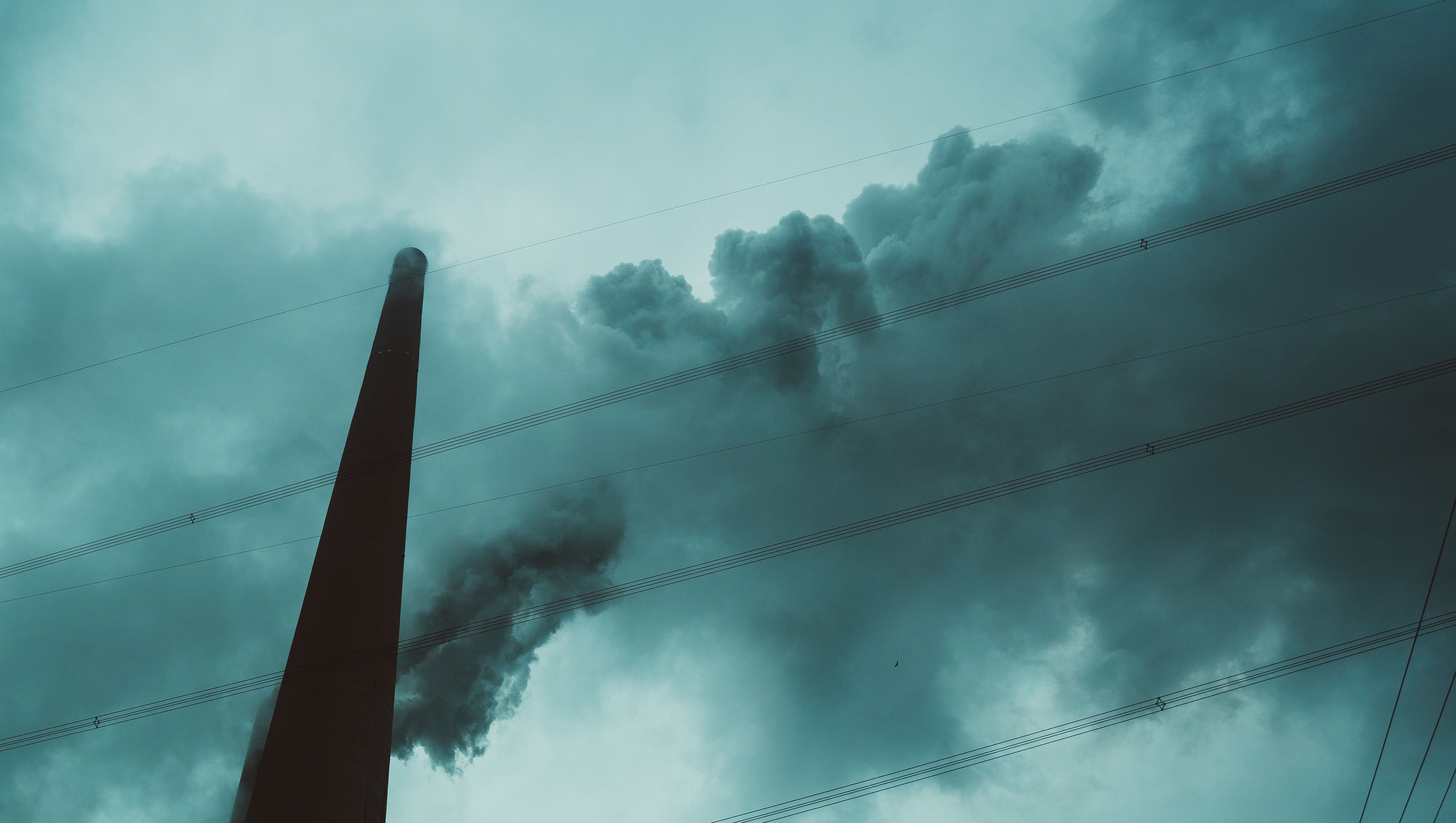
Because existing national power grids cannot supply clean energy at the speed required by these tech giants, developers are increasingly turning to fossil fuels. Many companies are bypassing traditional grid connection bottlenecks by building their own dedicated natural gas-fired power plants directly on-site. Consequently, carbon emissions are not just rising; in many cases, they are doubling or tripling year-over-year.
Chronology and Industry Trajectory: How We Got Here
The collision course between the tech industry’s expansion and global climate goals has evolved rapidly over the past several years:
- Pre-2023 (The Commitment Era): Major hyperscalers and real estate developers establish aggressive sustainability frameworks, pledging to achieve net-zero emissions by mid-century under the principles of the Paris Agreement. Corporate pledges like Amazon’s Climate Pledge (targeting net-zero by 2040) are heavily marketed to investors and consumers.
- 2023–2024 (The Generative AI Explosion): The public launch of advanced AI models triggers an unprecedented surge in demand for compute power. Data center construction enters hyper-drive. Major cloud providers and developers quickly realize that regional power grids cannot handle the sudden, massive load.
- Late 2024 (The Pivot to Nuclear and Fossil Fuels): Recognizing the shortfall in renewable energy supply, major tech firms begin investing in alternative baseload power. Amazon acquires a nuclear-powered data center in Pennsylvania, while Google and Meta initiate partnerships for nuclear energy development. Simultaneously, however, plans for dozens of natural gas and coal-burning plants are launched to get data centers online immediately.
- 2025–2026 (The Reality Gap): Annual sustainability reports reveal soaring emissions. Corporate transparency metrics show that roughly 75% of analyzed firms experienced rising carbon outputs. Governments in major markets, including the United States, scale back subsidies for solar and wind energy while encouraging fossil fuel reliance, compounding the environmental strain.
Supporting Data: Ambition Versus Reality
An in-depth analysis of the 20 largest data center firms—encompassing major cloud hyperscalers (Google, Amazon, Microsoft, Meta, Alibaba, Oracle) and prominent owner-developers (such as Blackstone’s QTS, Digital Realty, Vantage, and CyrusOne)—highlights a stark disconnect between public promises and operational realities.
Key Findings from the Investigation:
- Rising Emissions: Of the 17 companies on the list that clearly disclose annual carbon figures, 13 reported rising emissions in their most recent reporting cycles, regardless of the carbon accounting metric used.
- The Hyperscale Toll: In a single recent year, just six data center hyperscalers pumped 171 million tons of carbon into the atmosphere—an increase of 30 million tons from the previous year. This single-year jump is equivalent to putting an extra 7 million gasoline-powered cars on the road or burning 70 million barrels of oil.
- Record Year-Over-Year Spikes:
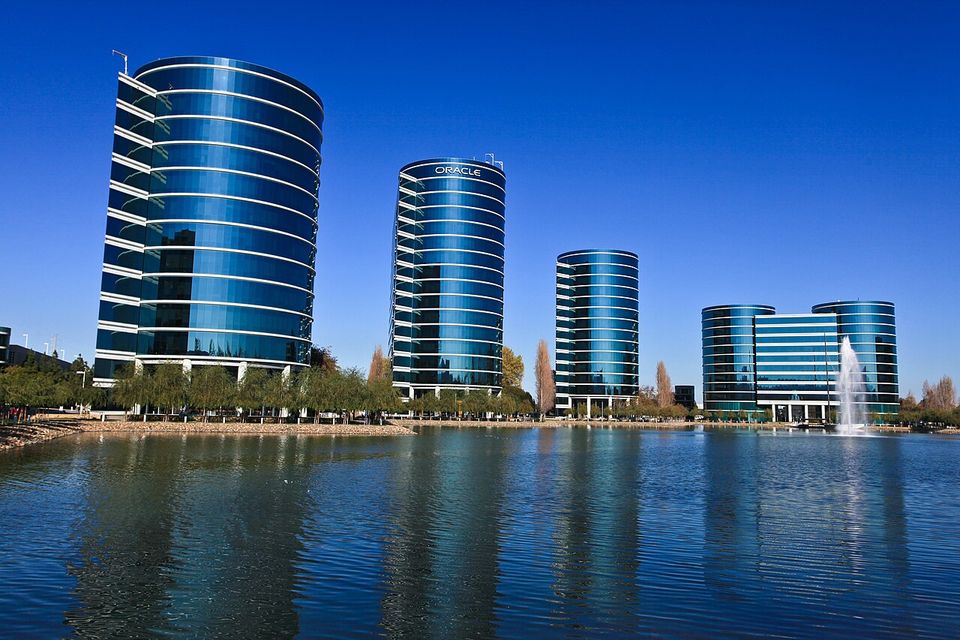
- Oracle saw its carbon emissions skyrocket by between 157% and 194% in 2025, fueled by massive infrastructure deals such as its $300 billion computing agreement with OpenAI.
- Vantage more than doubled its emissions, reporting a 145% increase prior to the full acceleration of the AI race.
- QTS (Blackstone) registered a 59% jump in emissions for 2024.
- Google reported a 29% increase in location-based emissions and an 18% increase in market-based emissions for 2025, alongside a 37% surge in electricity demand.
- Microsoft and Meta reported increases ranging between 10% and 25% across their respective reporting periods.
- The Hidden Omissions: The investigation revealed significant loopholes in corporate carbon accounting. Among real estate owner-developers, 50% do not include the power utilized for customer IT loads (the electricity consumed by the servers themselves) within their decarbonization targets. Because server-power accounts for roughly 75% of a data center’s lifetime emissions, many developers can claim they are reducing corporate footprints while the actual carbon produced by their assets expands unchecked. Furthermore, roughly one-third of analyzed firms exclude embodied carbon—emissions generated during the manufacturing of steel, glass, and concrete for construction—from their sustainability goals.
Official Responses and Industry Perspectives
Corporate leaders, government officials, and independent researchers offer starkly contrasting viewpoints on the current state of data center decarbonization.
The Corporate View
Tech giants readily acknowledge the mounting difficulties of greening their portfolios while scaling up AI infrastructure. In its 2026 sustainability report, Google stated: "While we remain deeply committed to sustainability, reaching our climate moonshot is getting harder… Growing our data center footprint to build out the infrastructure needed to make AI as helpful as possible to everyone requires energy and resources."

Similarly, Meta noted in its sustainability report that value chain emissions continue to fluctuate as new facilities come online, underscoring the long-term challenge of decoupling business expansion from carbon output.
Former Google Vice President of Data Centers Joseph Kava addressed the systemic hurdles at an industry conference, noting: "It’s not that they’re not committed to it. It’s just going to take longer to achieve than they had contemplated back when they made the commitment. So [it] won’t be 100% by 2030, in my opinion."
The Regulatory and Political Stance
National energy policies are increasingly prioritizing speed and economic growth over environmental caution. In the United States—the world’s largest data center market, housing approximately 4,100 facilities—the federal government has rolled back market-distorting subsidies for wind and solar power in favor of fossil fuel availability.
U.S. Energy Secretary Chris Wright captured the prevailing capitalist sentiment at an industry expo: "I’m a capitalist. If data center developers want to build this kind of power or that kind of power, I don’t care. I just care about math and speed."
Independent Expert Warnings
Independent scientists and international bodies have issued severe warnings regarding the long-term consequences of this policy trajectory.
- Kaveh Madani, director of the United Nations University Institute for Water, Environment and Health, emphasized the lack of oversight: "People do not properly monitor what is going on and do not know the scale of the problem… Or at the time they become aware of the impacts, it’s too late to do things." Madani added that the fragmentation of global climate efforts, combined with the explosive energy demands of AI, should make society deeply concerned about what is practically achievable.
- Alex deVries-Gao, a Dutch AI and climate researcher, highlighted the dangers of relying on accounting gimmicks like renewable energy certificates rather than direct infrastructure investment: "These companies are buying renewable energy, but I think the critical question is, to what extent are you actively investing into renewable energy infrastructure and not just buying green energy on paper?… If you drive up a certain power demand, you share the responsibility for the carbon emissions that occur as a result." His recent research revealed that global AI-linked operations generated as much carbon dioxide in 2025 as the entire city of New York.
Implications: A Looming Environmental Reckoning
The acceleration of fossil-fuel-reliant data center development carries severe implications for global climate stability. Research by the Environmental Integrity Project indicates that at least 74 new natural gas-fired power plants are currently planned across the U.S. solely to service data centers, projected to emit roughly 662 tons of greenhouse gases annually—an amount equivalent to the total emissions of Australia. Additionally, federal funds are being directed toward reopening or modernizing coal-fired power stations to satisfy surging electrical loads.
Simultaneously, the physical impacts of climate change are intensifying. Global temperature records continue to shatter, fueling deadly heatwaves, severe droughts, and catastrophic wildfires. According to the Internal Displacement Monitoring Centre, weather disasters displaced 13.6 million people globally last year—averaging more than 37,000 displacements per day.
While pockets of innovation exist—such as Echelon’s "power-first" remote development strategy in Europe, nuclear energy exploration by Amazon and Google, and efficiency gains driven by advanced cooling technologies—the immediate market incentives heavily favor fossil fuel integration.
Ultimately, the data center industry stands at a historic crossroads. Unless technology conglomerates and real estate developers radically accelerate true clean energy procurement and halt their reliance on newly constructed fossil-fuel power plants, the digital revolution’s promise of intelligence will come at an unsustainable cost to the habitability of the planet.
