

EUROPE — Amid unrelenting hostilities in Ukraine and an increasingly tense geopolitical landscape, Western intelligence agencies are sounding the alarm over a potential escalation of Russian covert operations targeting NATO’s eastern flank. According to senior European intelligence and government officials, Moscow is actively weighing a broader campaign of "hybrid warfare"—spanning critical infrastructure sabotage, targeted assassinations, and sophisticated false-flag operations—aimed at intimidating nations that provide robust support to Kyiv.
While Western analysts emphasize that there is currently no tangible evidence indicating Moscow is preparing a conventional military invasion or direct cross-border assault against NATO member states, the psychological and physical threat of a deepening shadow war is palpable. The warnings reflect a growing consensus among security experts that Russia’s conflict with the West has long transcended the physical frontlines of Ukraine, manifesting instead in a murky realm of covert operations designed to fracture European resolve.
Main Facts: The Anatomy of the Emerging Threat
The core of the current security concern centers on the diversification of Russian tactics. Rather than risking a catastrophic, Article 5-triggering conventional war with the North Atlantic Treaty Organization, Moscow is believed to be relying heavily on intelligence and security services to orchestrate plausible-deniability operations across Poland and the Baltic states of Estonia, Latvia, and Lithuania.
According to a European intelligence official who spoke on the condition of anonymity to discuss sensitive matters, Russian operatives are exploring multiple vectors of disruption:
- Critical Infrastructure Sabotage: Attacks on energy grids, telecommunications networks, and vital logistics hubs designed to paralyze regional economies and sow panic.
- False-Flag Operations: Elaborate setups—such as utilizing captured Ukrainian military hardware—to falsely implicate Kyiv in attacks on Western soil, thereby turning public opinion against continued foreign aid.
- Targeted Covert Actions: Physical eliminations, cyberattacks, and coordinated acts of arson or structural destruction carried out by proxy actors, reminiscent of the "little green men" strategy deployed during the annexation of Crimea.
Parallel to these European findings, the United States Central Intelligence Agency (CIA) has reportedly issued discrete warnings to regional capitals regarding the heightened probability of future Russian-backed disruptions. However, some officials maintain a dual perspective: while the operational threat is real, certain indicators may be deliberately engineered as part of a massive psychological information operation meant to project strength, sow fear, and deter Western aid commitments without firing a single conventional missile.
Chronology of Escalation: From Covert Plots to Airborne Incidents
To understand the trajectory of the current threat environment, security analysts point to a rapidly accelerating timeline of provocative incidents, foiled plots, and escalating rhetoric over the past several years.
The 2022–2024 Surge in Hybrid Warfare
Since the launch of Russia’s full-scale invasion of Ukraine in February 2022, security researchers have documented an exponential expansion of Moscow’s shadow war across Europe. Data compiled by organizations such as the US Helsinki Commission indicates that suspected Russian hybrid operations within NATO territory quadrupled between 2022 and 2023, and tripled again between 2023 and 2024. Nearly 150 distinct operations—ranging from cyber sabotage to physical arson attacks on military warehouses—have been cataloged during this window.
The 2024 Assassination Plot and Diplomatic Threats
The lethality and audacity of these networks became starkly apparent when authorities thwarted a 2024 plot orchestrated to assassinate a high-ranking German defense industry executive. As European nations tightened their security apparatus, Moscow escalated its rhetorical assaults. Russian diplomats frequently issued direct threats against the Baltic states, baselessly accusing them of allowing Ukraine to launch military drones from their sovereign territory.
In a particularly brazen instance, Russia’s ambassador to the United Nations issued a direct warning to Latvia, declaring that "membership in NATO will not protect you from retaliation," and explicitly noting that "the coordinates of decision-making centers in Latvia are well-known." International monitors have repeatedly debunked these claims, noting that while errant drones have occasionally drifted into Baltic airspace after being intercepted or thrown off-course by electronic jamming, none of the nations have participated in or facilitated Ukrainian drone strikes.
Late 2025: Infrastructure Disruptions in Poland and Germany
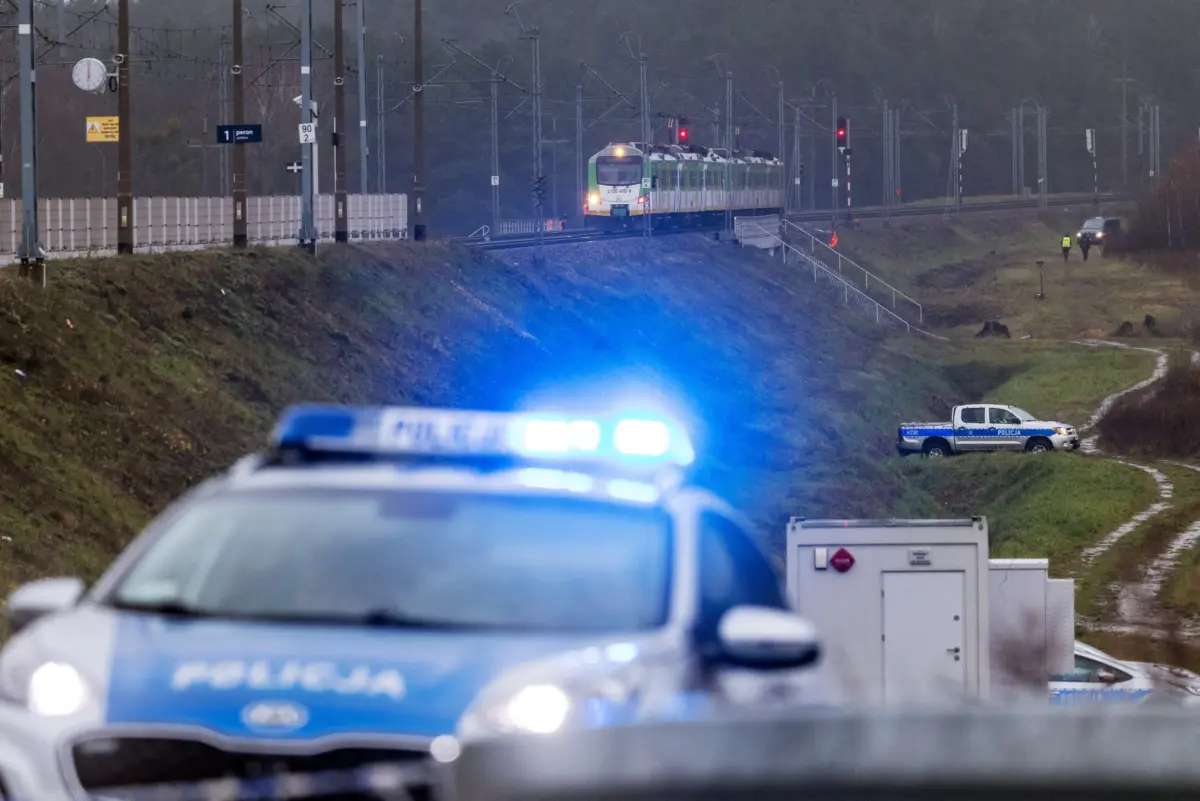
The shadow war took a heavily destructive turn in late 2025. On November 17, 2025, an explosion ripped through a railway line in Mika, Poland, causing significant structural damage and highlighting the vulnerability of critical European transit corridors.
By early 2026, the aviation and logistics sectors in Germany became direct focal points. At Germany’s Leipzig-Halle airport—a critical NATO military logistics hub and the European home base for Ukraine’s Antonov Airlines—flights were abruptly suspended after an armed drone was discovered directly adjacent to a Ukrainian aircraft. Compounding the alarm, a cargo plane narrowly avoided disaster after colliding in midair with a small, unidentified object, while unauthorized drones were visually confirmed flying over a key German military installation just 24 hours later.
Recent 2026 Warnings and False-Flag Alarms
As the calendar turned deeper into 2026, the defensive posture across the Baltics grew increasingly urgent. Lithuania’s defense minister publicly warned that Russian intelligence was actively preparing to deploy captured Ukrainian drones in a false-flag attack targeting critical civilian and military infrastructure within the Baltic region. Meanwhile, in Lithuanian courts, a high-profile trial commenced involving five individuals charged with organizing a series of coordinated 2024 arson and sabotage attacks on behalf of Russian military intelligence.
Supporting Data: The Quantifiable Surge of the Shadow War
The escalation is not merely a matter of political rhetoric; it is backed by a substantial body of empirical research and geopolitical analysis.
- Aid Commitments vs. Covert Pushback: At the NATO summit in Ankara, alliance members demonstrated unyielding support for Kyiv, pledging $80 billion in military assistance for 2026, with commitments to maintain "at least the equivalent levels" into 2027. In response, Moscow has intensified its efforts to disrupt the supply chains feeding this military aid.
- The CSIS Assessment: Seth Jones, a former Pentagon official with extensive special operations experience and currently a security expert at the Center for Strategic and International Studies (CSIS), summarized the primary danger facing the West:
"The biggest concern right now is a series of sabotage operations. From assassinations to accidental drones or missiles, little green men—operating in or around the Baltic countries—to explosions in various facilities."
- Frequency of Attacks: Academic and intelligence datasets illustrate a terrifyingly steep curve in hostile foreign interference. The metric of hybrid incidents has multiplied severalfold annually since 2022, transforming Europe into a sprawling, quiet battleground where attribution is intentionally difficult to prove.
Official Responses: Divergent Narratives and Defensive Postures
The international community is sharply divided in its interpretation of these escalating events, creating a diplomatic standoff characterized by accusations of paranoia on one side and willful blindness on the other.
The Western Defensive Stance
European and North American officials maintain that ignoring these warning signs would be catastrophic. Analysts like Lieutenant Colonel Thilo Geiger, a hybrid warfare researcher at the Institute for Peace Research and Security Policy in Hamburg, argue that incidents like the German drone sightings carry a clear, calculated psychological subtext:
"One of the possible messages or effects they want to achieve with such a thing is—don’t mess with us. Care about your German national interests and stop caring about your neighbors."
Governments in Warsaw, Vilnius, Riga, and Tallinn have heavily fortified their border controls, upgraded cyber defenses, and increased intelligence-sharing protocols with NATO allies. Leaders across the region argue that a proactive posture—exposing Russian plots before they manifest physically—is the only way to deter further aggression.
The Kremlin’s Rebuttal
Unsurprisingly, Moscow has forcefully rejected these assessments. Kremlin spokesperson Dmitry Peskov dismissed the accumulating intelligence reports and Western warnings as entirely fabricated "horror stories." According to state-run media reports via Tass, Peskov argued that these narratives are manufactured solely to provide a pretext for NATO to militarize its eastern borders, expand its infrastructure, and deploy aggressive military assets closer to the Russian federation.
Implications for European Security and the Future of NATO
The realization that Europe is locked in an unfolding shadow war carries profound long-term implications for the continent’s stability.
First, it forces NATO to redefine the parameters of deterrence. Traditional deterrence relies on the threat of overwhelming conventional retaliation. However, hybrid warfare—characterized by deniable cyberattacks, mysterious warehouse fires, and localized infrastructure sabotage—operates just below the threshold required to invoke NATO’s Article 5 mutual defense clause. This gray-zone conflict tests the resilience of democratic societies, forcing security agencies to spend billions of dollars hardening civilian infrastructure that was never designed to withstand state-sponsored sabotage.
Second, the psychological dimension of Moscow’s campaign poses a direct challenge to European political cohesion. By stoking fears of an impending wider war, Russia aims to erode public support for Ukraine. When airports close due to drone sightings or rail lines explode, citizens in Western and Central Europe are forced to confront the direct domestic costs of their governments’ foreign policies.
Ultimately, the warnings emerging from European intelligence agencies, the CIA, and regional defense ministries serve as a sobering reminder that the war in Ukraine is not geographically contained. As long as Kyiv continues to mount a robust defense—supported by tens of billions of dollars in Western military aid—the silent, unseen battlefields of the Baltic states, Poland, and Western Europe will remain frontline zones in a high-stakes geopolitical struggle.
