

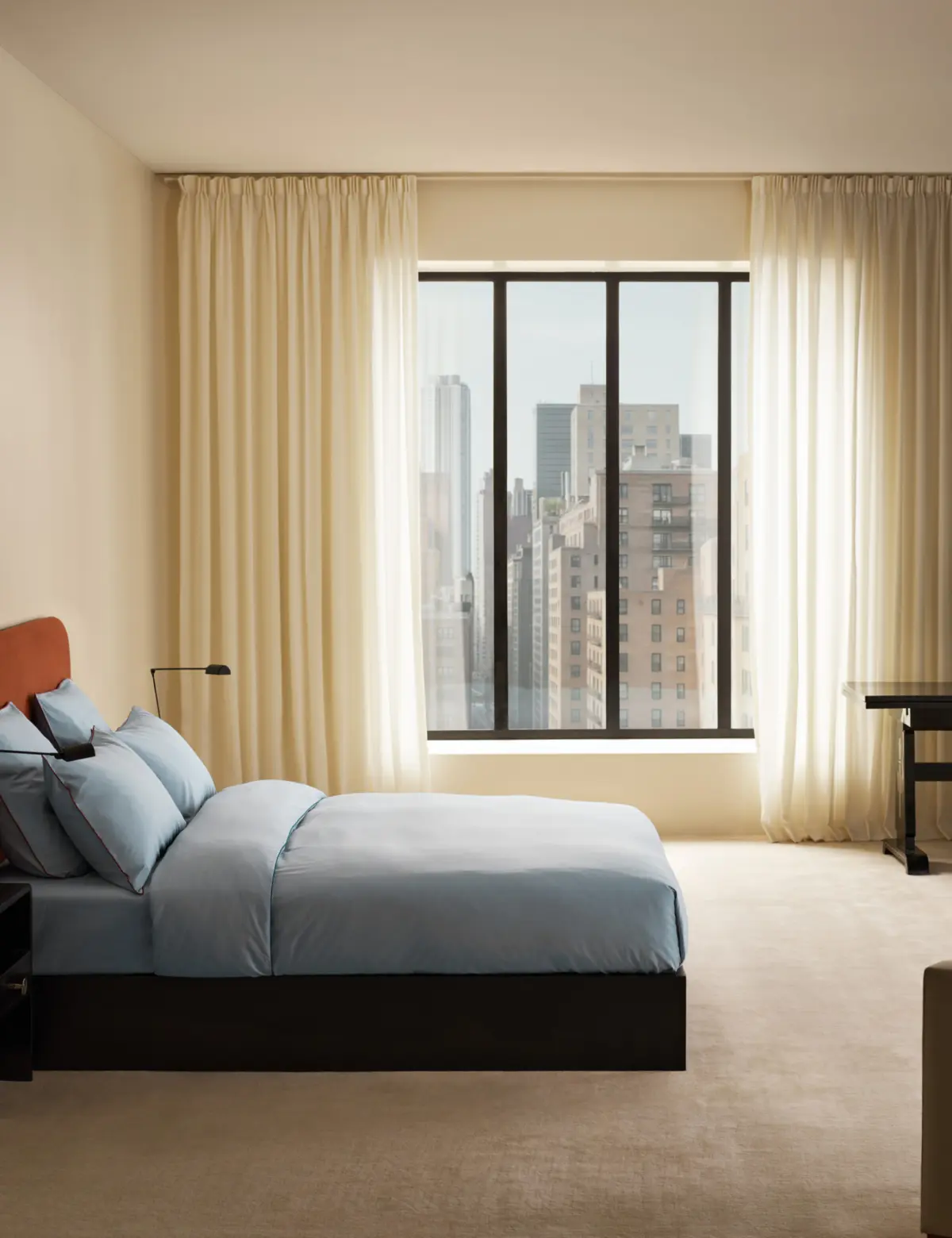
GLOBAL FASHION & INTERIOR DESIGN — Walk the humid, sun-baked asphalt of any style-conscious metropolis this summer, and you will inevitably encounter a singular, arresting palette. It is a shade that whispers rather than shouts, cutting through the sweltering heat with the crisp clarity of a glacier. This is ice blue—the frosty, chromatic calling card that has quietly colonized everything from high-fashion runways in Paris to the most exclusive minimalist bedsheets in New York and Copenhagen.
Far from being a fleeting seasonal whim, ice blue has established itself as a cultural anchor for the cosmopolitan style set. It is cool-person-coded, effortlessly chic, and versatile enough to bridge the gap between high couture and intimate domestic spaces. But how did a pale, wintry hue become the definitive aesthetic of the summer, and how are interior designers translating this high-fashion phenomenon into the home?
Main Facts: The Anatomy of a Color Trend
At its core, the ice blue phenomenon represents a broader convergence between the worlds of high fashion and interior architecture. The color is defined by its clean, muted undertones—possessing just enough frost to feel modern, yet enough softness to avoid clinical sterility.
Its dominance this season is underscored by high-profile endorsements across industries:
- The Runways: Dior boldly incorporated the shade into its SS26 collections in Paris, cementing its status as a critical colorway for the upcoming seasons.
- Retail Architecture: Miu Miu utilized ice blue as a striking, immersive color-drench for the grand reopening of its flagship boutique in Miami.
- Red Carpet Culture: Celebrity influence has further amplified the trend. Anne Hathaway recently stunned onlookers at the premiere of The End of Oak Street in Los Angeles, cascading down the red carpet in a dramatic, ice-blue creation punctuated by a flash of crimson underneath.
- The Home Sector: Bedding and home textile brands have rapidly adapted. Direct-to-consumer darlings and heritage names alike—including Tekla, HOMMEY, Nordic Knots, and Quince—have restructured their seasonal collections around ice blue, "Shirt Blue," and "Sky" colorways.
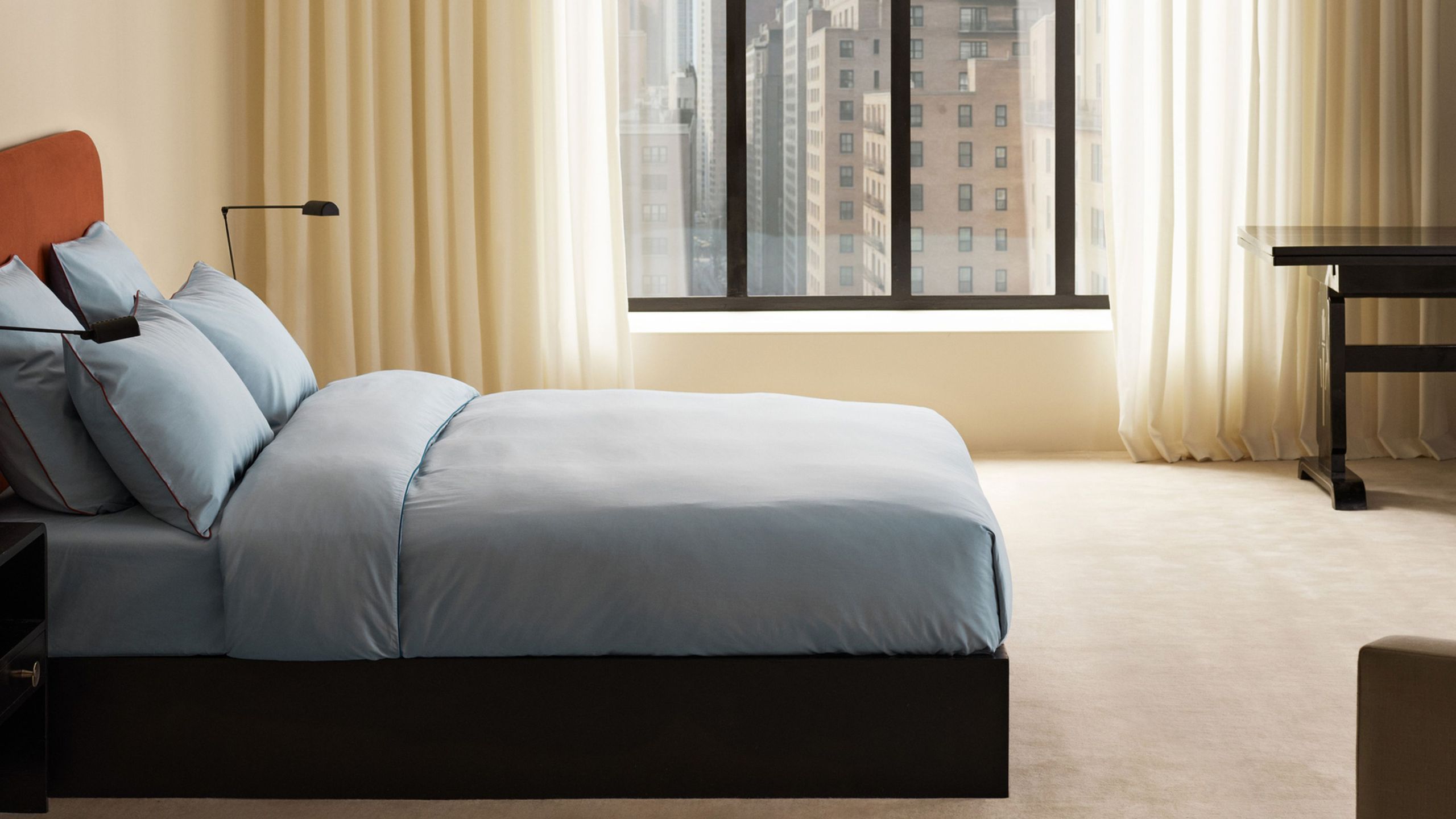
Yet, styling ice blue requires a nuanced hand. When paired with predictable sandy neutrals, the shade risks drifting into tired, predictable "beach house" territory. Instead, contemporary tastemakers are drawing direct inspiration from the runway, pairing the frosty hue with unexpected, grounding companions like rich chocolate brown and sharp, theatrical reds.
Chronology: From Parisian Catwalks to Bedroom Sanctuaries
To understand how ice blue became the ubiquitous design shorthand for modern elegance, it helps to trace its trajectory over the past year.
Phase 1: The Runway Ascent (Late 2024 – Early 2025)
The resurgence of icy pastels began on the international catwalks, where designers sought an antidote to the loud logomania and saturated neon trends of previous years. Paris Fashion Week served as the incubator. Houses like Dior began reintroducing pale blues as a sophisticated, gender-neutral alternative to traditional neutrals. The color communicated an understated luxury—what industry insiders frequently term "quiet confidence."
Phase 2: The Architectural Takeover (Spring 2025)
As the shade gained traction in apparel, retail design was quick to follow. Miu Miu’s architectural team executed a daring color-drench of their Miami flagship entirely in ice blue. The space functioned not merely as a store, but as an immersive chromatic environment, proving that the shade possessed spatial depth and architectural viability.
Phase 3: The Domestic Migration (Late 2025 – Present)
The transition from closet to bedroom was swift. In September, Nordic Knots expanded its highly sought-after rug collections into the bedding category, introducing "Shirt Blue"—a crisp, menswear-inspired percale that mirrored the viral success of their "Sky" rugs. Concurrently, European textile houses like Copenhagen’s Tekla and lifestyle brand HOMMEY began pushing icy hues into their luxury duvet covers and reversible fitted sheets.
By the time Anne Hathaway stepped onto the Los Angeles red carpet in her ice-blue, red-accented ensemble, the cultural loop was closed. The bedroom was no longer insulated from fashion; it had become its ultimate canvas.
Supporting Data: The Economics of the Icy Palette
The shift toward ice blue is not merely anecdotal; it is supported by significant shifts in consumer buying habits and home textile manufacturing.
- The Percale Boom: According to retail data from home furnishings platforms, searches for 400-thread-count Egyptian cotton percale in non-traditional neutrals (such as sky, ice, and slate blues) have surged by over 45% year-over-year.
- Democratic Design: While luxury European houses like Tekla command high price points for their sateen and percale offerings, affordable luxury alternatives—most notably Quince’s organic cotton bedding bundles—have democratized the trend. This has allowed mass-market consumers to participate in a high-fashion aesthetic at a fraction of the cost.
- Reversible Utility: Sales metrics from brands like HOMMEY indicate a rising consumer preference for dual-toned, reversible bedding (such as ice blue paired with chocolate brown). This points to an economic and functional desire for versatility; consumers want to refresh their bedroom palettes without purchasing entirely new sheet sets.
Official Responses and Expert Insights: Redefining Interior Styling
Interior designers and textile creators are welcoming the ice blue wave, viewing it as a sophisticated evolution from the omnipresent beige and bouclé fatigue of the early 2020s.
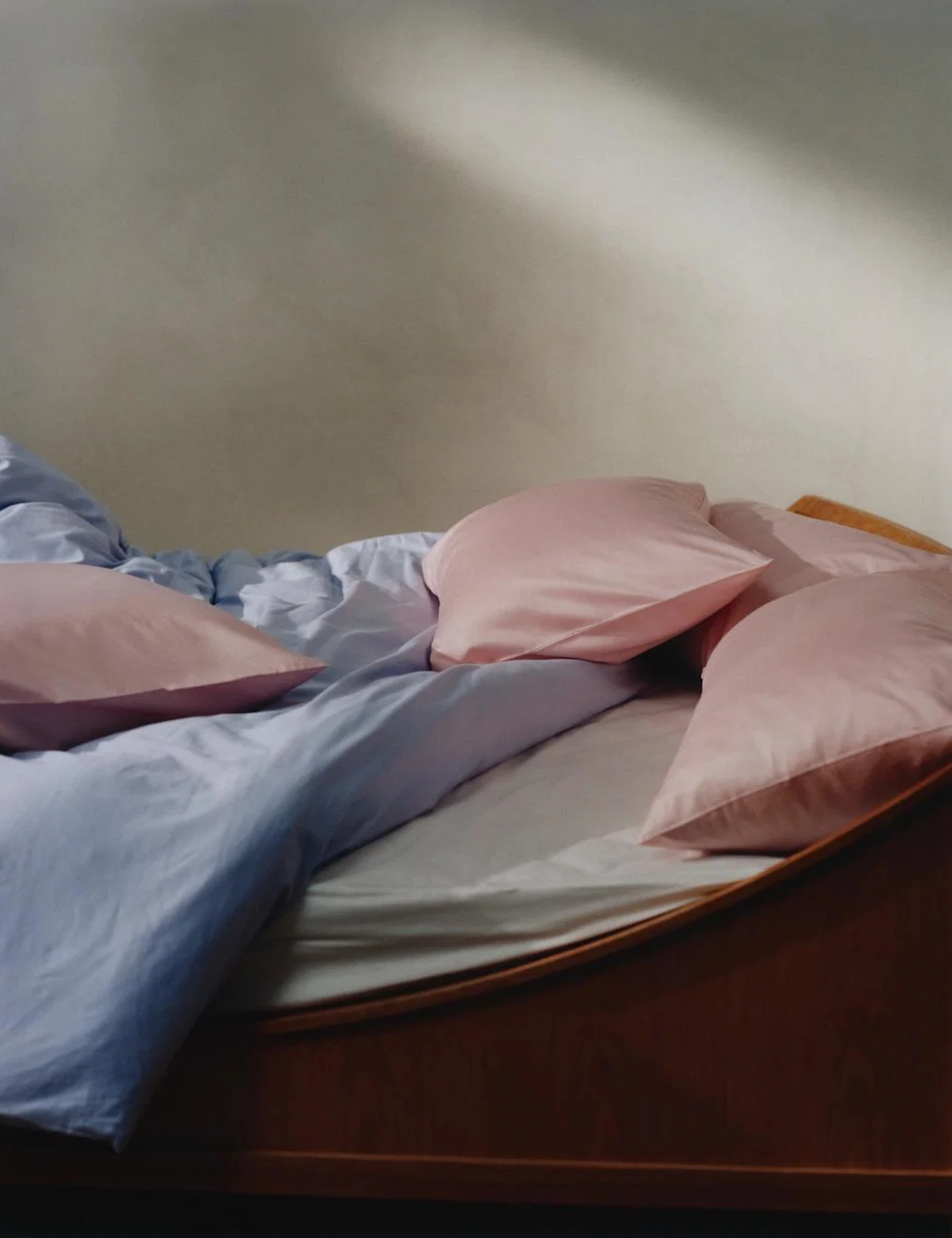
"When paired with the obvious sandy neutrals, ice blue starts to feel a little too beach house," notes leading textile design commentary. "Instead, we’re bringing the bedding trend back to its runway roots. Chocolate brown is perhaps its chicest companion, especially on a fitted sheet."
Design houses are actively encouraging consumers to break traditional color rules. Rather than sticking to a monochromatic blue scheme, brands like Tekla are championing a "cotton candy" aesthetic. By pairing an icy Evening Blue duvet with Blushing Pink pillowcases and foundational Cloud White fitted sheets, bedrooms take on a multidimensional, tactile richness.
Furthermore, the influence of the red-carpet moment has trickled down into pillow styling. The inclusion of crimson piping—as seen in Nordic Knots’ shirting-inspired percale collections—or the introduction of a single, vibrant crimson sham (nodding to Hathaway’s flash of red beneath her high-low hem) proves that small color accents can entirely alter the mood of a minimalist room.
This ties directly into another emerging micro-trend: the "unipillow" movement. As homeowners lean into minimalist, streamlined summer aesthetics, the traditional 12-cushion "pillowscape" is being cast aside in favor of a single, elegantly styled statement pillow—allowing high-impact colors like ice blue to take center stage without visual clutter.
Implications: What Ice Blue Means for the Future of Design
The enduring popularity of ice blue carries several broader implications for both the fashion and home goods industries:
- The Death of Monochromatic Minimalism: The trend signals a departure from cold, sterile grays and uniform beiges. Consumers are learning to embrace "complex neutrals"—colors that function as neutrals due to their low saturation, yet inject emotional resonance and personality into a space.
- Fashion-Home Interconnectivity: The rapid pipeline from Paris and Milan runways to urban bedroom suites illustrates that the boundary between wardrobe and interior design has effectively dissolved. What people wear to a film premiere is now explicitly linked to what they sleep under.
- The Psychology of Cool: In an era marked by climate anxiety and increasingly oppressive summer heatwaves, color psychology plays a tangible role in domestic design. Ice blue offers a visual respite, subconsciously lowering the perceived temperature of a room and providing a sanctuary of calm.
Ultimately, whether incorporated via a 400-thread-count percale duvet, a reversible chocolate-and-ice-blue linen sheet, or a simple flash of crimson piping, ice blue has proven it is far more than a passing phase. It is a masterclass in modern restraint—a shortcut to staying cool, composed, and undeniably chic, in more ways than one.
