As Georgia prepares to turn the page on Governor Brian Kemp’s two-term legacy, the battle to succeed him has transformed into one of the most fiercely contested political clashes in the nation. Beyond the traditional fault lines of party politics, a vital economic engine of the Peach State is actively putting its skin in the game: Atlanta’s commercial real estate (CRE) community.
Industry leaders, developers, brokers, and investors are hedging their bets across both sides of the political aisle. However, a comprehensive analysis of campaign finance disclosures reveals that the lion’s share of real estate capital is flowing into the war chest of Republican nominee Rick Jackson, even as the broader gubernatorial race settles into a razor-thin statistical dead heat.
Main Facts: The Candidates and the Core Issues
The November election pits Republican Rick Jackson—CEO of healthcare staffing giant Jackson Healthcare—against former Democratic Atlanta Mayor Keisha Lance Bottoms. Both candidates are vying to occupy the Governor’s Mansion starting in January, inheriting an economy that is robust yet grappling with acute pressures.
At the heart of the campaign are two interrelated crises that directly impact the commercial real estate sector: housing affordability and soaring healthcare costs.
The Republican Pitch: Jackson has framed his campaign around sweeping affordability measures, promising to treat the cost-of-living squeeze as an absolute crisis. His platform features a pledge to slash the state income tax in half, reduce property taxes, and aggressively expand healthcare access into rural Georgia. Bolstered by an official endorsement from Donald Trump, Jackson has closely aligned his platform with conservative economic policies.
The Democratic Pitch: Bottoms is leaning heavily on her extensive public sector and executive background. Her policy proposals focus on stabilizing rural hospital networks, establishing a state-run prescription cost-savings board, and fast-tracking zoning and permitting processes to stimulate the construction of workforce and affordable housing developments.
The ideological contrast between the two candidates has split the commercial real estate sector, creating a fascinating dynamic where major developers and brokers are weighing business philosophies, national political alignments, and candidate accessibility.
Chronology: The Road to the General Election
The path to the 2026 general election has been defined by high-dollar fundraising blitzes, high-profile endorsements, and shifting voter sentiment across the state.
May 2026: Georgia holds its closely watched gubernatorial primary elections, winnowing down crowded fields for both major parties.
June 2026: Following primary results, a tense Republican primary runoff solidifies Rick Jackson as the GOP nominee. Concurrently, major CRE figures begin executing heavy campaign contributions, with Jackson rapidly outstripping fundraising metrics through a mix of substantial self-funding and industry backing.
July 2026:
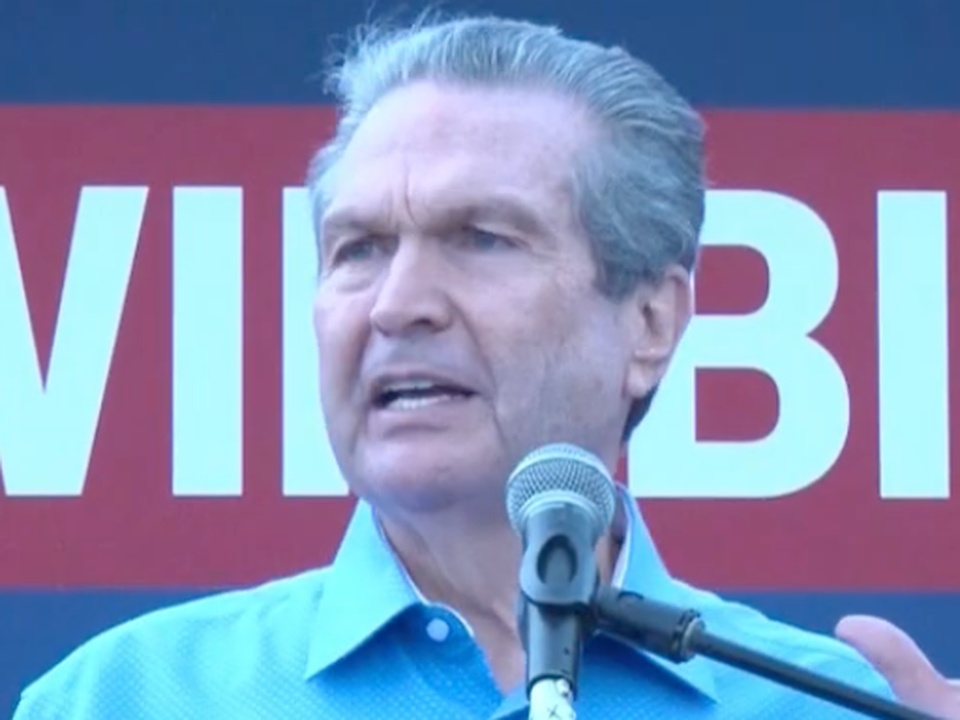
Rick Jackson holds his first official general election rally in Cleveland, Georgia, formally launching his "affordability-first" platform.
Former President Donald Trump makes his endorsement of Jackson official, solidifying the Republican nominee’s ties to the national MAGA base.
Campaign disclosure filings reveal staggering financial discrepancies: between June 11 and July 31, Jackson funnels more than $108 million of his personal wealth and $13 million in outside donations into his campaign. Meanwhile, Bottoms raises over $5.6 million during the same window, bolstered by a $1.6 million injection from the Democratic Governors Association.
August 2026: Polling data from Quantus Insights emerges, surveying 815 likely voters and revealing a statistical dead heat. Bottoms commands a narrow lead with 46.4% of the vote, compared to Jackson’s 44.9%, leaving nearly 8% of the electorate undecided and cementing Georgia’s status as a primary national political battlefield.
Supporting Data: CRE Contributions and Financial Footprints
An independent analysis of Georgia State Ethics Commission disclosure records sheds light on how industry players are allocating their financial support. As of July, individuals and executives associated with commercial real estate firms have poured at least $67,000 into Jackson’s campaign, compared to at least $30,000 directed toward Bottoms.
The Jackson Camp: Heavyweight Donors
Jackson’s donor list reads like a "Who’s Who" of Atlanta commercial real estate royalty. Among his top 10 overall donors is David Allman, founder and chairman of Regent Partners. Allman contributed $21,600 to Jackson’s campaign over the course of 2026. Allman’s firm is a titan in the local landscape, having developed Buckhead’s prominent Sovereign mixed-use tower and holding ownership of the iconic King and Queen office complexes in Central Perimeter.
Other notable CRE leaders backing Jackson include:
David Tyndall, CEO of Collaborative CRE ($4,800 in June)
Niles Bolton, founder of Niles Bolton Associates ($4,000 in May)
Jim Meyer, Managing Director at Tishman Speyer ($2,000 in July)
Egbert Perry, CEO of Integral Group ($2,000 in July)
(Note: Integral Group’s financial support came with caveats. A spokesperson clarified that Perry contributed at the request of a business associate and had also donated $2,500 to Bottoms, emphasizing that the contribution should not be construed as a personal endorsement of Jackson.)
The Bottoms Camp: Diverse and Out-of-State Backing
While Jackson leads in total volume from local CRE kingpins, Bottoms has cultivated a distinct donor base featuring out-of-state heavyweights, entertainment icons, and a high volume of smaller, one-time contributions from industry professionals.
Key backers for Bottoms include:
Ronald Abramson, a prominent D.C.-area real estate attorney with Buchanan, who contributed $31,400.
Rod Mullice, head of Atlanta development firm Windsor Stevens Holdings, whose series of contributions topped $5,000.
Gerald Alley, CEO of minority-owned Texas construction firm Con-Real ($8,400 in June).
Stephen Zoukis, former Jamestown executive ($1,000 in July).
Cheryl Effron, Tishman Speyer senior advisor ($1,000 in July).
Beyond real estate, Bottoms’ donor rolls feature prominent cultural and media figures, including Eagles band member Don Henley and rapper/actor Clifford "T.I." Harris Jr.
Official Responses and Industry Perspectives
The divide within Atlanta’s real estate community is less about concrete industry regulations and more about leadership style, economic development history, and alignment with national political figures.
David Allman defended his substantial investment in Jackson, highlighting a long-standing personal and professional relationship.
"I’ve known Rick for a long time. I know his story, and I know his values. I know his heart and compassion for all Georgians," Allman told Bisnow. "From a housing and affordable housing perspective, that’s something we as an industry ought to weigh in on. I think he will do that. I think he’ll listen and he will act."
Conversely, other prominent figures in the local market are intentionally steering clear of the Republican ticket due to national political considerations. Kirk Rich, a principal at Avison Young who recently hosted a campaign fundraiser for Bottoms at his home, emphasized that his political stances are entirely separate from his corporate role.
"I can’t support a competitor who is so ingrained in the MAGA Trump world. I just think Trump is a toxic force," Rich said. "I think Keisha, if she became governor, will work closely with Republican folks. She’s not coming in to do radical things."
Other industry veterans are taking a more analytical approach. Cheri Morris, president of mixed-use development firm Morris & Fellows—who has yet to donate to either campaign—pointed out that both candidates ultimately share a vested interest in the pro-business economic development playbook established under outgoing Governor Kemp. During Kemp’s tenure, Georgia secured massive economic wins, such as Hyundai’s multibillion-dollar Metaplant near Savannah and TriNet’s 150,000-square-foot office expansion in Central Perimeter.
"While Rick Jackson is a significant player in the world of medical real estate, Keisha Lance Bottoms has governmental experience with more exposure to economic development channels," Morris noted. "I have to believe [Bottoms has] more exposure to the work of government specifically supporting good business and good economic development."
Implications: What the Election Means for Georgia’s CRE Future
As the race enters its final stretch, the implications for Georgia’s commercial real estate sector are profound. Whichever candidate captures the Governor’s Mansion will hold immense sway over the state’s regulatory climate, infrastructure spending, and zoning frameworks.
Housing and Zoning Reform: With affordability dominating voter concerns, developers are watching closely to see how the next administration handles housing policy. Bottoms’ proposals for fast-tracking permitting processes could streamline multifamily and workforce housing projects. Meanwhile, Jackson’s focus on broad tax cuts aims to stimulate private investment and lower overhead for developers and property owners alike.
Healthcare Real Estate Expansion: Given Jackson’s deep roots in the healthcare sector—and Bottoms’ focus on rural hospital stabilization—healthcare real estate is poised for a boom regardless of the election outcome. Facilities management, outpatient clinics, and medical office buildings will likely see increased public-private attention as both candidates look to remedy rural healthcare deserts.
Economic Development Momentum: Governor Kemp’s legacy of landing mega-projects set a high bar for industrial and commercial growth. The next governor will need to maintain aggressive corporate recruitment pipelines while balancing the infrastructure strains of rapid population growth in metro Atlanta.
For now, Atlanta’s commercial real estate leaders remain split down ideological and strategic lines. Whether they are writing five-figure checks for Jackson’s self-funded populist machine or rallying behind Bottoms’ municipal experience and coalition-building, the industry recognizes that the stakes for Georgia’s economic future have never been higher.