

OKLAHOMA CITY, Okla. — In an era where military readiness is increasingly intertwined with energy independence and infrastructure resilience, a landmark sustainability project is taking shape in the heart of Oklahoma. ClimateMaster®, a leading U.S. manufacturer of geothermal and water-source heat pump systems and a brand of Climate Control Group, Inc. (CCG), is supplying cutting-edge technology for one of the most ambitious military housing energy upgrades in United States history.
At Fort Sill, a sprawling historic Army installation, a $63 million infrastructure investment is transforming how military families experience home comfort. Spearheaded by Corvias in a strategic partnership with Ameresco, the modernization effort is replacing outdated HVAC infrastructure across more than 1,700 military family homes. By integrating high-efficiency ClimateMaster geothermal heating and cooling systems, advanced smart thermostats, modern hot water equipment, and centralized controls, the project is projected to slash the community’s annual energy consumption by roughly 57%.
The financial and environmental implications are substantial. Once fully realized, the upgrades are expected to yield more than $5 million in annual energy savings. Beyond the balance sheet, the initiative underscores a growing recognition across the Department of Defense: sustainable, locally managed energy solutions are vital to national security, operational efficiency, and the quality of life for service members and their families.
Main Facts: The Anatomy of the Fort Sill Project
The modernization initiative at Fort Sill is a masterclass in public-private partnership and large-scale engineering execution. At its core, the project leverages the Earth’s natural thermal properties to provide reliable, year-round climate control while drastically reducing reliance on traditional fossil-fuel-dependent electrical grids.
Key Project Metrics:
- Total Investment: $63 million infrastructure overhaul.
- Scope: Upgrading more than 1,700 military family housing units.
- Projected Energy Reduction: ~57% decrease in annual energy consumption across the housing community.
- Financial Impact: Generating upwards of $5 million in annual energy savings.
- Core Technology: High-efficiency ClimateMaster geothermal heat pumps, advanced smart thermostats, upgraded hot water systems, and integrated controls.
- Delivery Mechanism: Energy Savings Performance Contract (ESPC), ensuring the project pays for itself through future utility savings without requiring upfront capital appropriations from Congress.
The technology deployed by ClimateMaster taps into the relatively constant subsurface temperatures of the earth. While ambient air temperatures fluctuate wildly between scorching Oklahoma summers and freezing winter nights, underground ground temperatures remain remarkably stable. Geothermal heat pumps utilize a closed-loop system of underground pipes to absorb heat from the earth during the winter and reject heat back into the ground during the summer.
This process requires electricity only to circulate fluid and run the compressor—not to generate heat from scratch. Consequently, geothermal heat pumps typically reduce energy consumption by 40% to 70% compared to conventional heating, ventilation, and air conditioning (HVAC) systems. Furthermore, because the primary mechanical components are housed indoors or protected from extreme weather elements, the equipment boasts a longer operational lifespan and lower ongoing maintenance requirements.
Chronology: From Concept to Community Showcase
The realization of the Fort Sill project represents the culmination of years of strategic planning, multi-agency coordination, and industrial manufacturing excellence.
Phase 1: Partnership and Strategic Alignment (2024–2025)
The blueprint for the Fort Sill modernization was forged through an established, high-stakes partnership between Ameresco, a leading energy efficiency and renewable energy integrator, and Corvias, a long-term partner to the U.S. military specializing in infrastructure and housing management. Having successfully collaborated on two previous military housing geothermal rollouts, the team sought an American-made, highly reliable HVAC partner capable of meeting strict military performance specifications at scale. ClimateMaster, headquartered nearby in Oklahoma City, was chosen to anchor the thermal infrastructure.
Phase 2: Manufacturing and Quality Assurance (Early 2026)
Production kicked into high gear at ClimateMaster’s state-of-the-art manufacturing facility in Oklahoma City. Keeping true to its deep-rooted heritage of domestic manufacturing, the company engineered and assembled the custom geothermal heat pumps destined for Fort Sill locally. This localized supply chain not only minimized logistical delays and carbon footprints associated with long-distance freight but also reinforced regional economic vitality.
Phase 3: The Official Showcase Event (August 2026)
To mark a major milestone in the deployment, military leadership, congressional representatives, and key industry partners converged on Oklahoma for a high-profile showcase event.
The day’s itinerary offered stakeholders a comprehensive, end-to-end look at the project’s ecosystem:
- The Manufacturing Tour: Attendees toured ClimateMaster’s Oklahoma City factory, witnessing firsthand the rigorous engineering, precision assembly, and quality control testing that go into every heat pump.
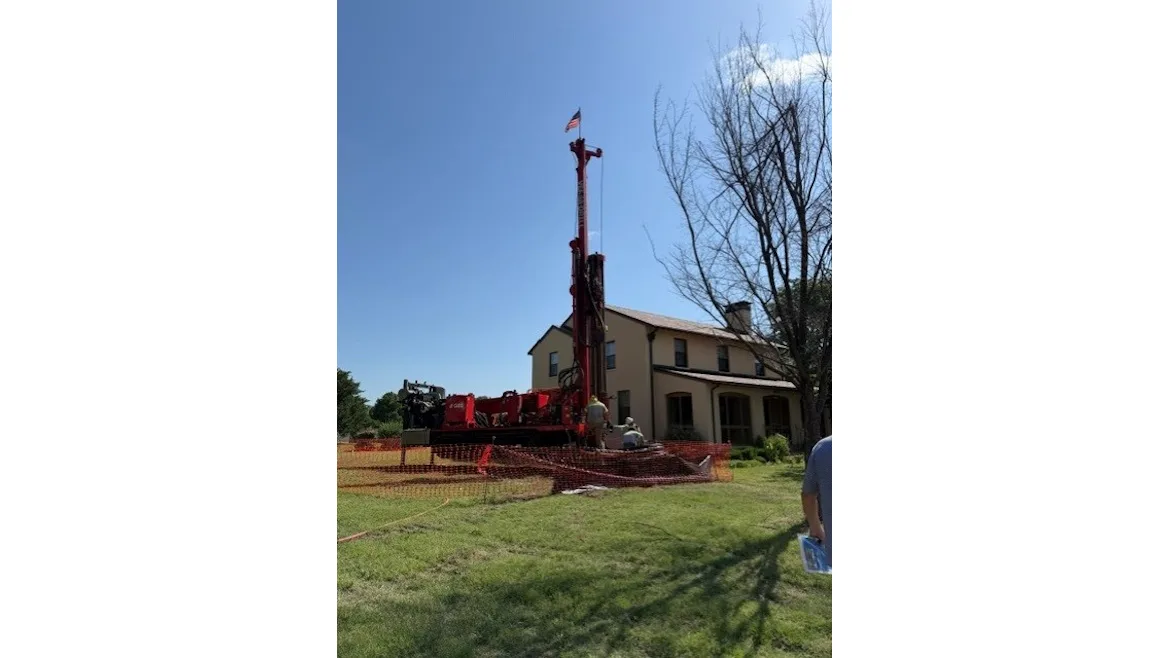
- The Field Visit: The delegation traveled directly to Fort Sill to observe ongoing subterranean drilling operations—the critical first step in establishing the underground loop fields.
- The Home Reveal: Officials walked through a recently renovated military family home, experiencing the operational quietness of the newly installed geothermal units and testing the advanced smart thermostats and home automation controls.
Supporting Data: The Power of the Energy Savings Performance Contract (ESPC)
One of the most remarkable aspects of the Fort Sill modernization is its financial structuring. Large-scale infrastructure projects within the federal government frequently face bureaucratic hurdles and budgetary constraints. However, the Fort Sill project bypasses these obstacles entirely through an Energy Savings Performance Contract (ESPC).
An ESPC is a contracting vehicle that allows federal agencies and military installations to execute comprehensive energy and water efficiency projects without upfront capital costs or congressional appropriations. Under this arrangement:
- A private-sector energy service company (in this case, Ameresco, working alongside Corvias and ClimateMaster) conducts a comprehensive energy audit and finances the upfront costs of the design and installation.
- The private partners guarantee that the improvements will generate a specific amount of energy cost savings over the life of the contract.
- The capital investment is paid back over time using the verified utility bill savings generated by the new, high-efficiency equipment.
- Once the contract term concludes and the project costs are fully amortized, 100% of the ongoing financial savings flow directly back into the installation’s operational budget.
By utilizing an ESPC, Fort Sill has effectively weaponized energy efficiency as a self-funding mechanism. The $5 million in annual energy savings does not merely balance a ledger; it represents capital that can be redirected toward other critical installation needs, community programs, and family support services.
Official Responses: Industry Leaders Weigh In on the Milestone
The success of the Fort Sill project highlights the power of synergy between private manufacturing capability and federal defense infrastructure management. Leadership from across the participating organizations emphasized the broader significance of the collaboration.
Titian Burris, national sales manager for ClimateMaster, spoke directly to the pride and purpose driving the initiative:
"We’re proud to partner with organizations like Ameresco and Corvias to help deliver innovative geothermal solutions that improve comfort, increase energy efficiency, and strengthen the long-term resilience of military housing," Burris stated. "Projects like Fort Sill demonstrate how proven technology and strong collaboration can create lasting benefits for military families and the communities they call home."
The deployment at Fort Sill is not an isolated experiment. It marks the third major military installation where Ameresco and Corvias have teamed up with ClimateMaster to deploy large-scale geothermal technology. This recurring partnership underscores a shifting industry consensus: when it comes to the complex demands of military housing—where equipment must operate reliably under heavy, continuous use by families—geothermal systems offer an unmatched blend of durability, occupant comfort, and lifecycle cost-efficiency.
Implications: Setting a New Standard for National Defense and Sustainability
The implications of the Fort Sill modernization extend far beyond the borders of Comanche County, Oklahoma. As the United States military continues to refine its strategic priorities around climate resilience, energy security, and installation management, the Fort Sill project serves as a blueprint for future developments across all branches of the armed services.
1. Enhancing Installation Resilience
Modern military installations are increasingly vulnerable to grid instability, extreme weather events, and shifting energy markets. By transitioning residential communities to closed-loop geothermal systems, bases dramatically reduce their peak electrical demand. This localized energy buffering insulates military families from regional grid failures and ensures that housing communities remain habitable even during broader utility disruptions.
2. Improving Quality of Life for Service Members
Military retention and recruitment are deeply tied to the quality of life provided to service members and their families. Housing quality is a cornerstone of this experience. Outdated, inefficient HVAC systems often lead to uneven indoor temperatures, high utility anxieties, and frequent maintenance complaints. By outfitting homes with quiet, reliable, precision-controlled geothermal systems and smart thermostats, Fort Sill is delivering a residential experience that rivals or exceeds the civilian housing market.
3. Advancing Federal Sustainability Mandates
Federal facilities face aggressive statutory mandates to reduce greenhouse gas emissions, improve energy intensity, and transition toward sustainable infrastructure. The 57% reduction in energy consumption achieved at Fort Sill provides a tangible, scalable proof-of-concept for how the Department of Defense can meet—and exceed—its long-term decarbonization and environmental stewardship goals without sacrificing operational readiness.
About the Organizations Behind the Project
ClimateMaster
Founded in the late 1950s, ClimateMaster is a premier U.S. manufacturer of energy-efficient and sustainable heating and cooling solutions. Operating from its headquarters and manufacturing base in Oklahoma City, the brand designs, engineers, and produces advanced water-source and geothermal heat pump systems. For more than half a century, ClimateMaster has driven industry innovation while steadfastly maintaining its "Engineered and Assembled in the USA" heritage. To learn more, visit climatemaster.com.
Climate Control Group, Inc. (CCG)
Headquartered in Oklahoma City, Climate Control Group is a recognized leader in HVAC innovation, combining more than 75 years of technical expertise with an unwavering commitment to performance and environmental sustainability. CCG designs and manufactures market-leading products tailored for applications where precision climate control is paramount, serving sectors ranging from residential and education to hospitality and commercial real estate. Its portfolio of industry-leading brands includes ClimateMaster, IEC, ClimaCraft, and ClimaCool. For more information, visit www.ccgi-hvac.com.
