

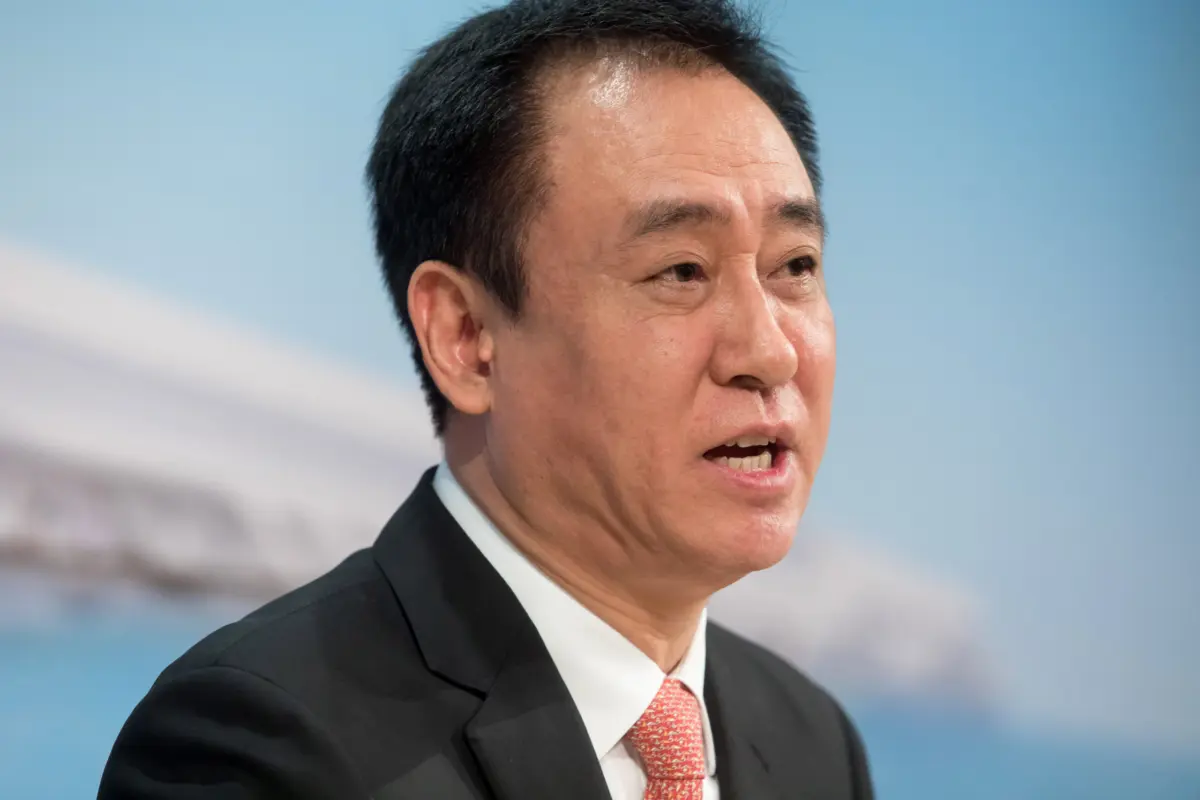
BEIJING — In a definitive end to one of the most staggering corporate collapses in modern economic history, China Evergrande Group founder Hui Ka Yan has been sentenced to life in prison. Once celebrated as a symbol of China’s meteoric economic rise and crowned Asia’s second-richest man, Hui’s downfall marks a watershed moment in Beijing’s aggressive reckoning with corporate excess, aggressive leveraging, and systemic financial deception.
The sentencing of the disgraced property tycoon, alongside 56 co-defendants—including his sons Xu Zhijian and Xu Tenghe—shuts the book on the foundational era of China’s long real estate boom. With all of Hui’s personal assets slated for confiscation, the fallout also extends heavily to corporate liabilities: Hong Kong-listed Evergrande has been slapped with a crushing 8.82 billion yuan ($1.3 billion) fine, while its primary onshore unit, Hengda Real Estate, faces an additional 7 billion yuan penalty.
The legal closure of the primary criminal case, however, does little to halt the ongoing global shockwaves. Evergrande remains mired in complex liquidation proceedings, leaving international creditors, domestic suppliers, and regulators to pick through the wreckage of a corporate titan that once commanded over 1,300 projects across 280 cities.
Main Facts: The Downfall of a Titan
The judgment against Hui Ka Yan follows a meticulously coordinated state investigation that unraveled a web of financial deception dwarfing many of history’s most notorious corporate scandals.
According to Chinese authorities and findings presented in court, Hui perpetrated a historic financial fraud centered on inflating assets and concealing staggering liabilities. In April, Hui formally pleaded guilty to a slate of severe charges, including illegally taking public deposits, fundraising fraud, fraudulently issuing securities, violating corporate information disclosure rules, and corporate bribery. Investigators also found that the founder systematically embezzled company assets through structured dividend mechanisms, pocketing billions while the company bled capital.
The legal hammer fell not only on the leadership but on the corporate entities themselves. Regulators determined that Evergrande’s main onshore unit had inflated more than 560 billion yuan ($78 billion) in revenue by improperly recognizing sales in advance. This alleged fabrication eclipses historical accounting scandals such as those of Enron Corp. and Luckin Coffee Inc., placing it among the largest financial frauds in global corporate history.
The penalties reflect the severity of the offenses. State media outlet Xinhua published a searing indictment of the former billionaire, writing:
"The amount involved in the crime is exceptionally large, the circumstances are particularly heinous, exceptionally heavy economic losses have been caused, and the harm to society is extremely grave… Evergrande and Hui must be severely punished in accordance with the law."
Chronology: From Rags to Riches to Ruin
The trajectory of Hui Ka Yan—also known as Xu Jiayin in Mandarin—mirrors the broader arc of China’s post-reform economic miracle. His rise from impoverished beginnings to corporate supremacy, and his subsequent catastrophic collapse, unfolded across decades of intense macroeconomic shifts.
- 1958–1992 (The Formative Years): Born in Henan province and raised in poverty by a woodcutter father, Hui seized upon the economic reforms championed by Deng Xiaoping. After working at a steel firm, he relocated to Guangzhou, the capital of Guangdong province, positioning himself at the frontier of China’s burgeoning market economy.
- 1996 (The Birth of Evergrande): Hui founded Evergrande—a name translating to "permanence and greatness" in Chinese—and quickly capitalized on an unprecedented real estate and urbanization boom.
- 2009–2020 (The Zenith): Following a successful initial public offering (IPO) in Hong Kong, Evergrande relied on aggressive, debt-fueled expansion to become the world’s most indebted developer and, for a time, China’s largest builder by sales. Fueled by easy credit and generous payout policies, Hui collected more than $7 billion in cash dividends over the decade, vaulting him to the upper echelons of global wealth.
- Late 2020 (The Turning Point): Beijing introduced the "three red lines" policy—a sweeping regulatory crackdown aimed at capping debt growth across the property sector. This effectively severed Evergrande’s access to the cheap credit markets it relied upon to service its maturing obligations.
- Late 2021 (The Default): Having accumulated hundreds of billions in liabilities, Evergrande officially defaulted on its international debt, triggering a systemic liquidity crisis across China’s property market.
- 2023 (Detention): Chinese police took Hui away, placing him under "residential surveillance"—a coercive police measure falling short of formal arrest—during which time his operational status remained shrouded in official secrecy.
- 2024 (Winding-Up and Liquidation): Following failed restructuring negotiations, a Hong Kong court issued a formal winding-up order against Evergrande. Shortly thereafter, a mainland Chinese court accepted a liquidation application against its core onshore unit, Hengda. Concurrently, regulators suspended the operations of PricewaterhouseCoopers (PwC) LLP, Evergrande’s long-time auditor, for six months and levied heavy fines.
- Present (Judgment): Hui is sentenced to life in prison, concluding the criminal investigations into the core leadership while liquidators continue efforts to untangle the developer’s global assets.
Supporting Data: The Scale of the Collapse
To understand the magnitude of Evergrande’s implosion is to understand the systemic vulnerabilities built into China’s historical property boom. Key metrics underscore the depth of the crisis:
- $78 Billion ($560+ Billion Yuan): The scale of revenue inflation allegedly orchestrated by Evergrande’s onshore unit, making it one of the largest corporate frauds ever recorded.
- $1.3 Billion (8.82 Billion Yuan): The direct corporate fine levied against the Hong Kong-listed Evergrande Group, alongside an additional 7 billion yuan penalty for Hengda Real Estate.
- $7+ Billion: The estimated cash dividends pocketed by Hui Ka Yan via his controlling stake following the company’s 2009 Hong Kong IPO, largely funded by high-yield borrowing.
- 1,300+ Projects across 280 Cities: The vast footprint of Evergrande’s developments during its prime, which left millions of pre-sold, unfinished apartments stranded nationwide when the company collapsed.
- Diversified Excess: At the height of its expansion, Evergrande pushed far beyond real estate, pouring capital into secondary industries ranging from bottled water and professional soccer teams to electric vehicle (EV) manufacturing.
Official Responses and Broader Crackdowns
The life sentence handed down to Hui is part of a broader, systemic campaign by Beijing to purge financial corruption, rein in real estate speculation, and curb the unchecked influence of corporate magnates ("princelings" of industry) whose balance sheets posed systemic risks to the broader Chinese economy.
Hui’s fate mirrors those of other high-profile Chinese executives who fell afoul of state regulators during similar anti-corruption and financial crime sweeps:
- Wu Xiaohui (Anbang Group): The former chairman was sentenced to 18 years in prison in 2018 for fraud and embezzlement as Beijing dismantled his sprawling insurance and investment conglomerate.
- Lai Xiaomin (China Huarong Asset Management): Arrested amid a sprawling corruption probe, Lai was executed in 2021 after being convicted of massive bribery and corruption charges.
- Chen Feng and Tan Xiangdong (HNA Group): The chairman and CEO of the aggressive conglomerate were detained in 2021 following liquidity crises and subsequent state-led restructurings.
State organs have utilized these high-profile prosecutions to send an unmistakable signal to the domestic and international business communities: speculative excess, accounting fraud, and the prioritization of personal wealth accumulation over systemic financial stability will face zero tolerance.
Implications: Creditors, Auditors, and the Future of Chinese Real Estate
While Hui Ka Yan’s life sentence brings a definitive end to his personal liberty, the legal and financial ripples of the Evergrande saga are far from spent.
1. The Global Liquidation Battle
Evergrande’s liquidation process remains an ongoing legal labyrinth. An army of onshore and offshore creditors—including international bondholders, institutional investors, and local suppliers—continue to comb through what remains of the developer’s assets. Hopes for recovering substantial portions of their heavy losses grow increasingly dim, but the litigation sets critical legal precedents for how cross-border corporate insolvencies involving mainland assets will be handled moving forward.
2. Fallout for the Auditing Industry
The Evergrande fraud has triggered profound collateral damage across the professional services sector. The six-month operational suspension and financial penalties imposed on PwC—Evergrande’s auditor for over a decade—have sent shockwaves through the "Big Four" accounting firms operating in China. The scandal has prompted internal reckonings, with regional PwC partners reportedly weighing asset-shielding strategies to insulate themselves from potential civil liabilities and regulatory fallout.
3. A New Paradigm for China’s Economy
For decades, property development served as a primary engine of China’s GDP growth, fueled by permissive local governments, high leverage, and boundless consumer demand. The permanent neutralization of Evergrande and its founder marks the official burial of the "growth-at-all-costs" era. Beijing has successfully pivoted its economic focus toward advanced manufacturing, green technologies, and high-tech industries, ensuring that heavily indebted property conglomerates will never again wield systemic influence over the nation’s financial architecture.
As the prison doors close behind Hui Ka Yan, China’s corporate sector is left to navigate a stark new reality—one where the pursuit of scale offers no immunity against the long arm of state regulation and the immutable laws of financial gravity.
