

By Ajay Kumar
Smart Home & Robotics Editor
The past few years have been rough for gamers. From runaway inflation and sweeping logistical bottlenecks to AI-driven price hikes on memory, GPUs, and solid-state drives, the cost of entering or maintaining a gaming ecosystem has hit PC and console enthusiasts hard. Unfortunately, there is no respite in sight.
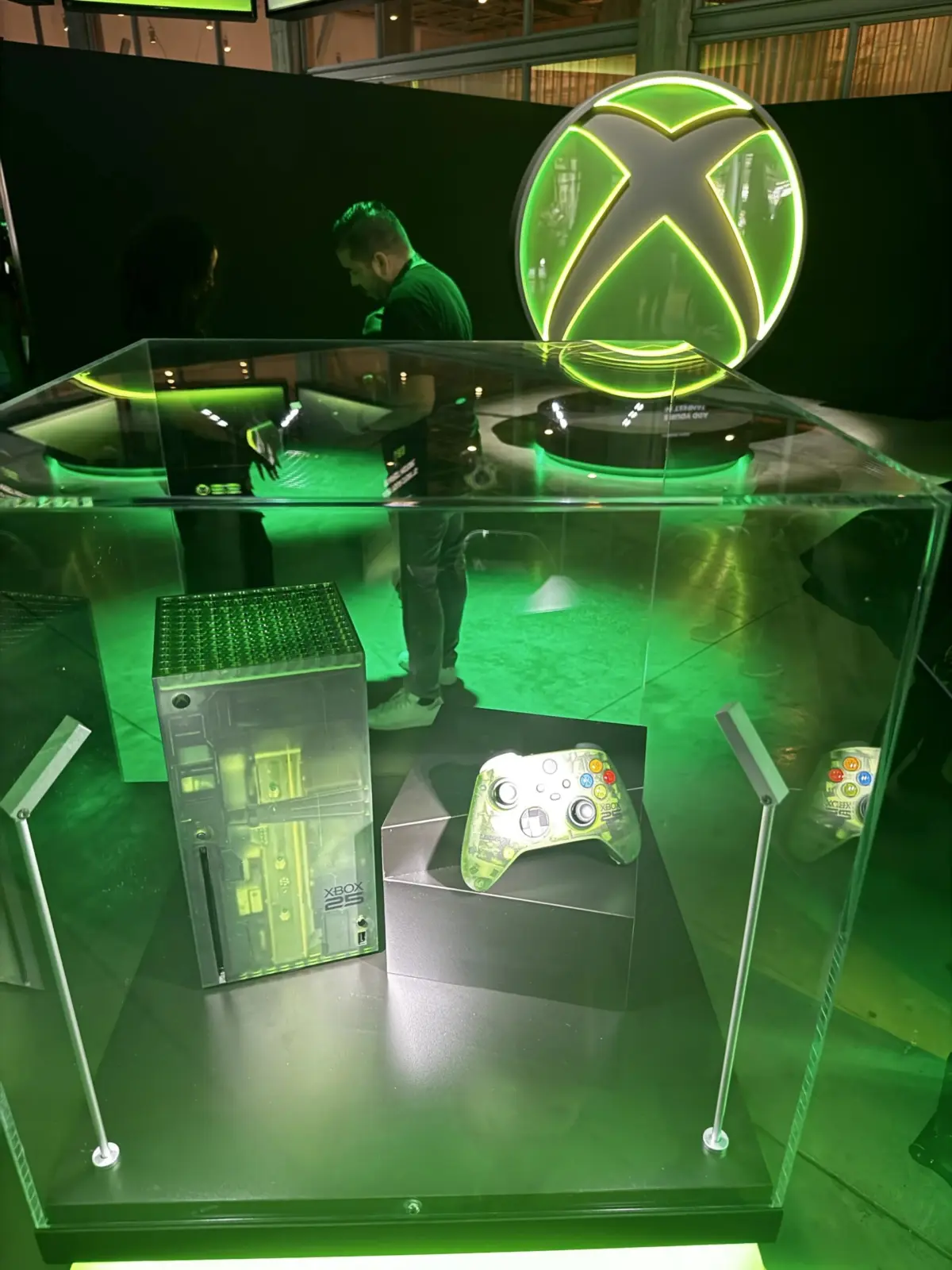
If recent leaks prove accurate, Microsoft’s upcoming special-edition translucent green Xbox Series X—built to commemorate the brand’s 25th anniversary—could retail for a staggering $900. This eye-watering figure places a nostalgic commemorative console in the same high-end pricing bracket as Sony’s pro-tier hardware, shattering long-held expectations about how console pricing is supposed to behave over a hardware generation’s lifecycle.
Main Facts: The $900 Translucent Green Xbox Series X
According to a report from the historically reliable French gaming outlet Dealabs, Microsoft’s upcoming 25th Anniversary Edition Xbox Series X is slated to retail for €900. Given Microsoft’s standard practice of applying direct currency conversions for UK and US markets, industry insiders anticipate a flat $900 price tag when it launches. Dealabs pegs the release date at Nov. 27, putting its arrival squarely in the middle of the lucrative Black Friday shopping window—though consumers should expect zero discounts on this heavily anticipated collector’s item.
The console itself is a throwback to the transparent, neon-green aesthetics of the original Xbox that debuted 25 years ago. It made its first public appearance at Microsoft’s Xbox Showcase during Summer Game Fest in June at the Academy Museum in Los Angeles, immediately drawing crowds of nostalgic fans.
However, the hardware underneath the translucent shell appears identical to a standard Xbox Series X.
"Presuming the special 25th anniversary edition is otherwise identical to a stock Xbox Series X console, the rumored price is $100 extra for green plastic on top of the current $800 price after hikes," noted CNET Managing Editor David Lumb, who examined the unit in person at the Los Angeles event. "It would be a staggering $400 on top of the Xbox Series X’s launch price of $500."
Sister site IGN further highlighted the absurdity of the pricing structure: the anniversary edition commands a $100 premium over the standard disc-drive-equipped Xbox Series X ($800) and matches the cost of the high-performance PlayStation 5 Pro ($900). Despite the steep barrier to entry, analysts predict Microsoft will experience brisk sales, driven entirely by the potent pull of brand nostalgia.

Chronology: How Console Prices Spiraled Out of Control
Historically, game consoles have followed a predictable deflationary curve. As manufacturing efficiencies scaled and component costs dropped over a generation’s lifecycle, companies typically lowered prices or introduced slimmer, cheaper revisions to capture mainstream audiences.
The current hardware generation has completely inverted that timeline. Fueled by a compounding series of crises—including a massive global RAM shortage, shifting international trade policies, and escalating tariffs—console manufacturers have enacted repeated, aggressive price hikes deep into their hardware cycles.
The Breakdown of Microsoft’s Price Hikes
- November 2020: The Xbox Series X launches at a baseline price of $500, with the digital-only Series S retailing for $300.
- May 2025: Microsoft quietly nudges the price of the newly introduced Xbox Series X 2TB Galaxy Black Special Edition up to $600.
- September 2025 (First Major Wave): Citing severe component pressures, Microsoft initiates its first sweeping round of price increases. The digital-only Series S (512GB) jumps to $400; the standard Series X with a disc drive climbs to $650; and the 2TB Galaxy Black Special Edition rises yet again to $800.
- June 2026 (Second Major Wave): In a surprise announcement, Microsoft jacks up prices further. The 512GB Series S reaches $500, the 1TB Series S option hits $600, the digital-only Series X climbs to $750, and the disc-drive Series X peaks at $800. Simultaneously, Microsoft announces the discontinuation of the 2TB special edition, narrowing consumer choices.
- November 2026 (Projected): The 25th Anniversary Edition Translucent Green Xbox Series X is rumored to launch at $900.
Industry-Wide Escalation
Microsoft is far from an isolated outlier. Competitors across the console and handheld landscape have systematically reworked their pricing strategies:
- Sony (April 2026): Sony implemented across-the-board price increases for its entire hardware ecosystem. The PlayStation 5 Pro surged to $900 (up from $700); the standard PS5 with a disc reader climbed to $650 (up from $500); and the handheld PlayStation Portal jumped to $250 (up from $200).
- Nintendo (September 2026): Breaking its reputation for consumer-friendly hardware pricing, Nintendo adjusted the cost of its successor console, the Switch 2, bringing it up to $500—a $50 increase over its introductory price point the previous June.
Supporting Data: The Anatomy of "RAMageddon" and Supply Chain Pressures
To understand why a mid-generation console is creeping toward the $1,000 threshold, one must examine the macroeconomic realities of the semiconductor industry.
Over the past three years, enterprise demand for high-bandwidth memory (HBM) and specialized dynamic random-access memory (DRAM) required to power generative AI data centers has created a severe supply crunch. Colloquially termed "RAMageddon" by industry analysts, this supply squeeze forced consumer electronics manufacturers to compete fiercely for finite silicon wafers.
While reports indicated that RAM price increases began to cool slightly in late March and early April of 2026, the relief has not trickled down to finished consumer goods. Supply chains remain fragile due to lingering logistical hurdles, rising cargo costs, and fluctuating international tariff frameworks. Because modern gaming consoles rely heavily on advanced custom System-on-Chips (SoCs) built on bleeding-edge semiconductor nodes, any disruption to memory and GPU components directly inflates the Bill of Materials (BoM).
Consequently, manufacturing a traditional home console has become fundamentally more expensive today than it was at launch. Rather than absorbing these losses or delaying hardware refreshes, major platform holders have elected to pass these operational expenditures directly onto the consumer.
Official Responses and Industry Silence
As of press time, corporate communication channels have remained tightly managed. A request for comment sent to Microsoft regarding the rumored $900 pricing and release schedule for the 25th Anniversary Edition Xbox Series X was not immediately answered by an Xbox representative.

Industry figures have generally avoided publicly defending the skyrocketing costs, choosing instead to let leaks and corporate earnings reports speak for themselves. However, third-party analytics firms suggest that hardware divisions within major tech conglomerates are under immense pressure to maintain profit margins. With software attachment rates plateauing and subscription growth slowing across services like Xbox Game Pass, hardware can no longer serve as a loss-leader meant to be subsidized by downstream software sales. Instead, every single unit shipped must clear immediate profitability hurdles.
Implications: Is Gaming Becoming a Luxury-Only Hobby?
The broader implications of a $900 Xbox and $900 PlayStation are profound. For decades, home consoles thrived precisely because they offered an accessible, standardized, plug-and-play alternative to high-end PC gaming. A family could purchase a robust entertainment system for $300 to $500 and enjoy hundreds of hours of interactive entertainment without worrying about driver updates, graphics card upgrades, or memory bottlenecks.
That value proposition is rapidly evaporating.
When special-edition collector’s items approach the price of flagship smartphones and high-end laptops, the psychological barrier to entry shifts dramatically. Gaming over the past year or two has increasingly felt like a luxury hobby, and there is no clear end in sight.
For the average consumer, these market dynamics leave very few viable paths forward. Gamers are now forced to choose between three difficult options:
- Absorb the inflated costs and pay historic highs for current-generation hardware.
- Extend the life of aging, legacy hardware well past its intended obsolescence date.
- Exit the console ecosystem entirely in favor of cloud-based gaming solutions or mobile alternatives.
As the industry marches toward the holiday shopping season, the launch of Microsoft’s translucent green monolith will serve as an ultimate litmus test. It will reveal whether the enduring power of brand nostalgia can successfully normalize luxury-tier pricing in a market where wallets are already stretched to their absolute limits.
