

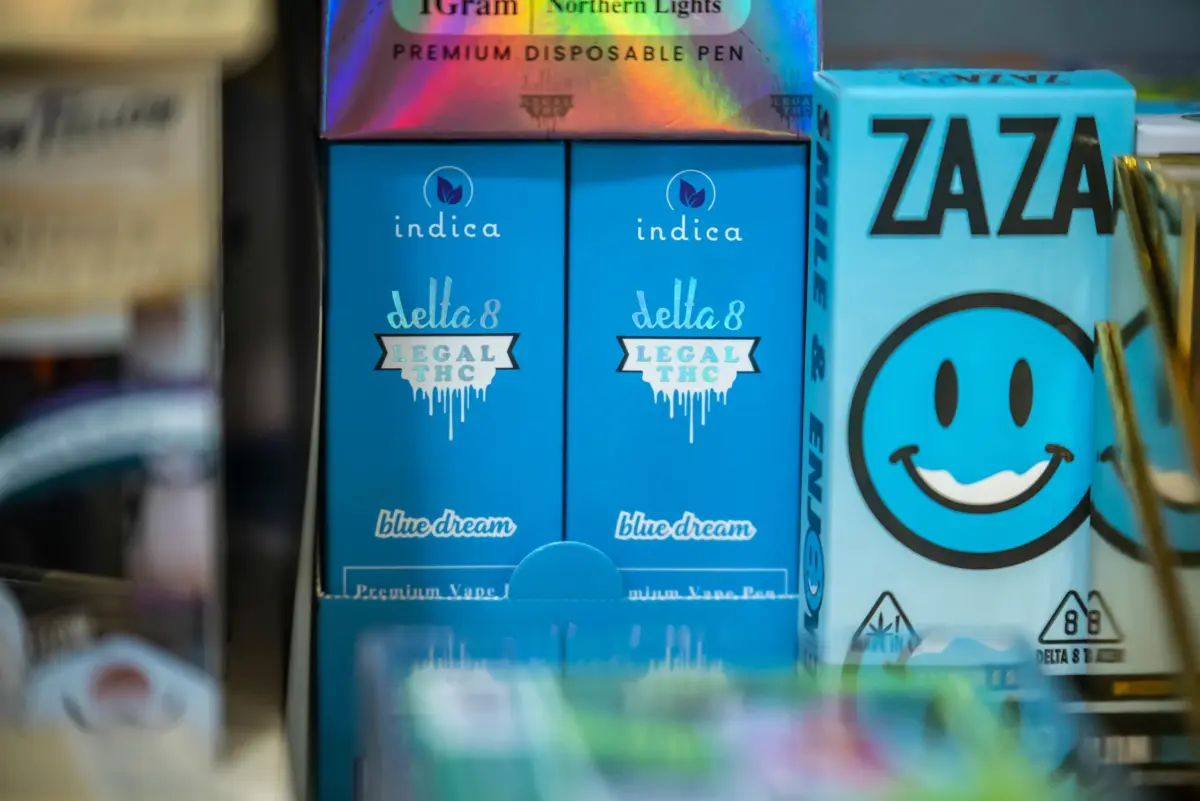
AUSTIN, Texas — The legal battle lines have been officially drawn in the Lone Star State. In a escalating series of high-stakes federal lawsuits, members of the Texas hemp industry are pushing back aggressively against state health regulators. Business owners, retailers, and distributors argue that recent executive actions effectively criminalize popular cannabis derivatives, decimate a thriving multi-billion-dollar market, and unlawfully engineer a protective monopoly for the state’s medical marijuana establishment.
With thousands of jobs on the line, millions of dollars in stranded inventory, and the specter of felony charges looming over everyday retail operators, the future of consumable hemp in Texas hangs precariously in the balance.
Main Facts: The Clash Over Hemp-Derived THC
At the core of the legal firestorm is a sweeping regulatory crackdown by the Texas Department of State Health Services (DSHS). Spurred by a pivotal Texas Supreme Court ruling earlier this year, the state has moved to reclassify nearly all hemp-derived THC products—including popular variants such as delta-8, delta-10, THCP, and THCA flower—as Schedule I controlled substances.
The enforcement of this reclassification fundamentally alters the legal landscape for roughly 14,000 retail stores statewide that are licensed to sell consumable hemp. Under the new framework, possessing these newly prohibited cannabinoids is treated as a state jail felony. Such charges carry severe penalties, including 180 days to two years in state prison and crippling fines of up to $10,000.
However, a singular exception remains: delta-9 THC products derived from hemp that contain no more than 0.3% THC by dry weight will stay legal. This narrow carve-out exists because the federal 2018 Farm Bill explicitly protects hemp defined within those specific parameters, while remaining silent on other synthetic or isomeric cannabinoids. Consequently, everyday consumers and retailers face a fragmented, highly confusing regulatory environment where two chemically similar products sit side-by-side on shelves—one completely legal, the other punishable by felony jail time.
Industry advocates and legal teams argue that this sudden shift has thrown the market into absolute chaos.
“For more than seven years, Texans have built a multibillion-dollar hemp industry under laws that define these products as legal hemp. Without any change to those laws, the State now says they’re Schedule I drugs, like heroin,” said Andrea Steel, lead counsel for one of the industry coalitions challenging the state.
Chronology of Conflict: From the 2018 Farm Bill to the 2024 State Crackdown
The origins of Texas’s modern hemp industry trace back to the landmark federal legislation of 2018.
- December 2018: The U.S. Congress passes the 2018 Farm Bill, federally removing hemp—defined as Cannabis sativa L. with a delta-9 THC concentration of not more than 0.3%—from the federal Controlled Substances Act. This act opened the floodgates for nationwide agricultural production, manufacturing, and retail sales of hemp derivatives.
- 2019–2021: Texas lawmakers pass state-level legislation aligning with the federal framework, establishing a licensing structure through DSHS for consumable hemp products. Entrepreneurs across the state invest heavily, establishing manufacturing facilities, supply chains, and retail storefronts.
- 2021: Tensions first flare when DSHS attempts to ban delta-8 THC. The hemp industry immediately pushes back, securing a statewide injunction that effectively paused state enforcement and allowed stores to stock, sell, and manufacture a wide variety of THC products for nearly five years.
- May 2024: The legal dam breaks. The Texas Supreme Court issues a definitive ruling siding with DSHS, effectively dismantling the 2021 injunction. The ruling clears the path for the state health agency to reclassify non-delta-9 hemp derivatives as Schedule I substances.
- Late 2024: DSHS begins aggressively enforcing the ban. State officials and law enforcement agencies are empowered to target retailers, seizing stock and threatening criminal prosecution.
- Mid-November 2024: The counteroffensive begins. Within weeks of each other, separate coalitions of hemp retailers, distributors, and advocacy groups file major federal lawsuits in the U.S. District Courts for the Western and Southern Districts of Texas, targeting DSHS, Attorney General Ken Paxton, and local law enforcement entities.
Supporting Data: The Catastrophic Toll on Texas Businesses
The economic fallout of the DSHS regulatory pivot has been swift and devastating. According to detailed figures outlined in the recent federal complaints, the state’s hemp ecosystem has absorbed staggering blows:
- Job Losses: Workforce reductions have forced the termination of over 36,000 employees across agricultural, processing, distribution, and retail sectors.
- Revenue Plunge: Statewide retail sales have plummeted by more than 50%, translating to billions of dollars in lost revenue for small- and medium-sized enterprises.
- Stranded Inventory: Millions of dollars worth of lawful products remain trapped in warehouses and storefronts across Texas, unsellable due to the threat of felony enforcement yet legally unreturnable to suppliers.
- Market Share at Risk: Industry analysts estimate that if the temporary restraining orders and injunctions fail, more than half of all THC products currently lining retail shelves will be permanently eradicated.
David Sergi, lead counsel for the hemp industry in the Western District lawsuit, emphasized the sheer human cost of the state’s actions in a formal news release.
“Thousands of small business owners built enterprises, hired workers, and invested capital relying on that law,” Sergi stated. “DSHS does not have the constitutional authority to rewrite statutes or destroy an industry simply because it disagrees with legislative policy.”
Official Responses and Legal Arguments
The legal challenges launched against the state are multifaceted, relying on federal preemption, administrative overreach, and constitutional commerce protections.
The Western District Lawsuit
Filed by four prominent hemp retailers in the U.S. District Court for the Western District of Texas, this complaint takes direct aim at DSHS’s regulatory authority. The plaintiffs argue that the agency engaged in unconstitutional executive overreach by rewriting statutory definitions outside of the legislative branch. Furthermore, the lawsuit alleges that the state has selectively targeted the open-market hemp industry while shielding and artificially bolstering the state-licensed medical marijuana program, known officially as the Texas Compassionate Use Program (TCUP). By eliminating commercial competition, critics argue the state has effectively engineered a restrictive monopoly.
The Southern District Lawsuit
In a companion legal action filed earlier in the month in the U.S. District Court for the Southern District of Texas, two retailers and a distributor—represented by attorney Andrea Steel—sued DSHS, Attorney General Ken Paxton, and Galveston County local law enforcement officials. This complaint focuses heavily on constitutional commerce protections, arguing that the state’s reinstated definitions fail to differentiate between lawful hemp and unlawful marijuana, violate the interstate commerce protections guaranteed by the 2018 Farm Bill, and impose an illegal, unconstitutional burden on interstate trade.
“Our Constitution does not allow the government to jail a person under a framework no one can make sense of—our clients are asking the federal court to protect Texans from their own confused government,” Steel said.
Plaintiffs in both actions are actively moving for temporary restraining orders and preliminary injunctions to halt the enforcement of the ban while the broader constitutional questions are litigated.
Future Implications: The Road Ahead for Texas Cannabis
The ongoing legal battles represent a crucial turning point for the future of cannabis policy in Texas. Beyond the immediate courtroom maneuvers, the broader war over consumable hemp is guaranteed to spill over into the upcoming Texas legislative session.
State lawmakers have made it abundantly clear that they view the proliferation of hemp-derived cannabinoids as a major public health crisis, particularly concerning youth consumption. During interim committee hearings, various legislators relied on rhetoric reminiscent of the 1980s “Just Say No” era, going so far as to invoke classic anti-drug imagery—such as the iconic frying-pan-and-brain analogy—to illustrate the perceived mental health risks associated with modern THC variants.
Signaling that the legislative fight is far from over, Senator Charles Perry (R-Lubbock) has already confirmed plans to file a comprehensive bill during the next legislative session aimed at completely banning consumable hemp products statewide.
Meanwhile, advocates warn that caving to prohibitionist policies will only push consumers toward illicit, unregulated black markets where product safety standards do not exist.
“It’s a pretty big blow, and it’s recriminalizing a lot of cannabis products that have been completely legal and allowable in the state for many years, so we’re taking steps backwards toward prohibition,” Sarah Todd, a media representative for the Texas Cannabis Policy Center, noted in previous statements to the press.
As federal judges weigh the merits of the pending injunctions, tens of thousands of workers, thousands of business owners, and millions of adult consumers wait anxiously. The outcome of these lawsuits will not only determine the financial survival of the Texas hemp industry but will also set a massive legal precedent for the limits of state regulatory power in the face of federal agricultural policy.
