

WASHINGTON — It was another brisk week for the construction and heavy building sectors, marked by massive capital injections into high-tech infrastructure, critical milestones on century-old transit corridors, and high-profile executive movements across the United States.
According to data released this week by the Associated Builders and Contractors (ABC), broader market pressures continue to challenge project balance sheets, revealing that construction costs in July surged 7.4% higher compared to the same period in 2025. Despite these macroeconomic headwinds, commercial and infrastructure pipelines remain active. Notably, a joint venture comprising AECOM Hunt, Turner Construction, and Horus Construction Services emerged as the top-ranked option to build the Tampa Bay Rays’ ambitious $2.3 billion Major League Baseball ballpark.
As the industry moves toward the final stretch of the year, contractors, developers, and engineers are grappling with a mix of supply chain complexities, technological innovations, and evolving federal-academic partnerships. Here is a comprehensive look at the major building headlines from the week that contractors and industry stakeholders need to know.
Main Facts: Skanska’s Megaproject and Amtrak’s Transit Milestone
The week’s headlines were dominated by two colossal capital projects: a massive private-sector data center build in the Southeast and a hard-won transit milestone in the Northeast corridor.
Skanska Secures $1.2 Billion Contract for Four Southeastern Data Centers
Stockholm-based construction and development giant Skanska announced a staggering $1.2 billion contract to build four new data centers in the Southeastern United States. Awarded by an existing, undisclosed client, the project underscores the unrelenting demand for digital infrastructure driven by artificial intelligence, cloud computing, and enterprise data storage.
Spanning a total footprint of approximately 808,000 square feet, the multi-building campus will require complex engineering and specialized trade coordination. The project scope includes the structural shell construction, interior fit-outs for advanced technical spaces, and robust support areas designed to house critical server hardware and cooling systems. Construction is scheduled to break ground in the third quarter of 2026, with an aggressive target completion date set for the third quarter of 2028.
Amtrak Reopens East River Line 2 After Historic Rehabilitation
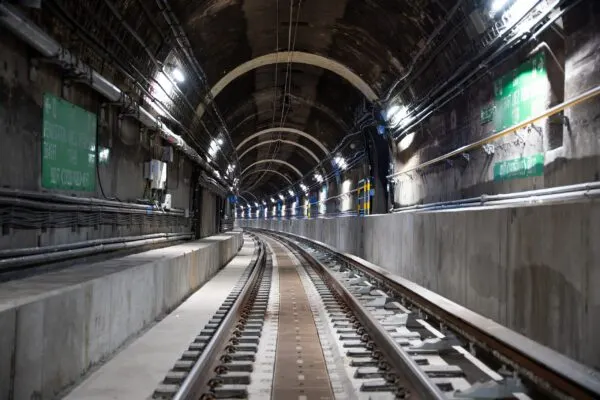
In mass transit, Amtrak officially reopened East River Line 2, marking a major milestone in the completion of the first phase of the $1.6 billion East River Tunnel (ERT) Rehabilitation project. The corridor is a vital artery for the heavily congested Northeast corridor, serving thousands of daily commuters.
The reopening follows months of intense remediation work. Earlier in the project lifecycle, construction crews were forced to push back their reopening timeline by roughly a month after workers discovered unexpected subsurface voids during catenary installation. This required rapid engineering interventions to redesign support hardware before overhead systems could be safely mounted.
Since kicking off last summer, field teams have systematically stripped and rebuilt the 116-year-old tunnel’s core infrastructure. According to Amtrak, workers completely overhauled track, power, communications, drainage, and structural elements. The staggering scope of material removal and replacement included:
- More than 24,000 feet of rail.
- 8,000 tons of ballast.
- 8,000 wooden rail ties.
- 20,000 cubic yards of bench wall concrete.
With the first phase successfully wrapped up, Amtrak reports that the second and final phase of the ERT project will commence this fall and remains fully on track to reach final completion by the end of 2027.
Chronology: How the Week’s Major Events Unfolded
To fully understand the cadence of the week’s developments, it is helpful to trace the timeline of public announcements, engineering hurdles, and executive reassignments:
-
Monday:
- Amtrak officially announces the reopening of the East River Line 2, restoring vital commuter train service in the New York City region after intricate engineering changes resolved unexpected subsurface voids.
- Auburn University and the U.S. Air Force publicly unveil a collaborative research partnership aimed at developing redeployable mass timber military housing.
- 84 Lumber, the nation’s largest privately held building materials supplier, announces the appointment of Dustin Hauenstein as its new Chief Financial Officer.
- McShane Construction names Jack Sommer as the new vice president of its Southeast Regional Office in Auburn, Alabama, tasked with expanding commercial market pursuits.
-
Tuesday:
- Manhattan Construction Group appoints Craig Bryant as senior vice president of Florida, placing him in direct oversight of the firm’s Tampa Bay and Southwest Florida operations.
-
Thursday:
- Skanska publicly releases details of its $1.2 billion contract to deliver four high-capacity data centers across the Southeast U.S. over a two-year construction window.
-
Friday:
- Industry analysts review the latest Associated Builders and Contractors (ABC) producer price index data, highlighting the ongoing 7.4% year-over-year escalation in construction costs.
Supporting Data and Technical Scope
The economic and structural data emerging from this week’s announcements highlight the immense scale, precise engineering, and financial realities defining modern construction.
Cost Pressures and Material Influx
According to the ABC data, material and input costs continue to outpace historical averages, with July figures reflecting a 7.4% jump over 2025 levels. Contractors are navigating these inflationary pressures by leaning into highly capitalized, specialized sectors—such as data centers and mission-critical facilities—where clients possess the capital reserves to absorb elevated pricing.
Mass Timber Prefabrication Metrics
The Auburn-Air Force partnership introduces vital technical shifts to military logistics. Traditional military housing and temporary barracks rely heavily on light wood-frame construction. While functional, conventional field framing requires multiple days of intensive onsite labor. By pivoting to pre-fabricated mass timber modules, researchers aim to slash onsite assembly time dramatically. The cross-laminated timber (CLT) panels provide superior structural integrity, enhanced fire resistance, and improved thermal performance—a critical requirement for cold-weather deployments.
Tunnel Engineering Scale
The East River Tunnel project serves as a masterclass in urban infrastructure rehabilitation. Working within a century-old bore means managing degraded structural masonry, antiquated drainage paths, and tight logistical windows. The removal of 20,000 cubic yards of bench wall concrete and thousands of tons of stone ballast under active urban settings underscores the heavy civil engineering prowess required to modernize America’s legacy rail systems.
Official Responses and Stakeholder Perspectives
Key leaders and institutional voices weighed in on the strategic rationale behind this week’s major project kickoffs and institutional partnerships:
-
On Mass Timber Military Innovation:
David Roueche, associate professor in Auburn University’s Department of Civil and Environmental Engineering, emphasized the operational advantages of prefabrication in emergency and military contexts. "With prefabrication, we are shifting some of that work away from the site," Roueche noted in a university release. "When shelter is critically needed, the actual assembly time should be much less." -
On Regional Leadership Strategy:
The appointment of seasoned executives signals a robust push into regional growth markets. For instance, Manhattan Construction’s elevation of Craig Bryant—a 28-year industry veteran who has delivered over $2.2 billion in aggregate projects—highlights the firm’s strategic focus on capturing market share in booming Gulf Coast and Central Florida commercial sectors. Similarly, McShane Construction’s onboarding of Jack Sommer aims to leverage his two decades of operational and preconstruction expertise to scale their Southeast footprint.
Implications for the Construction Industry
The convergence of data center expansions, massive transit overhauls, innovative military housing partnerships, and executive shuffles carries several broad implications for the broader architecture, engineering, and construction (AEC) ecosystem:
-
The Data Center Boom Reshapes Southeast Subcontractor Markets:
Skanska’s $1.2 billion commitment highlights how digital infrastructure is no longer confined to traditional tech hubs like Northern Virginia or Silicon Valley. Secondary and tertiary markets in the Southeast are seeing massive capital inflows, creating sustained demand for specialized electrical, mechanical, and HVAC subcontractors capable of meeting stringent high-tech specifications. -
Infrastructure Resilience Requires Adaptive Engineering:
Amtrak’s experience with subsurface voids during the East River Tunnel project serves as a stark reminder of the unpredictability inherent in brownfield and legacy infrastructure renovations. Contractors bidding on federally funded transit overhauls must bake contingency buffers into their schedules and budgets to account for unforeseen structural anomalies. -
Rethinking Temporary Shelter Through Mass Timber:
The Auburn University and U.S. Air Force initiative could permanently alter how temporary and rapid-deployment structures are procured. If mass timber proves viable and thermally efficient in cold-weather military deployments, commercial developers of disaster relief housing, remote mining camps, and temporary institutional facilities may quickly adopt prefabricated mass timber methodologies. -
Talent Wars Intensify at the Executive Level:
As firms position themselves to capture funds from federal infrastructure bills and private-sector tech builds, executive mobility is accelerating. Securing veteran leadership—such as 84 Lumber’s acquisition of CFO Dustin Hauenstein and Manhattan’s promotion of Craig Bryant—demonstrates that top-tier financial stewardship and operational oversight are top priorities for companies looking to protect margins amidst rising material costs.
As the industry pushes past the summer months, contractors will need to maintain agile procurement strategies, leverage prefabrication where feasible, and closely monitor fluctuating material indices to ensure long-term project profitability.
