

Main Facts: The Digital Landscape of Schoenbrun’s Breakthrough
As filmmaker Jane Schoenbrun continues to captivate audiences and dominate contemporary cinematic discourse with their latest provocative features—including Teenage Sex and Death at Camp Miasma and the A24-distributed psychological puzzle I Saw the TV Glow—the cinematic zeitgeist offers an ideal vantage point to look backward. Specifically, it is time to revisit the foundational indie feature that put Schoenbrun on the map: the 2021 Sundance Film Festival breakout, We’re All Going to the World’s Fair.
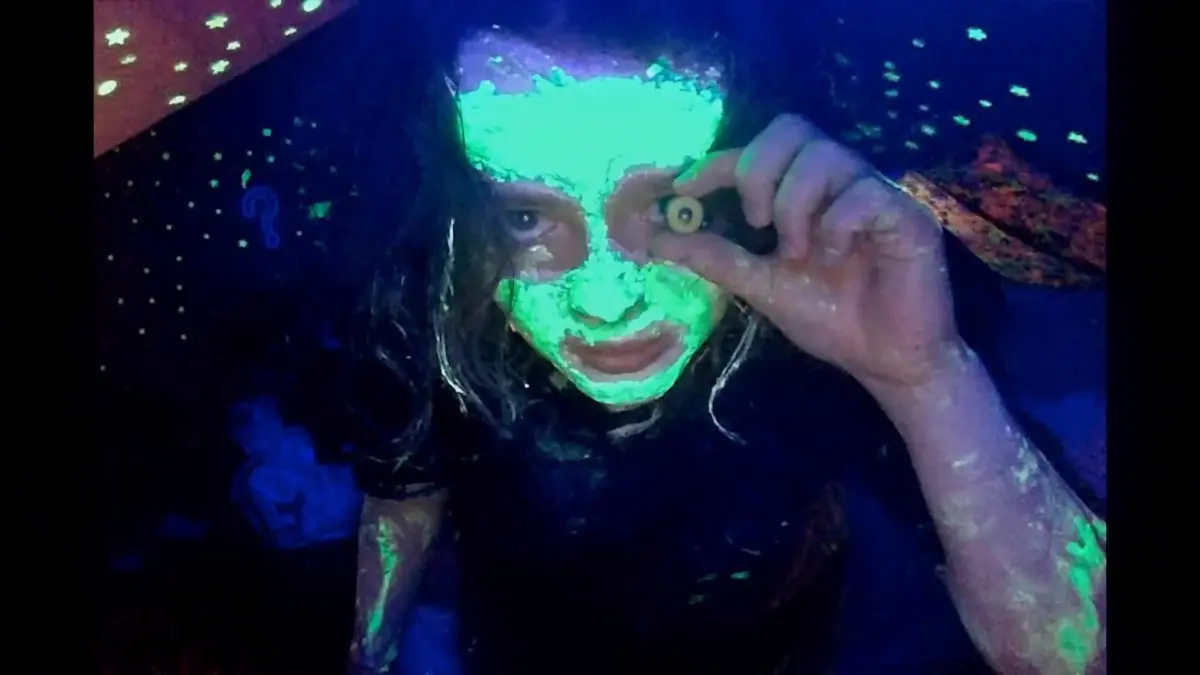
A pioneering work of "screenlife" horror and hyper-contemporary existential dread, We’re All Going to the World’s Fair eschews traditional cinematic grammar in favor of low-resolution webcams, glowing monitor light, and the cavernous, isolating echo chamber of the early-2010s creepypasta subculture. At its narrative center is Casey (played with devastating authenticity by newcomer Anna Cobb), a lonely teenager who locks herself in her attic bedroom and initiates an online ritual known only as the "World’s Fair Challenge."
Part alternate reality game (ARG), part digital self-harm, and part modern ice-bucket challenge, the game requires participants to prick their fingers, smear blood on their computer screens, repeat a hypnotic mantra three times, and watch a swirling, glitching spiral. The prompt is deceptively simple: I want to go to the World’s Fair. Once initiated, players are instructed to document their physical and psychological transformations online as they supposedly begin to change into plastic, morph into Tetris blocks, or otherwise dissolve into the fabric of the internet.
Far from a standard creature feature or jump-scare-laden slasher, Schoenbrun’s film operates as a deeply unsettling, slow-burn psychological probe. It investigates the ways young people—particularly marginalized, isolated youth—use the digital ether as both a lifeline and a coffin. The film forces its audience to reckon with the horrifying intimacy of the internet age, where a child can broadcast their deepest vulnerabilities to a global audience of strangers from the suffocating safety of a suburban bedroom.
Chronology: The Journey from Sundance Sensation to Cult Masterpiece
To understand the cultural footprint of We’re All Going to the World’s Fair, one must trace its trajectory from an underground festival darling to an essential text of modern horror cinema.
The Genesis and 2021 Sundance Premiere
Conceived in the late 2010s and brought to life through independent financing, Schoenbrun’s feature debut arrived at the 2021 Sundance Film Festival during a moment when global audiences were already living remarkably digitized, isolated lives due to the COVID-19 pandemic. The premiere immediately signaled the arrival of a major new cinematic voice. Critics praised the film’s hyper-realistic depiction of internet subcultures, its ambient, droning sound design by electronic artist Alex G, and its unwavering commitment to formal experimentation.
The Festival Circuit and Critical Momentum
Following its virtual Sundance debut, the film made waves across the international festival circuit, screening at the Berlin International Film Festival and achieving high acclaim among genre enthusiasts and arthouse devotees alike. It captured the anxieties of a generation raised on YouTube rabbit holes, Reddit creepypastas, and midnight forum boards. By the time it secured distribution with Utopia, it had already cultivated a devoted digital following.
Streaming Domestication and Legacy Re-evaluation
As We’re All Going to the World’s Fair transitioned to streaming platforms—finding a home on the Criterion Channel, Kanopy, and Hoopla—its reputation evolved from a clever "gimmick movie" about internet culture into a profound modern coming-of-age tragedy. Now, with Schoenbrun’s subsequent cinematic triumphs cementing their status as a visionary auteur of trans and queer alienation, World’s Fair is rightfully recognized as the opening salvo of a thematic trilogy exploring identity, dissociation, and the screens through which we mediate our existence.
Supporting Data: Dissecting the Anatomy of Digital Isolation
An analysis of We’re All Going to the World’s Fair reveals a meticulous construction of space, sound, and visual grammar that separates it from lesser found-footage or screenlife horrors.
The Aesthetics of the Webcam
The film relies heavily on fixed-frame compositions shot from the perspective of webcams, smartphones, and consumer-grade digital cameras. This choice strips away the cinematic artifice; there are no sweeping crane shots or expressive lighting setups here. Instead, the lighting is entirely diegetic, emanating solely from the bluish glare of computer monitors that wash out Casey’s face. This visual claustrophobia forces the viewer into an uncomfortable position of voyeurism. When Casey performs the challenge—most notoriously when she nervously, methodically jabs herself with a sewing pin to draw blood—the visceral impact is heightened precisely because it lacks Hollywood gloss. It feels dangerously real, evoking the self-destructive behaviors adolescents sometimes lean into when seeking validation from unseen online audiences.
Sound Design as Psychological Pressure
Alex G’s minimalist, ambient score plays a crucial role in maintaining the film’s pervasive sense of unease. Rather than utilizing traditional orchestral cues to signal danger, the soundscape consists of low-frequency hums, distorted audio glitches, and the ambient white noise of empty suburban houses. This sonic landscape mirrors Casey’s internal state: hollow, ringing, and perpetually vibrating with low-level panic.
The Domestic Void
Casey’s physical environment is characterized by an acute absence of nurturing human contact. Her father is relegated to a disembodied voice bellowing from downstairs—a source of irritation and alienation rather than safety or guidance. In lieu of peers, school dances, or traditional adolescent milestones, Casey’s social world is entirely constructed by the endless scroll of YouTube-style video essays, challenge logs, and ASMR roleplay channels.
Official Responses and Critical Reception
Upon its release, We’re All Going to the World’s Fair provoked intense critical debate, earning a stellar approval rating on Rotten Tomatoes and sparking impassioned discussions across film journals, cultural podcasts, and academic essays.
Critics frequently highlighted the film’s restraint. Rather than leaning into exploitation or sensationalizing internet danger narratives, Schoenbrun treated the digital space with psychological complexity.
Prominent film reviews praised the movie’s refusal to offer easy answers:
- "Schoenbrun captures the specific, nocturnal texture of teenage internet obsession better than almost any filmmaker before them," noted one major festival review.
- Another critic emphasized the film’s unique handling of body horror, writing, "It uses the language of creepypastas not for cheap thrills, but to articulate the profound bodily alienation of growing up online."
Furthermore, cultural commentators noted the film’s uncanny prescience regarding the loneliness epidemic among youth. Long before policymakers began seriously debating the mental health impacts of social media algorithms on teenagers, Schoenbrun’s film was already dramatizing how algorithms and anonymous digital communities can act as both a palliative for isolation and a catalyst for deeper psychological peril.
Implications: The Legacy of World’s Fair in Modern Horror
The reverberations of We’re All Going to the World’s Fair extend far beyond its modest indie budget. The film has fundamentally shifted how contemporary horror engages with technology, moving away from tired tropes of killer A.I. or haunted smartphones toward a more nuanced exploration of digital psychology.
Redefining the Coming-of-Age Narrative
Traditional cinematic coming-of-age stories are almost invariably tethered to physical milestones: first parties, romantic heartbreak, high school graduation, or sexual awakenings. We’re All Going to the World’s Fair deliberately subverts this tradition. Casey’s narrative is entirely devoid of sexualization or standard adolescent romance. Instead, her awakening is purely existential and digital. Her search for identity takes place in comment sections and video upload queues. By divorcing the coming-of-age genre from heteronormative milestones of physical maturation, Schoenbrun validates the internal, screen-mediated lives of modern youth, particularly those who find community and self-actualization in digital spaces before they ever find them in the physical world.
The Ambiguity of the Other: JLB and Grooming Anxieties
A central pillar of the film’s psychological tension is introduced via JLB, a middle-aged man who contacts Casey under the guise of protecting her from the dangers of the World’s Fair Challenge. Played with fragile, pathetic sincerity, JLB represents a terrifying archetype: the lonely older adult lurking in the digital periphery of a vulnerable minor.
Schoenbrun wisely refuses to make JLB a mustache-twirling monster or a straightforward cinematic villain. The relationship between Casey and JLB stews in profound, uncomfortable ambiguity. It captures the complex gray areas of online interactions, where lines between mentorship, parasocial attachment, digital grooming, and mutual loneliness blur dangerously. This thematic choice forces the audience to confront their own complicity as voyeurs; by watching the film, we occupy the same uncomfortable, surveillance-adjacent position as JLB.
Paving the Way for Auteur-Driven Digital Horror
Finally, World’s Fair served as the crucial stepping stone for Schoenbrun’s subsequent cinematic evolution. While their later works—such as the neon-soaked, surrealist nightmare I Saw the TV Glow—achieved grander visual scales and emotional operatics, they are direct stylistic and thematic descendants of World’s Fair.
Ultimately, We’re All Going to the World’s Fair stands as a monumental achievement in low-budget, high-concept indie cinema. It proves that the scariest monsters in the modern world are not hiding in the woods or under the bed; they are humming quietly in the corner of a dark bedroom, glowing softly through a webcam lens, waiting for someone—anyone—to answer the call and say, "I want to go to the World’s Fair."
