

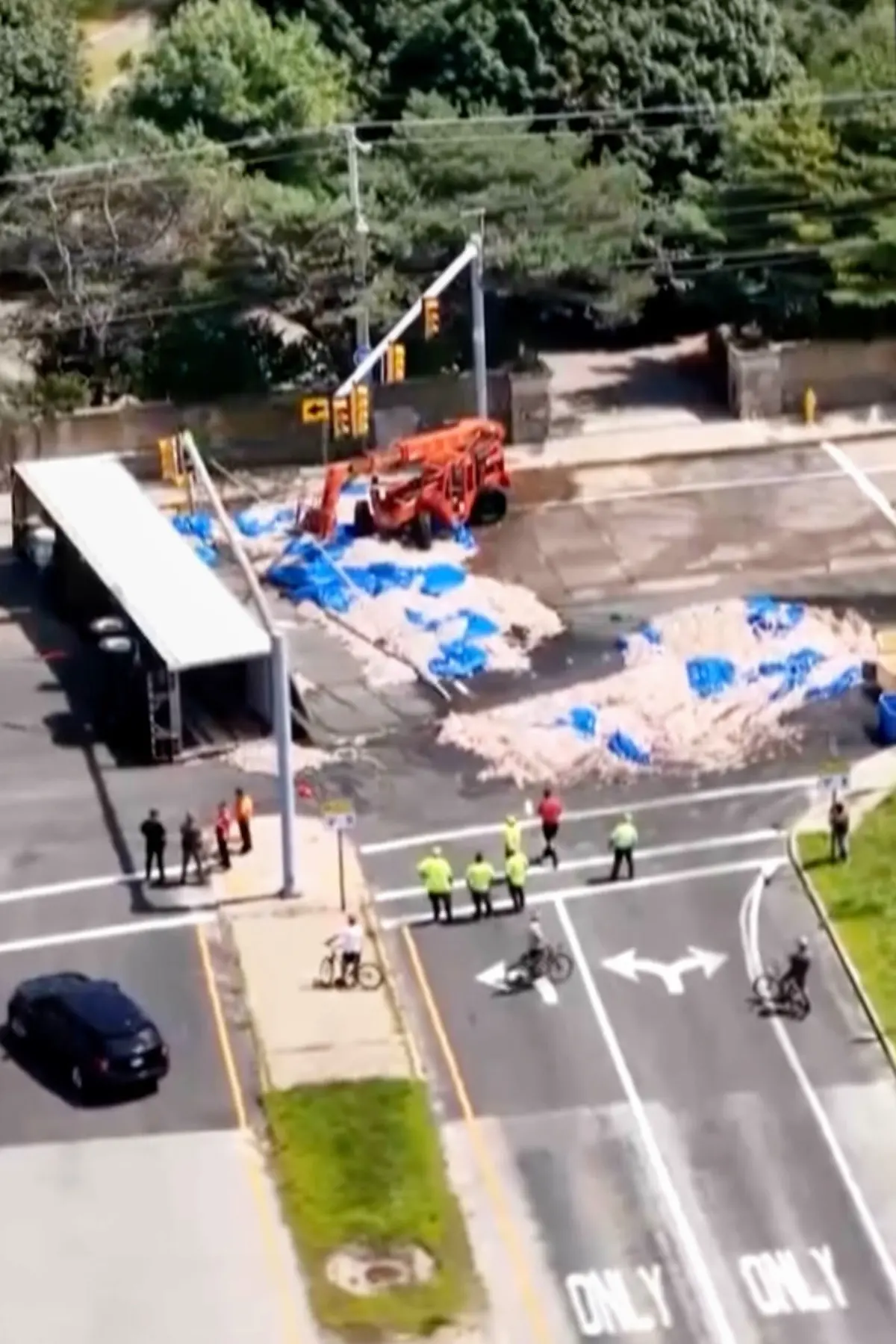
NARRAGANSETT, R.I. — For nearly eight hours on a sun-drenched Sunday in August, the picturesque coastal town of Narragansett was brought to a reluctant standstill by an unexpected, pungent intruder. What began as a routine commercial freight transport transformed into a bizarre, odoriferous roadside emergency that local law enforcement ultimately dubbed the “Squidpocalypse of ’26.”
When a fully loaded tractor-trailer carrying a mountain of freshly harvested squid suffered a catastrophic mechanical dislodgement, a substantial portion of its marine cargo spilled directly onto a heavily trafficked Rhode Island roadway. The resulting catastrophe left massive, glistening mounds of calamari baking under the brutal summer sun, creating a traffic nightmare and a wall of sensory assault that left residents, business owners, and municipal workers reeling for days.
Main Facts
The incident occurred on Sunday, August 16, 2026, in the coastal community of Narragansett. According to reports from the Narragansett Police Department, a heavy-duty commercial truck was transporting a massive shipment of squid intended for an out-of-town processing facility. As the driver attempted to navigate a routine turn, the trailer detached from the rig and tipped violently onto its side, rupturing its structural integrity and spilling thousands of pounds of seafood across the asphalt.
The scope of the spill was immense. Video footage captured by local observers and aerial drone shots from PierPicture showed staggering, multi-ton piles of white, glistening squid blanketing the intersection.
Remarkably, the accident resulted in zero injuries. The driver and a single passenger inside the cab of the truck escaped the rollover completely unscathed. No other vehicles were involved in the accident, sparing the town from what could have been a much graver multi-car collision.
However, the cargo itself presented an entirely unique set of logistical challenges. As the hours ticked by, the combination of high summer temperatures and the inherent chemical properties of marine proteins transformed the intersection into a biological pressure cooker. The smell—described by locals as an overwhelming, nauseating wave of decaying seafood—became the defining characteristic of the afternoon, lingering long after the last of the squid was shoveled into the back of a dump truck.
Chronology of Events
The unfolding of the Squidpocalypse followed a grueling, hour-by-hour timeline that tested the patience of local commuters and the endurance of emergency responders.
Sunday, August 16, 2026
- 9:27 AM: The Narragansett Police Department receives urgent emergency calls reporting a commercial vehicle rollover at a local intersection. Upon arrival, officers discover a massive tractor-trailer lying on its side, with its cargo doors breached and an overwhelming volume of squid carpeting the roadway.
- 10:30 AM: Initial assessments confirm that both the driver and passenger are uninjured. State and local authorities establish a wide perimeter, diverting traffic away from the affected intersection as the sheer volume of the spill becomes apparent.
- 12:00 PM (Noon): Under a cloudless, warm summer sky, the midday sun begins to beat down on the exposed marine cargo. According to Narragansett Police Capt. Ryan Prest, the scene rapidly deteriorates as the heat accelerates the decomposition of the sensitive seafood proteins, releasing a potent, highly distinctive odor into the surrounding neighborhood.
- 2:00 PM: Heavy machinery, including front-end loaders and municipal dump trucks, are summoned to the scene. Traditional cleanup methods are rendered useless by the sheer volume of the slippery, gelatinous cargo; manual shoveling and mechanical scooping become the primary remediation tactics.
- 5:15 PM: Following nearly eight hours of intensive cleanup, street sweeping, and sanitization, the intersection is officially deemed cleared of debris and hazardous biological waste. Roads are reopened to the public, though the atmospheric reminder of the spill persists in the coastal breeze.
Wednesday, August 19, 2026
- Social Media Release: The Narragansett Police Department officially embraces the folklore of the incident, taking to social media to declare that the town is “still recovering” from the “Squidpocalypse of ’26,” wittily noting that the event “put ‘slippery when wet’ to shame.”
Supporting Data and Technical Realities
To understand the magnitude of the Narragansett spill, one must examine the unique logistical footprint of the commercial seafood industry in Southern New England. Rhode Island ports are hubs for commercial squid (specifically Loligo pealeii, or the longfin inshore squid), which is a major economic driver for regional fisheries. Transporting these massive volumes requires specialized refrigerated trucking to maintain structural and olfactory integrity during transit.
When a trailer rolls over, the physics of the cargo shift dramatically. Unlike dry goods or manufactured products, a load of fresh squid behaves almost like a liquid or a semi-viscous mass. As the trailer tipped, the weight distribution shifted violently toward the point of impact, ensuring that a "substantial portion" of the cargo breached the container.
Furthermore, the environmental metrics of the day played a critical role in the severity of the public reaction:
- Ambient Temperature: Peak summer temperatures in coastal Rhode Island routinely reach the mid-to-high 80s Fahrenheit, with high humidity.
- Thermal Degradation: Marine proteins begin to break down rapidly when exposed to temperatures above 60°F. Without immediate cold-chain preservation, enzymes and bacteria accelerate putrefaction within a matter of hours.
- Duration of Exposure: The squid remained exposed to direct sunlight for nearly eight uninterrupted hours, allowing ample time for sulfur compounds—characteristic of decomposing marine life—to saturate the ambient air.
- Roadway Contamination: The natural oils and moisture released by thousands of crushed cephalopods created a slick, hazardous coating on the asphalt, requiring heavy industrial degreasers and mechanical scraping to ensure the road was safe for standard vehicular traffic once more.
Official Responses and Investigations
Local authorities responded to the bizarre incident with a blend of professional efficiency and lighthearted community engagement.
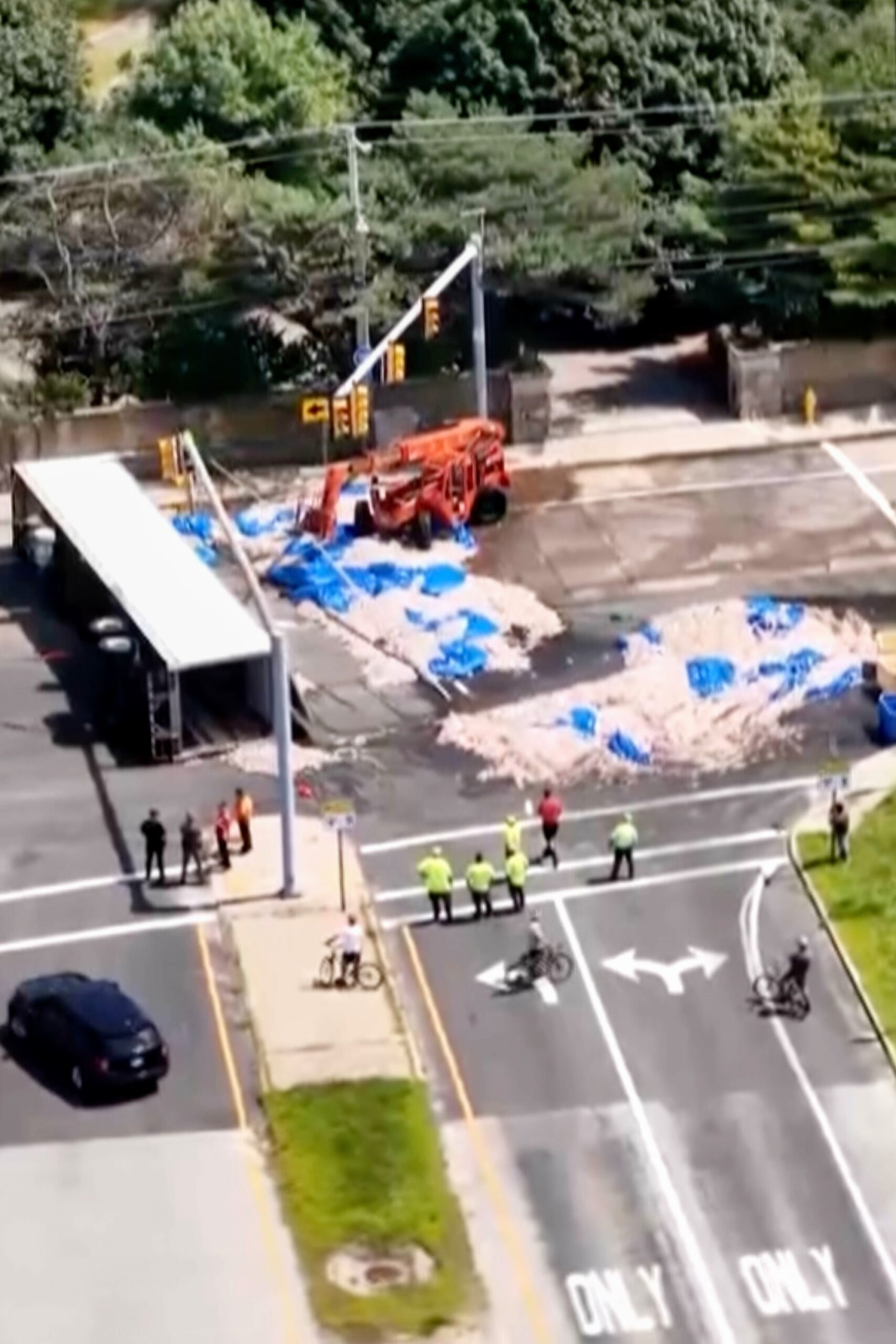
Capt. Ryan Prest of the Narragansett Police Department provided transparent updates to the press, highlighting both the grim realities of the cleanup and the fortunate lack of human casualties. When questioned by reporters about the root cause of the crash and potential accountability, Prest noted that the Rhode Island State Police Commercial Enforcement Unit immediately launched a formal investigation into the mechanical failure of the trailer hitch and the dynamics of the turn.
As of mid-week, however, the official enforcement ledger remained remarkably clean.
"We have not issued any citations," Prest stated during a media briefing. "I’m not sure if there will be any citations issued by the state police." Representatives for the Rhode Island State Police did not immediately respond to subsequent requests for comment regarding the ongoing mechanical review of the transport vehicle.
Meanwhile, local residents and commercial fishers offered their own expert perspectives on the catastrophe. Richard Stevens, a Narragansett resident and veteran fisherman, offered a vivid description of the hazard to local news affiliate WJAR.
"Squid has a distinctive odor to it," Stevens observed. "It can be very foul smelling, especially if it lands on the road and stays there for awhile." His sentiments were echoed by scores of commuters and local business owners who had the misfortune of downwind exposure during the eight-hour road closure.
Rather than remaining entirely defensive, the Narragansett Police Department capitalized on the viral nature of the event. Their official social media statement—poking fun at the phrase “slippery when wet”—turned a malodorous municipal headache into a moment of shared internet amusement, generating national headlines and cementing the event’s place in local lore.
Broader Implications
While the "Squidpocalypse of ’26" ultimately resulted in nothing more severe than a temporary traffic detour, ruined footwear, and a lingering coastal odor, the incident highlights several broader operational and infrastructure challenges faced by modern coastal municipalities.
1. Commercial Transit Safety in Coastal Zones
Coastal towns like Narragansett rely heavily on narrow, winding roads designed decades ago to accommodate modest local traffic, rather than modern, multi-ton commercial tractor-trailers hauling industrial quantities of perishable goods. The spill serves as a stark reminder of the infrastructure strain caused by heavy freight navigating tight municipal turns. Regulators may face renewed calls to evaluate designated trucking routes away from dense residential and commercial intersections.
2. Perishable Freight and Emergency Protocols
Standard emergency response training typically prepares departments for fuel spills, hazardous chemical leaks, or structural debris. Organic biological spills—particularly those involving massive tonnages of perishable foodstuff—require specialized heavy-machinery response, biohazard washing, and rapid-deployment cold-storage or disposal units. The eight-hour clearance window in Narragansett underscores the logistical hurdles municipal road crews face when clearing unconventional cargo.
3. Economic and Environmental Impact
Though the lost shipment of calamari represented a significant financial loss for the transport and processing entities involved, the rapid containment prevented any secondary environmental disasters, such as localized marine contamination or pest attraction. Nevertheless, local businesses situated near the intersection reported a temporary dip in Sunday afternoon foot traffic as customers steered clear of the olfactory zone.
As Narragansett continues to air out its streets and trade lighthearted banter online about the legendary event, the Squidpocalypse of ’26 will long be remembered as the day the sea’s most slippery residents briefly conquered the asphalt, leaving an indelible impression—and an unforgettable aroma—on the Ocean State.
