

Main Facts
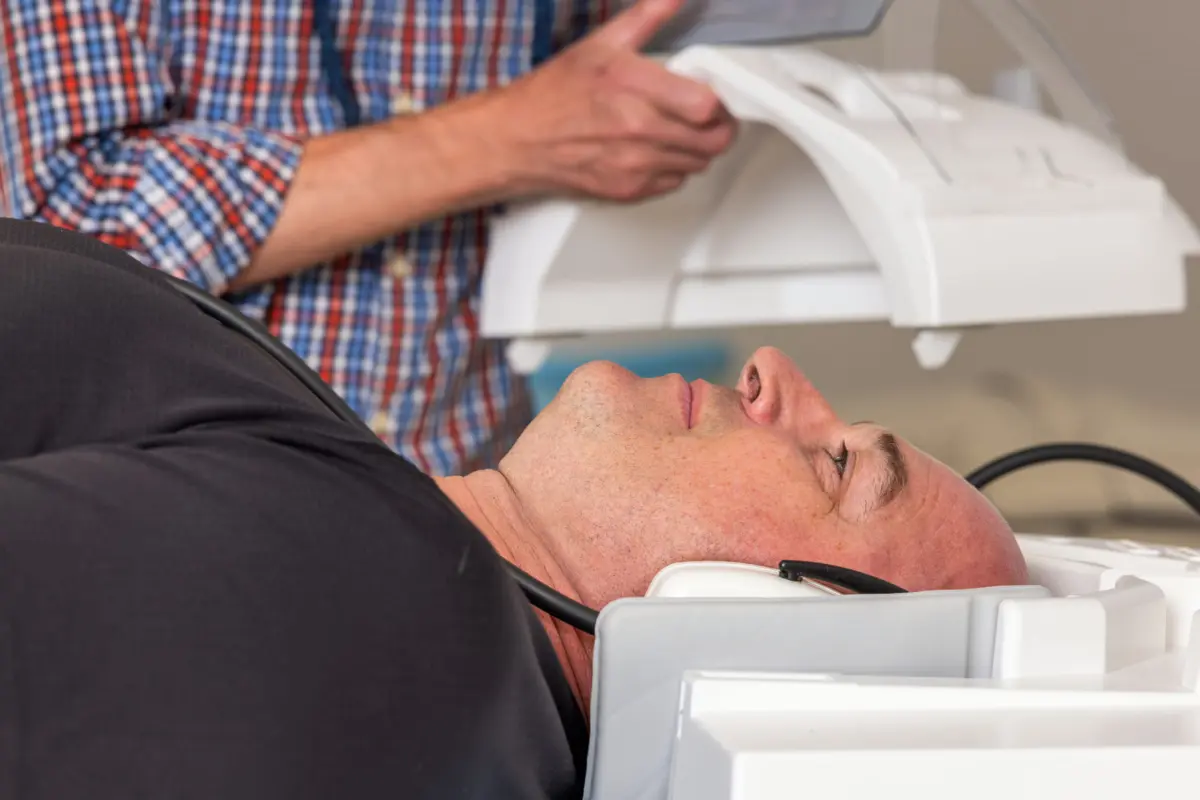
Decades after taking his final snap in the National Football League, former three-time Pro Bowl quarterback Matt Hasselbeck remains remarkably active, vibrant, and seemingly unscathed. At 50 years old, he enjoys middle adulthood alongside his wife and three children, a stark contrast to the grim fates suffered by several of his former peers. Yet, understanding that not everyone has been as fortunate, Hasselbeck recently traveled to Boston University to undergo a rigorous, two-day battery of medical scans and cognitive examinations.
His mission is clear: to help researchers achieve a medical milestone that has eluded the scientific community for decades—diagnosing chronic traumatic encephalopathy (CTE) in living patients.
CTE is a progressive, degenerative brain disease heavily linked to repeated concussions and sub-concussive head trauma common in contact sports and military combat. For years, the disorder has cast a long, heavy shadow over America’s most popular sport, having been diagnosed posthumously in more than 100 former NFL players. High-profile victims include Hall of Fame linebacker Junior Seau, iconic quarterback Ken Stabler, and former New England Patriots tight end Aaron Hernandez.
Currently, definitive diagnosis of the disease remains impossible until an autopsy is performed after death. However, through the sponsorship of a $15 million grant awarded by the National Institutes of Health (NIH) for 2025, researchers like Michael Alosco, co-director of clinical research at the Boston University CTE Center, are fighting to change that reality. By enlisting healthy former athletes like Hasselbeck—alongside everyday college football players and control subjects with Alzheimer’s disease—scientists hope to isolate specific biological markers that differentiate CTE from other neurodegenerative conditions, bringing the medical field closer to live diagnosis and future treatment trials.
Chronology
To understand the current push for diagnostic breakthroughs, it is essential to look at the timeline of how head trauma awareness has evolved in sports, moving from a culture of silence to active medical investigation:
- Pre-College Years: Long before reaching the professional ranks, Hasselbeck accumulated a baseline of head trauma, suffering three concussions before college alone—one on a football field, one on a basketball court, and another while goofing around on ice skates.
- 1998–2015 (The Professional Career): Spanning nearly two decades across stints with the Green Bay Packers, Seattle Seahawks, Tennessee Titans, and Indianapolis Colts, Hasselbeck’s career captured a transformative era in professional sports culture. Early on, the locker room ethos demanded toughness above all else; the only socially acceptable response to a crushing hit to the head was "I’m good." By the mid-2010s, however, player honesty and protocol surrounding concussions shifted dramatically.
- March 2016: A watershed moment occurred when the NFL officially acknowledged a link between football-related head trauma and CTE for the first time, followed by substantial financial commitments to concussion researchers.
- Late 2010s to Present: Researchers began expanding multi-site observational studies across the United States. Concurrently, public discourse shifted toward player safety, rule changes, and post-career advocacy.
- Recent Days: Hasselbeck checked into Boston University for an intensive two-day evaluation consisting of blood draws, cognitive tests, MRIs, and PET scans, alongside making a personal commitment to donate his brain for post-mortem research.
Supporting Data
The scope of the multi-site study spearheaded by Boston University extends far beyond elite quarterbacks, incorporating various demographics to map out the complexities of degenerative brain disease.
- Multi-Site Collaboration: Principal investigator Michael Alosco oversees the primary hub in Boston, while auxiliary sites operate across California, Arizona, Texas, and Florida, with more locations expected to open. Nicholas Ashton, the principal investigator at the Arizona site in Phoenix, notes that roughly 10 patients have participated locally, emphasizing that current diagnoses rely heavily on guesswork because CTE symptoms closely mimic those of Alzheimer’s disease.
- Diverse Participant Profiles: The study actively recruits two distinct populations: individuals who played college or professional football, and patients diagnosed with Alzheimer’s disease who have zero history of contact sports or repetitive head impacts. Among the non-NFL participants is Bryan Savage, a 56-year-old former Division III linebacker from Union College in Schenectady, New York. Savage, who lives in Maryland, traveled to Boston seeking answers for recent bouts of depression and ADHD. Fortunately, his brain scans returned normal for a man in his mid-50s, though his participation underscores how middle-aged former athletes frequently grapple with the uncertainty of physical and cognitive shifts.
- Diagnostic Metrics: Hasselbeck’s evaluation involved a combination of neurological and imaging techniques, including reciting the alphabet backward, counting backward from 100 by sevens, blood sampling, structural MRIs, and positron emission tomography (PET) scans utilizing a safe radioactive tracer to map active brain function.
- Funding and Scale: Bolstered by a $15 million NIH grant for 2025, researchers are racing to overcome the primary hurdle separating Alzheimer’s research from CTE research: sheer volume of historical data. While Alzheimer’s research spans decades of continuous live-patient tracking paired with brain donations, CTE data collected during a patient’s life has historically been scarce.
Official Responses
The initiative has drawn strong commentary from the medical community and participating athletes alike, emphasizing a collaborative front between science and sports leadership.
"They need guys like me—they need people who are feeling good to step up to the plate and volunteer," Matt Hasselbeck stated regarding his decision to participate. Recognizing the asymmetric nature of football positions, he added, "I played quarterback, so I didn’t take some of the hits that a lot of my teammates took. But the guys who were blocking for me, or playing special teams, or trying to get the ball back for me on defense, I wanted to do something. They had my back, so in a way I’d like to have their back."
Dr. Michael Alosco of Boston University highlighted the unique scientific hurdles facing his team: "We’ve applied what we’ve known worked for Alzheimer’s disease, but we’ve learned it does not work for CTE. We’ve really got to push discovery efforts and find the marker that’s specific to the protein of CTE versus Alzheimer’s because they’re different. How we’re going to get there is through the research we’re doing right now."
Dr. Nicholas Ashton echoed the sentiment regarding the necessity of a growing participant pool: "The more people involved, the more information we get and the closer we get to an answer. Treatments exploded with Alzheimer’s once we were able to accurately diagnose. We’re trying to get to the same spot with CTE."
Reflecting on his time working alongside league officials and the NFL Players Association (NFLPA) to enact protective rules, Hasselbeck expressed immense pride in how the culture has evolved: "I’ve always had a passion for making the game safer. I love football. One of the things I’m most proud of as an NFL guy is not just as a player, but the entire time I worked with the league and NFLPA for ways to make the game safer."
Implications
The implications of successfully diagnosing CTE in living individuals extend far beyond the gridiron, carrying profound weight for contact sports at all levels, military personnel, and neurodegenerative medicine at large.
- A Shift Toward Proactive Treatment: At present, because CTE can only be confirmed post-mortem, therapeutic intervention is virtually non-existent during a patient’s life. A reliable live diagnostic biomarker would instantly unlock clinical trials, allowing pharmaceutical companies and medical researchers to develop targeted therapies aimed at halting or slowing down neurodegeneration before behavioral and cognitive symptoms become debilitating.
- De-stigmatization of Mental Health Struggles: Former athletes like Bryan Savage often experience uncharacteristic mood swings, memory lapses, depression, and apathy in middle age, leaving them to wonder if their symptoms stem from a midlife crisis, normal aging, or cumulative athletic trauma. Validating these experiences through comprehensive neurological screening helps bridge the gap between physical injury and mental health, encouraging retired athletes to seek community support and medical intervention.
- Cultural Transformation in Athletics: The normalization of head injury reporting—shifting away from the archaic "rub some dirt on it" mentality of 1990s and 2000s locker rooms toward transparent concussion protocols—ensures that younger generations of athletes play under vastly safer conditions. By lending their names, scans, and eventual brain donations to science, figures like Hasselbeck ensure that the legacy of contact sports transitions from hidden danger to accelerated medical enlightenment.
