

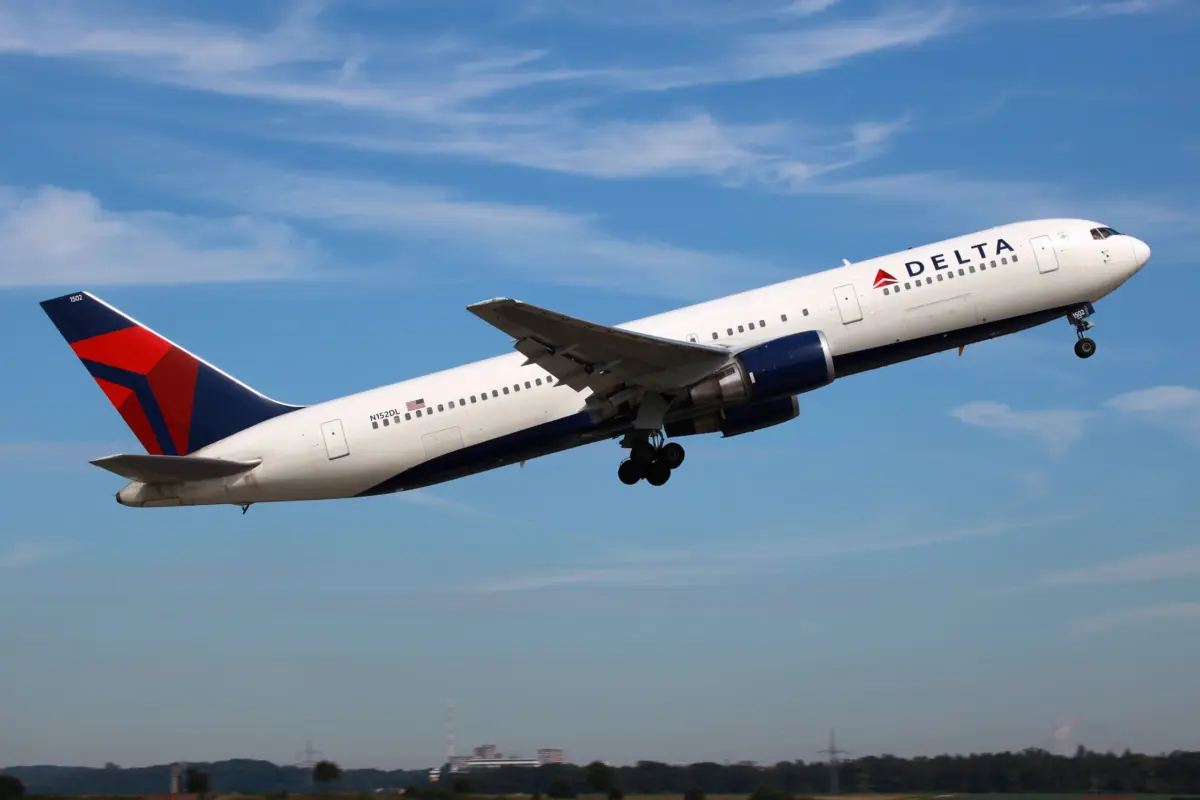
WASHINGTON — In response to escalating regional instability and recent kinetic strikes targeting critical infrastructure, the United States Federal Aviation Administration (FAA) has issued a stern advisory directing U.S. carriers and registered aircraft operators to exercise extreme caution when navigating the airspace over Saudi Arabia.
The directive, disseminated as a Notice to Airmen (NOTAM), underscores growing concerns over civil aviation safety amid ongoing military activities and hazardous navigation system interference throughout the Arabian Peninsula. The advisory, which carries significant implications for commercial and cargo aviation, remains in effect through December 10, casting a shadow of uncertainty over major upcoming route launches and established logistics corridors connecting North America, Europe, and the Middle East.
Main Facts
The FAA’s emergency directive is a direct response to a deteriorating security environment in the Saudi capital. According to the agency, ongoing military actions in the region pose severe, multi-faceted risks to commercial aircraft operating at all altitudes. These hazards are not restricted to ground operations but extend explicitly to high-altitude overflights, as well as the critical arrival and departure phases of flight, which are historically the most vulnerable periods for commercial airliners.
Furthermore, the advisory highlights persistent and dangerous interference with aircraft navigation and communication systems. In modern commercial aviation, reliance on Global Navigation Satellite Systems (GNSS) is absolute; electronic jamming and spoofing—tactics increasingly prevalent in active conflict zones—degrade flight deck situational awareness, presenting a latent threat to safe navigation.
Key elements of the current operational landscape include:
- The FAA Advisory Scope: Applies universally to all U.S. commercial airlines, registered aircraft operators, and pilots flying into, out of, or through Saudi airspace. It is scheduled to remain active until December 10.
- The Catalyst: A series of coordinated strikes on Riyadh’s primary international gateway, culminating in a devastating attack that resulted in 13 fatalities and over 300 injuries.
- Infrastructure Closures: Riyadh’s international airport has been forced to shutter operations, remaining closed to all commercial flight traffic through at least 5:00 p.m. EDT on Monday.
- Aviation Industry Impact: The warning threatens to disrupt ambitious regional expansion plans by major U.S. passenger carriers, such as Delta Air Lines, and complicates crucial international cargo networks operated by logistics giants like FedEx.
Chronology of Events
The sequence of events leading up to the FAA’s aviation warning highlights the rapid deterioration of security conditions surrounding Saudi Arabia’s primary civil aviation hubs:
- September 2025: Expanding its strategic footprint in the Middle East, FedEx launches its inaugural dedicated freight service into Saudi Arabia. Utilizing a Boeing 777 freighter, the route establishes a vital six-times-weekly link connecting the Americas and Europe to Riyadh, with onward Asian connections to Guangzhou and Shanghai.
- October 10: The initial wave of coordinated strikes hits the greater Riyadh area, specifically targeting critical infrastructure near the international airport. While initial reports indicate no immediate commercial aircraft damage, the psychological and operational shockwaves ripple through international aviation circles.
- October 11 (Saturday): A subsequent, highly destructive attack strikes Riyadh’s international airport. The bombardment results in catastrophic human casualties, leaving 13 dead and more than 300 individuals wounded. The strike immediately paralyzes ground operations at the facility.
- Immediate Post-Attack Window: Airport authorities suspend all incoming and outgoing flights, initiating an emergency closure projected to last through Monday afternoon at 5:00 p.m. EDT as safety assessments and structural inspections commence.
- Mid-October: In the wake of the attacks and mounting intelligence regarding regional military escalation and electronic warfare, the FAA issues its comprehensive NOTAM, warning U.S. operators of extreme risks spanning all flight levels across Saudi airspace through December 10.
Supporting Data and Operational Impact
The FAA’s directive does not exist in a vacuum; it targets a complex web of commercial passenger and cargo operations that rely heavily on the unhindered flow of traffic through the Middle East.
Passenger Aviation and Delta’s Expansion Plans
Passenger carriers face immediate scheduling dilemmas. Most major U.S. airlines—including United Airlines and American Airlines—typically service the Riyadh market indirectly through deeply integrated codeshare partnerships with regional carriers such as Saudia or Gulf-based hubs.
However, direct connectivity was poised for a major milestone. Delta Air Lines had scheduled the launch of its historic, highly publicized direct service between Atlanta and Riyadh, slated to commence on October 23. This route represented a strategic push by Delta to capture corporate and government travel between the United States and the Kingdom. The issuance of the FAA warning, paired with the physical closure of Riyadh’s airport, places the operational viability of this launch date under intense scrutiny.
Air Cargo and Logistics Networks
Beyond commercial passenger traffic, the aviation warning directly impacts international supply chains. In September 2025, FedEx inaugurated a dedicated Boeing 777 freighter route operating six times per week into Saudi Arabia. This arterial cargo route anchors Western logistics to the Kingdom, bridging North America and Europe with Riyadh before continuing onward to economic powerhouses in China, including Guangzhou and Shanghai.
Any prolonged airspace restrictions, navigation interference, or ground security delays threaten to bottleneck these high-value supply chains, forcing carriers to contemplate costly re-routing, increased fuel burns, and extended transit times.
Official Responses and Industry Stakeholder Positions
As the international aviation community digests the gravity of the FAA’s warning, responses from major stakeholders have highlighted the tension between commercial ambition and uncompromising safety mandates.
- The Federal Aviation Administration: In its official advisory, the agency was unambiguous regarding the gravity of the threat environment. "Threats could pose a potential risk to aircraft at all altitudes, including overflight, the arrival, and departure phases of flight," the FAA stated, formally categorizing the situation in Saudi airspace as a "potentially hazardous situation" that extends to all U.S.-registered operators.
- Delta Air Lines: Delta has maintained a cautious posture in the wake of the attacks. While corporate communications channels did not immediately respond to specific requests for comment on Sunday, airline leadership has established a clear operational philosophy. Speaking to CNBC the week prior to the attacks, Delta CEO Ed Bastian addressed potential geopolitical and safety hurdles head-on, declaring unequivocally that "safety is going to make the call" regarding whether the carrier will move forward with its scheduled October 23 route inauguration. This positions safety compliance as the absolute arbiter of Delta’s Middle Eastern expansion strategy.
- Regional Authorities and Airport Operators: Saudi aviation authorities have remained largely focused on emergency response, damage assessment, and structural remediation following the weekend strikes. Ensuring the structural integrity of runways, terminals, and air traffic control infrastructure remains the primary prerequisite before the airport can safely lift its closure order.
Implications for Global Aviation and Regional Stability
The convergence of kinetic military strikes on civilian airports and widespread navigation system interference marks a dangerous escalation in the challenges facing modern commercial aviation. The implications of the FAA’s advisory extend far beyond the immediate borders of Saudi Arabia:
1. Re-Evaluating Middle Eastern Airspace Risk Management
The events in Riyadh force a systemic re-evaluation of how civil aviation authorities assess risk in regions proximate to active geopolitical conflicts. Similar to historical airspace closures over Ukraine, Iraq, and parts of the Middle East, airlines and regulators must grapple with the reality that civilian infrastructure can inadvertently or deliberately become a focal point of military hostilities. The inclusion of high-altitude overflights in the FAA warning is particularly significant, reminding the industry of past tragedies where commercial airliners cruising at 30,000 feet were catastrophically impacted by surface-to-air threats or misidentified military actions.
2. Technological Vulnerabilities and Electronic Warfare
The FAA’s specific warning regarding navigation system interference highlights the growing threat of electronic warfare in modern conflicts. GPS jamming and spoofing—often utilized by military actors to disrupt drone guidance systems or missile targeting—have collateral effects that severely degrade the navigation and timing instruments of commercial aircraft. Pilots relying on GNSS data can experience sudden disorientation or instrument degradation, necessitating a reversion to traditional terrestrial navigation aids and heightened vigilance on the flight deck.
3. Economic and Strategic Fallout for Saudi Vision 2030
For Saudi Arabia, the disruption to its primary aviation gateway comes at a delicate time. As the Kingdom aggressively opens its economy to international tourism, foreign investment, and global business through sweeping modernization programs, secure and reliable international transport links are paramount. Extended airport closures, combined with international travel advisories from major global aviation regulators, threaten to temporarily cool investor confidence and delay the ambitious connectivity goals championed by national carriers and tourism boards alike.
As the December 10 expiration date of the FAA advisory approaches—and with Riyadh’s airport slated to evaluate its operational readiness past Monday evening—the global aviation community will be watching closely. For U.S. carriers, cargo operators, and international travelers alike, the message from Washington is clear: until stability is restored and navigation integrity can be guaranteed, caution must remain the guiding principle in Saudi skies.
