

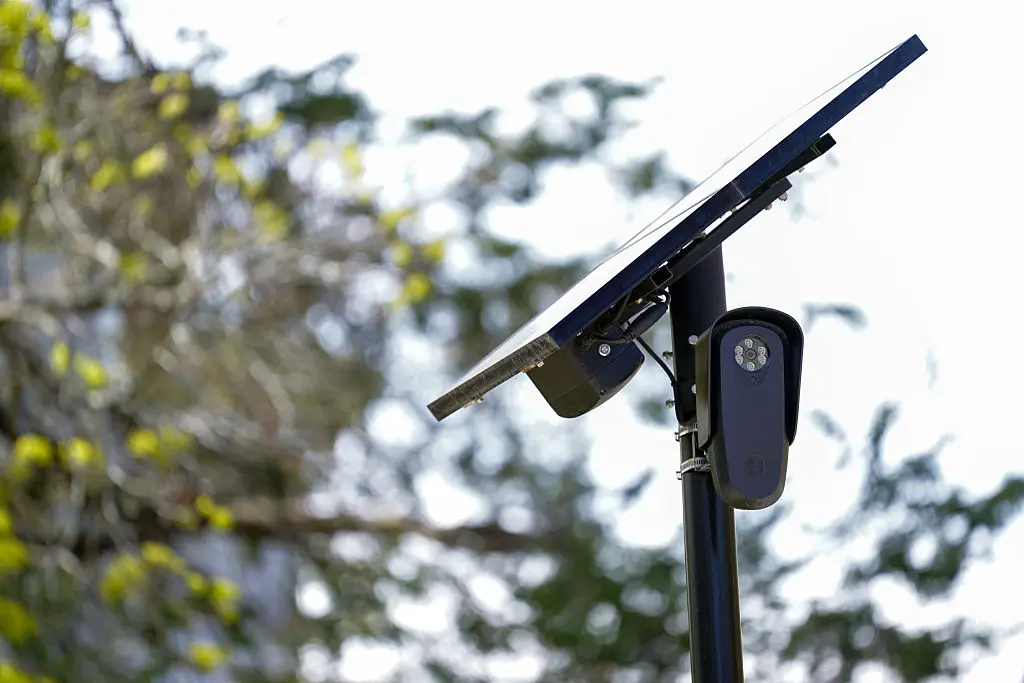
As municipalities across the country grapple with the rapid deployment of automated license plate readers (ALPRs) and artificial intelligence-backed surveillance systems, a peculiar form of civic anxiety has taken root. Across neighborhoods, suburban parking lots, and rural intersections, residents are spotting new hardware mounted on poles and utility lines. Armed with smartphone apps and a growing awareness of digital privacy, citizens are asking a fundamental question: Is that a Flock camera?
The debate over Flock Safety’s ubiquitous technology—encompassing AI-driven license plate tracking, person detection, and even audio monitoring like gunshot detection—has exposed a widespread lack of public familiarity with what these devices actually look like. This visual ambiguity has fueled confusion, leading to misplaced citizen activism, erroneous crowdsourced mapping, and municipal governments scrambling to issue public clarifications.

Understanding how to accurately identify a Flock Safety camera requires looking beyond generic assumptions, evaluating hardware design, checking public databases, and understanding the complex ecosystem of public-private surveillance partnerships.
Main Facts: The Anatomy of a Modern Surveillance Ecosystem
Flock Safety has rapidly expanded its footprint by positioning its hardware as a crime-fighting tool for both law enforcement and private entities. Unlike traditional traffic monitoring devices or red-light cameras—which are primarily fixed, wired into municipal infrastructure, and focused narrowly on traffic infractions—Flock’s units are designed for broad intelligence gathering.

Key identifiers and operational characteristics of Flock Safety infrastructure include:
- The Hardware Design: Most Flock cameras feature a distinct oval, hooded chassis housing a circular lens, often paired with a slim profile and a small, shiny stem-like company logo on the front.
- Power Source Independence: Flock systems heavily rely on large, dark-colored solar panel arrays mounted directly above or adjacent to the camera unit, enabling rapid deployment without extensive trenching or wired electrical connections.
- Dual Deployment Models: While many units are deployed by local police departments, a significant percentage are purchased and operated by private entities, including major retail chains (such as Home Depot and Lowe’s) and Homeowners Associations (HOAs).
- Advanced Capabilities: Modern iterations go beyond simple plate reading, incorporating AI-driven analytics that track vehicle characteristics (make, model, color), analyze human movement, and integrate with acoustic sensors.
Chronology: From Niche Law Enforcement Tool to Ubiquitous Public Fixture
The integration of automated surveillance into American communities did not happen overnight. Its trajectory reveals a steady march from niche municipal pilot programs to widespread, often contentious commercial networks.

- Early 2010s: Automated license plate readers (ALPRs) are primarily large, expensive, and stationary units deployed by major metropolitan police departments on highway gantries or specialized squad cars.
- Mid-to-Late 2010s: Companies like Flock Safety enter the market with low-cost, easily deployable solar-powered cameras aimed at neighborhoods and small municipalities, promising a turnkey solution for combating property crime and vehicle theft.
- 2020–2023: Adoption accelerates exponentially. Police departments utilize federal grants and municipal budgets to sign multi-year contracts. Concurrently, commercial entities begin installing private arrays in retail parking lots.
- 2024–Present: Public pushback reaches a tipping point. Privacy advocacy groups ramp up scrutiny, leading some cities to cancel contracts. Simultaneously, crowdsourced "DeFlock" initiatives emerge, attempting to map cameras via citizen reporting—frequently resulting in widespread misidentification of traffic sensors, private security devices, and non-Flock ALPR competitors like Axon or Obvio.
Supporting Data: Mapping the Surveillance Footprint
The sheer scale of modern surveillance adoption is difficult to track through visual inspection alone, making digital research tools essential for communities seeking transparency.
According to data compiled by digital rights organizations such as the Electronic Frontier Foundation (EFF), ALPR networks have saturated not just major urban centers, but mid-sized towns and rural corridors alike. Research indicates that hundreds of municipal police departments maintain active contracts with surveillance tech vendors, while major national retailers have integrated thousands of private AI-enabled cameras into environments frequented by millions of consumers daily.

Essential Tools for Verification
- The Atlas of Surveillance: Maintained by the EFF, this searchable database allows citizens to look up their town or county to identify active law enforcement surveillance contracts, ALPR deployments, and known data-sharing agreements with state and federal agencies.
- Street-Level Surveillance Hub: A companion resource designed to help communities understand the complex web of technologies utilized by contemporary public safety agencies.
- Municipal Public Records Portals: State-specific Freedom of Information Act (FOIA) or public records requests remain a legally binding avenue for uncovering exact purchase orders, installation dates, and data retention policies tied to local government surveillance budgets.
Official Responses and Municipal Blind Spots
As communities voice concerns over data privacy, government transparency, and potential civil liberties infringements, the response from local officials has been remarkably varied—and at times, chaotic.
In various municipalities, city councils have opted to cancel their Flock Safety contracts entirely following intense public pressure. However, these cancellations have frequently created a bureaucratic limbo: cameras remain physically mounted on utility poles for weeks or months because city staff and police departments lack clear protocols or jurisdictional clarity on who is responsible for removing hardware installed under third-party agreements.

Furthermore, investigative reports highlight a pervasive lack of oversight within local government structures. Many city councils have historically approved recurring police department line-item budgets without realizing that funds were subsidizing AI-driven mass surveillance networks. In some instances, local governments have announced new traffic safety initiatives while carefully omitting the word "Flock," even as contracts with the vendor remain active.
This administrative opacity has forced civic groups and individual watchdogs to rely on physical verification and direct questioning during public comment periods to hold local leaders accountable.

Implications: Privacy, Confusion, and the Future of Public Space
The visual confusion surrounding surveillance hardware carries profound implications for civil discourse, public trust, and individual privacy.
1. The Perils of Misidentification
When citizens rely entirely on crowdsourced mapping applications without verifying hardware specifications, the resulting misinformation can paralyze constructive debate. For instance, when municipal councils are forced to issue emergency bulletins clarifying that local street sensors are merely traffic control devices rather than police-operated AI cameras, it underscores a breakdown in public trust. Misidentifying private home security setups or competitor ALPR brands as Flock equipment distracts from legitimate oversight of actual mass surveillance networks.

2. The Erosion of Public Anonymity
The normalisation of ubiquitous, privately and publicly operated ALPRs fundamentally shifts the social contract regarding public movement. Unlike historical policing methods that required targeted suspicion, modern AI camera arrays passively log the daily transit patterns of entire populations, retaining searchable archives that can be queried by law enforcement agencies across jurisdictional lines—often without a warrant.
3. The Accountability Imperative
Ultimately, navigating the modern surveillance landscape requires a dual approach: citizens must educate themselves on the tangible differences between traffic infrastructure, private security, and advanced ALPR hardware, while simultaneously demanding rigorous transparency from elected officials. Until cities implement mandatory public hearings, transparent procurement audits, and clear sunset clauses for surveillance tech, the burden of mapping and questioning the digital panopticon will continue to rest heavily on the shoulders of the communities living beneath its lens.
