

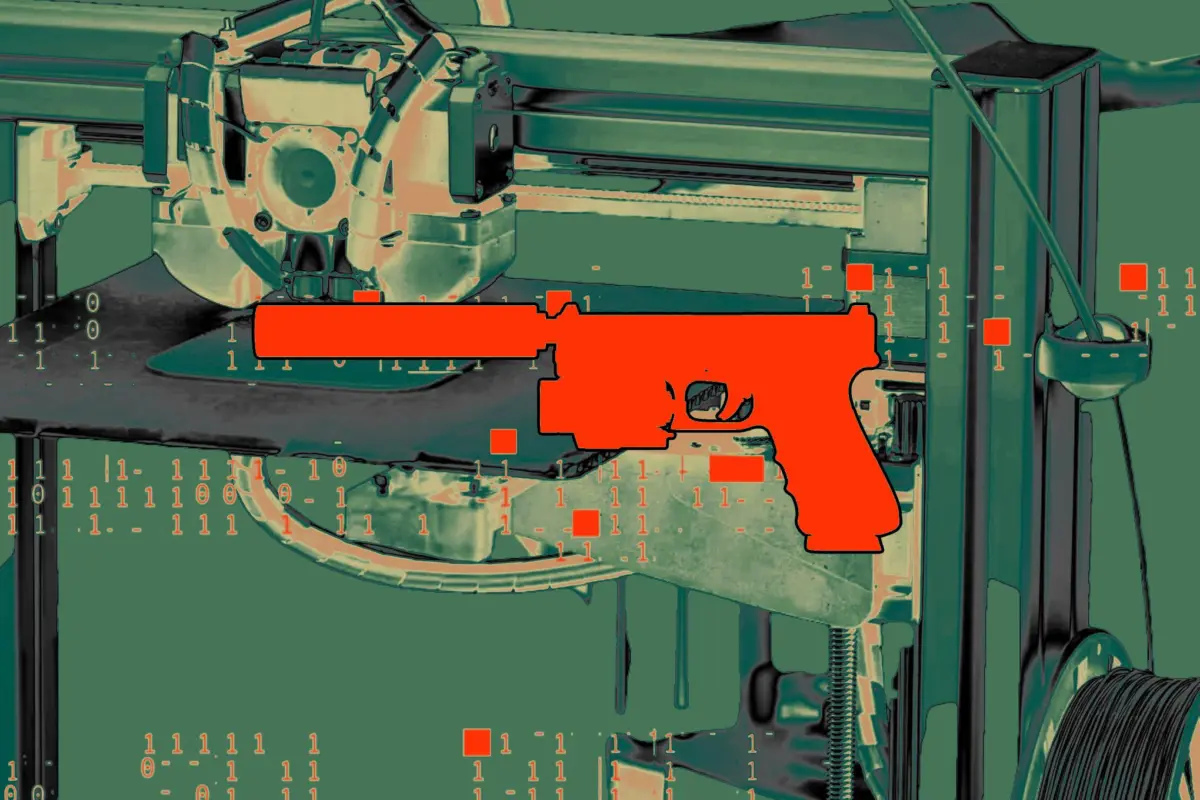
The ongoing technological and legal tug-of-war surrounding additive manufacturing has entered a volatile new phase. Cody Wilson, the polarizing figure who made global headlines a decade ago by developing the world’s first entirely 3D-printed firearm, has unveiled a software utility explicitly designed to circumvent government-mandated digital filters intended to block the fabrication of untraceable weapons. Dubbed "Hochulization"—a tongue-in-cheek moniker targeting New York Governor Kathy Hochul—the tool represents a preemptive strike by open-source advocates against emerging regulatory frameworks designed to police home manufacturing.
As lawmakers in states like New York and California push forward with legislation requiring hardware-level scanning to intercept digital blueprints for firearms, Wilson’s latest development threatens to upend these initiatives before they can be fully implemented. The clash exposes deep fault lines between public safety advocates seeking to stem the tide of "ghost guns" and digital rights proponents who warn that automated content filtering on consumer hardware will inevitably erode personal privacy, stifling innovation and setting a dangerous precedent for corporate and government surveillance.
Main Facts: The Technology Behind "Hochulization"
At the heart of this brewing conflict is a fundamental collision between state-level regulatory mandates and decentralized internet culture. Earlier this year, New York enacted pioneering legislation requiring new 3D printers sold within the state to include software capable of detecting and blocking weapon-related digital files. Similar legislation, designated AB 2047, is rapidly advancing through the California legislature, signaling a broader regional push to throttle the spread of untraceable, homemade firearms.
These regulatory efforts rely primarily on a relatively straightforward digital identification mechanism known as "hashing." When a file is processed through a cryptographic algorithm, it generates a unique string of characters—a digital fingerprint or hash. In theory, if a database of known firearm and component designs (such as lower receivers, magazines, or suppressors) is compiled, safety software embedded in a 3D printer can cross-reference incoming download files against this master list, flag matches, and halt the printing process.
Wilson’s company, Defense Distributed, operates DEFCAD, the world’s largest repository of 3D-printable gun designs, housing over 200,000 files. The newly developed "Hochulization" tool is engineered to neutralize hash-based detection effortlessly. By automatically appending a minor, non-functional series of bytes to the end of a digital model, the software alters the file’s cryptographic hash without modifying its geometric structure or compromising the structural integrity of the final printed object.
According to Wilson, the modification is a de minimis process designed to ensure that no comprehensive library of matching hashes can ever accurately map the repository. Wilson has stated his intention to apply "Hochulization" by default to all files hosted on DEFCAD and to release the tool as open-source software, enabling individual users worldwide to obfuscate their own local design files and bypass detection routines.
Chronology: A Decade of Conflict Over Digital Firearms
The friction between government regulators and open-source firearm developers has evolved across distinct legal and technological milestones:
- May 2013: Cody Wilson and his organization, Defense Distributed, successfully test-fire the "Liberator," the world’s first fully 3D-printed, single-shot plastic handgun.
- May 2013: Prompted by the public release of the Liberator blueprints, the United States Department of State orders Wilson to remove the files from the internet, threatening severe penalties under the International Traffic in Arms Regulations (ITAR).
- 2015–2018: Wilson files a high-profile lawsuit against the State Department, arguing that restricting the publication of computer-aided design (CAD) files infringes upon First Amendment protections for free speech and open-source code. Concurrently, Wilson launches alternate funding and publishing ventures amid intense political backlash.
- 2021–2024: Law enforcement agencies report a dramatic statistical surge in the recovery of 3D-printed firearms. The New York Police Department, for instance, reports confiscating a single 3D-printed weapon in 2021, a figure that skyrockets to 109 recoveries by 2024, mirroring trends in major metropolitan areas nationwide.
- Early 2027: New York State passes the nation’s first law mandating gun file detection software on newly manufactured 3D printers as part of its fiscal year budget. Concurrently, California lawmakers advance AB 2047 toward a full Senate floor vote.
- August 2027: Cody Wilson formally unveils the "Hochulization" software utility on DEFCAD, initiating the automatic rewriting of cryptographic hashes for the platform’s extensive library of firearms and suppressors.
Supporting Data: The Scale of the "Ghost Gun" Threat
To understand the urgency driving lawmakers, one must examine the proliferation of un-serialized firearms within the criminal underworld. While traditional factory-produced firearms still outnumber alternative manufacturing methods exponentially—with total U.S. firearm ownership estimated to exceed the human population—the accessibility of additive manufacturing has lowered the barrier to entry for acquiring lethal weapons.
Data compiled by advocacy groups such as Everytown for Gun Safety document sharp upward trajectories in urban crime gun recoveries involving 3D-printed components. The technology has also advanced significantly since the rudimentary, single-shot Liberator of 2013. Modern iterations, such as the FGC-9 semi-automatic carbine, utilize a hybrid construction of 3D-printed polymer and readily available metal tubing, capable of firing multiple high-velocity rounds.
These designs have been recovered globally, appearing in the arsenals of neo-Nazi accelerationist cells in Europe, rebel factions combating the military junta in Myanmar, and high-profile criminal incidents domestically. Notably, investigators alleged that Luigi Mangione—awaiting sentencing for the shooting death of UnitedHealthcare CEO Brian Thompson—utilized a partially 3D-printed Glock-style pistol frame and a proprietary suppressor, underscoring how individuals legally barred from owning firearms can exploit additive manufacturing to circumvent background checks and waiting periods.

Official Responses and Industry Debate
Despite the clear technical viability of "Hochulization" in defeating basic hash-matching protocols, policymakers and academic experts remain deeply divided on how to proceed.
Governor Kathy Hochul’s administration has aggressively championed printer-level restrictions, framing the initiative as a vital measure to choke off an illicit "plastic pipeline" feeding the illegal gun market. Similarly, California Assemblymember Rebecca Bauer-Kahan’s office has continued to advocate for AB 2047, which seeks to establish a state-regulated roster of compliant 3D printers by December 2029. However, neither legislative package explicitly dictates the exact engineering standards required for print-blocking software, leaving technical implementation to working groups composed of manufacturing experts, artificial intelligence researchers, and regulatory specialists.
Reactions from the technical community highlight the inherent limitations of regulatory enforcement. Solomon Diamond, an associate professor of engineering at Dartmouth College, acknowledged to The Verge that Wilson’s "Hochulization" technique would successfully bypass a purely hash-based identification filter. However, Diamond noted that technical efficacy does not render the policy worthless; administrative friction—such as mandatory account creation, email verification, and the deliberate effort required to alter a file—may still deter casual, unmotivated users.
Faced with the vulnerability of simple hashing, software developers working with lawmakers are exploring more advanced, AI-driven computer vision models capable of analyzing a file’s 3D geometry to predict whether a design constitutes a firearm. Yet, Wilson’s team tested this alternative by training their own proprietary detection model on public and private DEFCAD archives, discovering that geometry-based recognition yielded an unacceptable 35% false-positive rate when attempting to identify functional parts without tripping on unrelated mechanical components.
As of publication, neither Governor Hochul’s office nor Assemblymember Bauer-Kahan’s representatives have formally commented on the release of the "Hochulization" utility.
Implications: A Broader Threat to Digital Freedom
The implications of this technological arms race extend far beyond the narrow debate over gun control. The implementation of mandatory content-scanning software on consumer hardware has alarmed a diverse coalition of makers, hobbyists, digital rights organizations, and software developers who have no connection to firearms advocacy.
Civil liberties groups, including the Electronic Frontier Foundation (EFF), have repeatedly raised concerns that embedding content-moderation routines directly into manufacturing hardware creates a slippery slope toward pervasive digital surveillance. If 3D printers are legally required to scan incoming files for unauthorized weapons, the same technical infrastructure could easily be repurposed by corporate entities to enforce aggressive intellectual property rights, copyright protections, and patent restrictions.
For everyday hobbyists printing innocuous objects—such as custom e-reader cases, replacement mechanical gears, or artistic sculptures—the integration of overly aggressive AI filters risks generating frequent false positives. This could effectively lock users out of utilizing their personal devices for legal, creative expression.
By deploying "Hochulization," Wilson is deliberately attempting to force the hand of regulatory bodies. His strategy leaves lawmakers with an unpalatable binary choice: accept the status quo of ineffective enforcement, or mandate hyper-invasive, AI-driven surveillance architectures that threaten the foundational open-source ethos of personal manufacturing. As the legislative battles in New York and California march toward implementation deadlines, the outcome of this digital standoff will establish a monumental precedent for how governments regulate code, hardware, and creative autonomy in the twenty-first century.
