

Main Facts: A Historic Celestial Alignment
For the first time in over a quarter of a century, continental Europe is preparing to fall under the shadow of the Moon. On August 12, 2026, a rare and highly anticipated total solar eclipse will sweep across a narrow, high-visibility corridor stretching from the remote expanses of the Arctic Ocean down to the sun-drenched coasts of the Mediterranean.
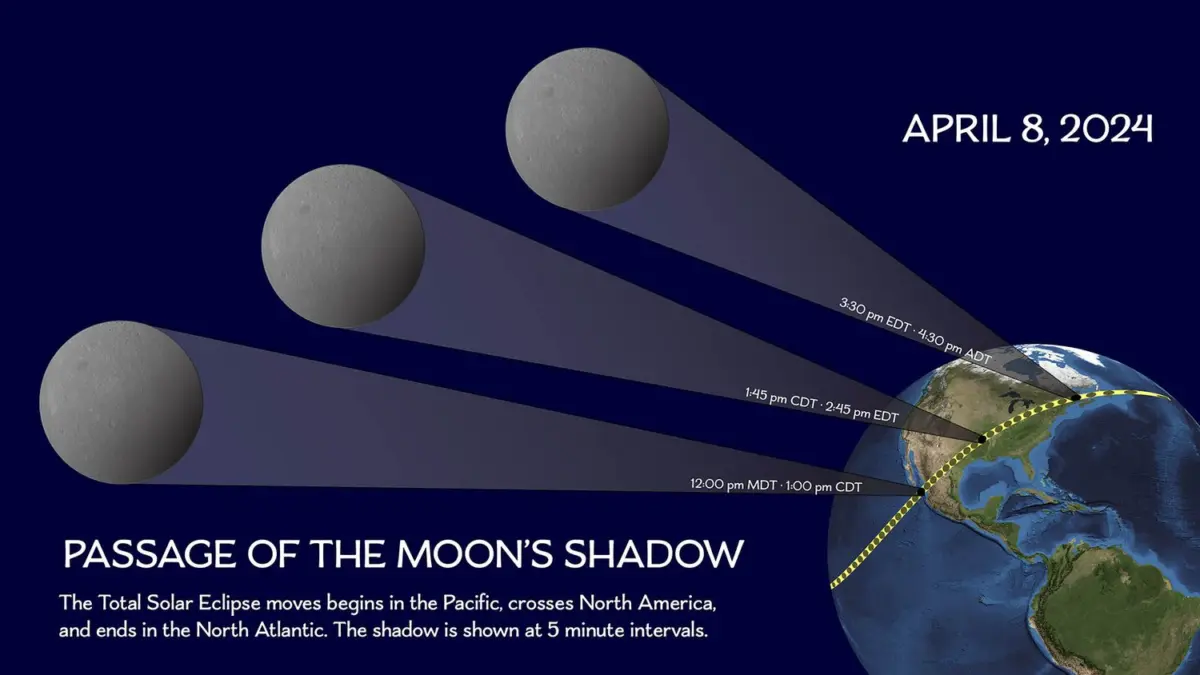
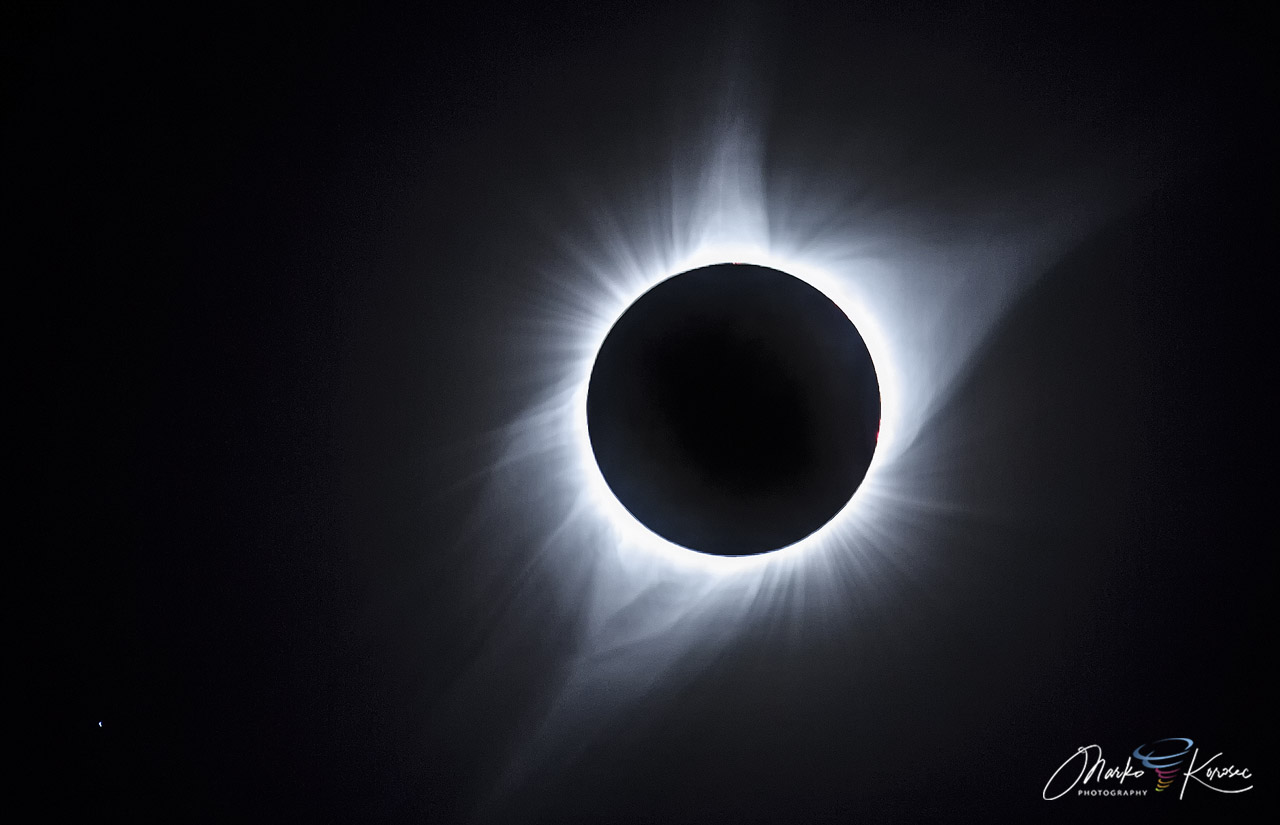
Marking the first path of totality to cross continental Europe since August 11, 1999, this astronomical spectacle will plunge millions of residents and travelers into complete daytime darkness. Along the narrow pathway—stretching roughly 60 to 70 miles wide—observers will experience up to 2 minutes and 18 seconds of totality. During this brief, breathtaking window, the Moon will perfectly align between the Earth and the Sun, completely obscuring the solar disk and revealing the ethereal, pearly-white glow of the Sun’s outer atmosphere, the corona.

What sets the 2026 event apart from many of its predecessors is a rare cosmic coincidence: the peak of the eclipse intersects directly with the annual Perseid meteor shower. Observers positioned within the path of totality who experience daytime twilight will have the unprecedented opportunity to spot shooting stars streaking across the darkened afternoon sky.
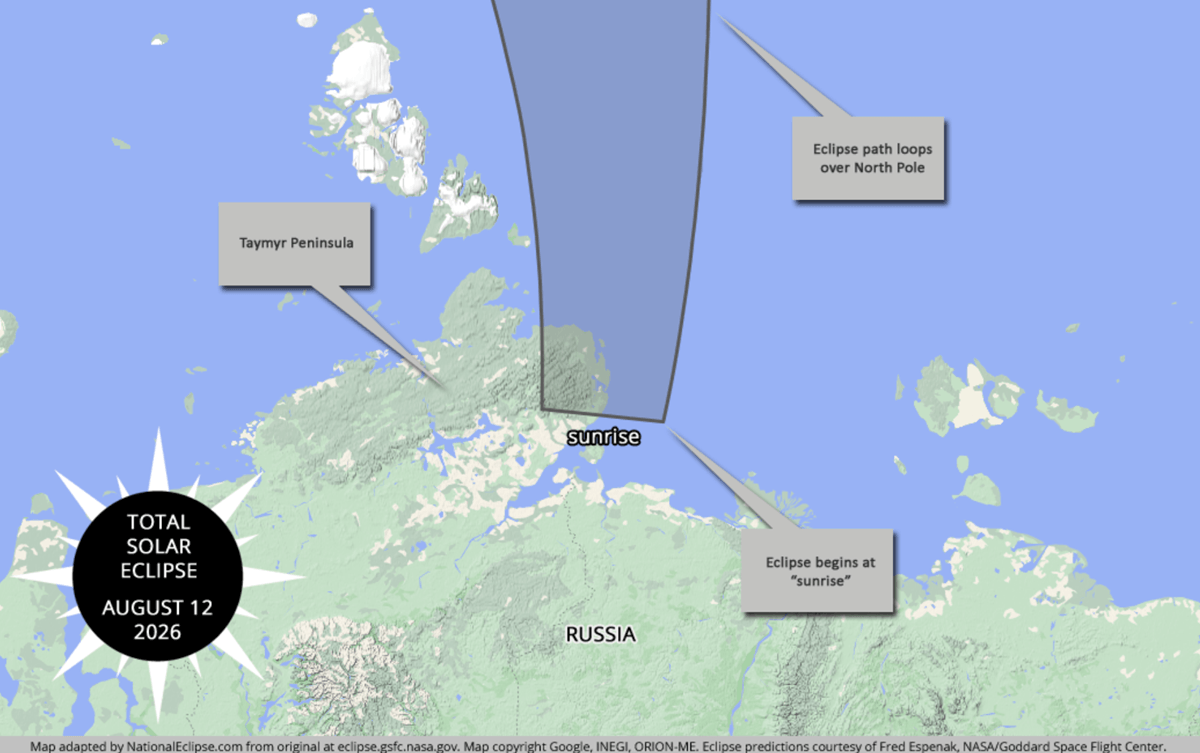
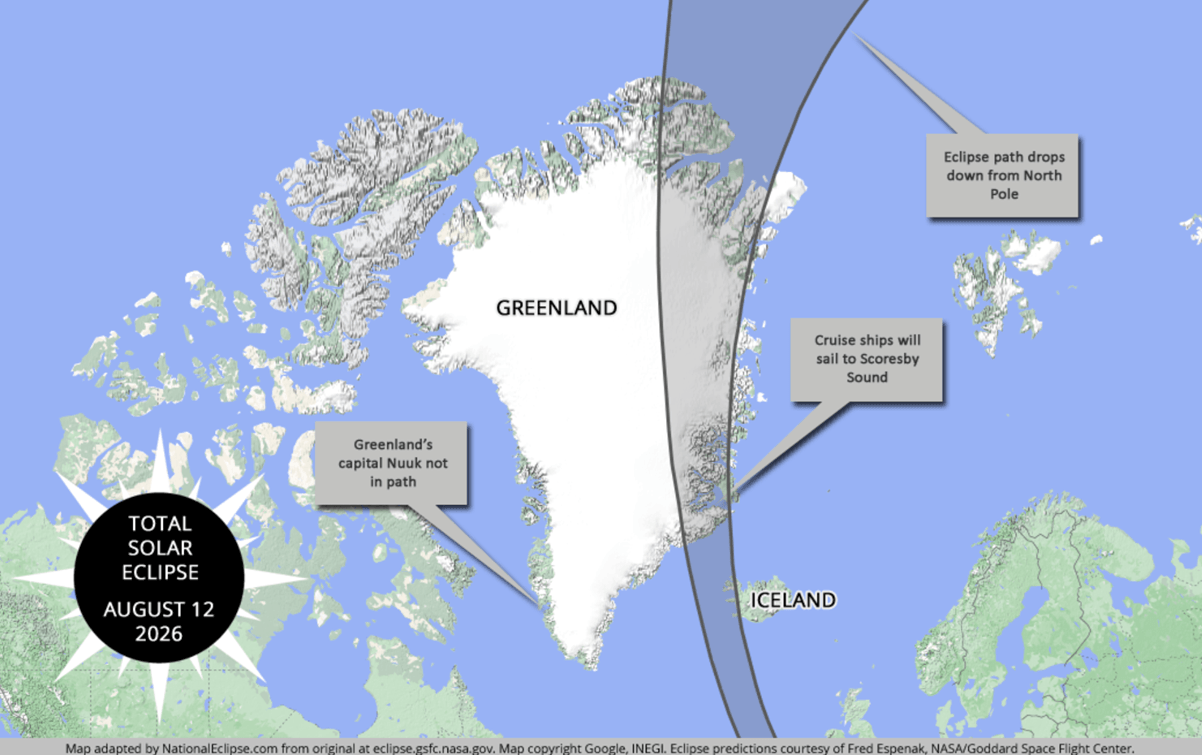
The astronomical trajectory begins at sunrise in northern Siberia, tracking south-southwest over Greenland and skirting the rugged western coastline of Iceland. As the lunar shadow accelerates across the Atlantic Ocean, it will make landfall directly over northern and eastern Spain. Millions across major metropolitan and regional hubs—including A Coruña, Zaragoza, and Palma de Mallorca—will watch afternoon daylight fade into an eerie twilight before the eclipse terminates at sunset.
Chronology and Geographic Trajectory
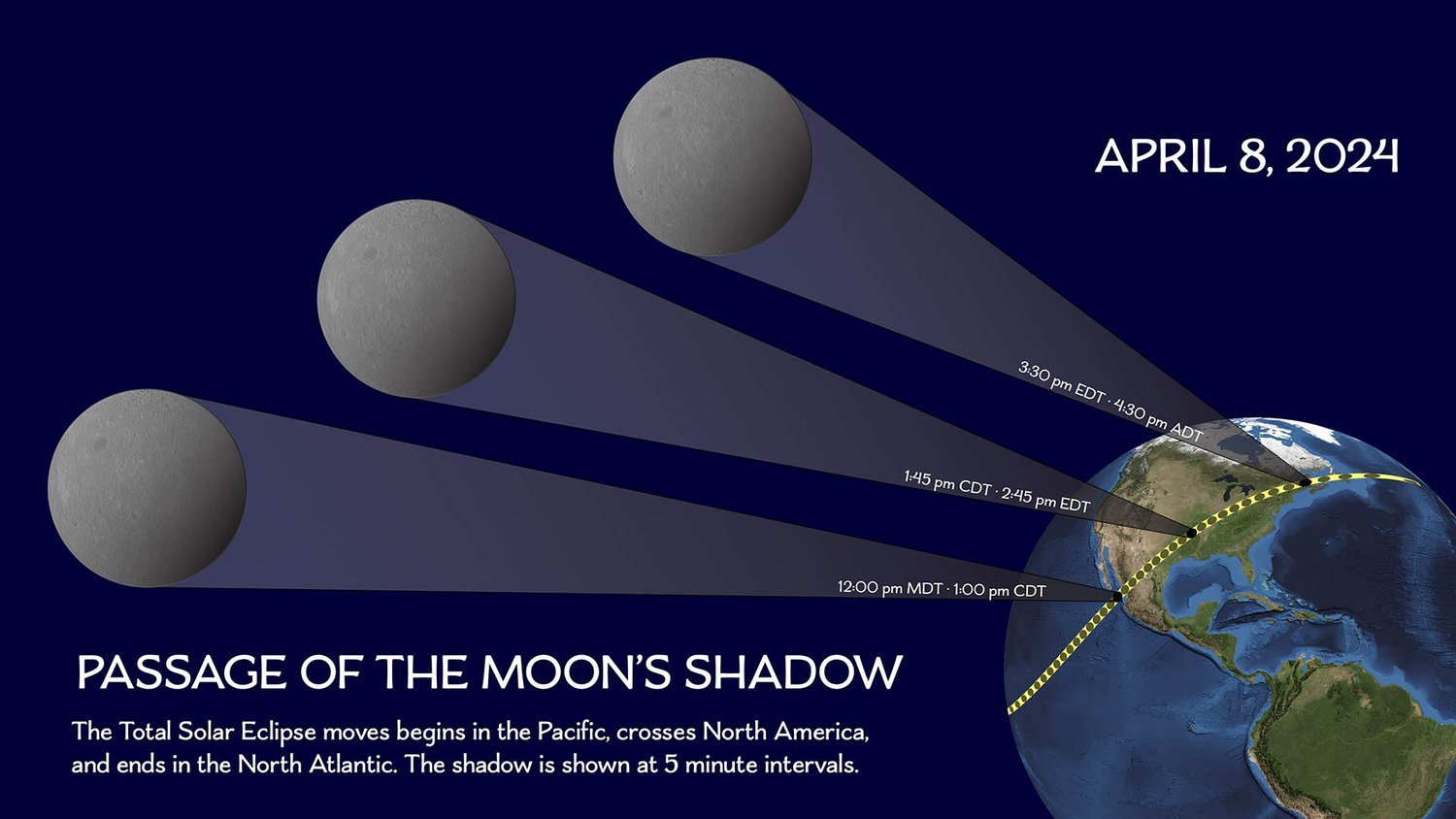
The celestial mechanics of the August 12 eclipse will unfold across a precisely timed sequence, dictated by the rapid, eastward-moving umbral shadow of the Moon.
Greenland and Russia
The planetary journey of the eclipse begins in the high Arctic. In Russia, the partial phase starts at sunrise, with totality commencing at 02:02 local time for a brief duration of approximately 1 minute and 35 seconds. The shadow then sweeps across the North Pole toward Greenland. In northeast Greenland, totality begins at 16:14 local time, shifting to 16:38 in the southeast. Durations here range from 2 minutes and 8 seconds in the north to an impressive 2 minutes and 17 seconds in the south. While permanent settlements along Greenland’s west coast will miss the direct path, maritime tourism is expected to surge, with numerous cruise ships navigating the southeast glaciers to offer passengers an unobstructed view.
Iceland
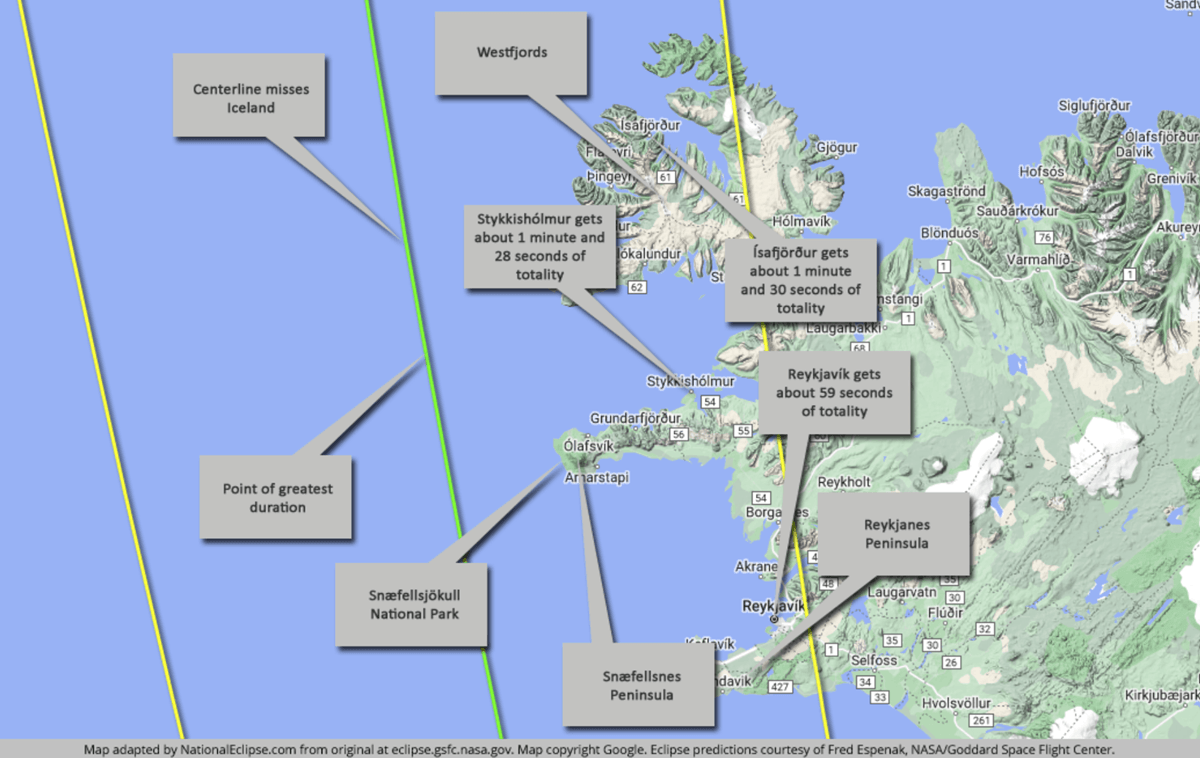
As the shadow races southwest, it clips the Westfjords of Iceland before tracking across the western portion of the island toward the capital city, Reykjavik. The partial eclipse begins at 16:43 local time in the Westfjords and roughly four minutes later in Reykjavik. Totality arrives at 17:44 in the Westfjords, holding for 1 minute and 30 seconds, and reaches Reykjavik at 17:48, where totality will last for a swift 59 seconds. The entire eclipse window will span approximately two hours.
Spain
The grand finale of the eclipse occurs over the Iberian Peninsula as the sun dips low toward the horizon. The partial phase begins at 19:30 Central European Summer Time (CEST). Totality touches mainland Spain at 20:26 CEST, granting viewers in northern and eastern regions roughly 1 minute and 45 seconds of darkness. As the shadow tracks southeast toward the Balearic Islands, the duration slightly compresses to 1 minute and 36 seconds over Palma de Mallorca, concluding just as the eclipsed sun sets.
Supporting Data: The Science of Eclipses and Local Weather Projections
Understanding the Mechanics
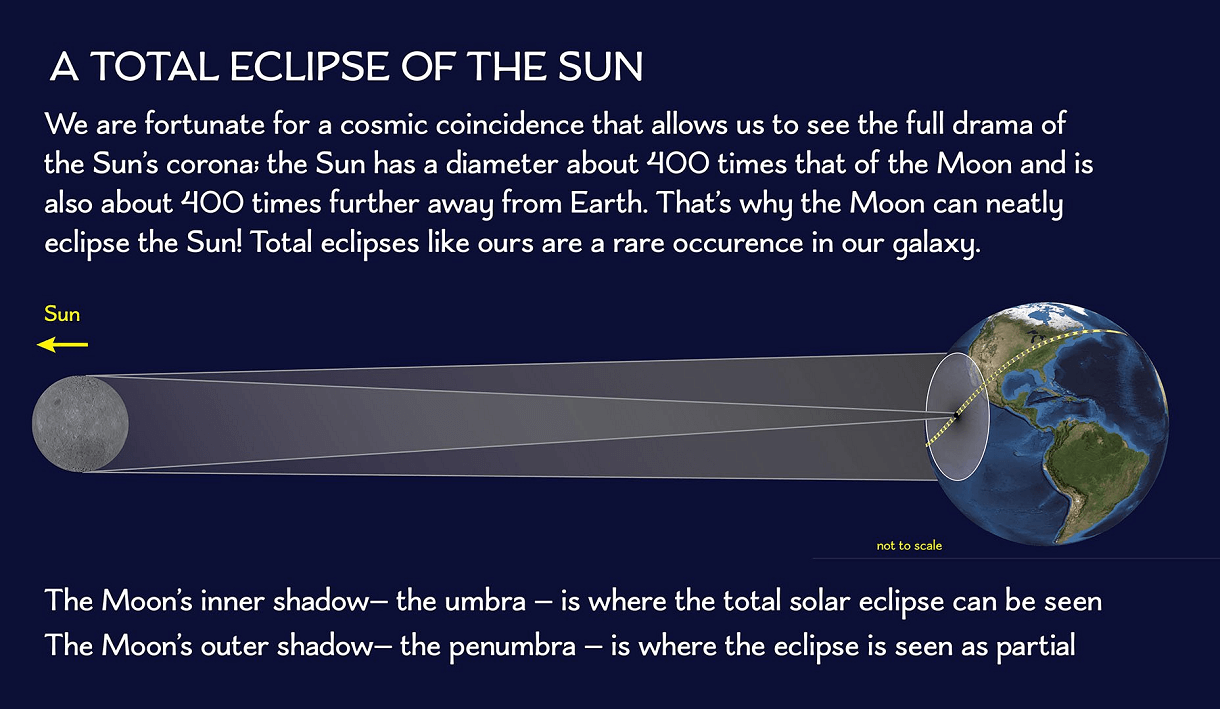
Total solar eclipses are governed by precise celestial geometry. They occur when the Moon passes directly between the Earth and the Sun, casting a shadow onto the Earth’s surface. This shadow is divided into two parts: the penumbra, which produces a partial eclipse over a vast geographic area, and the umbra, the dark inner core responsible for total totality.
The Moon orbits the Earth in an elliptical path rather than a perfect circle, resulting in varying distances known as apogee (farthest) and perigee (closest). Because the Moon’s distance fluctuates, its apparent size in the sky changes. For a total solar eclipse to occur, the Moon must be close enough to completely cover the solar disk.
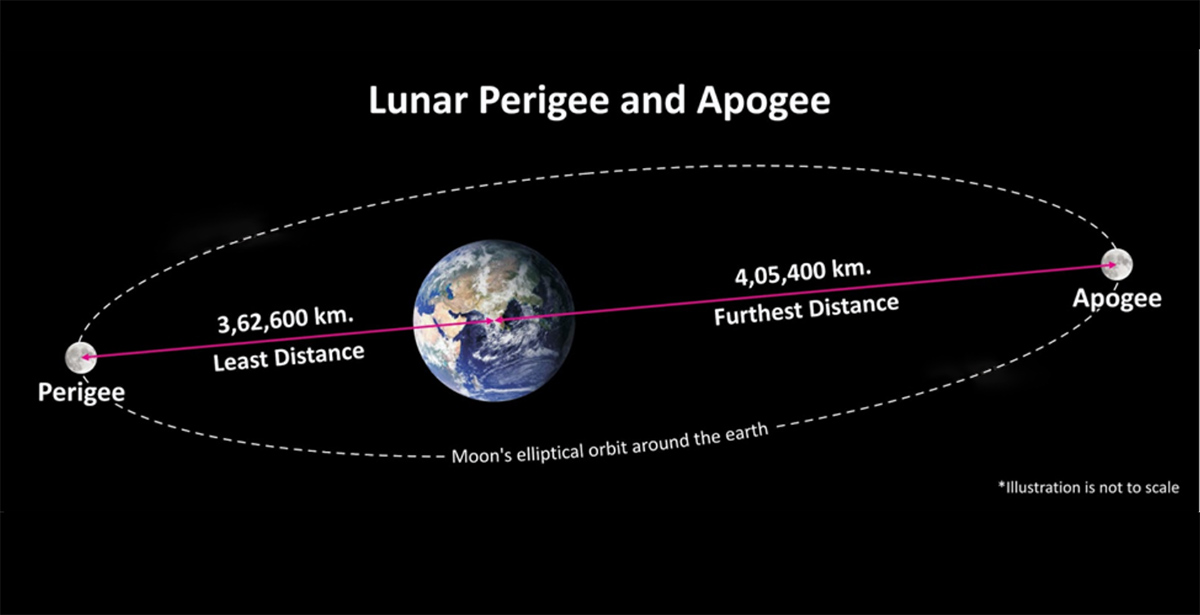
Furthermore, because the Moon is gradually receding from Earth at a rate of a few centimeters per year, scientists calculate that millions of years in the future, total solar eclipses will cease entirely as the Moon appears too small to fully block the Sun. For now, humanity enjoys a unique window in cosmic history where this alignment is possible.
Meteorological Outlook and Cloud Cover Forecasts
Clear skies are the ultimate desire of any eclipse chaser, and weather models provide a mixed outlook across the 2026 path:
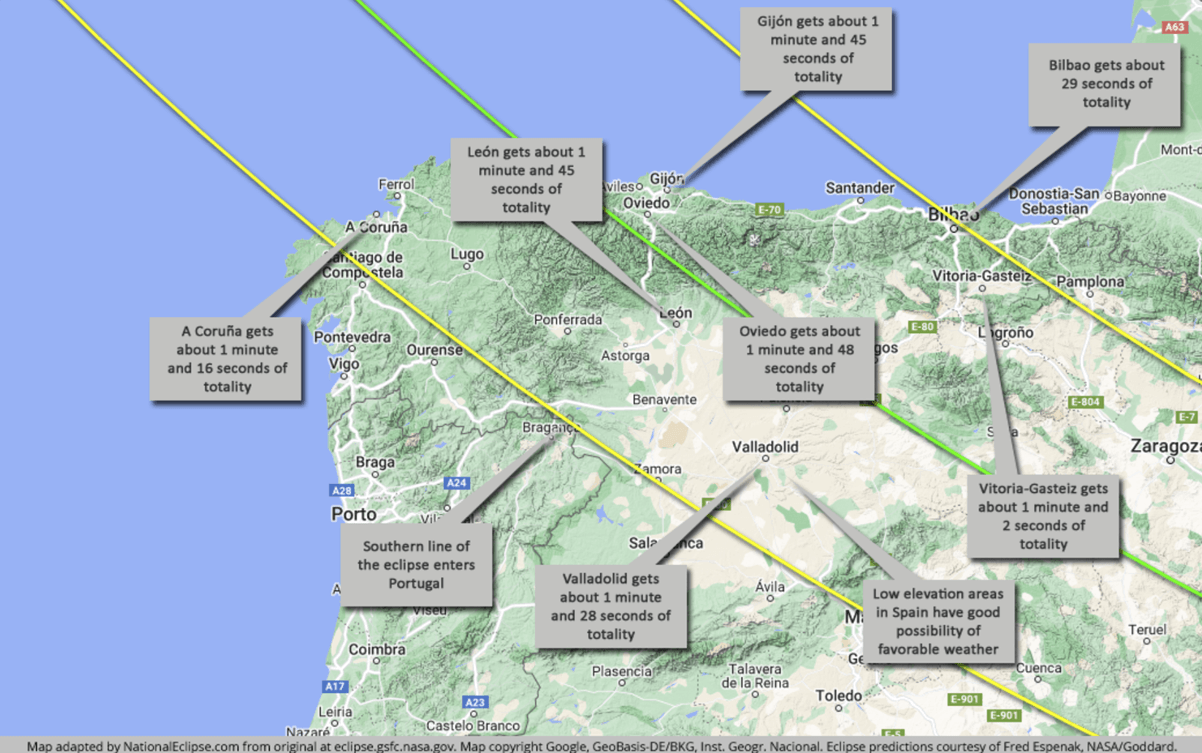
- Spain: Conditions look exceptionally promising. Mid-August in Iberia is characterized by hot, dry air masses and stable atmospheric high pressure, drastically reducing the likelihood of cloud cover. While some light, non-obstructive clouds may brush eastern Spain, overall observing conditions are projected to range from good to excellent.
- Iceland: The meteorological forecast is more challenging. Frequent Atlantic depressions during this time of year increase the probability of cloud cover over western Iceland and Reykjavik. However, prevailing southeast winds may induce downslope drying effects, potentially opening temporary breaks in the clouds over the Westfjords and providing opportunistic viewing windows.
Official Responses, Infrastructure, and Public Safety
Governments, tourism boards, and civil protection agencies in Spain and Iceland are mobilizing for an unprecedented influx of international astro-tourists. Major cities within the path of totality anticipate millions of visitors, creating significant logistical challenges for local infrastructure, transport networks, and public safety services.
Civil Preparedness and Crowd Management
Municipalities in northern and eastern Spain, as well as the greater Reykjavik area in Iceland, are drafting comprehensive crowd-management strategies. Authorities are emphasizing the following logistical considerations:
- Transportation Overload: Highways, rural roads, and public transit systems are expected to experience severe congestion immediately before and after the event. Officials are urging travelers to utilize public transport where available and arrive at viewing locations well in advance.
- Public Spaces: Parks, coastal promenades, and elevated viewpoints will serve as primary gathering spots. Temporary facilities, enhanced waste management, and emergency medical posts are being deployed to handle high-density crowds.
- Emergency Services: Local police and rescue services are increasing staffing levels to manage potential gridlock, backcountry wilderness navigation issues in Iceland, and heat-related concerns in Spain.
Safety Protocols: Protecting Vision
Health authorities across Europe have launched public awareness campaigns regarding the dangers of viewing a solar eclipse without proper protection. Looking directly at the Sun—even when it is partially obscured—can cause permanent retinal damage or blindness within seconds.
- Certified Eyewear: Observers must use certified solar viewing glasses that meet the stringent ISO 12312-2 international safety standard. Glasses featuring scratches, punctures, or tears must be discarded immediately.
- Supervised Viewing: Parents and educators are strongly urged to closely supervise children, ensuring ISO-compliant glasses are worn continuously during all partial phases.
- Optical Equipment Warning: Telescopes, binoculars, and camera lenses must never be pointed at the Sun without dedicated, professionally manufactured solar filters attached to the front objective elements. Using optical devices with only cheap eyepiece filters can cause the glass to crack instantly from concentrated solar heat, resulting in severe eye trauma.
- The Totality Exception: The only moment it is safe to remove eye protection is during the brief window of complete totality, when the Moon entirely blocks the solar disk. The moment the bright corona begins to recede and the diamond ring effect appears, protective eyewear must be immediately put back on.
Implications: Economic, Scientific, and Cultural Aftershocks
The August 2026 total solar eclipse carries profound implications across multiple sectors, extending far beyond a momentary atmospheric marvel.
Economic and Tourism Windfalls
The event represents a massive economic stimulus for the hospitality and tourism industries. Hotels, campsites, and car rental agencies in targeted Spanish regions and Icelandic rural zones report near-capacity bookings years in advance. Tour operators specializing in expedition cruises and specialized photography tours anticipate record-breaking revenues. Local economies will benefit from increased spending on dining, transportation, and commemorative merchandise, though local governments must balance these economic windfalls with the sustainable management of sensitive natural habitats.
Scientific Research Opportunities
For the scientific community, total solar eclipses provide a rare laboratory environment. The sudden drop in solar radiation and temperature triggers immediate, localized changes in the Earth’s ionosphere and lower atmosphere. Solar physicists will utilize the 2026 eclipse to study the dynamics of the Sun’s corona—a region millions of degrees hotter than the surface below, whose mechanisms remain partially mysterious. Furthermore, the coincidental alignment with the Perseid meteor shower offers atmospheric scientists a unique opportunity to study how the sudden darkness alters meteor ablation and upper-atmospheric chemistry.
Cultural and Psychological Impact
Eclipses have historically inspired awe, dread, and profound philosophical reflection throughout human history. In modern times, witnessing a total solar eclipse serves as a unifying global experience, fostering a collective sense of wonder. As millions of people across diverse cultures look upward simultaneously, the event temporarily bridges national divides, reminding humanity of its place within a vast, finely tuned cosmos.
For those unable to secure a clear view or travel to the 2026 path, the astronomical community won’t have to wait indefinitely for the next major event. Attention will quickly pivot toward the subsequent total solar eclipse on August 2, 2027, which will sweep across northern Africa and the Middle East, offering an extended duration of totality exceeding six minutes. Until then, Europe prepares for a celestial appointment nearly three decades in the making—a fleeting, unforgettable dance of shadow and light.
