

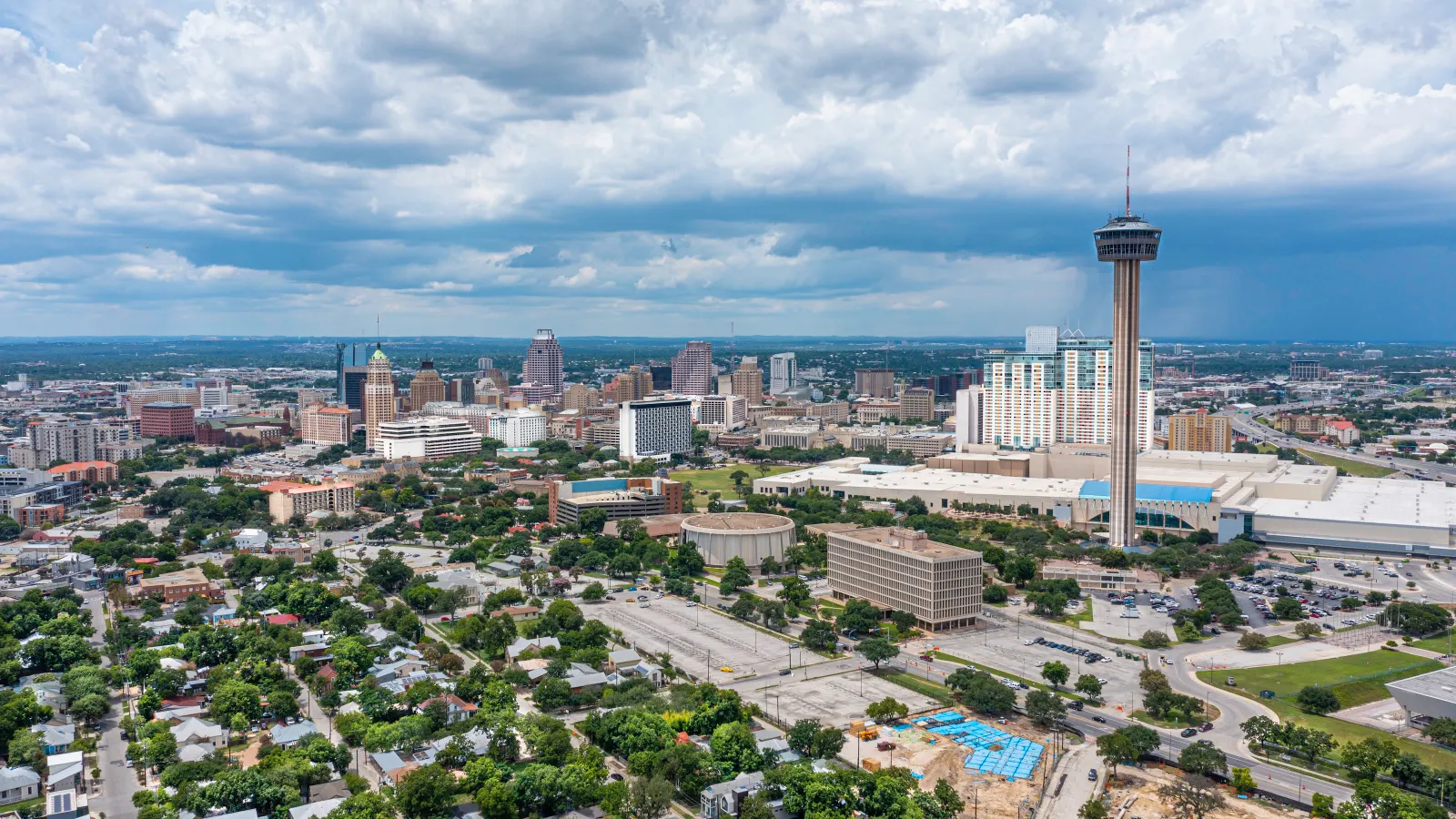
SAN ANTONIO — The San Antonio Spurs are officially passing the ball to a powerhouse contracting joint venture to bring their ambitious, generational vision to life.
The five-time NBA champions have tapped Minneapolis-based Mortenson and local stalwart Bartlett Cocke General Contractors to lead construction management for their planned state-of-the-art downtown arena. The massive project, carrying a staggering $1.3 billion price tag, will anchor a newly minted sports and entertainment district designed to redefine the urban core of San Antonio.
The selection of Mortenson and Bartlett Cocke marks a major milestone in a development timeline that has captured the attention of both the sports world and the commercial construction industry. As funding agreements are finalized and the project team crystallizes, the massive undertaking promises to reshape the Lone Star State’s second-largest city through public-private collaboration, architectural innovation, and sweeping urban infrastructure upgrades.
Main Facts: The Anatomy of the $1.3 Billion Build
At the heart of San Antonio’s downtown revitalization efforts lies the new home of the Spurs. While specific capacity and exact square footage milestones continue to be refined by the design team, the financial and structural parameters of the endeavor are firmly established.
- Project Type: NBA Arena and Multi-Use Sports and Entertainment District Anchor
- Total Project Value: $1.3 billion
- Location: Downtown San Antonio, Texas
- Client / Developer: San Antonio Spurs
- Lead Contractors: Mortenson and Bartlett Cocke General Contractors
- Project Manager: CAA ICON (Creative Artists Agency Icon)
- Lead Architect: Overland Partners
- Civil Engineer: Pape-Dawson Engineers
According to official fiscal year budget documents from Bexar County, the arena’s massive capital requirement is being funded through a collaborative public-private model. Bexar County has committed $311 million toward the construction of the new venue, while the City of San Antonio is contributing an additional $489 million. The San Antonio Spurs organization will fund the remaining balance of the construction costs, in addition to carrying financial responsibility for any potential cost overruns—a crucial safeguard for local taxpayers.
The venue will not stand alone. Instead, it is designated as the crown jewel and physical anchor of a sweeping downtown sports and entertainment district. This broader urban initiative also encompasses a brand-new convention center and major municipal infrastructure improvements aimed at boosting pedestrian flow, transit connectivity, and commercial activity in the downtown sector.
Chronology of Development: From Concept to Construction Partners
The path to breaking ground on a $1.3 billion downtown arena requires years of strategic planning, political alignment, and stakeholder negotiation. The timeline of the Spurs’ arena project highlights a deliberate, phased approach to assembling a world-class development team.
Phase 1: Conceptualization and the Master Plan (Late 2024 – Early 2025)
Discussions surrounding the long-term future of the Spurs’ home court intensified as the franchise looked for ways to maximize fan experience, enhance revenue generation, and integrate more deeply with San Antonio’s burgeoning downtown culture. City and county leaders recognized that an urban arena could serve as a powerful catalyst for downtown revitalization, mirroring successful sports-anchored urban renewal projects in other major U.S. markets.
Phase 2: Assembling the Core Development Team (May 2026)
In May 2026, the Spurs officially announced the first wave of heavy-hitters tasked with bringing the vision to paper. The organization selected CAA ICON to provide high-level project management services. For design and engineering, the team tapped Overland Partners as the lead architect, alongside civil engineering firm Pape-Dawson Engineers. This initial coalition established the preliminary programming, site feasibility studies, and conceptual renderings for the district.
Phase 3: Securing Public Financing and Approvals (Summer 2026)
During the summer of 2026, financial frameworks were formalized. Bexar County and the City of San Antonio integrated the funding commitments into their respective budget and memorandum of understanding (MOU) processes. With public funding caps established at $311 million and $489 million respectively, the legal and financial foundation was locked into place.
Phase 4: Contractor Selection and Pre-Construction Kickoff (August 2026)
On August 26, 2026, the Spurs made their most consequential operational announcement to date: the addition of Mortenson and Bartlett Cocke General Contractors to lead construction management. This pairing brings together national sports venue megabuild expertise with deep-rooted, six-decade local construction knowledge.
Supporting Data: A Track Record of Mega-Project Delivery
To successfully deliver a $1.3 billion arena within tight operational windows, project stakeholders require contractors with proven track records in complex stadium and arena builds. The newly formed team brings a formidable pedigree to San Antonio.
Mortenson: National Arena and Stadium Heavyweight
Headquartered in Minneapolis, Mortenson is widely recognized as one of the preeminent sports builders in North America. The firm’s portfolio includes numerous high-profile professional sports venues across the NFL, NHL, and NBA sectors.
Notably, Mortenson has a history of collaborating closely with project manager CAA ICON on massive, high-stakes undertakings:

- Allegiant Stadium (Las Vegas): In 2019, Mortenson teamed up with McCarthy Building Cos. as the general contractor for this $1.9 billion home of the NFL’s Las Vegas Raiders, with CAA ICON providing overarching project management.
- Climate Pledge Arena (Seattle): In 2021, Mortenson completed the complex, highly sustainable $1.15 billion redevelopment of the home of the Seattle Kraken (NHL), again working alongside CAA ICON.
Bartlett Cocke General Contractors: Six Decades of Local Expertise
Balancing Mortenson’s national scale is Bartlett Cocke General Contractors, a San Antonio institution with over 60 years of building history in South Texas. Bartlett Cocke has delivered dozens of high-profile commercial, educational, and civic projects throughout the region, ensuring that the arena project remains deeply connected to local labor markets, supply chains, and municipal building codes.
Collaborative Synergy
Industry experts note that pairing an out-of-market giant specializing in sports architecture with a deeply entrenched local contractor is a proven formula for success. While Mortenson provides specialized knowledge regarding sightlines, acoustic engineering, premium club spaces, and complex mechanical systems required for modern NBA arenas, Bartlett Cocke offers vital regional context, permitting insights, and relationships with local subcontractors.
Official Responses and Stakeholder Perspectives
The announcement of the construction team drew enthusiastic reactions from corporate leaders, civic officials, and sports executives alike, emphasizing the generational impact of the build.
"Mortenson is honored to be selected by the San Antonio Spurs to help deliver this generational project," said Logan Gerken, vice president and general manager at Mortenson. "Together with Bartlett Cocke — a company that has helped shape San Antonio for generations — we bring the scale, resources, and specialized expertise of one of the industry’s most experienced sports construction teams."
Spurs leadership has consistently echoed the sentiment that the arena is much more than a basketball court; it is an economic engine for the entire region. Franchise executives emphasized that the collaborative approach ensures every dollar invested—whether public or private—will yield long-term dividends for the community.
City and county officials have similarly championed the public-private partnership model. By capping public contributions at specified thresholds and placing the financial burden of potential cost overruns squarely on the Spurs organization, local leadership has sought to protect taxpayers while securing a world-class downtown amenity.
Implications: Transforming San Antonio’s Urban Core
The construction of the $1.3 billion arena and the establishment of the surrounding sports and entertainment district carry profound implications for the economic, cultural, and physical landscape of San Antonio.

1. Catalyzing Downtown Economic Development
Urban planners have long understood that sports venues can act as powerful magnets for private investment. By anchoring the new district with an NBA arena, San Antonio is banking on a surge in hospitality, retail, residential, and commercial development surrounding the site. The inclusion of a new convention center within the district master plan further positions the city as a premier destination for national conventions, tourism, and entertainment events.
2. Infrastructure and Transit Modernization
To support thousands of event-goers, the project necessitates comprehensive municipal infrastructure improvements. Upgrades to local roadways, public transit links, pedestrian corridors, and smart-city technologies will be accelerated to ensure seamless ingress and egress around the district. These improvements will not only benefit event attendees but will also enhance daily mobility for downtown residents and workers.
3. Setting a New Standard for Public-Private Partnerships
In an era where sports stadium financing is frequently met with public skepticism and fierce political debate, the San Antonio model—featuring capped public investments, private risk-bearing for cost overruns, and multi-agency cooperation—may serve as a blueprint for future arena developments across the United States.
Looking Ahead
As Mortenson, Bartlett Cocke, CAA ICON, and Overland Partners move from the pre-construction phase into active site development, all eyes will be on downtown San Antonio. With a targeted focus on community integration, financial accountability, and architectural excellence, the new home of the San Antonio Spurs is well on its way to redefining the city’s identity for decades to come.
