

NEW YORK — In an industry historically dominated by legacy networks and traditional corporate structures, Ann Caruso has spent the last two decades quietly and methodically rewriting the playbook. As the Chief Executive Officer of Cross Management Corporation—a premier New York City-based general contractor—Caruso stands at the helm of a firm that has evolved from a regional construction management player into a nationally recognized powerhouse.
Her ascent to the top job in 2022 was not a conventional one. It was forged in hardware stores, refined through legal training in construction and insurance defense, and tested by two decades of economic cycles, technological disruptions, and a global pandemic that fundamentally altered how corporate America views physical workspace.
Today, Caruso is guiding Cross Management through its most ambitious chapter yet. Following a strategic partnership finalized last year in which Japanese construction giant Shimizu acquired a 51% stake in the firm, Caruso and her team are positioned to scale operations nationally while doubling down on their core competencies: high-end commercial interiors, building repositioning, and intricate retail construction.
Construction Dive recently sat down with Caruso to discuss her unique career trajectory, the shifting post-pandemic office market, the engineering marvels of major Manhattan developments, and what it truly means to lead as a woman in a transforming industry.
Main Facts: The Evolution and Expansion of Cross Management
At its core, Cross Management specializes in complex interior fit-outs, adaptive reuse, and commercial transformations. While many general contracting firms broad-stroke their capabilities across heavy civil infrastructure or massive ground-up industrial parks, Cross Management has carved out a niche where architectural precision, speed, and client collaboration intersect.
The defining milestone of the company’s recent history occurred last year, when Shimizu Corporation—one of Japan’s historic "Big Five" construction conglomerates and a global industry titan—acquired a 51% controlling stake in Cross Management. This strategic alliance has granted the New York firm access to international resources, balance-sheet strength, and global technological insights while maintaining its localized agility and leadership team.
Under Caruso’s stewardship, the firm is currently expanding its operational footprint beyond its traditional New York stronghold. By focusing on commercial interiors, building repositioning, and retail environments, Cross Management is directly addressing the evolving demands of corporate tenants who are reimagining physical offices not merely as rows of desks, but as dynamic destinations for collaboration, corporate culture, and productivity.
Chronology: From the Hardware Aisle to the Corner Office
Caruso’s journey into the upper echelons of the construction industry is a study in organic immersion. Her foundational understanding of the trade began long before she ever set foot on a commercial job site.
- Early Foundations: Growing up in a family that owned and operated a hardware store, Caruso was surrounded by the raw materials, tools, and daily commerce of the building trades from an early age.
- Legal Background: Recognizing an affinity for the structural complexities of development, she went to work at a construction-focused law firm prior to earning her formal law degree, gaining early exposure to insurance defense, risk mitigation, and project contracts.
- The Cross Management Era (2004): While still completing her legal education in 2004, Caruso joined Cross Management as a rising firm based in New York City. Over the next 18 years, she worked across multiple facets of the business, weathering economic downturns, market shifts, and organizational growth.
- Stepping into the C-Suite (2022): Having mastered the operational, legal, and strategic dimensions of the business, Caruso assumed the role of CEO, initiating a period of aggressive modernization and strategic positioning.
- The Shimizu Partnership: In a landmark transaction, Caruso successfully negotiated and integrated Cross Management’s strategic partnership with Shimizu Corporation, cementing the Japanese giant’s 51% stake and transforming the domestic firm into an internationally backed enterprise.
Supporting Data and Major Milestones: The Hudson Yards Triumph
While corporate strategy and international partnerships tell one part of the story, the true test of a general contractor lies in execution. For Caruso, the metric of success is rarely reduced to a single ledger entry, but landmark projects illustrate the sheer scale of the firm’s capabilities.
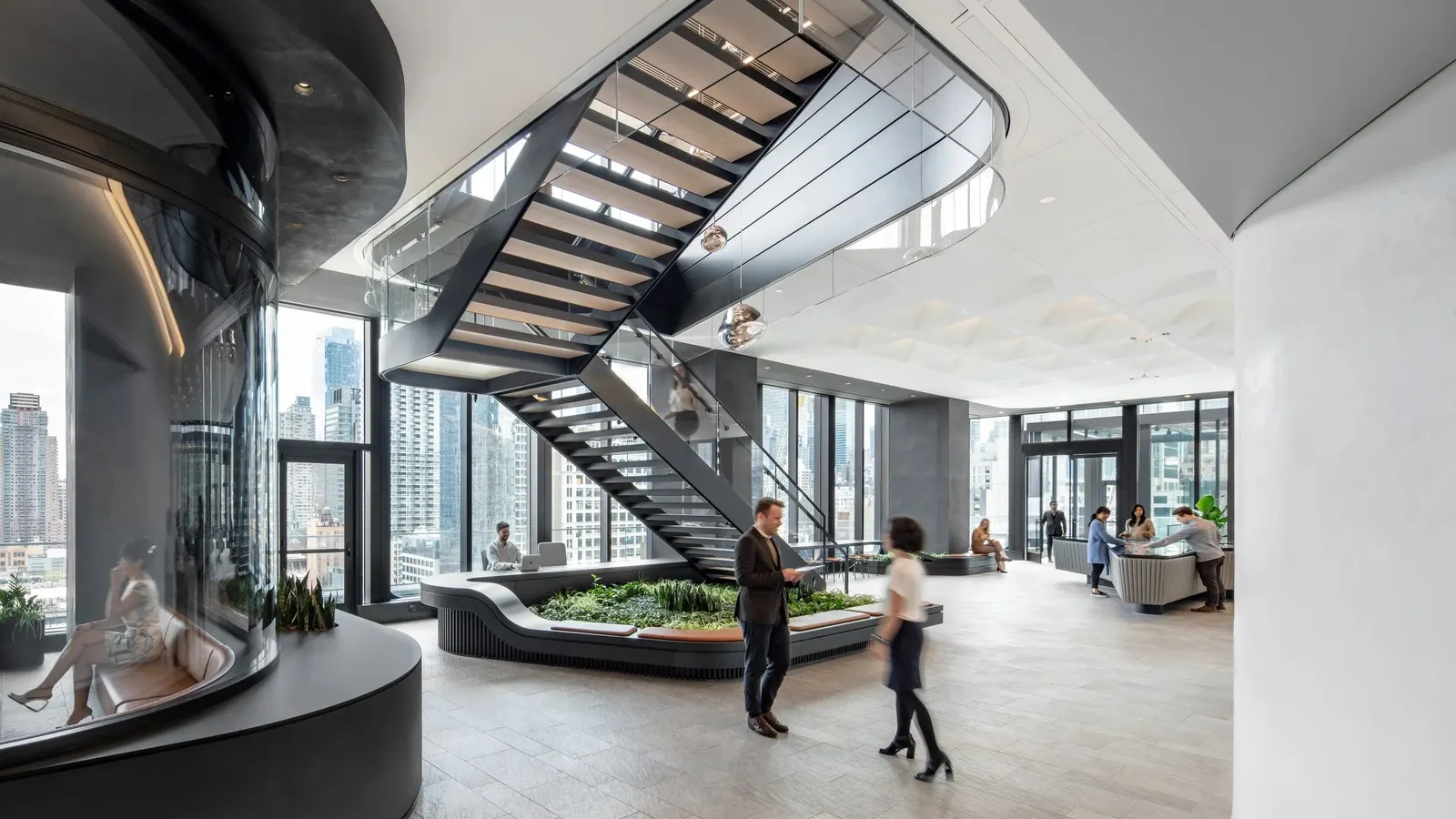
Among the projects that define Cross Management’s portfolio is a massive, over 300,000-square-foot interior fit-out for financial firm Point72 within a newly constructed development at Hudson Yards in Manhattan.
The project required an extraordinary degree of logistical planning, supply chain coordination, and meticulous attention to high-end architectural details spanning multiple vertical floors. In an active, high-density urban environment like Hudson Yards, managing deliveries, coordinating dozens of trade partners, and meeting rigid commercial deadlines demands absolute synchronization.
However, Caruso is quick to pivot away from square footage metrics when discussing organizational pride. "I don’t tend to measure success by a single project," Caruso notes. "Construction is a business where everyone can point to a finished space. What matters more to me is whether the client would hire us again."
According to Caruso, repeat business remains the ultimate key performance indicator. Long-term client retention signals that a contractor has successfully earned trust, maintained financial transparency, and delivered on commitments long after the punch list has been cleared.
Official Responses and Industry Insights: Navigating the Post-Pandemic Office
During her conversation with Construction Dive, Caruso addressed several critical trends reshaping the modern commercial real estate and construction sectors.
On the Post-Pandemic Office Market
"The market has evolved quite a bit over the past several years. The pandemic changed the way many companies think about their workplaces, and we’re still seeing that play out today. While some organizations have reduced their footprint, others are investing in higher-quality spaces that support collaboration, culture, and productivity."
Caruso emphasizes that while tenant footprints may have shrunk in certain sectors due to remote and hybrid work models, the demand for premium, thoughtfully engineered spaces has actually intensified. Landlords and tenants alike are investing heavily in amenities, advanced acoustic engineering, wellness-focused HVAC systems, and collaborative layout designs that entice employees back to the office.
On the Core Philosophy of Construction
"What hasn’t changed is the need for thoughtful, well-executed construction. Clients expect flexibility, speed, and value, and they rely on their construction partners to help them navigate changing workplace strategies. The work may look different from 10 years ago, but the importance of quality and strong relationships remains the same."
On Representation and Women in Leadership
As a female CEO in an industry where women have historically been underrepresented in executive and field roles, Caruso offers a grounded, pragmatic perspective on visibility and industry transformation.
"I’ve spent most of my career focused on doing my job well rather than focusing on being one of the few women in the room. At the same time, I recognize that visibility matters. What means the most to me is helping demonstrate that success in this industry comes from knowledge, preparation, hard work, and building strong relationships."
Reflecting on how the landscape has shifted over her two-decade career, Caruso notes a profound evolution in workplace culture.
"When I started my career, there were far fewer women in leadership positions and project roles than there are today. The industry has made meaningful progress… It’s no longer just about representation. It’s about creating opportunities for advancement, leadership, and long-term success."
Implications: The Future of Cross Management and the Construction Landscape
Caruso’s trajectory and leadership style offer several broader implications for the future of general contracting, international corporate partnerships, and workforce diversity.
1. The Power of Strategic Global-Local Hybrids
The integration of Cross Management into the Shimizu family highlights a growing trend in commercial construction: regional agility paired with global backing. As supply chain volatility, inflation, and capital constraints challenge mid-sized contractors, partnerships with multinational giants provide the financial resilience necessary to take on mega-projects while retaining the local relationships that drive day-to-day execution.
2. Redefining Workplace Construction
The ongoing recalibration of the office sector means general contractors can no longer rely on cookie-cutter corporate build-outs. Firms like Cross Management must act as strategic consultants, helping clients navigate shifting hybrid work models through flexible, high-aesthetic, and technologically integrated commercial interiors.
3. Mentorship and the Next Generation of Talent
Caruso’s advice to young professionals—and specifically women entering the trades and construction management—underscores the shifting culture of the industry. Her counsel is direct: "Don’t be intimidated by what you don’t know. Construction is an industry where everyone is learning every day. Ask questions, find good mentors, be willing to take on challenges, and don’t be afraid to speak up."
As the construction sector grapples with labor shortages and an aging workforce, cultivating inclusive leadership pipelines and welcoming diverse perspectives will no longer be viewed as an HR initiative, but as an essential business strategy for survival and growth.
4. Trust as Currency
Ultimately, Caruso’s philosophy boils down to a timeless axiom: construction is fundamentally a people business. In an increasingly digitized world driven by project management software, BIM modeling, and automated scheduling tools, the bedrock of successful construction remains human trust.
As Cross Management embarks on its next chapter under Caruso’s leadership and its partnership with Shimizu, that unyielding focus on relationships, accountability, and execution will undoubtedly remain the blueprint for its continued success.
