

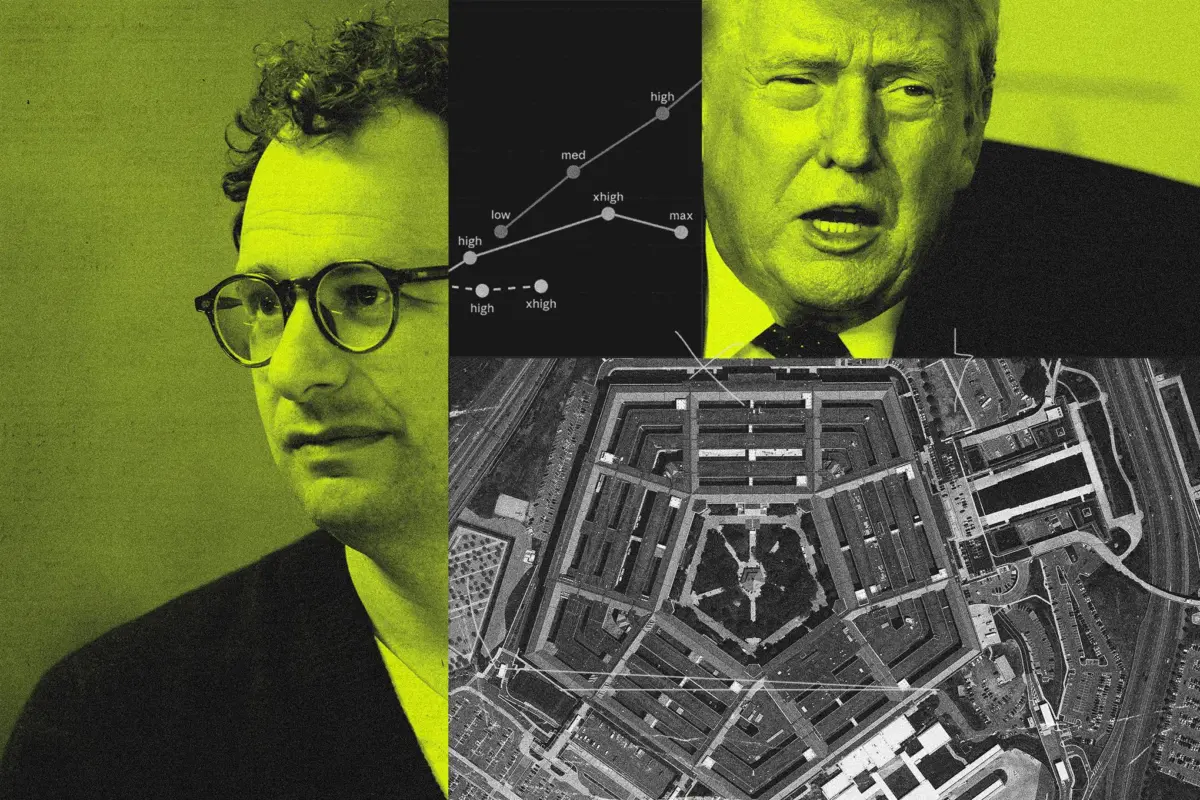
SAN FRANCISCO — In a major legal victory for the artificial intelligence industry and civil liberties advocates alike, a federal judge ruled on Thursday that the Pentagon’s blacklisting of leading AI lab Anthropic earlier this year was unconstitutional.
The decision, handed down by U.S. District Judge Rita F. Lin of the Northern District of California, brings a dramatic temporary halt to a months-long, high-stakes standoff between the Trump administration and one of Silicon Valley’s premier frontier AI developers. At the heart of the dispute was a fundamental question: Can the federal government penalize a private technology company for refusing to abandon its ethical boundaries regarding military applications of artificial intelligence?
Judge Lin delivered a sweeping rebuke of the Department of Defense (referred to in filings as the Department of War), writing that the administration’s use of national security justifications was a pretext for unlawful retaliation.
"The empty invocation of national security is not a blank check to punish and retaliate against government critics," Judge Lin wrote in her ruling. She added that Defense Secretary Pete Hegseth’s decision to designate Anthropic a supply chain risk constituted "unlawful retaliation in violation of the First Amendment," noting that the measure "was arbitrary and capricious."
While acknowledging that the military retains the absolute right to select whichever AI vendors best suit its operational needs, Judge Lin emphasized that the administration crossed a bright constitutional line by weaponizing regulatory designations to punish Anthropic for its public dissent.
Chronology of a Crisis: How the Standoff Unfolded
The legal showdown is the culmination of a tense winter and spring characterized by aggressive contract negotiations, high-profile ultimatums, and a rapid deterioration of relations between the national security apparatus and the commercial AI sector.
Winter: The Ultimatum and the Red Lines
The conflict began earlier this winter when Defense Secretary Pete Hegseth initiated a sweeping renegotiation of all existing AI contracts across the United States military. The administration sought to transition the Pentagon to a standardized procurement framework that would permit the use of advanced AI for "any lawful use," dramatically expanding the military’s operational scope.
While the vast majority of major artificial intelligence laboratories—eager for lucrative defense contracts and eager to align with national security priorities—quickly signed onto the new terms, Anthropic stood its ground. Led by CEO Dario Amodei, the company insisted on maintaining two strict ethical guardrails:
- No mass surveillance of American citizens.
- No lethal autonomous weapons systems—specifically, AI technologies empowered to select and engage targets without meaningful human oversight.
Anthropic’s refusal to bend triggered a rapid escalation. Pentagon officials launched a series of intense back-and-forth negotiations, followed by public criticisms and an administrative ultimatum from the Trump administration demanding full compliance or face severe federal exclusion.
The Eve of the Deadline
Less than 24 hours before the administration’s final deadline expired, Anthropic CEO Dario Amodei issued a definitive public statement refusing to alter the company’s position.
"We have never raised objections to particular military operations nor attempted to limit use of our technology in an ad hoc manner," Amodei wrote, defending the company’s stance. However, he stressed that in a "narrow set of cases, we believe AI can undermine, rather than defend, democratic values."
Following the collapse of negotiations, the Department of Defense took unprecedented action: it formally designated Anthropic a "supply chain risk"—a severe classification typically reserved for foreign adversaries or entities compromising national security through espionage or malicious cyber activity. Simultaneously, the Pentagon moved to freeze Anthropic out of defense ecosystems, rapidly distributing contracts to seven competing AI labs, including OpenAI, Microsoft, Google, and SpaceX.
Spring to Summer: The Lawsuit and Preliminary Wins
Refusing to accept the designation, Anthropic filed a federal lawsuit in March in the California district court, alleging that the Trump administration had unlawfully retaliated against the company for establishing non-negotiable ethical red lines.
Even in earlier phases of the litigation, judges were skeptical of the government’s rationale. Pointing to internal administrative records, Judge Lin noted in a preliminary injunction order earlier this spring that the Department of War’s own documents revealed Anthropic was targeted because of its "hostile manner through the press."
"Punishing Anthropic for bringing public scrutiny to the government’s contracting position is classic illegal First Amendment retaliation," Lin wrote at the time. Thursday’s final ruling cements that preliminary finding into binding law.
Supporting Data and Institutional Implications
The fallout from the Anthropic blacklist reshaped the defense-tech landscape nearly overnight. To fill the void left by Anthropic’s exclusion, the Pentagon accelerated partnerships across the tech sector, onboarding major enterprise players to secure continuous streams of large language models, computer vision tools, and logistical planning software.
Yet, data from the litigation highlights a troubling pattern within the Pentagon’s procurement rationale. Independent legal analysts examining court disclosures pointed out that supply chain risk designations have historically required objective vulnerabilities—such as hardware tampering, malicious code, or compromised foreign ownership. In Anthropic’s case, government lawyers struggled to point to technical flaws in the company’s codebase, relying instead on broad arguments regarding contractor compliance and insubordination.
Furthermore, the case underscores the growing economic and political power wielded by private AI laboratories. As foundational models become critical infrastructure for both civilian economies and military defense, the friction between corporate governance frameworks (such as AI safety boards and responsible use charters) and traditional military command structures is reaching a boiling point.
Official Responses and Stakeholder Reactions
Reaction to Thursday’s ruling was swift, highlighting the deep ideological and commercial divides the case has exposed.
In an official statement released shortly after the decision, Anthropic spokesperson Danielle Ghiglieri struck a conciliatory yet firm tone:
"We welcome the court’s ruling that this supply chain risk designation was unlawful. We remain focused on working productively with the government to harness AI for our national security so all Americans benefit from this technology."
Conversely, representatives for the Department of Defense expressed disappointment with the outcome, signaling that the administration is weighing its legal options, which could include an appeal to the Ninth Circuit Court of Appeals. Administration officials have consistently argued that allowing private vendors to dictate terms of engagement creates an untenable patchwork of operational restrictions during times of geopolitical tension.
Civil liberties organizations, however, praised the ruling as a vital check on executive overreach. The American Civil Liberties Union (ACLU) and various digital rights groups filed amicus briefs during the proceedings, arguing that permitting the government to blacklist domestic critics under the guise of national security would create a chilling effect across the entire technology sector, effectively silencing companies from raising ethical concerns about government technology use.
Broader Implications for the Future of AI and Defense
The judicial defeat of the Pentagon’s blacklist carries profound implications that extend far beyond the immediate fortunes of Anthropic and the Department of Defense.
1. The Erosion of Corporate "Red Lines"
For months, industry watchers worried that the administration’s hardline tactics would force every major AI lab to dissolve their internal safety frameworks and ethical boards out of fear of federal retaliation. Thursday’s ruling provides legal breathing room for companies attempting to balance commercial viability with corporate social responsibility. It establishes that while the government can choose not to do business with companies that enforce ethical boundaries, it cannot legally punish, blacklist, or smear them for exercising their free speech rights or publicly debating government policy.
2. The Militarization of Artificial Intelligence
As geopolitical competition—particularly between the United States and strategic rivals like China—accelerates, the pressure to integrate advanced AI into autonomous weapons, intelligence gathering, and cyber warfare will only intensify. The Anthropic case highlights an uncomfortable truth: the private sector is increasingly building the weapons of tomorrow, yet many of the researchers and engineers creating these systems object to their deployment in lethal or unchecked environments. How the U.S. military bridges this cultural divide with Silicon Valley without resorting to authoritarian coercion remains one of the defining national security challenges of the decade.
3. Judicial Oversight of Executive Power
Finally, Judge Lin’s ruling serves as a potent reminder of the judiciary’s role in policing the boundaries of executive authority. By cutting through broad, uncorroborated invocations of "national security," the court reaffirmed that constitutional protections—specifically the First Amendment—do not vanish simply because a transaction involves the Department of Defense.
As the dust settles on this chapter of the legal battle, all eyes will turn to Washington to see whether the Pentagon appeals the decision or seeks a negotiated framework that accommodates both national security imperatives and the constitutional rights of the technology companies building the future.
