

VERO BEACH, Fla. — For 12 years, Martin Castro-Silva sat on the other side of the mahogany desk as a private client banker at Chase in South Florida, managing the finances of affluent individuals. Day in and day out, he observed a recurring financial pattern among his wealthiest patrons: their net worth was almost invariably anchored by real estate.
The epiphany didn’t arrive via a corporate seminar or a financial textbook. It walked through his office door in the form of a young client who routinely wired funds to finance residential fix-and-flips. Every few months, this client would return, having netted $20,000 to $25,000 in profit from a single transaction. Intrigued, Castro-Silva began asking questions. Those conversations served as the catalyst for a career pivot that would take him from the predictable security of institutional banking to the high-stakes, high-reward world of independent real estate development.
Today, Castro-Silva operates as a full-time real estate investor in Vero Beach and Sebastian, Florida. In 2025 alone, he successfully transacted 11 properties—flipping seven for profit and retaining two as long-term rental assets—while meticulously adhering to a strict single-family buy box. More importantly, he has reclaimed his autonomy, stepping away from the corporate grind and eliminating weekend work to spend time with his young children.
Main Facts: The Blueprint of a Modern Real Estate Investor
Castro-Silva’s transition illustrates how transferable corporate skills, combined with disciplined risk management and creative financing, can accelerate wealth generation. His operational model relies on several core pillars:
- Target Market: Concentrated exclusively in Vero Beach and Sebastian, Florida—markets offering affordable entry points and resilient demand.
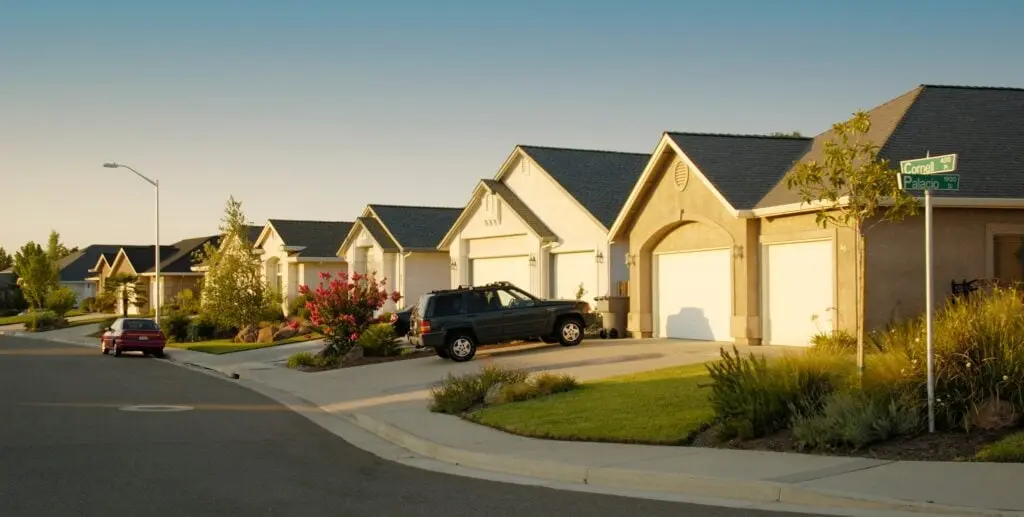
- Asset Class: Single-family homes, typically around 1,200 square feet, featuring three bedrooms (or two bedrooms with expansion potential).
- Financial Parameters: Purchase prices ranging between $150,000 and $220,000, with an after-repair value (ARV) under $350,000.
- Financing Mix: A diversified capital stack utilizing cash-out refinances, hard money loans, private lending, cross-collateralized lines of credit, and family equity partnerships.
- Portfolio Output: Transacted 11 properties in 2025, comprising seven completed flips and two rental acquisitions retained for portfolio growth.
Chronology: The Evolution from First Deal to Full-Time Entrepreneur
Deal One: The Lake Worth Townhome and the Seven-Month Trial
In February 2022, after refinancing his primary residence to extract capital and establishing a relationship with a local wholesaler, Castro-Silva executed his inaugural deal alongside his mother.
The asset was a townhome in Lake Worth purchased for $200,000, funded via a 50/50 split of cash and an interest-only hard money loan. Despite requiring a modest $25,000 to $30,000 renovation to overhaul two bathrooms and a kitchen, the project dragged on for seven months because Castro-Silva was still maintaining his full-time banking career.
Carrying costs mounted to roughly $7,000. Upon completion, they listed the property for $320,000, ultimately closing at $310,000 after offering an unnecessary concession. Despite the operational delays and rookie mistakes, Castro-Silva netted $37,000—nearly half his annual corporate salary from a single transaction. "That was the moment everything clicked," he recalls.
Deal Two: The Leap of Faith and the Cost of Overpricing
Empowered by his initial success and motivated by a desire to be present for his children (then ages one and three), Castro-Silva took a definitive leap of faith midway through his second project, resigning from Chase.
He acquired a single-family home two hours north for $170,000, utilizing a line of credit drawn against his primary residence. Budgeted renovation costs of $40,000 ultimately swelled to $50,000—a reasonable variance for his first full single-family gut rehab.
However, the real lesson materialized during the exit phase. Disregarding his real estate agent’s counsel, Castro-Silva initially listed the property between $325,000 and $335,000. After turning down an early cash offer of $300,000 in the first week, the property sat stagnant for four months. He eventually sold it for $300,000 via traditional financing. Although the net profit remained steady at $35,000, the extended holding timeline served as an expensive masterclass in market pricing discipline.
Deal Three: Cross-Collateralization and Creative Capital
Depleted of liquid capital following his second project, Castro-Silva leveraged his professional network, approaching a bank client who also worked as a real estate agent. He structured a mutually beneficial arrangement: the client would provide financing in exchange for securing the listing agreement when the property was ready for market.
The lender extended a $150,000 hard money loan, secured by Castro-Silva’s first single-family property as cross-collateral. Having internalized the lessons of his previous overpricing mistake, Castro-Silva listed the asset at a realistic $299,000. The property went under contract within six hours, closing the exact same week as his second deal and re-establishing his liquidity.
Deal Four: Organic Sourcing and Family Syndication
True to the grassroots nature of localized real estate investing, Castro-Silva made it a point to inform everyone he encountered about his business—including the neighbors adjacent to his active construction sites.
Months after striking up a conversation, the neighbor next to his first single-family flip decided to sell. Castro-Silva acquired the property directly for $150,000—securing a $20,000 discount compared to typical wholesaler prices—despite the home featuring an additional room.
Recognizing his trajectory, his siblings sought to participate. They pooled their capital to fund the purchase in cash, invested $55,000 to $60,000 in renovations, and successfully exited at $320,000. The venture yielded a $65,000 net profit split three ways, cementing the viability of family equity partnerships.
Supporting Data: The Financial Engine
Castro-Silva’s portfolio growth is underpinned by rigorous underwriting and risk mitigation. By focusing on properties valued under $350,000, he insulates his business against market downturns.
| Metric / Parameter | Operational Standard | Strategic Rationale |
|---|---|---|
| Purchase Price Range | $150,000 – $220,000 | Keeps capital exposure low per project and ensures broad buyer demand upon exit. |
| Target Square Footage | ~1,200 sq. ft. (3 Bed / 2 Bath) | Optimal size for first-time homebuyers and downsizing retirees in Vero Beach. |
| Exit Strategy Flexibility | Flip or Rent (Break-even fallback) | Eliminates the bleeding of hard-money interest if retail buyers hesitate; protects cash flow. |
| Capital Deployment | Lines of credit, Hard money, Private lenders | Preserves personal liquidity while maximizing leverage through trusted networks. |
Official Responses and Strategic Insights
When asked about the transition from the banking sector to active real estate entrepreneurship, industry analysts point to Castro-Silva’s risk management background as a primary driver of his success. While many first-time investors stumble due to underestimating renovation timelines or over-leveraging high-interest debt, Castro-Silva’s financial literacy allowed him to structure complex financial vehicles—such as cross-collateralized lines of credit and equity partnerships—from the outset.
Furthermore, his decision to relocate his family directly to his target investment market of Vero Beach underscores a vital tenet of localized real estate investing: proximity breeds opportunity. By embedding himself within the community where he operates, he unlocked off-market deals through organic networking that traditional marketing campaigns often fail to capture.
Implications: Lessons for Aspiring Real Estate Entrepreneurs
The trajectory of Martin Castro-Silva offers a compelling roadmap for professionals trapped in corporate environments who aspire to enter the real estate sector. His journey highlights several broader industry implications:
- The Power of Transferable Skills: Corporate backgrounds—whether in banking, project management, or sales—provide invaluable baseline competencies. For Castro-Silva, understanding underwriting, capital allocation, and client relations directly translated to managing loans, contractors, and private lenders.
- Conservative Buy Boxes Protect Capital: By strictly defining his parameters—low purchase price, modest square footage, and strong secondary exit strategies (renting versus selling)—he created a financial safety net that prevented minor project delays from becoming catastrophic losses.
- Scaling Through Systems: Transitioning from a solo operator struggling with a seven-month renovation to transacting 11 properties a year required delegating execution. By establishing dedicated renovation crews and leveraging private capital partners, Castro-Silva transformed a stressful job into a scalable business model.
Ultimately, Castro-Silva’s evolution from observing wealthy clients across a bank desk to building his own real estate portfolio demonstrates that financial independence is not merely a product of high initial capital, but of disciplined execution, continuous learning, and the courage to act when opportunity presents itself.
