By Global Business Insights Published: September 2026
Main Facts
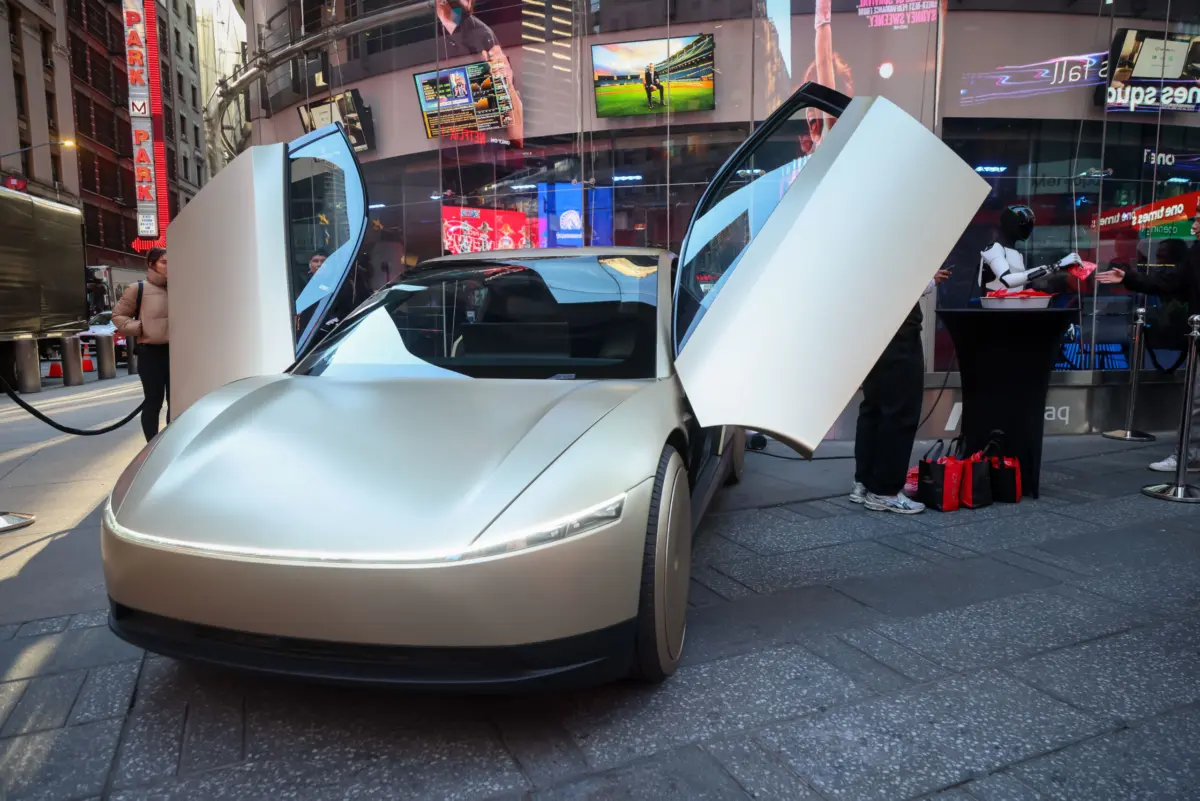
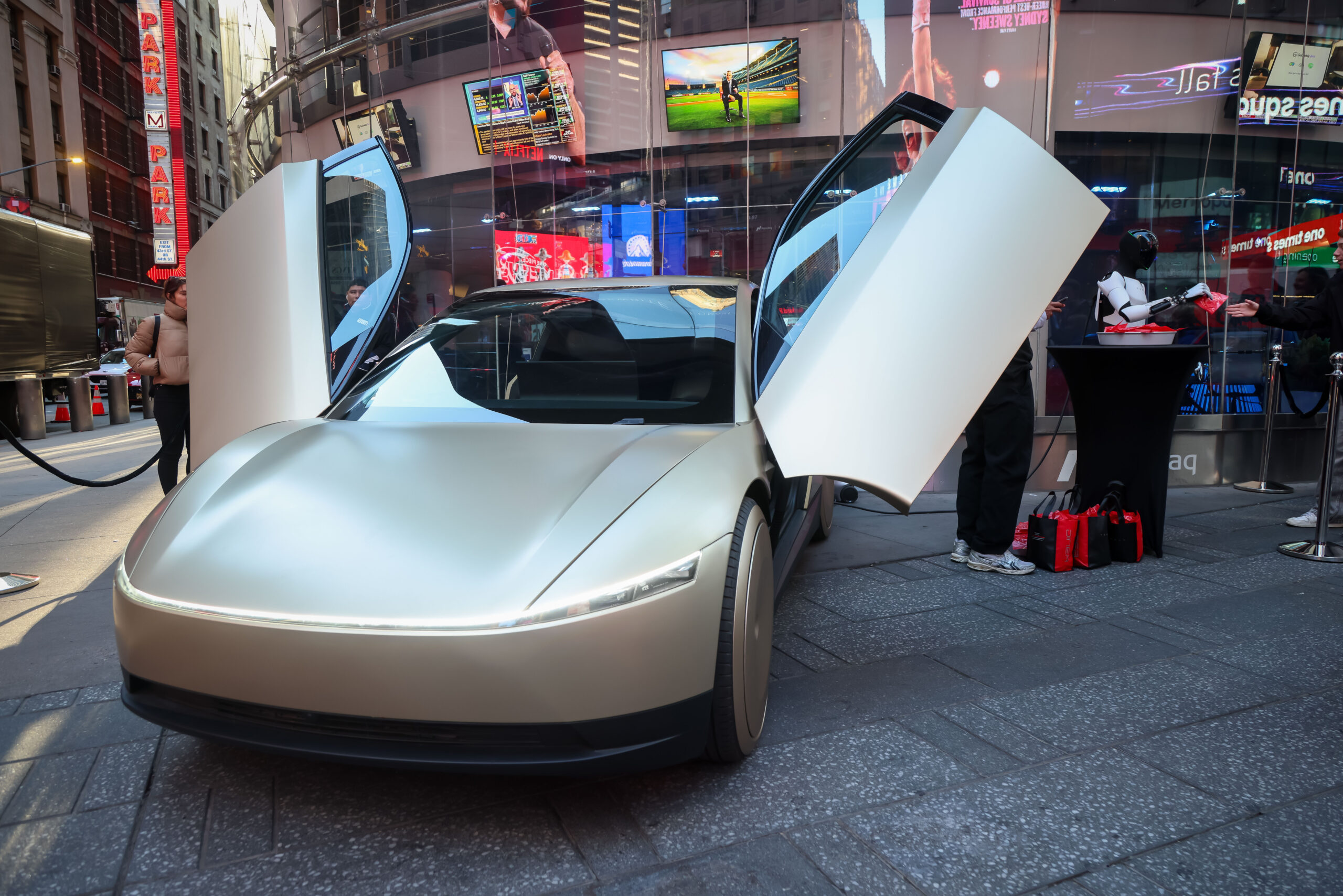
Tesla Inc. is preparing for a high-stakes corporate milestone on Thursday in Austin, Texas, where the electric vehicle pioneer will officially reintroduce its purpose-built autonomous vehicle, the Cybercab, and integrate it into the company’s fledgling commercial robotaxi service. First unveiled in late 2024 on a Hollywood studio lot, the Cybercab is a futuristic, steering-wheel-free and foot-pedal-free vehicle designed from the ground up to revolutionize personal mobility and public transport.
The upcoming launch event represents a pivotal crossroads for Tesla. Long celebrated as the undisputed king of the electric vehicle market, the company is attempting a massive strategic pivot: transforming from a traditional car manufacturer into an artificial intelligence and autonomous robotics enterprise.
Ahead of the invite-only gathering—tailored for Tesla enthusiasts, tech evangelists, and social media influencers—CEO Elon Musk took to his social media platform, X (formerly Twitter), to hype up the rollout, posting overnight messages including the phrase, “A storm of Cybercabs.”
Despite the grand rhetoric and high expectations, the event is clouded by intense scrutiny, financial pressures, and severe regulatory gray areas. As of late Wednesday, Tesla had registered just 45 Cybercabs with authorities in Texas. When combined with the company’s existing fleet of modified Model Y SUVs, Tesla’s total robotaxi footprint in the Lone Star State sits at approximately 420 vehicles—a fraction of the nearly 1,000 autonomous vehicles operated by Alphabet Inc.’s market leader, Waymo.
Furthermore, Wall Street remains deeply divided. Analysts are watching closely to determine whether Thursday marks the beginning of an aggressive, commercial-scale deployment or merely another theatrical prototype showcase with limited real-world utility.
Chronology of the Cybercab Journey
The path from a Hollywood soundstage to the streets of Austin has been marked by bold promises, shifting timelines, and incremental real-world testing.
Late 2024: Elon Musk takes the stage at a Warner Bros. studio lot in Hollywood to pull the cover off the Cybercab prototype. He promises a sub-$30,000 production cost, a 2026 commercial debut, and a vehicle completely stripped of traditional manual driver controls like steering wheels and accelerator pedals.
Throughout 2025: While fans await production lines to spin up, Tesla quietly begins testing early iterations of autonomous software across multiple U.S. cities. In October 2025, a Cybercab prototype is spotted making public appearances, generating renewed media buzz.
Late 2025 – Early 2026: Tesla launches its long-awaited autonomous ride-hailing pilot program in Austin, utilizing modified Model Y SUVs. The service gradually expands across six metropolitan areas spanning Texas and Florida, though many early rides still require human safety monitors behind the wheel to intervene in complex traffic scenarios.
June 2026: U.S. federal auto safety regulators propose long-awaited changes aimed at stripping away legacy design barriers—such as mandatory brake pedals—for autonomous vehicles, though final rules remain unlegislated.
July 2026: Amazon.com Inc.’s autonomous vehicle unit, Zoox, successfully secures a crucial federal exemption from multiple motor vehicle safety standards, enabling the commercial deployment of its own custom-built robotaxi. Meanwhile, Tesla shares begin a modest 20% recovery rally following a brutal slump earlier in the year.
Late September 2026: Tesla registers 45 Cybercabs with Texas state authorities just 24 hours before the scheduled Austin launch event, signaling an impending expansion of its testing and deployment framework.
Supporting Data and Financial Metrics
The commercial success of the Cybercab is deeply intertwined with Tesla’s broader financial health, which has faced significant turbulence throughout 2026.
Prior to a late-summer rally that drove shares up 20% since July 29, Tesla’s stock had suffered a punishing 21% decline year-to-date. In sharp contrast, the broader S&P 500 Index managed a robust 12% gain over the same period. Investors have grown increasingly impatient with traditional EV margin compression, turning their attention toward high-margin software, AI, and autonomous fleet services as the primary drivers of future valuation.
The competitive landscape also presents a daunting challenge. Tesla’s primary rival in the autonomous space, Waymo (backed by Alphabet Inc.), operates with a massive head start. Waymo’s footprint in Texas alone approaches 1,000 registered autonomous vehicles. By comparison, Tesla’s newly bolstered Texas fleet numbers roughly 420 vehicles, the vast majority of which are retrofitted Model Y crossovers rather than purpose-built Cybercabs.
According to Morgan Stanley analyst Andrew Percoco, Wall Street’s immediate reaction to Thursday’s event will hinge entirely on scalability:
"If Thursday’s event is merely an unveiling with limited vehicles committed to the road, we expect the stock to sell off. Conversely, a broader rollout that has a material impact on the Tesla robotaxi fleet size could excite investors."
Official Responses and Regulatory Hurdles
Beyond financial sentiment and fleet sizes, Tesla faces an uphill battle with federal regulators regarding the physical design and legal classification of the Cybercab.
Traditional Federal Motor Vehicle Safety Standards (FMVSS) enforced by the National Highway Traffic Safety Administration (NHTSA) mandate that all motor vehicles sold or operated on public roads must feature human-centric design controls. These include physical brake pedals, mechanical steering linkages, and side-view mirrors.
While NHTSA has signaled a willingness to modernize these rules—proposing regulatory carve-outs for driverless vehicles in mid-2026—those policy updates remain in bureaucratic limbo and have not been formally finalized.
Other industry players have navigated these complex legal frameworks through formal channels. For instance, Amazon’s Zoox spent years attempting to self-certify its custom robotaxi before formally applying for and securing specific federal exemptions in July 2026, granting them the legal clearance needed for commercial deployment.
Tesla, however, has appeared reluctant to follow the standard regulatory playbook. As of Wednesday afternoon—just hours before the Austin launch—Tesla had failed to file an official exemption request for the Cybercab with NHTSA. Representatives for the federal safety agency confirmed that while they remain in informal communication with Tesla and are closely monitoring the situation, no formal exemption paperwork has been processed.
This regulatory vacuum leaves the door open to potential cease-and-desist orders, state-level injunctions, or severe limitations on how quickly the Cybercab can transition from a controlled demonstration to a widespread commercial utility.
Implications for the Future of Mobility
The formal reintroduction of the Cybercab carries profound implications not only for Tesla as a corporate entity, but for the entire global automotive and tech ecosystem.
1. The Validation of Vision-Only Autonomy
Tesla’s stubborn refusal to utilize expensive LiDAR (Light Detection and Ranging) or high-definition mapping sensors—relying instead purely on camera-based computer vision powered by its Full Self-Driving (FSD) neural networks—faces its ultimate stress test. If the Cybercab can successfully navigate complex urban environments without human safety drivers, it will validate Musk’s low-cost hardware philosophy, undercutting competitors who rely on hyper-expensive sensor suites.
2. The Shift Toward "Transportation-as-a-Service" (TaaS)
Should Tesla successfully deploy thousands of Cybercabs across major U.S. metropolitan areas, it could permanently alter consumer habits, shifting urban populations away from vehicle ownership toward on-demand, autonomous ride-hailing. Musk has repeatedly pitched the Cybercab as the foundation of a peer-to-peer sharing economy, where individual owners could theoretically add their personal Cybercabs to the Tesla network when not in use to generate passive income.
3. Regulatory Precedent and Public Safety
Tesla’s approach to regulatory compliance—or lack thereof—will establish a critical legal precedent for American innovation. Critics argue that bypassing established safety exemptions sets a dangerous precedent for public safety, risking friction with local municipal governments and law enforcement agencies. Conversely, proponents argue that antiquated federal rules drafted for human drivers should not be allowed to stifle the rapid deployment of life-saving autonomous technologies.
As the doors open in Austin on Thursday, the automotive world watches with bated breath. Whether the Cybercab proves to be the dawn of a profitable new era or a premature exercise in techno-optimism will ultimately depend on asphalt, algorithms, and regulators.