

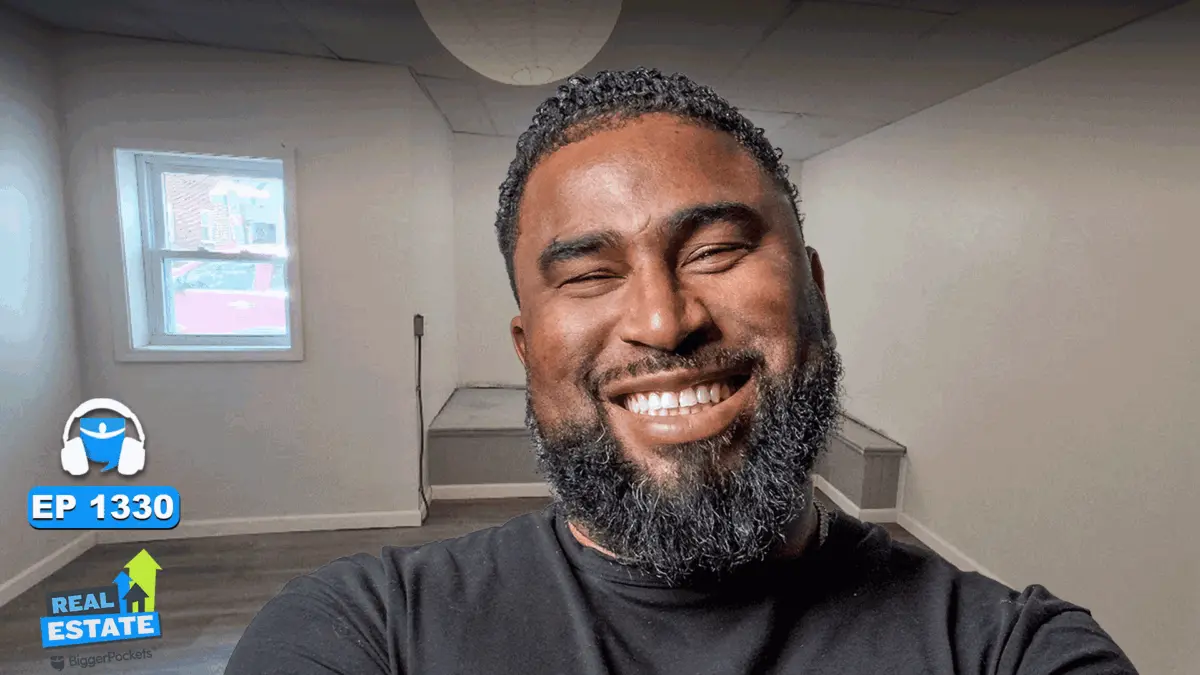
ALTOONA, Pa. — In an era when online financial gurus hawk expensive blueprints for effortless passive income—often amounting to little more than digital snake oil—finding a reliable vehicle for wealth creation can feel impossible. For Kent Long, a 48-year-old regional manager for occupational therapy, the realization hit hard: most internet side-hustle advice was a fantasy.
Looking to escape the grind of a demanding 9-to-5 that kept him behind the wheel for hours several days a week, Long turned away from e-commerce experiments and toward tangible assets. His pivot to real estate in July 2024 has since rewritten his financial future. Starting with a modest $14,000 down payment, Long engineered a disciplined blueprint of multifamily property conversions, equity leveraging, and sweat equity. In just two years, he expanded from zero units to a thriving 10-unit portfolio, bringing in $5,500 a month in positive cash flow and positioning himself to retire 15 years ahead of schedule.
Main Facts: The Anatomy of a High-Cash-Flow Portfolio
Long’s strategy challenges the prevailing wisdom that lucrative real estate investing requires massive capital injections or hyper-appreciating coastal markets. Operating in Altoona, Pennsylvania, Long capitalized on lower-cost-basis properties with untapped multi-unit potential.
- The Portfolio Today: Across four strategic acquisitions—comprising two duplexes and two triplexes—Long controls 10 rental units generating a collective $5,500 in monthly cash flow.
- The Initial Catalyst: In July 2024, Long purchased his first property—a single-family home previously configured as a duplex—for $70,000.
- The Financing Vehicle: Long relied on 30-year conventional loans and commercial financing through local community banks, utilizing Home Equity Lines of Credit (HELOCs) to fund subsequent acquisitions without triggering high-interest debt loops or resetting primary mortgage balances at higher rates.
- Family Collaboration: Long integrated his family into the venture, guiding his son to build his own real estate asset base while leveraging the trade skills of his father, a union carpenter.
Chronology: A Step-by-Step Expansion
July 2024: The First Strike in Altoona
Facing a major life transition amidst a divorce, Long evaluated his housing options. Rather than renting, he hunted for a property that could generate immediate income. He discovered an on-market single-family home in Altoona that had previously operated as a duplex.
"All I literally had to do was put a door on it," Long recalled during an interview on the BiggerPockets Podcast. Walking into the property, the first floor formed one apartment, a separate interior door led upstairs to a second unit, and a makeshift space in the rear functioned as a hotel-sized studio.
Purchased for $70,000 after sitting on the market through failed financing deals by previous buyers, Long invested $10,000 in renovations. Doing the labor himself—drawing on his aptitude for DIY kitchen and bathroom updates—he converted the building into a triplex. The units quickly leased for $850 (rear studio), $900 (first-floor one-bedroom), and $1,250 (third-floor three-bedroom), netting $3,000 a month against a debt service of roughly $500 to $600.
February 2025: Leveraging Equity Without Refinancing
Rather than executing a traditional cash-out refinance—which would have locked in a new, larger loan balance and eroded monthly margins—Long secured a $78,000 HELOC based on 80% of the property’s newly appraised value.
Drawing $35,000 from this line of credit, he purchased a 1,700-square-foot single-family home for $30,000 in cash. After a $20,000 all-in renovation, the property generated $1,900 monthly across a two-bedroom and a one-bedroom unit. Long subsequently placed a commercial loan on the asset for $85,000, using the proceeds to clear $20,000 in credit card debt and replenish his initial investment.
Involving the Next Generation: The Son’s Deal
By the third property, Long’s 19-year-old son joined the family enterprise. Spotting a duplex listed for $44,000, Long and his son secured a commercial loan requiring a 15% down payment ($15,000 to $16,000), which Long funded via his initial HELOC.
With the help of Long’s father—a union carpenter—the family spent two to three days a week transforming the property. The units rented for $1,200 each. Upon refinancing, the son pulled a $72,000 check at age 20, paying back his father’s initial capital while retaining over $50,000 in liquidity.
Scaling to 10 Units
Long’s fourth deal involved a duplex with an attached derelict former corner store on the ground floor. Purchasing the asset for $55,000, he kept existing first-floor tenants at $450/month and slowly adjusted their rent upward while they covered the modest mortgage during ongoing renovations. Long cleared out two dumpsters of debris from the commercial space, transforming it into a three-bedroom, one-bathroom unit renting for $1,200, alongside two upstairs units renting for $950 each. A subsequent commercial refinance appraised the property higher, allowing Long to pull $83,000 and completely zero out his HELOC balance.
Supporting Data: The Economics of Cash-Flow Markets
Long’s strategy highlights the financial mechanics of investing in lower-cost Midwestern and Rust Belt markets compared to high-appreciation metropolitan zones:
| Metric | Property 1 (Triplex) | Property 2 (Duplex) | Property 3 (Duplex) | Property 4 (Triplex) |
|---|---|---|---|---|
| Purchase Price | $70,000 | $30,000 | $44,000 | $55,000 |
| Renovation Cost | $10,000 | $20,000 | $25,000 | $30,000 |
| Total All-In | $80,000 | $50,000 | $69,000 | $85,000 |
| Monthly Gross Rent | $3,000 | $1,900 | $2,400 | $3,100 |
| Monthly Debt Service | ~$550 | ~$600 | ~$600 | ~$600 |
While properties in Altoona experience flat appreciation compared to coastal markets, the immense spread between debt service and gross rental income minimizes downside risk. By keeping capital outlays low, Long engineered a margin of safety that traditional single-family suburban investing rarely allows.
Implications for Modern Real Estate Investors
Long’s journey offers a roadmap for everyday professionals hesitant to enter the housing market amid elevated interest rates and high purchase prices. His success underscores several key principles for modern real estate operators:
- The Power of Local Community Banks: While national lenders often impose rigid underwriting standards for niche multi-unit conversions, local community banks understand regional market dynamics and are more willing to structure flexible commercial and construction loans.
- HELOCs vs. Rate-Reset Refinances: Utilizing a HELOC to fund subsequent acquisitions preserves a low primary mortgage interest rate and ensures that interest is only paid on the capital actively drawn from the line of credit.
- Sweat Equity and Family Labor: By leveraging generational trade skills (carpentry, painting, and general contracting), Long kept overhead renovation costs to a fraction of contractor estimates, accelerating the stabilization timeline.
- Gradual Rent Optimization: Rather than alienating existing tenants with sudden, aggressive market-rate hikes, Long utilized transparent communication plans, slowly stepping rents upward while maintaining 100% occupancy during rehab phases.
Official Outlook and Future Roadmap
Long currently works as a regional manager overseeing 18 skilled nursing facility therapy departments, driving between two and four hours three to four days per week. Despite his demanding travel schedule, Long spends only one to four hours a month managing his real estate portfolio.
With 10 doors secured across four properties in just two years, Long has nearly achieved his original five-year goal ahead of schedule. His updated timeline targets four additional units over the next 18 months. When he turns 50, Long plans to step away from his corporate career entirely, relying entirely on his real estate portfolio for retirement income.
For aspiring investors who feel they have missed the window to enter the market, Long’s story serves as a clear rebuttal. As Henry Washington, co-host of the BiggerPockets Podcast, noted during Long’s feature: "If you think you are late to real estate, this is your sign to get in the game."
