

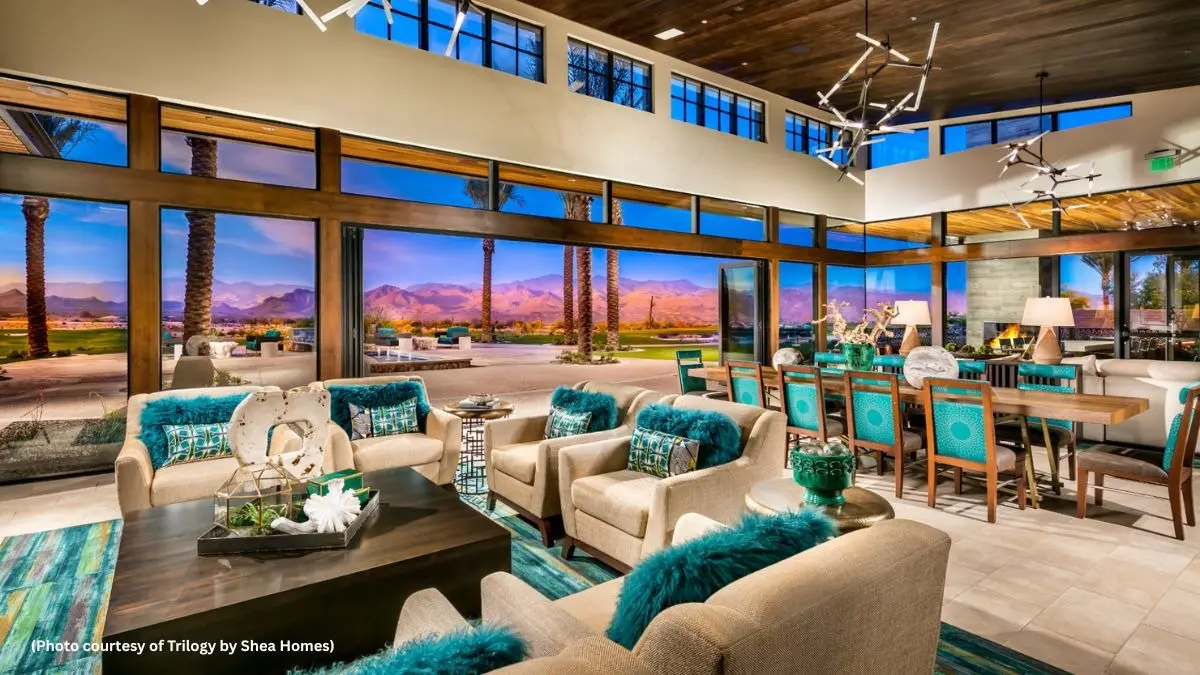
In today’s shifting housing landscape, active adult homebuilders face a unique paradox. While a strong segment of buyers aged 55 and older are financially secure, possess substantial equity, and are eager to make their next real estate move, closing the deal is harder than ever. Convincing prospective buyers to choose one master-planned community over another requires far more than floor plans and square footage.
To overcome buyer hesitation in a competitive market, leading developers are overhauling their strategies. Moving past traditional sales models, industry leaders like Crown Community Development’s Amblebrook and Trilogy by Shea Homes are pioneering experiential marketing. By prioritizing lifestyle immersion, targeted psychological messaging, and the concept of "optionality," these developers are rewriting the playbook for the active adult housing market.
Main Facts: The Shift From Concrete Features to Experiential Living
The modern active adult buyer is fundamentally different from previous generations. Rather than shopping for a retirement home, they are purchasing a stage of life defined by freedom, connection, and activity. Consequently, homebuilders are discovering that lifestyle comes first, and the house comes second.
- Experiential Marketing: Developers are leaning into organic, in-person events where prospective buyers can interact directly with current residents rather than sales agents.
- The Gen X Factor: A growing portion of the 55-plus demographic consists of Generation X buyers (born in 1965 and later). Many are still working, highly active, and reject traditional "retirement" stereotypes.
- The Power of Optionality: Successful communities are marketed not as structured retirement villages, but as vibrant "base camps" where residents can curate their daily schedules freely.
- Longer Sales Cycles: Even though these buyers are often less sensitive to interest rates due to strong equity positions, major life decisions take time, with some prospects remaining in a builder’s pipeline for multiple years.
Chronology: The Evolution of 55-Plus Sales Strategies
To understand how the industry reached this modern inflection point, it helps to examine how the active adult sales model has evolved over the past decade.
Phase 1: The Traditional Model (Pre-2010s)
Historically, active adult and retirement communities relied heavily on standard real estate marketing tactics: static model homes, printed brochures highlighting floor plans, and formal presentations led by onsite sales representatives. The focus was predominantly on physical architectural features, low-maintenance living, and basic community amenities like a clubhouse or pool.
Phase 2: The Shift to Amenities and Clubs (2010s–2020)
As the leading edge of the Baby Boomer generation entered their 50s and 60s, developers realized that amenities needed to expand. Golf courses, fitness centers, and organized club calendars became standard. However, the engagement model remained largely transactional, relying on guided tours to show off the community’s offerings.
Phase 3: The Experiential & Psychological Era (Present)
Today, builders face a market defined by cautious optimism and high standards. Recognizing that buyers want authenticity, developers like Amblebrook and Trilogy have abandoned formulaic sales pitches. In their place, they have instituted structured ambassador programs, immersive multi-day "stay and play" events, and seasonal community festivals designed to let the lifestyle speak for itself.
Supporting Data & Market Realities
The necessity for this strategic pivot is underscored by broader demographic and economic trends.
- Extended Decision-Making Timelines: While a segment of the active adult market is ready to purchase immediately, industry data shows that a significant number of prospects take between one and two years—sometimes longer—to transition into a 55-plus community. This prolonged consideration period is tied to life milestones, such as final career wrap-ups, grandchildren, or selling a long-term family home.
- The Wealth Gap vs. Rate Sensitivity: Unlike younger first-time homebuyers who are acutely vulnerable to fluctuations in mortgage interest rates, older buyers frequently leverage considerable home equity or cash reserves. However, economic uncertainty still causes psychological hesitation, making emotional connection and trust vital components of the sales process.
- Generational Shift: With Gen X entering the demographic window, builders must adapt to a generation that views aging differently. Market research indicates that individuals generally view themselves as significantly younger than their chronological age. Displaying imagery of older retirement demographics alienates 50-something buyers who still see themselves as vigorous and career-driven.
Official Responses: Insights From Industry Leaders
To gain a deeper understanding of how these strategies translate into real-world success, industry executives share their insights on consumer psychology and community design.
Selling the Lifestyle First at Amblebrook
Amblebrook, a master-planned age-restricted community in Gettysburg, Pennsylvania, developed by Crown Community Development, has built its entire marketing approach around "showing, not telling."
Sara Carbonell, Amblebrook’s Director of Sales and Marketing, emphasizes that the physical home is secondary to the cultural experience. "We know that the 55-plus buyer is really focused on lifestyle, and the house comes second," Carbonell noted in an interview with HousingWire TBD.

To bridge the gap between curiosity and commitment, Amblebrook launched its seasonal Days of Joy event series. Taking place multiple times a year, these gatherings bring together current residents, prospective buyers, and local vendors for artisan festivals, block parties, live music, and themed cookouts.
Crucially, these events remove the pressure of a traditional sales environment. "That’s our general process to sell the lifestyle," Carbonell explained. "They have to see it, and they have to see it in action. Instead of a formal sales interaction, prospects naturally strike up conversations with residents who love bragging about the community."
Amblebrook formalizes this organic advocacy through an ambassador program. Selected residents are trained and rewarded for volunteering at events, welcoming newcomers, and sharing firsthand experiences. Furthermore, the community utilizes a massive 7,000-square-foot welcome center complete with a café, market, and club meeting spaces, alongside a "stay and play" program that allows prospective buyers to live on-site for consecutive days before making a financial commitment.
Reframing Gen X Psychology at Trilogy by Shea Homes
At Trilogy by Shea Homes—a brand offering both age-restricted and lifestyle communities—executives are hyper-focused on appealing to younger buyers, including those in their early to mid-50s.
Jeff McQueen, President of Trilogy by Shea Homes, points out that messaging must align with how modern buyers view themselves. "I think you gotta get into the psychology of how people view themselves. I think most people tend to view themselves as younger than they actually are mathematically by age," McQueen stated. "So, if we’re showing pictures of people that live in our communities that are in their mid-to-late 60s, that’s probably not really that attractive to people that are in their mid-50s."
The Importance of "Life Unscripted" and Optionality
Trilogy designs its neighborhoods around walkability, utilizing trail systems to connect homes to parks, pools, wellness centers, and restaurants. While amenities are robust—ranging from fitness classes to pickleball and resort-style pools—McQueen stresses that the core value proposition is optionality.
"While we certainly have amenities and all kinds of socialization opportunities, you don’t have to necessarily participate in those. They’re not forced upon you," McQueen said.
This philosophy underpins Trilogy’s "life unscripted" marketing message. Rather than presenting a rigid, scheduled retirement routine, the brand positions its communities as a dynamic base camp where Gen Xers can curate their daily lives entirely on their own terms.
"There’s a stereotype in the marketplace of 55-plus communities that we deliver a canned, formulaic approach to how you live," McQueen added. "So, we’ve got to message a little bit differently, and a little bit more articulately, to the Gen Xers, so that they understand they can live a very personalized, individually curated life in our communities."
Implications: The Future of Active Adult Development
The evolution of sales and marketing strategies seen at Amblebrook and Trilogy signals a broader, permanent transformation within the residential construction industry.
- The Death of the Static Sales Office: Traditional sales centers featuring static site maps and basic floor plan binders are rapidly losing efficacy. Future active adult communities will need to invest heavily in experiential spaces—such as active clubhouses, hospitality venues, and community lawns—that allow prospective buyers to physically sample the community culture.
- Peer-to-Peer Influence Outperforms Sales Reps: Consumers are increasingly skeptical of corporate marketing messaging. By empowering resident ambassadors to share authentic, unscripted testimonials during events, builders can build immediate trust and accelerate the decision-making process.
- Designing for Freedom, Not Retirement: As Gen X continues to comprise a larger share of active adult buyers, terms like "senior living" and "retirement village" are becoming obsolete. Communities that win market share will be those that embrace flexibility, wellness, and self-directed optionality—proving that the next chapter of life is entirely unscripted.
