

By Global Tech Desk
Published: October 2026
Main Facts: The 2026 Smartphone Landscape
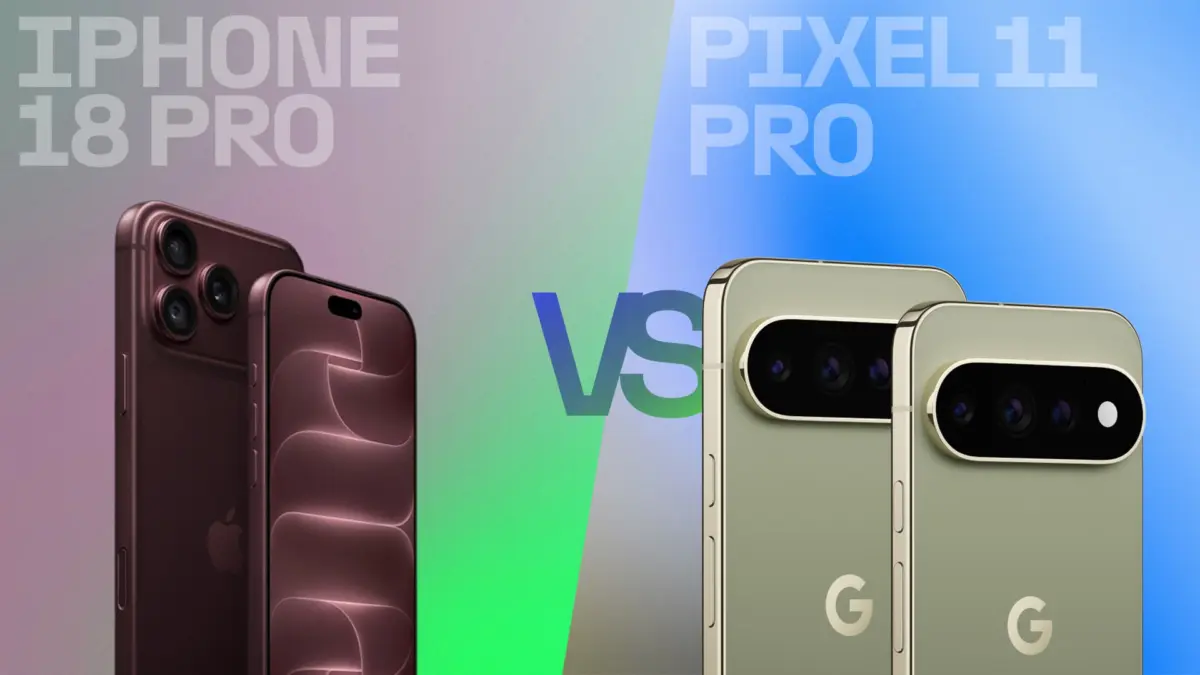
The autumn consumer electronics cycle of 2026 has officially brought forth the next evolution in mobile computing. While Apple’s futuristic foldable, the iPhone Duo, captured much of the mainstream media’s attention at the company’s recent "Surprise and Shine" event, it is the tried-and-true candy-bar format that remains the bread and butter of the industry. Enter the Apple iPhone 18 Pro and the Google Pixel 11 Pro—two heavyweight flagships designed to capture the hearts, minds, and wallets of mobile photography enthusiasts, power users, and everyday creatives alike.

Both devices arrive bearing price hikes. The iPhone 18 Pro starts at $1,199 for the base 256GB model, representing a $100 bump over its predecessor, the iPhone 17 Pro. Similarly, Google’s Pixel 11 Pro starts at $1,099—also a $100 increase over the Pixel 10 Pro. Industry analysts attribute these price adjustments to persistent, global memory component shortages that have driven up the baseline cost of advanced electronics.
Despite the elevated entry costs, these devices showcase the absolute pinnacle of their respective ecosystems: iOS 27 for Apple and Android 17 for Google. They feature cutting-edge camera arrays, top-tier build qualities, advanced neural processors, and distinct design philosophies that cater to entirely different crowds.

Chronology: The Evolution to the 2026 Flagships
The road to the iPhone 18 Pro and Pixel 11 Pro has been defined by a multi-year arms race centered on computational photography, artificial intelligence integration, and silicon efficiency.
- Late 2024 – Early 2025: The industry experienced the initial shocks of rising memory production costs. Manufacturers began experimenting heavily with generative AI hardware accelerators embedded directly into mobile system-on-chips (SoCs).
- Late 2025 (The Previous Generation): Apple released the iPhone 17 Pro with its distinctive dual-tone finish, while Google launched the critically acclaimed Pixel 10 Pro. Both set high bars for handheld cameras but left consumers hungry for better thermal management and longer telephoto reaches.
- Mid-2026: Ongoing supply chain pressures forced component costs upward, culminating in the $100 generational price increases for both tech giants.
- September – October 2026: Apple unveiled the iPhone 18 Pro at its autumn keynote alongside the innovative iPhone Duo. Weeks later, Google rolled out the Pixel 11 Pro, showcasing its updated Tensor G6 architecture and edge-to-edge camera bar design. Reviewers worldwide immediately put both devices through grueling real-world tests to evaluate their camera capabilities, thermal throttling, and battery endurance.
Supporting Data: Hardware, Design, and Performance Specifications
When placed side-by-side, the hardware choices made by Apple and Google highlight stark contrasts in philosophy, even as they converge on core metrics like display size and durability.

Design and Ergonomics
- iPhone 18 Pro: Adopts a clean, uniform monotone look utilizing an aluminum unibody construction. It is available in four distinct colorways: burgundy red, glacier blue, silver, and black. It weighs 211 grams (approximately the weight of a medium apple) and measures 5.9 × 2.3 × 0.3 inches.
- Pixel 11 Pro: Retains Google’s signature full-width camera bar on the rear, now enhanced with edge-to-edge glass for a more cohesive, uniform appearance. It comes in canyon (an orange-pinkish hue), fog white, olive green, and obsidian black. It is slightly lighter at 204 grams, measuring 6.0 × 2.8 × 0.3 inches.
Both phones feature color-matching metallic frames that offer a seamless in-hand feel. Both boast IP68 water and dust resistance, making them fully capable of surviving accidental drops into water or exposure to fine beach sand.
Displays
- iPhone 18 Pro: Features a 6.3-inch OLED display running at a resolution of 2,622 × 1,206 pixels (460 ppi) with a dynamic 120Hz refresh rate. It is protected by Ceramic Shield 2 and features an upgraded, smaller Dynamic Island that can now track up to three Live Activities simultaneously (such as active timers and rideshare tracking). Peak brightness reaches an impressive 3,000 nits.
- Pixel 11 Pro: Features a 6.3-inch OLED display with a sharper resolution of 2,856 × 1,280 pixels (496 ppi) and a dynamic 120Hz refresh rate. Protected by Corning Gorilla Glass Victus 2, it houses an ultrasonic in-display fingerprint sensor and reaches an ultra-bright 3,600-nit peak for exceptional outdoor legibility under direct sunlight.
Camera Systems
Photography is the undisputed battleground for these two devices:

- iPhone 18 Pro: Introduces a groundbreaking variable aperture on its 48-megapixel main camera, allowing users to manually (or automatically) toggle between four physical f-stops ($textf/1.48$, $textf/1.8$, $textf/2.8$, and $textf/4.0$). It is paired with a 48-megapixel ultrawide lens and a 48-megapixel telephoto sensor supporting 4x optical and 8x hybrid zoom. The front-facing camera is an 18-megapixel sensor equipped with automatic framing and pro-level manual controls.
- Pixel 11 Pro: Features a 50-megapixel main sensor, a 48-megapixel ultrawide camera, and an upgraded 48-megapixel telephoto sensor boasting a larger physical footprint for a 30% increase in light capture. It supports 5x optical zoom, 30x digital zoom, and an astonishing 120x Pro Zoom backed by generative AI cleanup algorithms. The front selfie camera is a high-resolution 42-megapixel shooter.
Processors and Thermal Management
- Apple A20 Pro: Built on an ultra-dense 2nm manufacturing process, Apple’s in-house silicon is paired with a larger internal vapor chamber. Reviewers note that the iPhone 18 Pro runs remarkably cool during extended gaming sessions, only getting marginally warm during intensive file downloads (such as 28GB game files) or fast charging.
- Google Tensor G6: Powering the Pixel ecosystem, the Tensor G6 handles complex machine learning tasks, Gemini AI features, and real-time photo processing effortlessly. However, extended gaming tests indicate that the Pixel 11 Pro can grow uncomfortably warm after 10 minutes of high-graphics gaming, struggling slightly compared to Apple’s console-quality App Store ecosystem.
Battery and Charging
- iPhone 18 Pro: Delivers a full day of reliable battery life, matching the endurance of previous Pro Max models. When drained, it supports rapid wired charging via a 40W+ adapter, hitting an 82% charge in just 30 minutes, or a 50% charge in 20 minutes. MagSafe charging speeds have also seen notable improvements.
- Pixel 11 Pro: Equipped with a robust 5,115 mAh battery. It supports 30W wired charging (going from 55% to 88% in a standard 30-minute test) and 25W Qi 2.2 wireless charging. (Note: Users seeking faster 45W wired charging must upgrade to the larger Pro XL variant).
Official Responses: What the Experts and Makers Say
Both Apple and Google have heavily marketed their devices around the concept of intelligent, frictionless media capture.
Apple’s engineering teams have emphasized the photographic utility of the new variable aperture lens. In official press communications, Apple noted that giving users physical control over light exposure bridges the gap between computational photography and traditional DSLR mechanics. CNET’s Patrick Holland echoed this in his review, praising the variable aperture for delivering "some amazing shots in the dark" while shifting seamlessly between magnifications.

Google, on the other hand, leans heavily into its software prowess and generative AI integrations. Google representatives highlighted the inclusion of features like Camera Looks (built-in color profiles) and Magic Capture—a mode that records a short video clip and uses AI to extract and stitch together the crispest still frames. CNET Managing Editor Andrew Lanxon praised Camera Looks as "a welcome addition for casual shutterbugs who love to simply snap away without worrying about editing later," though he cautioned that Google has yet to fully unlock the tool’s maximum potential.
Furthermore, Google has committed to an industry-leading 7 years of software and security updates for the Pixel 11 Pro, ensuring long-term viability that matches or exceeds Apple’s traditional support lifecycle.

Implications: Which Phone Should You Buy?
The launch of the iPhone 18 Pro and Pixel 11 Pro at higher price points signals a broader industry shift: premium smartphones are now firmly established as luxury, long-term investments rather than biannual disposable upgrades. With base models starting north of $1,100, consumers are demanding faultless performance, professional-grade media creation tools, and robust AI integrations.
Choose the Apple iPhone 18 Pro if:
- You are deeply entrenched in the Apple Ecosystem: If your daily workflow involves a Mac, iPad, and Apple Watch, the seamless continuity of iOS 27, dual eSIM management, and Apple Intelligence features are unmatched.
- You are a Mobile Gamer: The 2nm A20 Pro chip, combined with superior thermal dissipation and Apple’s library of console-quality games that transfer across Mac and Apple TV, makes the 18 Pro the definitive gaming powerhouse.
- You value Manual Camera Control: The introduction of a true variable aperture on a 48MP main sensor offers unmatched physical manipulation of light exposure, appealing directly to purists and shutterbugs.
Choose the Google Pixel 11 Pro if:
- You want Cutting-Edge AI and Smart Features: Android 17, powered by the Tensor G6 chip and advanced Gemini capabilities, offers unmatched voice-to-text filtering, American Sign Language (ASL) live translation via the camera, and conversational AI integration.
- You Want Extreme Zoom Capabilities: The combination of a 5x optical telephoto lens, 30x digital zoom, and 120x Pro Zoom backed by generative AI cleanup makes distant subjects remarkably accessible.
- You Want Long-Term Software Support: Google’s ironclad promise of 7 years of full software and security updates provides incredible peace of mind for buyers looking to keep their hardware well into the 2030s.
Ultimately, whether you lean toward the refined aluminum unibody and precise optics of the iPhone 18 Pro or the brilliant outdoor display, AI-driven photography, and vibrant color profiles of the Pixel 11 Pro, 2026’s flagship tier proves that mobile innovation is far from stagnant—even if you have to pay a little extra to experience it.
