

By Jacob Kastrenakes
Executive Editor, The Verge
Main Facts
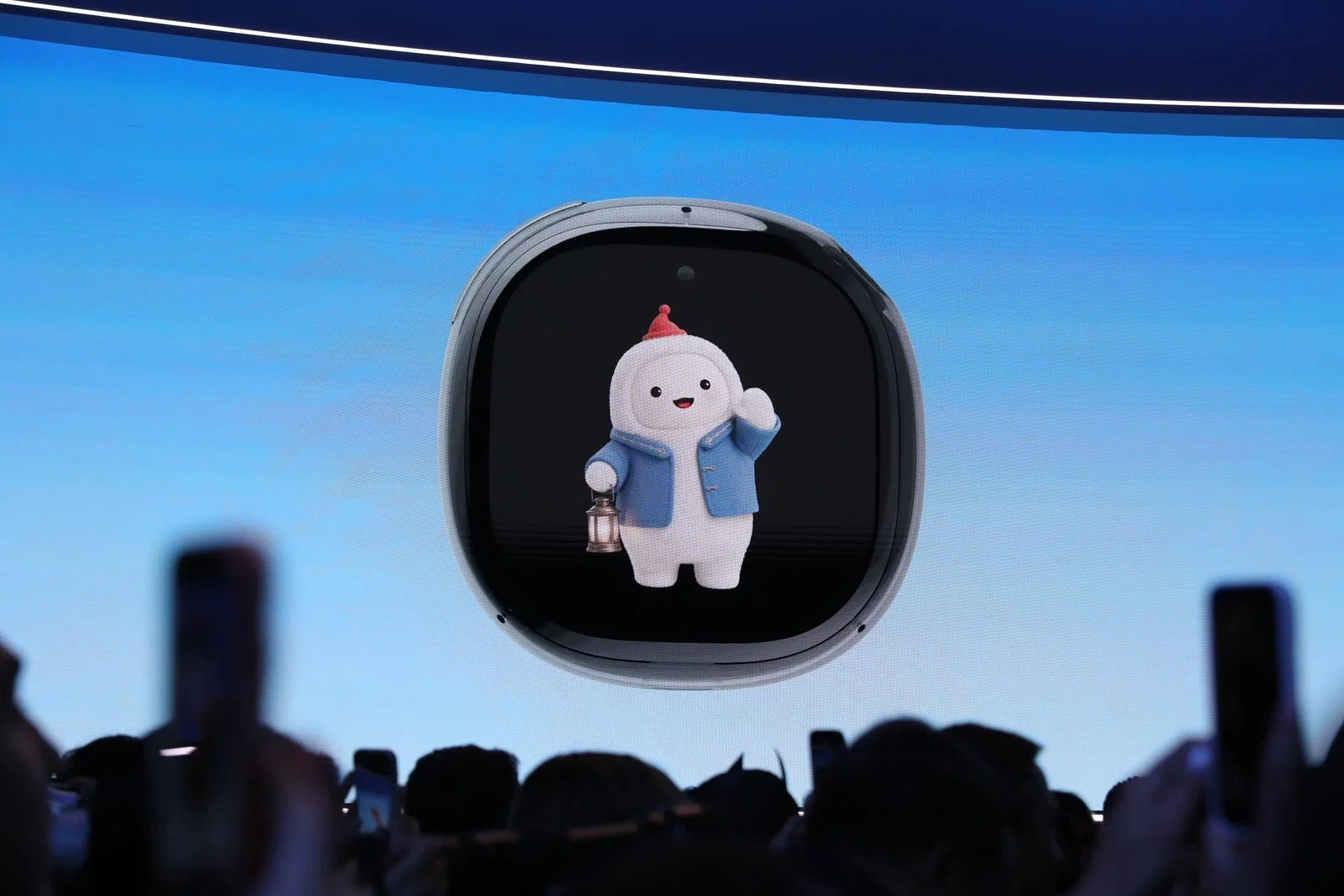
Meta is officially diving deeper into the consumer AI hardware market with a dedicated, standalone device designed to house its rapidly evolving AI agent, Muse. Entitled the Muse Charm, the gadget was given a surprise, brief debut by Meta CEO Mark Zuckerberg during the closing moments of the Meta Connect keynote presentation.
Resembling a chunky, strap-less smartwatch, the Muse Charm features a prominent display screen and comes equipped with a small lanyard for convenient portability. Built for hands-free, frictionless interaction, the device includes a top-right fingerprint sensor that acts as a physical trigger to wake the AI and initiate voice commands. Additionally, the Charm houses an integrated camera and a multi-microphone array (featuring at least three visible audio ports on the front chassis) to capture spatial and audio inputs seamlessly.
According to Zuckerberg, the primary value proposition of the Charm is elimination of friction: users will no longer need to pull out a smartphone, unlock the device, and navigate through an application interface to engage with Meta’s ecosystem.
Despite the high-profile tease, the product remains in a nascent stage of development. Zuckerberg admitted during the keynote that Meta has “only built a few of these so far” and that the company is still finalizing the industrial design and finishing materials. However, Meta is operating on an aggressive rollout timeline, aiming to ship the Muse Charm to consumers “in time for the holidays in December.” Pricing, global distribution details, and the underlying cellular or Wi-Fi connectivity architecture remain undisclosed.
Chronology: The Rapid Ascent of Muse and the Road to Charm
The timeline of Meta’s artificial intelligence strategy has accelerated dramatically over the past year, transitioning from backend large language model research to proactive, consumer-facing agentic systems.
- Early 2024: Meta integrates its foundational Llama models more deeply into consumer apps, signaling a pivot toward ambient and conversational AI assistants across Instagram, WhatsApp, and Facebook.
- Late Summer 2024: Meta begins internal testing and preliminary rollouts of agentic workflows—AI systems capable of executing multi-step tasks rather than merely answering prompts.
- September 2024 (Less than a month prior to Meta Connect): Meta officially introduces Muse, a next-generation AI agent designed to operate autonomously across software environments, taking direct actions on a user’s behalf.
- Meta Connect (Tonight): Mark Zuckerberg delivers the keynote presentation, dedicating significant stage time to expanding Muse’s software capabilities—including new computer-use features for macOS and direct management of email inboxes. At the final moments of the event, Zuckerberg unveils the Muse Charm hardware prototype, confirming Meta’s ambitions to move beyond software app stores and into dedicated wearable AI hardware.
- December 2024 (Projected): Meta’s target window to begin shipping initial units of the Muse Charm to the market, an extraordinarily tight turnaround for a device still lacking finalized finishing materials.
Supporting Data & Technological Context
To understand the weight of the Muse Charm announcement, it is necessary to examine the current state of consumer AI, Meta’s software capabilities, and the graveyard of early AI hardware experiments.
The Muse Agent Capabilities
Muse is designed to break away from traditional chatbot paradigms. Rather than waiting for text input and spitting out a paragraph, Muse acts as an "agent"—a piece of software endowed with tools to navigate digital environments. During the Connect presentation, Zuckerberg highlighted two major software breakthroughs for the agent:
- Mac Computer Use: Muse can interact natively with macOS environments, manipulating user interfaces, organizing files, and streamlining desktop workflows.
- Email Management: The agent can parse, categorize, draft, and send emails directly from a user’s inbox based on natural language instructions.
Hardware Specifications of the Muse Charm (Observed)
- Form Factor: Strap-less, wearable square screen with an integrated lanyard.
- Activation: Physical fingerprint sensor located on the top-right corner.
- Sensors & Inputs: Built-in compact camera and a three-microphone array for high-fidelity voice and visual capture.
- Design Philosophy: Teased with a translucent outer shell showcasing internal components, which Zuckerberg described as an “elevated hacker aesthetic.”
The AI Hardware Landscape
The market for dedicated generative AI hardware has proven treacherous. Devices like the Rabbit R1 and the Humane AI Pin generated massive hype prior to their respective launches, only to be heavily criticized by reviewers and consumers alike. The Rabbit R1, a similarly sized pocket-friendly gadget meant to house an AI agent, ultimately suffered from sluggish performance, poor battery life, and a lack of practical capabilities that made carrying a secondary device redundant when smartphones could perform the same tasks.

Meta is entering this arena with a distinct advantage: a massive, entrenched software ecosystem and an agent (Muse) that possesses vastly more advanced functional capabilities than the early generation of alternative AI gadgets. Nevertheless, the form factor question remains entirely unproven.
Official Responses and Industry Reactions
Meta executives have framed the Muse Charm not as a smartphone replacement, but as an exploratory step toward ambient computing. By stripping away the screen distractions inherent to traditional mobile operating systems, Meta hopes to create a more direct, intent-driven interface.
Mark Zuckerberg struck a pragmatic yet enthusiastic tone during his presentation. While acknowledging that the hardware is still in its infancy—noting that the engineering team has “only built a few of these so far” and is still actively refining exterior materials—he made it clear that Meta views hardware integration as a vital frontier for its AI roadmap.
Industry analysts, however, have expressed a mixture of intrigue and skepticism. While tech commentators praised the boldness of pivoting a brand-new AI agent into physical hardware within weeks of its software launch, many voiced immediate concerns regarding connectivity, battery efficiency, and privacy. Deploying an always-ready, camera-equipped, mic-array-laden pendant or lanyard device into public spaces instantly revives the intense scrutiny Meta (and competitors like Google and Humane) faced over data collection, surveillance optics, and accidental activation.
Implications: What the Muse Charm Means for Meta and the Tech Industry
The unveiling of the Muse Charm carries profound implications for the future of consumer technology, Meta’s corporate strategy, and the ongoing war for platform dominance.
1. The Battle for Post-Smartphone Dominance
Meta Connect served as a glaring reminder of how aggressively Meta wants to escape its reliance on Apple and Google. As long as Meta’s core applications (WhatsApp, Instagram, Facebook) must live inside iOS and Android app stores, the company remains vulnerable to platform tax policies, privacy restrictions, and ecosystem gatekeeping. By building proprietary hardware like Ray-Ban Meta smart glasses and now the Muse Charm, Meta is attempting to establish a direct pipeline to the consumer that bypasses traditional mobile operating systems entirely.
2. Can Agentic AI Save Dedicated Gadgets?
The primary failure of the first wave of AI hardware was a utility gap: the AI wasn’t smart enough to justify carrying a second device. Muse, by contrast, represents a far more aggressive "agentic" approach—capable of executing complex desktop actions and managing sensitive communications. If the Muse Charm can reliably execute these tasks locally or via fast cloud handoffs, it might succeed where the Rabbit R1 stumbled. However, if the device feels like an unnecessary accessory to a smartphone that can already run the Muse app, consumers will likely reject it.
3. Privacy, Trust, and the "Hacker Aesthetic"
Meta’s embrace of a translucent, "elevated hacker aesthetic" hints at a desire to make the technology feel transparent and approachable. Yet, the inclusion of a camera and an always-listening microphone array on a lanyard-worn device worn at chest height will inevitably spark fierce privacy debates. As regulatory bodies around the world tighten scrutiny on biometric data collection and ambient recording devices, Meta will need to provide extreme clarity on how the Muse Charm processes, stores, and protects user data—especially when shipped out to consumers ahead of the holiday shopping season.
As Zuckerberg promised to share more details "soon," the tech world is left watching closely to see if Meta can successfully bridge the gap between speculative prototype and functional, mass-market holiday reality.
