

Main Facts
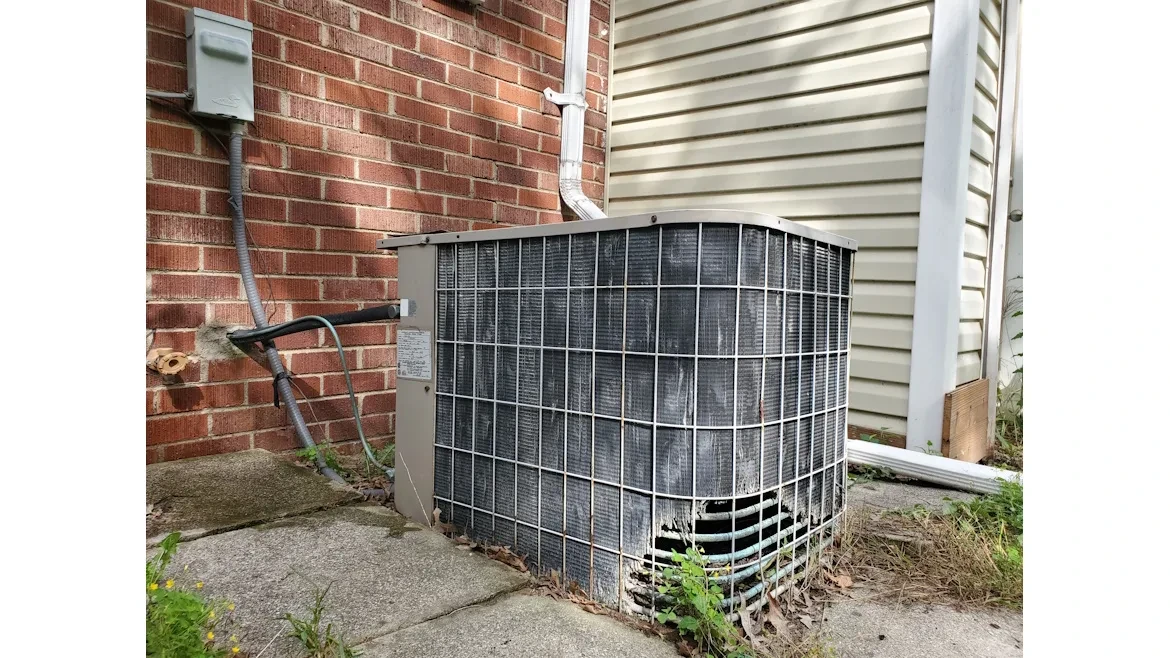
The longevity of modern home appliances has long been a subject of consumer skepticism and debate, but nowhere is this tension more palpable than in the realm of heating, ventilation, and air conditioning (HVAC) systems. Recently, a viral Reddit post picked up by Yahoo Shopping brought this exact issue into the national spotlight: a homeowner was struggling to find a contractor willing to service a functioning 1987 air conditioning condenser. Approaching its fourth decade of operation, the unit sparked a broader industry conversation about the threshold of obsolescence.
At its core, the dilemma pits the consumer’s desire to squeeze every last drop of utility out of an existing investment against the technician’s professional liability, safety concerns, and economic reality. While a 39-year-old air conditioner is an extreme statistical outlier, it raises fundamental questions for property owners across the country. Namely, if an old machine still produces cold air, does it automatically deserve to be retired?
According to leading industry veterans, the answer is not a simple yes or no. The debate over whether to repair or replace an aging HVAC system involves navigating a complex matrix of mechanical condition, replacement part availability, skyrocketing energy inefficiencies, environmental regulations regarding refrigerants, and legal liability. While some predatory contractors push for premature replacements—sometimes targeting units barely a decade old—reputable HVAC professionals emphasize that age is merely one data point in a much larger equation. However, as systems creep past the 15-, 20-, and 30-year marks, the calculus shifts dramatically from simple maintenance to a high-stakes financial and safety gamble.
Chronology
To understand how the modern HVAC repair-versus-replace landscape evolved, it helps to look at the historical timeline of manufacturing standards and how the industry has transformed over the past half-century.
- The Pre-1990s Era of Over-Engineering: Systems manufactured in the 1970s and 1980s—such as the viral 1987 condenser—were built with heavy-gauge steel, simple mechanical switches, and minimal digital electronics. Because they lacked complex circuit boards and computerized diagnostics, they functioned essentially like mechanical tanks. They were straightforward to diagnose and repair, allowing many of them to easily outlive their expected 10-to-15-year lifespans.
- The Regulatory and Technological Shifts (1990s–2000s): As environmental regulations tightened—most notably the phasing out of ozone-depleting refrigerants like R-22 under the Montreal Protocol—the manufacturing of HVAC units shifted. Systems began incorporating more complex electronics, higher-efficiency scroll compressors, and stricter energy efficiency mandates (SEER ratings). While these innovations drastically reduced household energy consumption, they also introduced components with shorter lifespans and higher sensitivity to power surges and wear-and-tear.
- The Modern "Disposable" Appliance Market (2010s–Present): Modern HVAC units are engineered for high efficiency, often utilizing lightweight metals and advanced circuitry. While a well-maintained modern system can comfortably reach 15 to 20 years, the industry has seen an influx of aggressive sales tactics. Some firms began pushing blanket replacement policies for units hitting the 10-year mark, breeding deep consumer distrust.
- The Present Day: The modern era is defined by supply chain hurdles, rising equipment costs, and a cultural clash between consumers who suspect contractors of upselling and technicians trying to balance affordable customer solutions with strict liability safeguards. Viral social media stories—like the 39-year-old condenser debate—frequently capture this friction, forcing the industry to publicly address the grey areas of equipment longevity.
Supporting Data
Behind every HVAC service call lies a trove of technical data, financial metrics, and operational realities that dictate whether a repair is economically viable.
Industry standards typically peg the average lifespan of a residential air conditioner or heat pump at 10 to 15 years, depending heavily on geographic location, run-time hours, and maintenance history. Furnaces and boilers often enjoy a longer lifespan, sometimes stretching to 20 or 25 years. However, these figures are baselines, not expiration dates.
- The Maintenance Factor: Data from seasoned field technicians reveals that a meticulously maintained 35-year-old system—one that has enjoyed annual coil cleanings, filter changes, and electrical checks—can operate with surprising reliability. Conversely, a neglected 10-year-old system suffering from a failing compressor and choked airflow may be a lost cause.
- The Cost of Obsolete Refrigerants: One of the most significant financial pressures on aging air conditioners is the phase-out of R-22 (commonly known by the brand name Freon). Because the production and import of R-22 have been banned in the United States, remaining supplies command a premium price. Sinking $1,500 to $2,000 into recharging a leaking R-22 system is rarely a sound financial investment, as the refrigerant will likely leak out again, rendering the expense a total loss.
- The Cumulative Component Trap: When an aging system breaks down, homeowners frequently evaluate the repair in isolation—asking whether a $500 fix is worth it to restore cooling. HVAC professionals, however, look at the "companion components." If a contractor replaces a fan motor on a 30-year-old unit, the capacitors, wiring, contactors, and compressor sitting right next to that new part are equally aged. The statistical probability of a secondary failure shortly after a major repair is exceptionally high.
Official Responses
Industry leaders and operations managers on the front lines of residential service have weighed in heavily on the operational philosophies guiding modern service calls.
Ryan Otto, operations manager at No Problem Heating and Cooling in St. Peters, Missouri, emphasizes that condition supersedes calendar age.
"There’s not a hard calendar cutoff," Otto explains. "A 35-year-old well-maintained system is much different than a 10-year-old system that’s never been maintained and the compressor is failing. We’ve had systems that were 35 years old, and they were immaculately maintained. Changed filters, had maintenance every year, and that thing was still running strong and still efficient."
Otto notes that while older systems were mechanically simple to fix, the tipping point arrives when replacement parts become obsolete, or when the cost of frequent repairs eclipses the price of a brand-new, highly efficient installation. Furthermore, he addresses the emotional barrier of purchasing a new HVAC system: "There’s not one person that I’ve ever gone to their house like, ‘Hey, I just bought a new HVAC system. Let’s go around the side of the house. I want you to check out my new Trane. This sucker’s humming.’ That doesn’t happen."
Denny Turlin, a sales engineer at Welsch Heating & Cooling in St. Louis, Missouri—a company with over 131 years in business—shares a similar pragmatic outlook. Turlin once serviced a hot-water boiler in a historic St. Louis home dating back to the 1800s that was still chugging along.
"I don’t believe there is an ‘automatic’ age at which every system should be replaced," Turlin states.
However, Turlin notes that the conversation shifts fundamentally once equipment crosses the 15-year threshold, particularly if it requires extensive rehabilitation. At that stage, contractors must weigh equipment age, overall condition, refrigerant type, historical repair frequency, energy efficiency, and current parts availability.
To protect both the consumer and the business when working on geriatric equipment, companies like Welsch utilize rigorous documentation. Butch Welsch, company owner, shares an instance where a client planning to move within two years opted to replace only a failing compressor rather than the entire system to save upfront capital.
"We didn’t want the new owner come back to us and say, ‘Well, why didn’t you replace the unit? That would have been the smarter thing to do,’" Welsch explains. "So we made him sign a document that said we recommended replacing the whole unit, but understood that… you didn’t want to put that much money into it, and we’ll go along with it. Now it’s in writing."
Implications
The friction between homeowners seeking low-cost band-aid repairs and contractors evaluating long-term systemic reliability has profound implications for the HVAC industry, consumer safety, and household economics.
1. Combating Consumer Skepticism
The perception that HVAC contractors are predatory salespeople pushing unnecessary replacements is a significant hurdle. Because predatory companies do occasionally exploit uninformed consumers by declaring 10-year-old units "dead," ethical contractors must work twice as hard to build trust. Transparent communication—providing clients with clear dual estimates (the cost of the immediate repair versus the long-term cost of ownership for a new system)—is becoming the gold standard of customer service.
2. The Boundaries of Liability and Safety
Perhaps the most critical implication of servicing ultra-old equipment is safety. While a homeowner may be willing to take a financial gamble to "just make it through one more summer," safety hazards—such as cracked heat exchangers leaking carbon monoxide, severe electrical faults, or compromised water containment—are non-negotiable.
Reputable technicians draw a hard ethical line here. As Ryan Otto points out, walking away from a lucrative repair job is sometimes necessary when a workaround compromises home safety:
"Yes, I may be able to jump this wire out and do that and do this, but… your safety is way more important than your money. And if we don’t agree on that, that’s perfectly fine."
Technicians carry the mental and legal burden of liability; nobody wants to stand before a judge answering for a catastrophic fire or gas leak caused by a jury-rigged, decades-old appliance they chose to keep alive.
3. The Future of Sustainable Home Comfort
As energy codes tighten and smart thermostats become ubiquitous, the gap in efficiency between a 1980s fossil-fuel-guzzling or high-amperage cooling system and a modern variable-speed inverter system grows wider. While keeping a vintage machine running has a certain romantic appeal and keeps hardware out of landfills in the short term, the cumulative energy waste and environmental toll of obsolete refrigerants mean that retirement is ultimately inevitable for every machine.
Ultimately, the lesson of the 39-year-old air conditioner is one of balance. Age is not an immediate death sentence, but ignoring the convergence of safety, economics, and mechanical decay is a dangerous game. The role of the modern contractor is not to dictate choices to the homeowner, but to illuminate the path forward with unvarnished facts—leaving the final decision safely in the hands of the consumer.
