

By Mike Sorrentino
Senior Editor, Mobile
Main Facts: What the Pixel 11A Leaks Reveal
Google’s next-generation budget-friendly smartphone, tentatively dubbed the Pixel 11A, has broken cover in an extensive early leak. Detailed digital renders published collaboratively by industry insiders Android Headlines and tipster OnLeaks offer a comprehensive first look at the device, pointing to a continuation of Google’s minimalist design philosophy alongside a significant, generation-leaping internal upgrade.
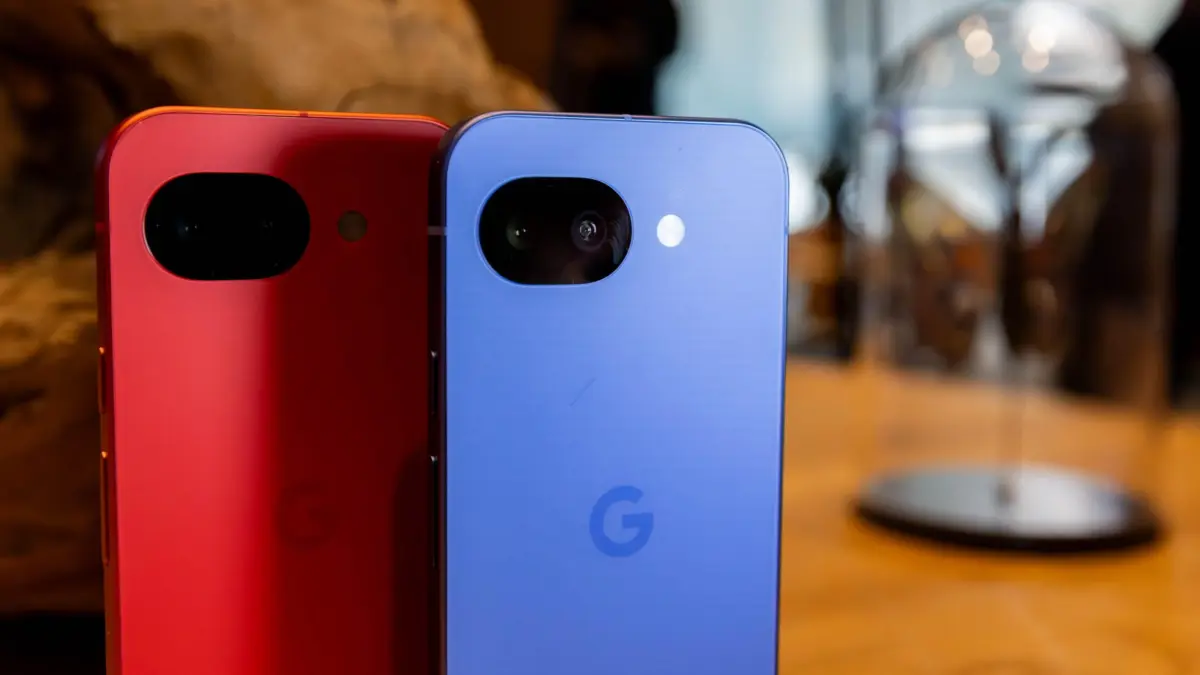
According to the leaked material, the Pixel 11A will maintain the simple, flat chassis aesthetic popularized by its predecessor, the $499 Pixel 10A, complete with the clean, flush back panel that lacks a traditional protruding camera bump. However, the most immediately striking visual update is the introduction of a vibrant new purple colorway. This hue will join a refreshed palette featuring classic black, silver, and green variants. As is standard practice for the tech giant’s marketing division, these utilitarian color descriptions will likely be swapped out closer to launch for whimsical, artsy monikers.
Beneath the familiar exterior, however, lies the real story. Rumors indicate that the Pixel 11A is slated to pack Google’s powerhouse Tensor G6 processor—the exact same silicon driving the premium $899 Pixel 11. If accurate, this represents a major philosophical shift for Google’s A-series lineup.
Historically, Google’s budget models have lagged a generation behind their flagship counterparts in processing power. For instance, the Pixel 10A utilized the Tensor G4 chip, matching the older Pixel 9 series rather than contemporary flagships. While devices like the Pixel 10A routinely punch above their weight class thanks to stellar software optimization and class-leading camera capabilities, they historically miss out on high-end hardware-dependent features—such as advanced contextual AI tools like "Magic Cue." Arming the Pixel 11A with the Tensor G6 could bridge this capability gap, bringing top-tier computational photography and advanced machine-learning capabilities to a much wider consumer base.
Chronology: The Timeline of Google’s A-Series Evolution and the Road to the 11A
To understand the significance of the Pixel 11A leaks, it is helpful to look back at how Google’s budget strategy has evolved, and project where the roadmap leads over the coming months.
- The Mid-Range Foundation (Pixel 7A through 9A): For years, Google successfully captured the mid-range smartphone market by offering flagship-tier cameras and clean Android software at a reliable $499 price ceiling. However, these devices consistently compromised on raw processing power, utilizing slightly older chipsets to cut manufacturing costs.
- The Pixel 10A Era (February): Google officially announced the Pixel 10A early in the year, maintaining the $499 price point while offering incredible value. Despite running on the Tensor G4 processor, it became celebrated as one of the best value-for-money camera phones on the market, though tech critics noted its exclusion of cutting-edge AI features exclusive to the newer Pixel 10 ecosystem.
- Late Fall (The Current Leak): In a surprise early appearance, marketing renders of the Pixel 11A surface via Android Headlines and OnLeaks, revealing the new purple finish, flat design continuity, and unexpected rumors of a Tensor G6 inclusion.
- The Months Ahead (Late Winter / Early Spring): With the official unveiling likely months away—historically mirroring the February announcement window of the Pixel 10A—industry watchers will be closely monitoring supply chain leaks, regulatory filings, and official teasers from Google.
Supporting Data: Pricing Pressures, Hardware Specs, and the AI Dilemma
While the prospect of a Tensor G6-powered mid-ranger is undeniably exciting for consumers, the broader macroeconomic landscape introduces significant uncertainty regarding the Pixel 11A’s final market positioning.
The RAM Shortage and Pricing Speculation
One of the most critical variables hanging over the Pixel 11A is the ongoing global RAM shortage. Industry analysts have reported that escalating component costs—often referred to in tech circles by portmanteaus like "RAMageddon"—are driving up production expenditures across the board for both laptops and smartphones.
Historically, Google has firmly anchored the base price of its A-series phones at $499, spanning from the Pixel 7A all the way through the Pixel 10A. However, market pressures suggest this sweet spot may be difficult to maintain. It would not come as a shock to industry analysts if the Pixel 11A sees its starting price bumped up to $599, bringing it in line with inflationary adjustments seen across the broader Pixel 11 ecosystem.
Should a price hike materialize, consumer advocacy and smart purchasing strategies will hinge on how Google structures its storage tiers. If the company follows the blueprint set by the base Pixel 11—which eliminated the entry-level 128GB model in favor of a 256GB baseline at $599—the higher cost of the Pixel 11A could be partially offset by double the baseline storage capacity, echoing the configuration philosophy of the current Pixel 10A.

Processor Parity vs. Feature Differentiation
Historically, locking A-series phones to older processors allowed Google to maintain a healthy profit margin while protecting the value proposition of its more expensive flagship devices. If the Pixel 11A truly debuts with the Tensor G6, Google will have to find new ways to differentiate its $899 flagship from its $599 (or $499) mid-range alternative.
This differentiation will likely manifest in secondary hardware choices rather than raw compute power:
- Build Materials: While the Pixel 11A retains a clean, flat design, it will likely continue using composite back panels or matte plastic frames rather than the premium polished aluminum and glass sandwiches found on the standard and Pro flagships.
- Display Technology: Expect lower peak brightness levels, standard (rather than adaptive high-refresh-rate) panel technology, or thicker bezels to keep display manufacturing costs down.
- Camera Hardware: While image processing will benefit immensely from the Tensor G6, physical camera sensors (such as ultrawide and telephoto lenses) will likely remain scaled back compared to the flagship Pixel 11.
Official Responses and Industry Silence
As is standard corporate policy regarding unreleased hardware, Google has remained tight-lipped about the leak. When contacted for comment regarding the authenticity of the Android Headlines and OnLeaks renders, as well as the rumored inclusion of the Tensor G6 processor, representatives for Google did not immediately respond.
Supply chain sources and case manufacturers, however, often treat leaks of this nature as high-confidence blueprints. Because third-party accessory makers require precise dimensional data to manufacture cases ahead of a device’s commercial release, leaks originating from CAD renders (like those from OnLeaks) historically boast an exceptionally high accuracy rate regarding physical dimensions, button placements, and port layouts.
Implications: What the Pixel 11A Means for the Mid-Range Smartphone Market
If the leaked details surrounding the Pixel 11A prove accurate, Google is preparing to aggressively redefine what consumers should expect from a mid-range smartphone.
1. Democratizing High-End AI and Processing
For years, buying a budget phone meant accepting performance compromises that became apparent within 12 to 18 months of purchase. By equipping the Pixel 11A with the Tensor G6—the exact same silicon powering its top-tier flagship—Google is future-proofing its budget lineup. More importantly, it ensures that cutting-edge on-device machine learning, voice processing, and computational photography features are no longer walled off behind an $800+ paywall. This move could force competitors like Samsung and Apple to rethink how they handle hardware trickle-down in their own respective Galaxy A and iPhone SE product lines.
2. The Risk of Alienating Budget-Conscious Buyers
Conversely, the potential price creep up to $599 presents a distinct marketing challenge. The $499 price point has been sacred ground for budget shoppers looking for premium features without breaking the bank. If inflation and component shortages force Google to abandon the sub-$500 category for its primary A-series offering, it risks ceding the true budget segment to aggressive Chinese manufacturers and lower-priced competitors.
3. Design Consistency as a Brand Identity
By sticking with the flat, bump-free design language established by the Pixel 10A, Google is doubling down on a cohesive aesthetic across its ecosystem. A flush camera bar not only makes the device less prone to wobbling when resting on flat surfaces, but it also establishes an instantly recognizable visual identity for Google’s hardware family—one that prioritizes ergonomic simplicity over aggressive, camera-centric industrial design.
As we look ahead to the official unveiling—likely arriving in the late winter or early spring—the Pixel 11A is shaping up to be one of the most compelling tech releases on the horizon. Whether it lands at $499 with clever cost-cuts or steps up to $599 with a massive influx of flagship power, Google’s next-generation budget contender is poised to shake up the mid-range market once again.
