

In the high-stakes world of real estate investing, the fear of purchasing a "money pit" keeps countless aspiring buyers on the sidelines for years. Newcomers are routinely warned away from distressed properties, non-paying occupants, and structural nightmares. Yet, for every cautionary tale, there is an exception that proves the rule: a first deal does not have to be pristine to launch a lasting portfolio.
Joshua Settimio’s journey from scrubbing million-dollar beach rentals in high school to managing a portfolio of roughly 70 properties across four partnerships serves as a masterclass in resourcefulness. Featured on a recent episode of the Real Estate Rookie podcast hosted by Ashley Kehr and Tony J. Robinson, Settimio revealed how an unbankable start, a termite-infested 1930s home, and an unyielding tenant transformed him from a rookie into a seasoned multi-family operator.
Chronology of a Rookie Journey
The Early Foundation: Proximity and Perspective
Settimio’s introduction to real estate began long before he ever purchased a property. Growing up in the Gulf Shores, he worked a high school beach service job, setting up umbrellas and cleaning luxury rental homes. While scrubbing HVAC vents with bleach, he observed the lifestyle of the property owner—a man who traded traditional career paths for the financial freedom and flexibility afforded by real estate.
Later, after moving to Arkansas to play college football on a full-tuition scholarship that he negotiated himself, Settimio faced a major pivot point following an athletic injury. Seeking direction, he secured an internship at a local apartment complex simply by walking up to a property manager he had met while landscaping.
"I didn’t know what I didn’t know," Settimio reflected on the experience. "I just called him and asked if I could follow him around, shadow him, and help with anything he needed."
This willingness to manufacture opportunities through direct outreach laid the groundwork for his transition into real estate. Graduating early, Settimio earned his real estate license in late 2019 and immersed himself in a top-performing brokerage surrounded by mentors who were seasoned investors.
The Ultimate Test: The $38,000 "Money Pit"
Armed with a real estate license and a front-row seat to the industry, Settimio set his sights on buying his first rental property. However, early career hurdles quickly blocked his path. With only six months of work history as a 1099 real estate agent, traditional commercial lenders repeatedly turned him down for financing.
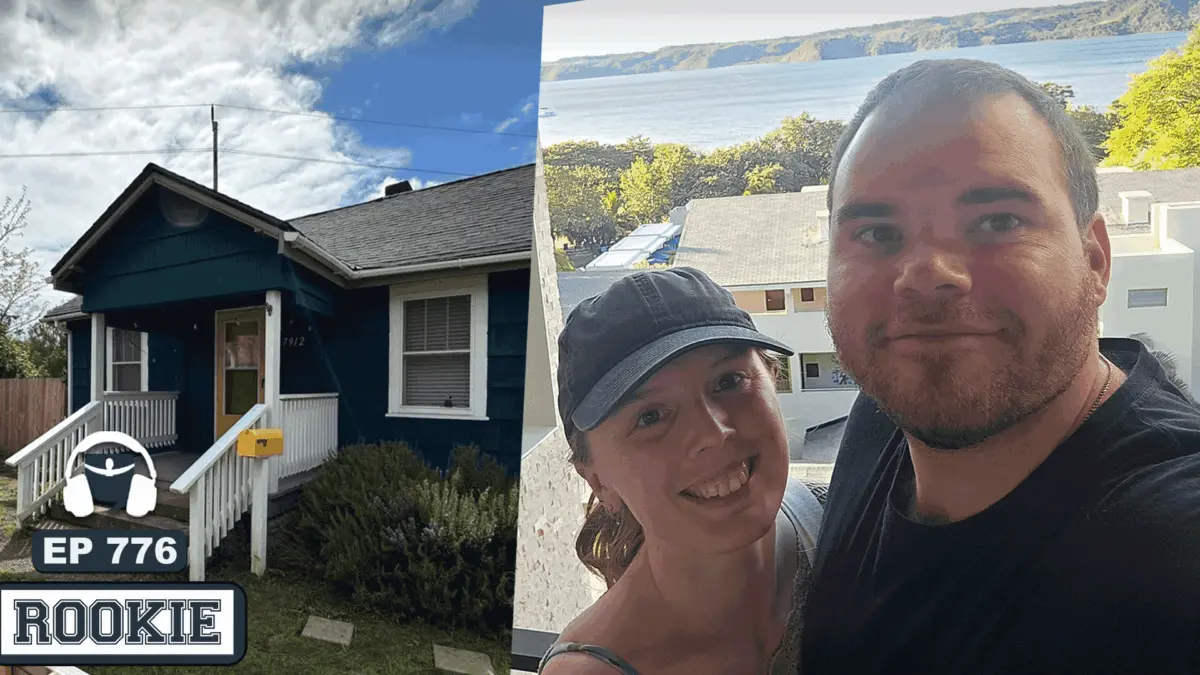
Undeterred, Settimio leveraged his network within his brokerage to uncover an off-market opportunity. A fellow agent was listing a property for an owner who was at his wit’s end: a 1,100-square-foot house in Batesville, Arkansas, purchased for $38,000, which came complete with severe termite damage and a tenant who had not paid rent in over a year.
Recognizing that conventional bank financing was off the table, Settimio pursued seller financing. Because the owner had not seen a dime from the property in 18 months, the proposition of receiving monthly payments through a structured seller-financed agreement proved mutually beneficial. With minimal due diligence—a single rapid walkthrough without a formal inspector or contractor—Settimio signed the deal.
Navigating the Trench Work
The reality of the investment quickly set in. The tenant, despite initial verbal agreements to resume paying rent once repairs began, continued to withhold payments. Realizing he needed to establish firm boundaries between empathy and business operations, Settimio served a three-day notice to quit, followed by planning an unlawful detainer (eviction) action.
Operating without legal counsel—largely due to local legal unfamiliarity with the process during the peak of COVID-19—Settimio’s firm stance prompted the tenant to vacate the property peacefully before formal court proceedings concluded.
Once vacant, the true scale of the distress was revealed. The house required a complete gutting of its subfloors due to rotting floor joists, extensive termite remediation, and a ground clearance of only 12 inches beneath the structure. Working alongside his wife, Kayla, Settimio spent evenings manually digging out dirt to increase crawlspace clearance, hauling out debris, and executing DIY repairs over an agonizing 8-to-12-month period.
Supporting Data and Financial Strategies
Settimio’s turnaround strategy relied heavily on unconventional financing pivots, creative debt management, and bootstrapping.
- Initial Purchase Price: $38,000 for a 2-bedroom, 1-bath home in Batesville, Arkansas.
- Monthly Seller-Financed Payment: Approximately $390 per month (before insurance), which Settimio aggressively paid down bi-weekly by rounding up his payments.
- Termite Remediation Cost: $1,500 to $1,800 for active treatment, supplemented by manual excavation to raise crawlspace clearance from 12 inches to 24 inches, lowering annual maintenance contract costs significantly.
- The Breakthrough Refinance: After being rejected by multiple banks, Settimio secured a meeting with the largest local bank in his area armed with a detailed business plan and scope of work.
- As-Completed Appraisal: The bank utilized an "as-completed" appraisal, which valued the fully renovated property at $86,000.
- Leveraging Equity: Following the refinance, Settimio owed roughly $46,000 to $48,000, secured a new monthly rent of $850, and opened a line of credit using the property’s usable equity. This capital directly funded the down payment for his subsequent real estate acquisitions.
Official Perspectives and Industry Insights
Reflecting on the psychological and tactical challenges of breaking into real estate, podcast hosts Ashley Kehr and Tony J. Robinson emphasized the universal nature of rookie anxieties.
"Most rookies are afraid their first purchase will become a money pit," Kehr noted, highlighting how Settimio’s resilience through an eight-month vacancy and extensive structural repairs ultimately unlocked the equity needed to fuel his expansion.
Robinson pointed out the critical lesson regarding lender persistence: "If someone would’ve stopped at lender number one, or lender number five, or lender number ten… they maybe never would’ve even become real estate investors. But because you kept going, you were able to make that connection."
Settimio echoed this sentiment, referencing a baseball analogy shared by one of his mentors: "The best players in that sport hit the ball one-third of the time. You don’t have to be perfect." His journey underscored that real estate education often comes at a financial cost comparable to—or cheaper than—student loans, functioning primarily as a vehicle for experiential learning.
Implications for the Modern Rookie Investor
Settimio’s trajectory offers several profound takeaways for individuals looking to build a rental portfolio in a competitive or high-rate economic environment:
- Proximity Trumps Isolation: By surrounding himself with experienced brokers, property managers, and active investors, Settimio absorbed complex operational knowledge organically, avoiding the proverbial "island" feeling common among beginners.
- Creative Financing Solves Unbankable Deals: Traditional W-2 or short-term 1099 income histories frequently disqualify rookies from commercial loans. Seller financing and structured private agreements provide viable alternative pathways into ownership.
- The Power of the As-Completed Appraisal: For distressed properties requiring heavy rehab, an as-completed appraisal allows lenders to evaluate future value rather than current disrepair, unlocking capital that standard valuations deny.
- Balancing Empathy and Boundaries: Property management requires separating human compassion from strict legal enforcement. Recognizing when a tenant’s personal struggles cross the line into financial default is essential for business survival.
Today, Settimio’s ambitions have scaled far beyond single-family homes. Preparing to close on a 20-unit former motel in a regional lake town—his largest solo acquisition to date—he proves that a rough, error-filled first deal is not a permanent roadblock, but rather the essential foundation for long-term portfolio growth.
