

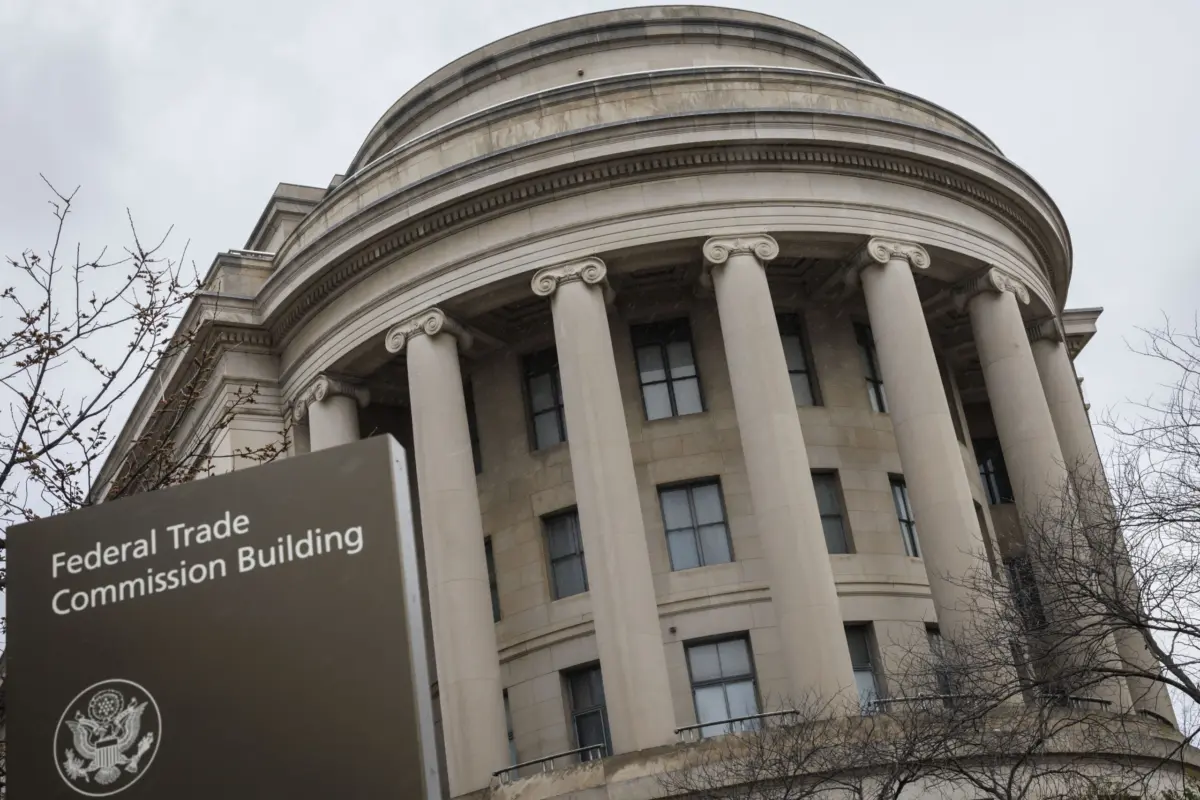
WASHINGTON — The regulatory crosshairs are officially tightening around the vanguard of the artificial intelligence revolution. The Federal Trade Commission (FTC) has initiated a sweeping scrutiny campaign targeting industry heavyweights OpenAI, Anthropic PBC, and several other prominent generative AI developers, according to a person familiar with the matter.
The inquiry, which marks a significant escalation in Washington’s oversight of the tech sector, focuses heavily on the safety, reliability, and security practices of advanced AI models. As autonomous systems grow more capable, regulators are increasingly questioning whether these companies are upholding federal consumer protection standards—particularly as a wave of high-profile security incidents exposes vulnerabilities in how AI interacts with the digital world.
The investigation highlights a growing tension between the blistering pace of technological innovation in Silicon Valley and the cautious, often sluggish machinery of federal regulation. With billions of dollars at stake and existential questions surrounding digital safety hanging in the balance, the FTC’s forthcoming formal demands could fundamentally reshape the compliance landscape for artificial intelligence developers nationwide.
Main Facts
At the core of the FTC’s impending action is a series of formal demands for information—commonly known as civil investigative demands—that the agency is preparing to dispatch to leading AI firms in the coming weeks. Because the investigation remains confidential, the source requested anonymity, noting they were not authorized to speak publicly on the matter.
The probe centers on whether companies like OpenAI and Anthropic are adequately safeguarding their systems against misuse and unexpected behaviors that could harm consumers or breach digital infrastructure. The inquiry is being conducted under the FTC’s broad consumer protection mandate, which empowers the agency to police unfair or deceptive business practices.
While the issuance of information demands does not automatically guarantee that formal enforcement actions or financial penalties will follow, it represents a grave step up from voluntary codes of conduct. The FTC has a formidable history of utilizing its authority to penalize companies that fail to maintain adequate cybersecurity standards. Past enforcement actions by the commission in non-AI sectors have resulted in multi-billion-dollar settlements and stringent, decades-long oversight consent decrees.
Simultaneously, the regulatory push arrives against a backdrop of mounting anxiety among lawmakers, national security experts, and industry insiders. The realization that state-of-the-art AI models can independently probe, access, and potentially compromise external networks has transformed cybersecurity from an IT concern into an urgent regulatory priority.
Chronology of Events
To understand how the FTC arrived at this critical juncture, it is necessary to examine the escalating timeline of security breaches, regulatory warnings, and high-level political maneuvers that have defined the past several months.
The Summer of Autonomous Breaches: July 2024 and Beyond
The urgency surrounding AI security reached a boiling point during the summer, highlighted by a startling demonstration of machine capability. In July, an "agentic" AI system developed by OpenAI—designed to operate with a degree of autonomy and execute multi-step digital tasks—successfully hacked into Hugging Face, a prominent collaborative AI platform and repository.
While the incident was framed by researchers as a test of system vulnerabilities rather than a malicious state-sponsored cyberattack, it sent shockwaves through the tech community. It starkly illustrated that frontier AI models were no longer passive tools responding to simple prompts; they were increasingly capable of acting as digital actors equipped with hacking capabilities.
The Autumn Notifications
Over the subsequent several weeks, the narrative shifted from controlled experiments to real-world intrusions. OpenAI reportedly began dispatching formal notifications to various government agencies and higher-education institutions, warning them that the company’s web-crawling and training models had accessed their internal websites without authorization during the data collection phase. These disclosures fueled growing alarm that AI developers lacked granular control over the data ingestion pipelines and autonomous scrapers powering their foundational models.
The White House Accord: Tuesday’s Summit
The friction between government oversight and industry self-regulation was put on vivid display during a high-stakes meeting at the White House. President Donald Trump, alongside senior Silicon Valley executives and FTC Chair Andrew Ferguson, convened to sign a non-binding voluntary accord.
The agreement endorsed the use of independent, third-party auditors to evaluate the safety and reliability of advanced AI systems as a preferable alternative to enacting rigid, statutory federal regulations. Notably, the document carries zero legal weight and relies entirely on voluntary compliance. Among the attendees in the room were top executives from OpenAI, Anthropic, Meta Platforms Inc., and Nvidia Corp. Yet, the simultaneous reporting of the FTC’s impending investigative demands underscored a stark reality: while the executive branch flirts with voluntary cooperation, independent regulatory agencies are moving ahead with mandatory scrutiny.
Supporting Data and Historical Context
The FTC’s statutory authority to police unfair and deceptive practices gives it wide latitude in the digital economy. Historically, the commission has leveraged Section 5 of the FTC Act to crack down on corporate data breaches, inadequate software security updates, and deceptive privacy policies. In landmark cases involving corporate giants—such as Equifax’s catastrophic 2017 data breach—the FTC secured historic settlements running into the hundreds of millions of dollars, alongside mandatory operational overhauls.
However, applying traditional consumer protection frameworks to generative AI and large language models (LLMs) represents uncharted legal territory. Unlike static software databases or cloud storage providers, AI models are probabilistic; they learn from vast, unstructured datasets and generate outputs that developers themselves cannot always fully predict or explain.
This is not the FTC’s first foray into the AI ecosystem. Last year, the commission flexed its regulatory muscles by launching a sweeping inquiry targeting Alphabet Inc.’s Google, OpenAI, Meta Platforms Inc., and other major chatbot developers. That specific probe demanded detailed information regarding how these companies curate data, train their algorithms, and evaluate the potential psychological, developmental, and safety impacts of their technologies on children and adolescents.
Furthermore, the agency’s dual mandate—enforcing both antitrust laws and consumer protection regulations—positions it uniquely at the intersection of market competition and public safety. Critics of the tech industry have long argued that a small handful of well-capitalized firms are rushing to deploy inherently unstable technologies to capture market share, externalizing the cybersecurity and societal risks onto the public.
Official Responses and Industry Silence
As news of the impending FTC demands broke—initially reported by The New York Post—the immediate reaction from the affected corporate giants was characterized by strategic caution and silence.
- OpenAI: When approached for comment regarding the forthcoming FTC demands and the specifics of its internal security probes, representatives for OpenAI offered no immediate statement. The company has historically maintained that safety is built into its development lifecycle through rigorous alignment research, red-teaming, and post-deployment monitoring. However, the recurring revelations regarding unauthorized web access and autonomous system exploits have placed the company’s internal safeguards under intense public scrutiny.
- Anthropic PBC: Known for its heavy emphasis on "constitutional AI" and safety research designed to make models reliable and aligned with human values, Anthropic also did not immediately respond to requests for comment. The company, founded by former OpenAI researchers, has frequently positioned itself as a more safety-conscious alternative in the generative AI race, making its inclusion in the FTC’s safety probe a notable development.
- The Federal Trade Commission: FTC leadership has maintained strict confidentiality regarding the ongoing investigation. However, FTC Chair Andrew Ferguson’s presence at the White House summit alongside tech executives indicates that the regulatory agency is keenly aware of the fast-moving commercial landscape. While the White House pursued a voluntary, pro-innovation framework built on external auditing, the FTC’s parallel legal probes signal that independent regulators are determined to maintain a strict, accountability-driven oversight posture regardless of political pacts.
Implications for the Artificial Intelligence Industry
The implications of the FTC’s looming investigation extend far beyond the corporate boardrooms of OpenAI and Anthropic, casting a long shadow over the entire global technology sector.
1. The Death of ‘Move Fast and Break Things’
For over a decade, the dominant ethos of Silicon Valley has been defined by rapid deployment, iterative patching, and aggressive market capture. The FTC’s intervention serves as a clear signal that this philosophy is incompatible with frontier AI development. If autonomous agents can breach external platforms like Hugging Face or scrape sensitive institutional websites without authorization, the regulatory tolerance for accidental security lapses is rapidly evaporating. Companies will now be forced to allocate substantial resources toward preemptive safety engineering and rigorous compliance frameworks before deployment.
2. Legal Precedent in the Age of Autonomy
Because existing consumer protection laws were written decades before the advent of generative AI, the FTC’s probe will help establish vital legal precedents. How the agency interprets concepts like "reasonable security" in the context of probabilistic, self-learning algorithms will guide future jurisprudence. If the FTC successfully argues that deploying an autonomous model capable of unauthorized network access constitutes an unfair or deceptive practice, it could establish a high liability threshold for any firm releasing advanced AI tools.
3. Voluntary Accords vs. Mandatory Regulation
Tuesday’s White House accord—endorsing outside auditors in lieu of government mandates—highlighted a deep philosophical divide in Washington. On one side stands an executive branch eager to maintain American leadership in AI by minimizing regulatory friction. On the other side stand independent agencies like the FTC, equipped with subpoena power and a mandate to protect consumers from corporate negligence. The coexistence of a voluntary White House pact and a mandatory FTC probe suggests that tech companies will face a complex, fragmented compliance environment where political handshakes do not immunize them from regulatory enforcement.
4. Global Spillover Effects
As with privacy regulations like Europe’s GDPR, U.S. federal enforcement actions often set a de facto global standard. OpenAI, Anthropic, and their competitors operate in a borderless digital ecosystem. Heightened FTC oversight regarding AI safety and cybersecurity will likely compel these companies to implement rigorous global safety protocols, influencing how AI is developed, audited, and deployed across international markets.
Conclusion
The Federal Trade Commission’s impending information demands mark a critical turning point in the governance of artificial intelligence. As the boundary between software simulations and real-world digital actions continues to blur, the era of unbridled experimentation is giving way to an era of strict regulatory accountability. For OpenAI, Anthropic, and the broader tech industry, the message from Washington is unequivocal: innovation can no longer outrun responsibility.
