

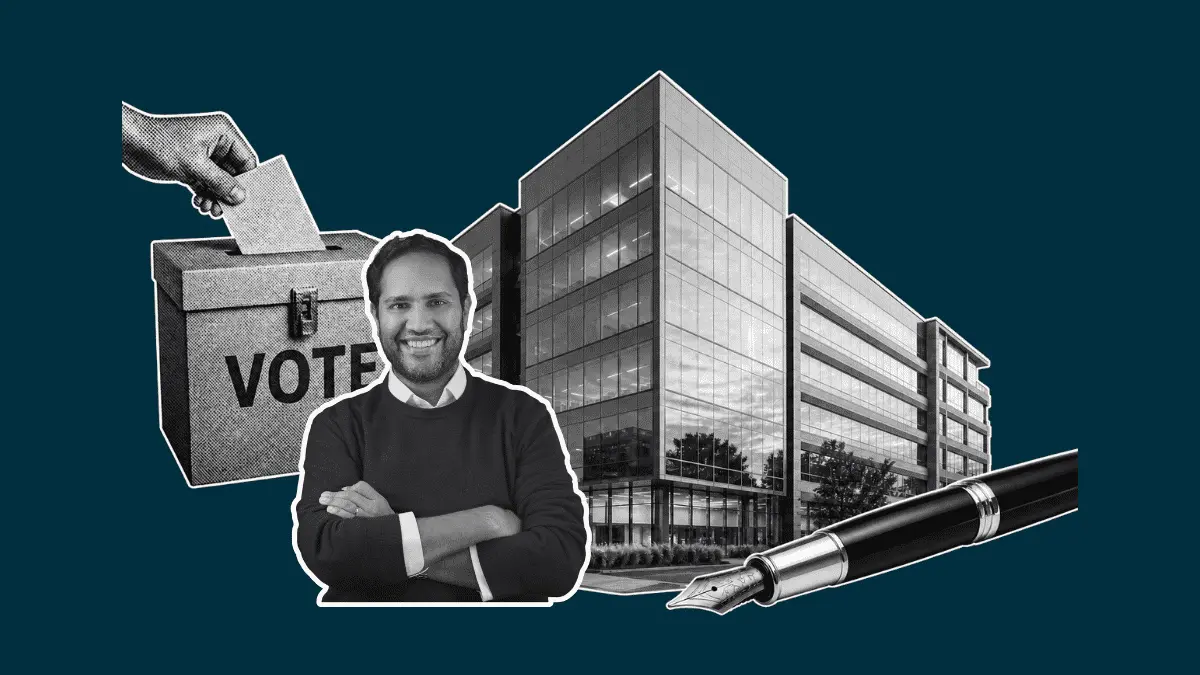
NEW YORK — In a rare and hard-fought corporate showdown that shattered conventional Wall Street expectations, Vishal Garg has successfully mounted one of the most dramatic comebacks in recent financial history. The founder of Better Home & Finance Holding Co. announced Monday that independent election inspectors officially certified shareholder votes backing his campaign to oust five members of the company’s board of directors.
The certification brings a decisive close to a bitter, two-month leadership struggle that pitted the company’s polarizing founder against an entrenched board. With shareholders representing 52.02% of Better’s outstanding voting power casting ballots in his favor, Garg has not only reclaimed his foothold in the company he founded but has fundamentally reshaped its governance structure, clearing the path for his self-described "Better 2.0" strategic roadmap.
The announcement came on the same day Better officially dropped its challenge against Garg’s consent solicitation, effectively waving the white flag and acknowledging the overwhelming mandate delivered by its investor base.
Main Facts of the Corporate Takeover
The certified vote count spells immediate doom for the targeted members of Better’s previous administration. Shareholders successfully voted to remove:
- Harit Talwar, Chairman of the Board
- Daniel Lewis, Interim Chief Executive Officer
- Arnaud Massenet, Director
- Bhaskar Menon, Director
- Prabhu Narasimhan, Director
With these departures, the Better board has been significantly downsized from nine seats to five. Garg stands as the sole surviving incumbent director from the previous regime. To fill the four vacant seats, Garg appointed prominent technology and finance figures, alongside two internal Better employees whose identities remain undisclosed.
The newly constituted board wasted no time executing structural changes designed to strip away defenses erected by the previous administration. According to the release, the board has taken immediate steps to:
- Abolish the "Poison Pill": Dismantle Better’s stockholder rights plan, which was originally implemented to ward off hostile takeovers or concentrated voting power.
- Halt Litigation: Dismiss all pending legal actions initiated by the company against Garg in the U.S. District Court for the Southern District of New York.
- Appoint Leadership: Identify a candidate for interim CEO, with final documentation and an official announcement expected imminently.
Chronology of the Dispute: From Ouster to Redemption
To fully understand the gravity of Monday’s announcement, one must look back at the rapid-fire deterioration and subsequent resurrection of Garg’s relationship with Better’s board.
Early August 2026: The Ouster
The crisis erupted in early August when Better’s board of directors abruptly voted to strip Garg of his title as chief executive officer. In his place, the board appointed Daniel Lewis to serve as interim CEO, signaling a desire by directors to distance the digital mortgage pioneer from Garg, whose past leadership controversies had heavily impacted the company’s public image.
Mid-August to September: Counter-Offensive and Legal Warfare
Rather than fading quietly into the background, Garg launched an aggressive counter-offensive. He retained high-powered corporate litigator Alex Spiro of the firm Quinn Emanuel to spearhead his defense and legal strategy. Simultaneously, Garg mobilized The Garg Group—a coalition of sympathetic investors—to launch a consent solicitation campaign aimed directly at stripping the board of its governing majority.
The battle quickly escalated into a courtroom drama, with Better filing lawsuits against Garg in the Southern District of New York in an effort to block his maneuverings and defend its leadership structure. Throughout August and September, Wall Street analysts watched closely, largely writing off Garg’s chances given the formidable legal and procedural hurdles facing hostile proxy challenges against public boards.
Late September to Monday: Capitulation and Certification
As verification of the proxy ballots progressed, it became clear that Garg was commanding substantial support from the shareholder base. Facing an inevitable mathematical defeat, Better’s board capitulated on Monday, dropping its formal challenge to the consent solicitation. Shortly thereafter, the independent election inspector certified that 52.02% of the company’s voting power had backed the ouster, sealing Garg’s historic return.
Supporting Data and the Odds of Success
The statistical improbability of Garg’s victory has been a central talking point for his legal and advisory teams. In corporate finance circles, proxy battles aimed at completely replacing a public company’s board are notoriously difficult to pull off, particularly when opposed by incumbent management armed with corporate defense mechanisms.
- 1.7% Success Rate: According to corporate governance data cited by Garg, only 1.7% of proxy disputes seeking to replace the board of a public company have succeeded over the past decade.
- 50-to-1 Odds: Industry metrics indicate that investors attempting to unseat an incumbent public board face roughly 50-to-1 odds against success.
- 52.02% Majority: The definitive tally demonstrated clear conviction among Better’s shareholders, securing a clean majority well above the baseline threshold required for the consent solicitation to take effect.
"In the last decade, only 1.7% of corporate proxy disputes seeking to replace the Board of a public company succeeded," Garg noted in a statement. "Overcoming 50-to-1 odds to replace a public company board is a tremendous vote of confidence from our shareholders."
Official Responses and Legal Perspectives
The unprecedented nature of the dispute drew sharp commentary from both the founder’s camp and external observers, underscoring how aggressively the narrative shifted over the course of two months.
Alex Spiro, Garg’s lead attorney from Quinn Emanuel, did not mince words regarding the historical significance of the outcome.
"No public CEO has ever been pushed out, litigated the issue, and won his way back in two months," Spiro stated. "Vishal Garg has been vindicated."
From the perspective of the incoming leadership, the focus has immediately pivoted from internal corporate warfare to operational rehabilitation. Garg emphasized that while the legal battles are winding down, the heavy lifting of corporate restructuring is only beginning.
"We recognize the significant work ahead to execute on Better 2.0, and we are committed to rebuilding trust through transparency, execution and clear results for our next 90 days ahead and beyond," Garg said.
Implications for Better’s Future: The "Better 2.0" Strategy
With control of the boardroom firmly back in his hands, Garg is wasting no time rolling out his comprehensive restructuring blueprint, dubbed "Better 2.0." The forward-looking strategy focuses heavily on aggressive cost-cutting, technological integration, and pivoting the company toward higher-margin business segments.
Key Pillars of the 90-Day Plan:
- Amplified Cost Reductions: Garg’s revised plan elevates the company’s annual cost savings target from an initial $45 million to an aggressive $60 million. To achieve this, the company will hire a specialized advisory firm to aggressively streamline day-to-day operations.
- Technological Expansion: A primary focus will be placed on scaling Better’s proprietary Tinman artificial intelligence platform, alongside efforts to finalize external partnerships to monetize the software.
- HELOC and Non-Core Asset Strategies: The company intends to aggressively expand its home equity line of credit (HELOC) lending business while actively divesting non-core assets to generate liquidity.
- Capital Return Initiatives: To appease long-suffering investors, The Garg Group is actively seeking approval for a $30 million stock buyback program aimed at bolstering share value.
- Governance and Oversight: Garg plans to serve as the head of product, platform, and innovation while the newly appointed board finalizes the search for a permanent or interim chief executive officer.
The New Board Lineup
The newly reconstructed board brings heavy-hitting technological and venture capital expertise to Better’s oversight table:
- Vishal Garg: Founder and continuing board member.
- Bing Gordon: Co-founder of Electronic Arts, former Amazon director and senior product adviser, and chief product officer/adviser at venture capital powerhouse Kleiner Perkins. Gordon brings decades of consumer technology and digital platform expertise to the table.
- Steven Sarracino: Founder of Activant Capital, a former Better investor and director whose firm has managed a $1.45 billion venture fund focused on high-growth technology enterprises.
- Two Unnamed Employee Representatives: Current Better employees selected to ensure direct internal representation on the governing body.
Conclusion: A New Chapter or Continued Turbulence?
As Vishal Garg steps back into the driver’s seat at Better Home & Finance, the broader financial community remains watchful. Defeating a sitting board of directors in a hostile proxy contest is an extraordinary feat of corporate maneuvering, but the underlying challenges that led to Garg’s initial ouster in August—ranging from market conditions in the digital mortgage sector to past governance concerns—have not vanished.
For now, Garg has claimed total victory, backed by a decisive 52.02% shareholder majority and armed with a revitalized board containing seasoned tech veterans like Bing Gordon and Steven Sarracino. Whether the aggressive cost-cutting and technological pivots of "Better 2.0" can translate into long-term stability and shareholder value will determine if this historic corporate comeback ultimately translates into enduring business success.
