

Published: October 6, 2026
Author: Joe Bousquin (Adapted and Expanded)
Main Facts
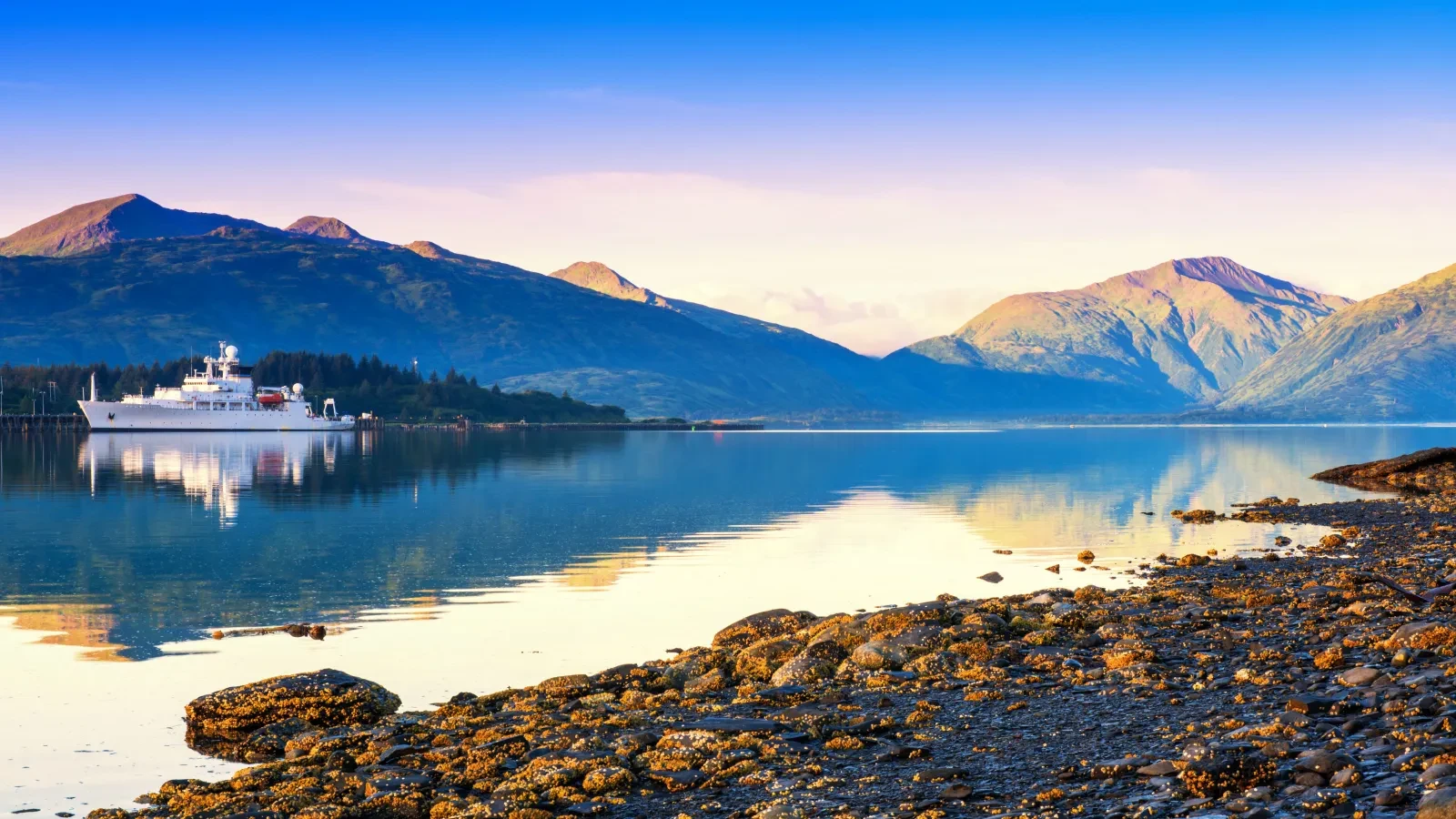
The United States Coast Guard is undergoing a sweeping modernization of its critical maritime and shore-based infrastructure, marked by the commencement of two high-profile construction projects on opposite ends of the country. Perini Management Services has officially broken ground on a comprehensive infrastructure overhaul at Base Kodiak in Alaska, while construction giant Skanska has launched the multi-year replacement and expansion of the agency’s primary homeport pier in Newport, Rhode Island.
These initiatives represent a critical pivot in how federal maritime defense and security infrastructure is maintained, upgraded, and expanded. The projects are engineered to support the Coast Guard’s next-generation fleet—most notably the new class of Offshore Patrol Cutters (OPCs)—while addressing decades of deferred maintenance, severe environmental conditions, and evolving strategic demands in the Arctic and the Atlantic seaboard.
The combined scope of these projects features heavy civil engineering, complex marine construction, environmental remediation, and advanced utility integration. Perini’s endeavor at Base Kodiak involves intricate waterfront revitalization, unexploded ordnance (UXO) removal, and modern fueling infrastructure. Simultaneously, Skanska’s project in Newport requires the complete demolition of the existing Pier 1 to make way for a state-of-the-art facility capable of concurrently berthing up to four modern offshore patrol cutters.
Chronology
The timeline of these projects reflects a coordinated effort by the Coast Guard and its private-sector partners to accelerate long-delayed upgrades through modern procurement methodologies.
The Path to Groundbreaking (2024–2026)
- Late 2024 to 2025: Strategic planning and engineering assessments identify acute infrastructure bottlenecks at both Base Kodiak and the Newport homeport, highlighting the inability of legacy facilities to safely and efficiently support modern cutters.
- December 2025: Congress passes the National Defense Authorization Act (NDAA) for Fiscal Year 2026, authorizing alternative project contracting methods—such as accelerated design-build and progressive design-build procedures—for military and defense-related construction.
- Fall 2026: Procurement and contracting hurdles are cleared under accelerated delivery frameworks, allowing both Perini Management Services and Skanska to mobilize on-site.
Execution and Project Lifecycles
- September 2026: Perini Management Services officially kicks off mobilization and early-stage construction activities at Base Kodiak, beginning with environmental assessments and preliminary site preparation.
- October 2, 2026: Skanska publicly announces the official commencement of the Newport pier replacement project, detailing the complex engineering milestones ahead.
- March 2030: Skanska’s contract in Newport, Rhode Island, is scheduled for final completion, delivering a fully modernized deep-water berthing facility.
- September 2030: Perini Management Services targets substantial completion for the extensive, multi-phased infrastructure overhaul at Base Kodiak, Alaska.
Supporting Data
The scale and financial magnitude of these projects underscore the immense capital investment required to bring the Coast Guard’s physical footprint into the mid-21st century.
- Geographic Reach: The initiatives span approximately 3,800 miles, linking the strategic high-threat, high-opportunity Arctic operating theater of Kodiak Island, Alaska, with the historic Atlantic maritime hub of Newport, Rhode Island.
- Berthing Capacity: Skanska’s new Pier 1 in Newport is explicitly designed to accommodate up to four offshore patrol cutters (OPCs) simultaneously, dramatically increasing the homeport’s throughput and logistical efficiency.
- Project Durations: Both projects operate on accelerated yet expansive timelines reflective of heavy civil and marine engineering complexities. Skanska’s Newport project has a duration of roughly 3.5 years (concluding in March 2030), while Perini’s Base Kodiak undertaking spans a four-year window (concluding in September 2030).
- Procurement Efficiency: The contracts leverage the FY2026 NDAA provisions, aligning with a broader federal trend toward Other Transaction Authority (OTA) and accelerated design-build frameworks that have been shown to shrink pre-construction phases by shifting from prescriptive scopes to solution-based bidding.
Official Responses
Representatives from the contracting firms, industry experts, and federal liaisons have emphasized the transformative nature of these awards.
In recent corporate releases and industry communications, executives from Perini Management Services highlighted the complex logistical and environmental challenges inherent to working in remote Alaskan environments. Base Kodiak—being the largest Coast Guard installation in the country—requires meticulous planning to ensure that ongoing defense missions are not disrupted by heavy construction traffic, utility overhauls, and hazardous material remediation.
Skanska echoed similar sentiments regarding the Newport homeport transformation. Company officials noted that the demolition and reconstruction of Pier 1 is not merely a concrete-and-steel exercise, but a vital link in the national security chain. By engineering a pier capable of sustaining heavy vessel loads, advanced electrical shore power, and rapid logistical replenishment, Skanska aims to future-proof the Newport facility against rising sea levels and increasingly severe coastal weather events.
Furthermore, architecture, engineering, and construction (AEC) firms such as Haskell have pointed to these projects as prime examples of a nationwide evolution in federal procurement. By utilizing performance-based criteria rather than rigid, line-item specifications, federal agencies are empowering private-sector innovators to apply cutting-edge engineering techniques directly to public infrastructure challenges.

Implications
The concurrent execution of the Base Kodiak and Newport projects carries profound strategic, economic, and operational implications for the United States Coast Guard and the broader construction industry.
Strategic and Operational Readiness
The Coast Guard is in the midst of a generational fleet recapitalization. Legacy medium and high endurance cutters are being phased out in favor of National Security Cutters, Offshore Patrol Cutters, and Fast Response Cutters. However, a modern ship cannot operate effectively without a modern shore-based ecosystem.
- The Arctic Frontier: Base Kodiak serves as the operational heartbeat for Coast Guard missions in the Bering Sea, Gulf of Alaska, and the Arctic Circle. As commercial shipping, geopolitical competition, and environmental pressures mount in the polar regions, Base Kodiak must possess robust fuel distribution, secure cutter shore ties, and reliable utility grids. Perini’s work directly addresses these strategic imperatives.
- Atlantic Power Projection: Newport, Rhode Island, remains a cornerstone of naval and maritime research and operations. Upgrading Pier 1 ensures that the Atlantic Area command has the heavy-lift, deep-water infrastructure necessary to service the new generation of OPCs, keeping patrols active and response times minimal.
Procurement and Contracting Evolution
From an industry perspective, these projects validate the utility of alternative project delivery methods authorized under the FY2026 NDAA. Traditional federal construction procurement has historically been bogged down by linear, bureaucratic design-bid-build cycles that often lead to cost overruns and protracted schedules.
By embracing accelerated design-build frameworks and solutions-oriented bidding (akin to Other Transaction Authority principles), agencies like the Coast Guard are redefining federal construction. Contractors are incentivized to bring value engineering, advanced risk mitigation strategies, and innovative construction methodologies to the table long before the first shovel hits the dirt.
Environmental and Safety Considerations
Both projects underscore the modern construction sector’s dual responsibility: building for the future while cleaning up the past. Perini’s mandate to conduct unexploded ordnance (UXO) removal at Base Kodiak highlights the hidden hazards often present on historic military installations. Safely clearing these materials is a prerequisite for any meaningful waterfront improvement or utility trenching.

Concurrently, Skanska’s marine construction in Newport must adhere to strict environmental protections governing Narragansett Bay. Modern marine piers are no longer just concrete decks on steel piles; they are integrated environmental systems designed to minimize disruption to local marine habitats, manage stormwater runoff efficiently, and resist corrosive saltwater conditions for decades to come.
Conclusion
As Perini Management Services in Alaska and Skanska in Rhode Island press forward with their respective multi-year campaigns, they are laying the physical foundation for the Coast Guard’s operational capabilities well into the 2030s and beyond. Through a blend of legislative modernization, innovative procurement, and heavy engineering expertise, these projects demonstrate how federal infrastructure investment can successfully adapt to meet the complex demands of modern national security.
