

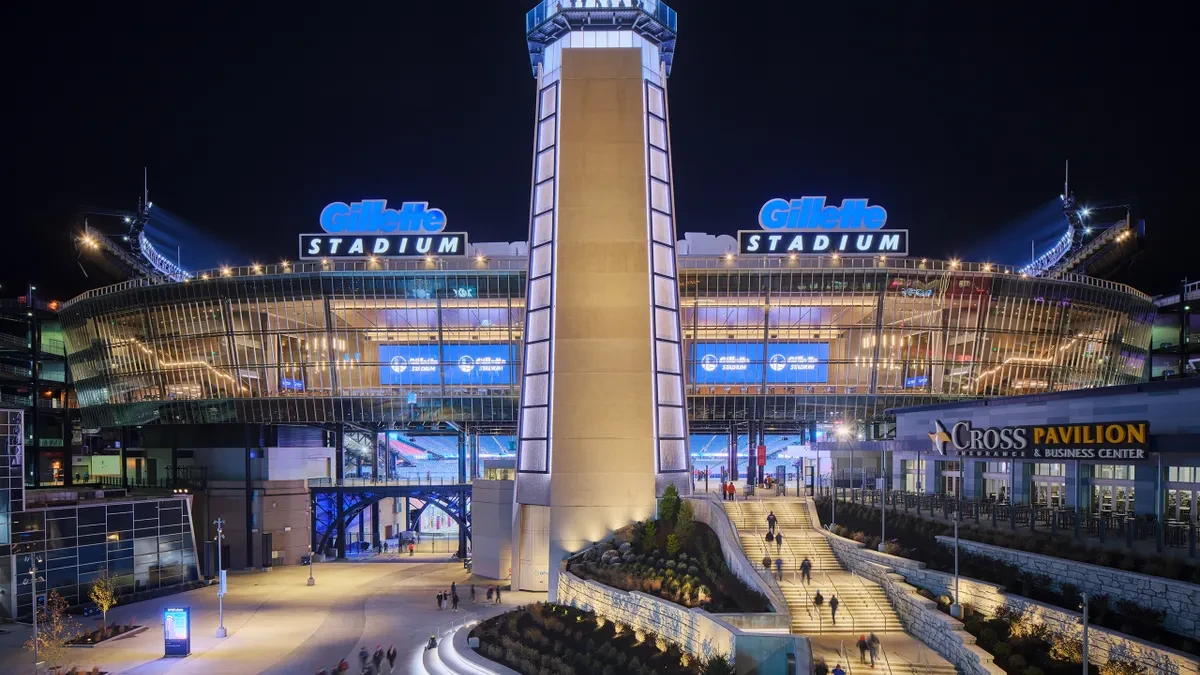
BOSTON — In response to a rapidly evolving sports architecture and entertainment real estate market, national builder Suffolk Construction has officially announced the launch of its Sports Center of Excellence. Unveiled in early October 2026, this newly centralized business unit is strategically designed to spearhead the construction, expansion, and renovation of high-profile stadiums, arenas, collegiate recreation centers, and elite athletic training facilities across the United States.
To command this high-stakes venture, Suffolk has appointed industry veteran and former Nike executive Matt Swaim as Executive Vice President of the division. Additionally, the firm has named Will Gamba as Vice President of Preconstruction for the Sports and Entertainment sector.
The structural pivot underscores a broader, industry-wide shift. Modern sports venues are no longer just seasonal shells utilized for a few hours on game days; they are multi-use, year-round entertainment hubs, commercial spaces, and community centerpieces. As client expectations soar—demanding hyper-sophisticated amenities, premium hospitality clubs, immersive digital infrastructure, and tighter-than-ever project delivery schedules—contractors must adapt. Suffolk’s new specialized division aims to streamline operations, optimize preconstruction practices, and de-risk complex builds from conception to the final whistle.
Main Facts: Inside the Sports Center of Excellence
The creation of the Sports Center of Excellence represents a deliberate consolidation of Suffolk’s expertise, resources, and leadership in the sports and entertainment asset class. Rather than handling major stadium builds through decentralized regional offices, Suffolk has chosen to pool its national talent into a single, cohesive powerhouse.
Key structural and leadership details of the new unit include:
- Leadership: The division is helmed by Executive Vice President Matt Swaim, a veteran builder with over 25 years of specialized experience in sports and entertainment architecture and construction. Swaim joined Suffolk in 2024 after a high-profile stint as Vice President of Real Estate, Design, and Construction at athletic giant Nike.
- Preconstruction Focus: Recognizing that modern mega-projects are won or lost in the planning phase, Suffolk appointed Will Gamba as Vice President of Preconstruction. Gamba will oversee budgeting, constructability reviews, scheduling, and value engineering from the initial design phase through the guaranteed maximum price (GMP) milestone.
- Scope of Work: The national unit will manage a diverse portfolio of assets, including professional sports stadiums, multi-purpose indoor arenas, collegiate athletic complexes, state-of-the-art training facilities, and surrounding entertainment districts.
- Core Objectives: The division will focus on standardizing risk management protocols, synchronizing project staffing, advancing preconstruction innovation, and executing projects that hit rigid, immovable opening-day deadlines.
Chronology: The Path to Centralized Sports Construction
Suffolk Construction’s evolution toward a dedicated sports division is the result of years of strategic talent acquisition, high-profile project execution, and shifting market dynamics.
Pre-2024: Building a Track Record
Long before the formal announcement of the Sports Center of Excellence, Suffolk built a formidable reputation in the New England market and beyond for delivering complex, high-visibility entertainment venues. A crowning achievement in this portfolio was the Gillette Stadium North End Zone Expansion in Foxboro, Massachusetts. Completed in 2023, the project introduced a massive new lighthouse, a curved high-definition video board, and expansive hospitality spaces, all while the stadium remained operational for active NFL and concert schedules. Projects of this caliber proved that Suffolk possessed the logistical acumen required for elite stadium work.
2024: The Arrival of Matt Swaim
Recognizing the immense growth potential in the sports infrastructure sector, Suffolk brought Matt Swaim into the fold in 2024. Swaim arrived with a pedigree built over a quarter-century of managing monumental builds, most notably his tenure at Nike. While leading real estate, design, and construction for the sportswear titan, Swaim masterminded the master planning and delivery of Nike’s sprawling 300-acre, 4-million-square-foot corporate campus expansion. This experience instilled in him a deep understanding of mega-scale project coordination, corporate branding integration, and sustainable construction practices.
October 2026: Official Launch of the Center of Excellence
Following two years of internal restructuring and alignment under Swaim’s guidance, Suffolk officially formalized its capabilities on October 1, 2026, announcing the rollout of the Sports Center of Excellence. Alongside the unit’s launch, the firm named Will Gamba as VP of Preconstruction, completing the core leadership triad designed to take the division national.
Supporting Data and Market Dynamics: The Modern Stadium Boom
The formation of Suffolk’s new division does not happen in a vacuum. It is a direct response to a transformative era in sports architecture, characterized by surging construction costs, escalating technological requirements, and compressed timelines.
The Evolution of Fan Expectations
According to industry research and analysis by Construction Dive, stadium design has undergone a radical transformation over the past decade. Traditional, bare-bones seating bowls are relics of the past. Today’s team owners, developers, and municipal stakeholders demand:
- Premium Hospitality Clubs: High-end suites, private lounges, all-inclusive food-and-beverage zones, and immersive viewing experiences that command lucrative, multi-year corporate leases.
- Advanced Digital Infrastructure: High-density Wi-Fi networks, massive LED ribbon boards, augmented reality zones, and broadcast-quality production facilities integrated seamlessly into the structural concrete and steel.
- Year-Round Usability: Modern venues are engineered to host music festivals, corporate conventions, soccer matches, e-sports tournaments, and community events 365 days a year, placing unprecedented wear-and-tear on materials and mechanical systems.
The Timeline Crunch
Perhaps the greatest challenge in stadium construction is the inflexibility of the schedule. Unlike a commercial office building or a residential tower—where a delayed opening date might result in staggered tenant move-ins—a sports stadium faces an absolute, immovable deadline: Opening Day.

- The NFL season kicks off in September.
- Major League Baseball opens in March/April.
- NBA and NHL seasons tip off in the fall.
Missing an opening day by even a single week can result in millions of dollars in lost ticket sales, broadcasting rights, concession revenues, and breached sponsorship agreements. Consequently, general contractors must utilize advanced preconstruction modeling, modular prefabrication, and rigorous logistical planning to compress construction timelines without sacrificing safety or quality.
Official Responses and Leadership Insights
Leadership at Suffolk Construction has emphasized that the Sports Center of Excellence is engineered not merely to chase lucrative contracts, but to fundamentally redefine how sports venues are conceptualized and delivered.
In the official company press release, Matt Swaim elaborated on the unique pressures and responsibilities inherent in sports architecture:
"Sports projects require a level of planning, coordination, and execution that matches the significance of the opening day deadline," Swaim stated. "But delivering a successful sports facility is about more than meeting a date. It is about understanding how a venue will operate, connect with its community, and perform long after opening day."
Swaim’s perspective highlights a growing industry ethos: the lifecycle value of a stadium extends far beyond its initial concrete pour. Builders must account for energy efficiency, crowd circulation dynamics, future technological retrofits, and integration with surrounding urban transit and commercial developments.
By placing Will Gamba at the helm of preconstruction for the sector, Suffolk has signaled that front-loading project intelligence is the cornerstone of mitigating risk. Gamba’s team is tasked with utilizing advanced Building Information Modeling (BIM), laser scanning, and real-time supply chain tracking to identify potential bottlenecks before a single shovel hits the dirt. This rigor protects owners from unexpected budget overages and schedule disruptions—a critical value proposition in an era of volatile material costs and labor shortages.

Implications for the Industry and the Future of Sports Architecture
Suffolk’s creation of the Sports Center of Excellence carries significant implications for the broader construction and architectural landscape.
1. Raising the Bar for Competitors
As major contractors race to capture market share from a booming pipeline of stadium renovations and new builds—spurred in part by international events like the 2026 FIFA World Cup and the 2028 Summer Olympics in Los Angeles—specialization is becoming a competitive necessity. Regional builders who lack dedicated sports units may find it increasingly difficult to compete with national powerhouses that can offer centralized risk management, standardized preconstruction tech, and deeply experienced leadership teams like Swaim and Gamba.
2. Deepening Focus on Sustainability and Smart Infrastructure
With climate considerations and municipal carbon regulations tightening, future sports venues will face intense scrutiny regarding their environmental footprint. A centralized unit like Suffolk’s Sports Center of Excellence is uniquely positioned to research, test, and scale sustainable construction methodologies—such as low-carbon concrete mixes, advanced solar array integration, and water-recycling systems—across multiple projects nationwide.
3. Community Integration and Urban Regeneration
Modern stadiums are increasingly acting as anchors for massive mixed-use real estate developments, including residential towers, retail spaces, hotels, and public parks. Swaim’s background in master planning massive corporate campuses at Nike suggests that Suffolk’s new division will approach stadium construction through an urban planning lens, ensuring that these mega-venues revitalize downtown districts rather than functioning as isolated monoliths.
Looking Ahead
As sports franchises continue to invest heavily in fan experience and infrastructure modernization, the demand for elite, friction-free project delivery will only accelerate. By centralizing its operations under seasoned leadership, Suffolk Construction has positioned itself at the forefront of this multi-billion-dollar market. The success of the Sports Center of Excellence will likely serve as a blueprint for how top-tier contractors adapt to the hyper-complex demands of 21st-century entertainment architecture.
